MBR Wastewater Treatment System Turkmenistan Cost
An MBR wastewater treatment system Turkmenistan cost spans $1.2M–$8M+ from 100 m³/day municipal to 20,000 m³/day industrial duty, with OPEX of $0.25–$0.40/m³. Specified effluent is COD <30 mg/L, BOD <5 mg/L, TSS <1 mg/L, in a 60% smaller footprint.
Turkmenistan faces extreme water stress. The World Bank (2023) reported that approximately 90% of freshwater withdrawals are diverted to agriculture, so industry and towns compete for a thin remainder. Irrigation demand peaks in summer, the same season that pushes cooling loads on treatment plants to their highest. Water audits we review for Caspian sites therefore start from the reuse target, not from the discharge limit alone.
Industry and towns therefore run on a thin share of national withdrawal. Scarcity has pushed oil and gas sites managed by Turkmenneft toward closed-loop water use. A membrane bioreactor folds secondary and tertiary treatment into one stage. Product water goes to cooling towers or to irrigation on arid ground such as the Karakum Desert.
The Turkmenbashi refinery MBR is the worked industrial case. It reaches 95% COD removal at 500 mg/L influent with submerged PVDF membranes of 0.1 μm pore size and chemical dosing skids. Earlier notes priced $1.2M for 100 m³/day municipal plants and $8M+ for 20,000 m³/day industrial systems. The Arçman wastewater plant, at 20,000 m³/day, is the large-flow benchmark cited from Envora Global data for groundwater protection in Central Asia.
High ambient heat makes large clarifiers a weak fit. Most plants we size for the Caspian coast add cooling once air exceeds 45°C, because clarifier capture falls in that heat. Export-oriented sites still line discharge limits up with EU and WHO values to keep foreign buyers. MBR filtration removes bacteria and viruses without a heavy chemical dose.
Local compliance notes cite Turkmenistan's GOST R 54534-2011 and WHO guidelines for discharge into sensitive water bodies. Buyers should keep the lab sheet next to the hydraulic profile. A permit that only names a process, with no numeric limit, is not enough to size the membrane. The numeric limits used on this page sit in the compliance table further down.
How MBR Systems Work: Process Flow and Turkmenistan-Specific Adaptations
Process flow on a Turkmenistan MBR runs from screened influent to a membrane, and effluent TSS does not depend on how well the sludge settles. By definition, a membrane bioreactor combines microfiltration or ultrafiltration with the activated sludge process. Commercial flat-sheet elements are specified for five years of chemical and mechanical resistance (Wikipedia, Membrane bioreactor). The usual industrial order is influent, fine screening at 1-2mm, an anoxic denitrification tank, an aeration tank for nitrification and organic oxidation, submerged membrane filtration, disinfection, then effluent. That order suits complex hydrocarbon wastewater from refineries.
Heat and dust force hardware changes. Ambient air above 45°C calls for a heat exchanger or cooling tower so MLVSS temperature stays below 38°C, which limits bacterial die-off and fouling. Dust and Caspian salinity also push buyers toward flat sheet. Designers specify 0.1 μm PVDF membranes for dust-resistant MBR applications rather than hollow fiber, because flat sheet stands up better to abrasive silt at Turkmenbashi and along the Caspian coast.
| Parameter | Standard MBR Specification | Turkmenistan Adaptation |
|---|---|---|
| Membrane Material | PES or PVDF | Reinforced PVDF (Salinity Resistant) |
| Pore Size | 0.04 μm - 0.4 μm | 0.1 μm (Optimized for Flux/Fouling) |
| Operating Temp | 15°C - 35°C | Cooling Skids for 45°C+ Ambients |
| Flux Rate | 15 - 25 LMH | 12 - 18 LMH (Conservative for Dust) |
| Energy Use | 0.5 - 0.7 kWh/m³ | 0.6 - 1.2 kWh/m³ (Due to Cooling) |
Energy for air scour and aeration is the OPEX risk in this climate. Projects in Mary and Ashgabat add chemical dosing skids for high-COD industrial wastewater so the membrane sees a steadier load. That pre-step extends membrane life into the 5–7 year range. Most plants we size for those two cities hold flux at 12 - 18 LMH, not at the 15 - 25 LMH band used in cleaner air.
Membrane Bioreactor for Oil Refinery in Turkmenistan
A membrane bioreactor for an oil refinery in Turkmenistan is justified when influent COD is high, free oil is removed first, and the mixed liquor is cooled below 38°C. Refinery wastewater needs a high biomass, and these designs run at MLVSS 8,000–12,000 mg/L to crack complex hydrocarbons. The Turkmenbashi train's 95% COD removal at 500 mg/L influent is the reference point. Salinity should be held below 5,000 mg/L or the biology slows.
Put a DAF or equivalent oil-removal step ahead of the membrane. Free oil and grease coat the sheet and drive transmembrane pressure up within days. Reinforced PVDF is the material named for saline oil-and-gas duty. PES is the polymer to avoid when salinity is high.
Refinery packages we review often arrive with an API separator only, and that is not enough once emulsified oil remains. Screening at 1-2mm still belongs at the head of the train so trash does not cut the sheet. Chemical dosing ahead of the bioreactor steadies COD spikes that follow tank drains. Keep the cooling skid in the aeration circuit whenever yard temperature exceeds 45°C.
MBR vs. MBBR vs. Conventional Activated Sludge: Which System Fits Your Turkmenistan Project?
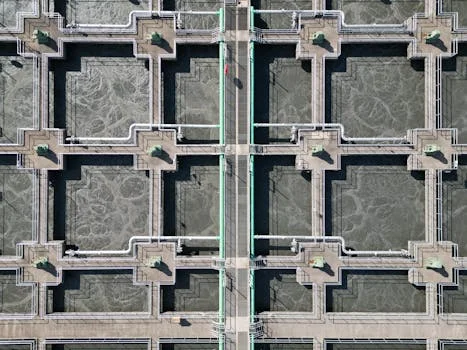
MBR systems provide a 60% reduction in physical footprint compared with conventional activated sludge, which is why they win brownfield plots inside an existing fence. Conventional activated sludge depends on clarifiers that lose capture when sludge bulks. The membrane holds TSS below 1 mg/L. MBBR raises capacity above conventional activated sludge in a smaller tank, but it still needs extra filtration before direct reuse.
Procurement in Turkmenistan has to price import duty of 15–20% on membrane modules and the thin local pool of membrane-cleaning technicians. MBR CAPEX is higher than MBBR or conventional activated sludge. Payback often comes from avoided fines plus reused water, which costs less than municipal supply or desalinated Caspian water. Rural Lebap municipal jobs whose target is BOD only, not reuse, are the cases where MBBR still wins.
| Feature | MBR (Membrane Bioreactor) | MBBR (Moving Bed) | CAS (Conventional) |
|---|---|---|---|
| Effluent TSS | <1 mg/L | 10–30 mg/L | 15–50 mg/L |
| Footprint | Minimal (1x) | Moderate (1.5x) | Large (3x) |
| CAPEX (Relative) | High ($$$) | Medium ($$) | Low ($) |
| OPEX (Relative) | High ($0.35/m³) | Medium ($0.20/m³) | Low ($0.15/m³) |
| Reuse Potential | High (Direct) | Requires Filtration | Requires Tertiary |
Engineers who want a clarifier comparison should read alternatives to MBR for municipal wastewater treatment before dropping the membrane. For refinery COD, the membrane still wins because MLVSS of 8,000–12,000 mg/L is hard to hold in a clarifier. Most municipal jobs we see in rural Lebap stop at MBBR when the permit is BOD only. Relative OPEX in the table is $0.35/m³ for MBR, $0.20/m³ for MBBR and $0.15/m³ for conventional activated sludge.
GOST R 54534-2011 Wastewater Compliance Membrane Bioreactor
GOST R 54534-2011 wastewater compliance on a membrane bioreactor is handled in this guide as the municipal discharge reference, with GOST 12.1.007-76 kept for industrial pollutants. Project notes treat both GOST texts as aligned closely with WHO and EU practice. For a discharge to the Caspian Sea or a sensitive inland basin, the limits used here are COD below 30 mg/L and BOD below 5 mg/L. A membrane is one of the few processes that holds those values without the seasonal swing of a clarifier.
Buyers should still confirm the permit numbers with the Ministry of Agriculture and Environmental Protection for the specific outfall. A Russian GOST designation is not, by itself, a Turkmenistan discharge licence. Most permit packs we review still ask for a lab sheet against the GOST limits in the table, not a narrative. Keep that sheet in the tender file.
| Pollutant | Turkmenistan GOST Limit | WHO/EU Benchmark | MBR Typical Performance |
|---|---|---|---|
| COD (mg/L) | <30 | <125 (General) | 15–25 |
| BOD5 (mg/L) | <5 | <25 | <2 |
| TSS (mg/L) | <1 | <35 | <0.5 |
| Ammonia (mg/L) | <1 | <2 | <0.5 |
| Oil & Grease | <5 mg/L | <10 mg/L | <1 mg/L |
The WHO/EU column in that table is a benchmark, not a Turkmenistan statute. According to the consolidated text of Council Directive 91/271/EEC on EUR-Lex, version of 1 January 2014, Table 1 sets three concentration lines for secondary treatment. BOD5 is 25 mg/L O2 without nitrification, measured at 20°C, with a minimum reduction of 70-90%. COD is 125 mg/L O2 with a minimum reduction of 75%, and total suspended solids are 35 mg/L, with the solids line marked optional.
Those Table 1 figures line up with the <125, <25 and <35 entries already in the benchmark column. Ammonia below 2 mg/L and oil and grease below 10 mg/L in that column are not Table 1 values. For EU sensitive areas, Table 2 of the same consolidated text sets total phosphorus at 2 mg/L for 10,000–100,000 p.e. and 1 mg/L above 100,000 p.e. Total nitrogen is 15 mg/L or 10 mg/L on the same population split, with minimum reductions of 80% for phosphorus and 70-80% for nitrogen.
Table 2 nitrogen values are annual means. A daily average may be used instead, and then it must not exceed 20 mg/L total nitrogen when the biological reactor effluent is at or above 12°C. One population equivalent in Article 2 of the directive is 60 g of BOD5 oxygen per day. None of these EU lines replace the Turkmenistan column in the table above.
Article 10 of Directive 91/271/EEC requires EU plants to be designed, constructed, operated and maintained so performance holds under all normal local climatic conditions. The duty is EU law, not a Turkmenistan clause, but the practical parallel is the cooling skid once ambient air exceeds 45°C. Article 12 of the same directive states that treated waste water shall be reused whenever appropriate, which is the logic of the ROI case below, still as EU law only.
Non-compliance in Turkmenistan carries a large fine exposure. The 2022 Environmental Code allows fines up to 5% of a facility's annual revenue for repeated violations. Export-oriented textile and chemical plants often must meet stricter buyer standards than the domestic permit. Membrane effluent keeps ammonia and phosphorus below the levels that trigger those penalties or a shutdown.
MBR Plant CAPEX OPEX Turkmenistan Supplier
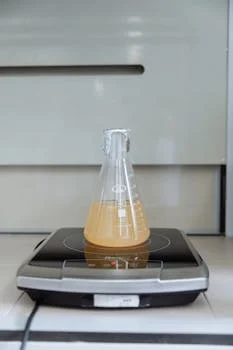
Supplier quotes for an MBR plant CAPEX OPEX Turkmenistan supplier package at 1,000 m³/day industrial duty usually land at $3.0M to $4.5M before inland freight. A 1,000 m³/day unit is quoted at $3.0M–$4.5M in that same band. The build includes membrane units at $300–$500/m², stainless steel or epoxy-coated concrete tanks, and PLC automation. Local import duties and clearance fees typically add 15% to the base equipment cost, so test the 15–20% duty range in the early budget.
OPEX benefits from energy near $0.08/kWh and from local labor rates. Imported cleaning chemicals and membrane replacement pull the other way. On average, the OPEX for an MBR system in Ashgabat or Mary ranges from $0.25 to $0.40 per cubic meter treated. Against cost benchmarks for regional wastewater projects, Turkmenistan sits a bit higher because heat drives more chemical backwash and more cooling kilowatt-hours.
| Cost Component | Estimated Cost (Turkmenistan) | % of Total OPEX |
|---|---|---|
| Energy (Aeration/Pumping) | $0.12 - $0.18 / m³ | 45% |
| Membrane Replacement (7yr) | $0.06 - $0.10 / m³ | 25% |
| Chemicals (CIP/Dosing) | $0.04 - $0.07 / m³ | 15% |
| Labor & Maintenance | $0.03 - $0.05 / m³ | 15% |
A refinery in Turkmenbashi processing 1,000 m³/day faces a municipal water purchase cost of $0.85/m³. An MBR with a CAPEX of $3.5M and an OPEX of $0.30/m³ saves $0.55/m³ in water cost. Total annual savings from water reuse alone are $200,750. When avoided non-compliance fines averaging $500,000/year for major refineries are included, the payback period is approximately 4.2 years.
Supplier Checklist: How to Evaluate MBR System Vendors for Turkmenistan Projects
A Turkmenistan supplier check has to survive desert dust, long spare-part lead times and a permit file. Use the six tests below before the commercial bid is accepted. Most quotes we compare leave out the 15% clearance adder until the freight invoice arrives.
- Membrane Warranty: Does the vendor offer a minimum 5-year pro-rated warranty on membrane integrity?
- Dust Mitigation: Are control panels and blowers rated at IP65 or higher to withstand fine desert sand?
- Local Support: Does the vendor have a service partner or technician network in Ashgabat or Turkmenbashi for emergency repairs?
- Compliance Documentation: Can the supplier provide certified lab results showing compliance with GOST R 54534-2011?
- Material Specifications: Are the membranes made of reinforced PVDF? Avoid PES membranes for high-salinity oil/gas applications.
- Pre-treatment Integration: Does the vendor offer pre-treatment options for high-salinity wastewater in Turkmenistan, such as DAF systems, to protect the MBR?
The packaged unit for this duty is the MBR Membrane Bioreactor Wastewater Treatment System. It is specified with PVDF flat-sheet membranes, automated chemical cleaning, and an aeration pattern stated to reduce OPEX by up to 15% compared with standard European models. Ask for duty, design flux and the CIP chemical list in the same revision. Cooling energy in the 0.6 - 1.2 kWh/m³ band belongs in that revision too.
Readers comparing supplier communities in other regions can use the separate note on mbr network - network for membrane bioreactor. That topic is not part of a Turkmenistan cost build-up. Keep this file on flux, duty, cooling and the GOST lab sheet.
Who Should Specify This Plant
Refinery, textile, chemical and municipal buyers in Turkmenistan who need TSS below 1 mg/L are the audience, provided they can fund membrane replacement inside a 5–7 year life. The same band is $1.2M for 100 m³/day municipal plants and $8M+ for 20,000 m³/day industrial systems. Most buyers who send COD, oil and grease, TDS and a summer temperature get a narrower band than a flow-only request.
Look elsewhere if the only duty is BOD removal at a rural Lebap town and reuse is not required. MBBR then has the lower OPEX, near the $0.20/m³ line in the comparison table. A conventional plant remains the low-CAPEX choice where land is cheap and TSS of 15–50 mg/L is acceptable. Do not force a membrane onto that duty.
Seven items move the quote more than the brochure does:
- Design flow, including the peak week, not only the average m³/day.
- Influent COD, oil and grease, and salinity against the 5,000 mg/L biology caution.
- Discharge limit versus a reuse limit for a cooling tower or irrigation.
- Cooling skid size for ambient air above 45°C and mixed liquor held below 38°C.
- Membrane price at $300–$500/m² and a replacement allowance inside 7 years.
- Import duty tested at both 15% and 15–20%.
- Power price near $0.08/kWh plus the extra 0.6 - 1.2 kWh/m³ when cooling is on.
Send flow, the influent assay and the reuse or discharge limit through the project data sheet for this article so the CAPEX band can be narrowed before tender.
Frequently Asked Questions
Buyers usually ask five checks: clarifier versus membrane, heat and dust, the clean cycle, saline refinery feed, and the 1,000 m³/day money band.
What is the difference between MBR and a clarifier?
An MBR uses a physical membrane to separate solids, and a clarifier uses gravity. The membrane pore size cited for these plants is 0.1 μm, MBR effluent TSS stays below 1 mg/L, and clarifier effluent is often 20–50 mg/L. The MBR uses about 60% less space, at an OPEX of $0.25–$0.40/m³ against $0.10–$0.20/m³ for a clarifier. Most hot-climate plants we review lose clarifier capture when sludge bulks, so reuse specs move the project to a membrane.
How do membrane bioreactors work in Turkmenistan's climate?
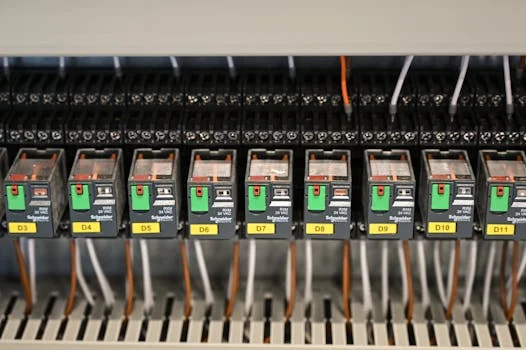
Membrane bioreactors in Turkmenistan need cooling and dust protection before biology or electrical gear is reliable. Cooling towers or heat exchangers hold the mixed liquor below 38°C when ambient air exceeds 45°C, and panels plus blowers should be IP65 or tighter against desert sand. PVDF membranes are selected because they tolerate chemical cleaning when salinity and dust raise fouling. Blower intake filters need a weekly check in this dust, more often than in a temperate yard.
What are the maintenance requirements for MBR systems in Turkmenistan?
Maintenance is a monthly low-concentration chemical backwash, a quarterly intensive chemical soak, and a daily transmembrane pressure check. Operators record transmembrane pressure every day so a slow rise is caught before a shutdown. Because of desert dust, aeration-blower intake filters are inspected weekly and replaced sooner than in a temperate climate. Most crews we train do the recovery soak before July.
Can MBR systems handle high-salinity wastewater from oil/gas industries?
Yes, an MBR can treat saline oil and gas wastewater, but biology slows as TDS rises, so pre-treatment should hold salinity below 5,000 mg/L. A DAF unit normally sits ahead of the bioreactor and strips free oil and grease that would coat the membrane. Reinforced PVDF is preferred over PES on these high-salinity duties. The Turkmenbashi example in this guide shows 95% COD removal from 500 mg/L influent only after oil is reduced ahead of the membrane tank.
What are the typical CAPEX and OPEX for a 1,000 m³/day MBR system in Turkmenistan?
CAPEX for a 1,000 m³/day MBR in Turkmenistan is typically $3.0M to $4.5M, including import duty, and OPEX is $0.25 to $0.40 per cubic meter treated. The worked refinery case uses $3.5M CAPEX and $0.30/m³ OPEX against a purchased-water price of $0.85/m³. Reuse then saves $0.55/m³, or $200,750 a year at 1,000 m³/day. The guide also cites an average reused-water value of $0.80/m³ and avoided fines near $500,000/year, which pulls the stated payback to about 4.2 years.