Wastewater Treatment Plant Cost in Sindh Pakistan 2025: Engineering Breakdown with Local Data, Compliance & ROI Calculator
In Sindh, Pakistan, wastewater treatment plant costs vary widely by capacity and technology. For industrial projects, budget Rs15–40 million per MGD (million gallons per day) for conventional activated sludge systems, or Rs25–60 million per MGD for advanced MBR systems. Municipal plants range from Rs50–120 million per MGD, depending on compliance requirements. The Sindh government has earmarked Rs2 billion for 2024–25, enough to treat ~10–15 MGD of industrial effluent. Key cost drivers include land acquisition (Rs5–15 million per acre in Karachi), energy consumption (30–50% of OPEX), and compliance with NEQS discharge limits (BOD < 80 mg/L, TSS < 150 mg/L).Why Wastewater Treatment Costs Are Rising in Sindh: Compliance, Fines, and Industrial Growth
Wastewater treatment costs are escalating in Sindh due to stringent regulatory enforcement, rapid industrial expansion, and the increasing financial burden of non-compliance. The Sindh Environmental Protection Agency (SEPA) has intensified its oversight, imposing significant fines for violations under the Pakistan Environmental Protection Act (PEPA 1997). For instance, fines for non-compliance with discharge standards typically range from Rs500,000 to Rs2 million per violation, as stipulated in Section 11 of PEPA 1997. This regulatory pressure forces industries and municipalities to invest in robust treatment infrastructure to avoid repeated penalties and potential operational shutdowns. Industrial growth across Karachi, Hyderabad, and Sukkur is a major factor, increasing effluent volumes by an estimated 8–12% annually (Sindh Bureau of Statistics 2023). This surge in discharge necessitates larger capacities and more advanced treatment solutions, directly impacting "industrial effluent treatment cost Pakistan". A tangible example of this pressure occurred when a textile factory in Korangi was fined Rs1.2 million for consistently exceeding NEQS limits, discharging effluent with a BOD of 320 mg/L against the permissible 80 mg/L limit. Such incidents highlight the financial risks associated with inadequate treatment. untreated industrial and municipal effluent continues to severely damage local water bodies, leading to widespread contamination of the Lyari River and increasing groundwater salinity in regions like Thatta, impacting public health and agricultural productivity. These environmental and economic consequences further underscore the urgent need for effective wastewater management and compliance with "Sindh EPA wastewater regulations" and "NEQS discharge limits Pakistan".Sindh Wastewater Treatment Plant Cost Breakdown: Budget Allocations vs Real-World Project Costs
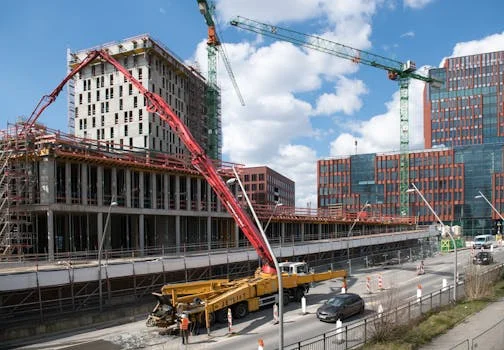
- Equipment: 40% (e.g., pumps, blowers, membranes, clarifiers)
- Civil Works & Infrastructure: 25% (e.g., tanks, buildings, piping)
- Land Acquisition: 15% (highly variable, Rs5–15 million per acre in Karachi)
- Permits & Engineering: 10% (EIA, design, SEPA fees)
- Initial O&M (first year): 10% (chemicals, power, labor, spare parts)
| Capacity (MGD) | Technology | Estimated CAPEX Range (Rs Million) | Notes |
|---|---|---|---|
| 0.5 - 1 | Conventional Activated Sludge | 15 - 40 | Suitable for small industrial units |
| 0.5 - 1 | MBR / DAF | 25 - 60 | Higher effluent quality, smaller footprint |
| 2 - 5 | Conventional Activated Sludge | 60 - 200 | Common for medium-sized industrial zones |
| 2 - 5 | MBR | 100 - 300 | For stringent discharge or water reuse |
| 5 - 10 | Conventional Activated Sludge | 250 - 600 | Large industrial or smaller municipal STPs |
| 5 - 10 | MBR (Municipal) | 350 - 900 | High-quality municipal treatment, potential for reuse |
Technology Selection for Sindh: MBR vs DAF vs Conventional Activated Sludge – Costs, Efficiency, and Compliance
Selecting the appropriate wastewater treatment technology in Sindh depends critically on factors such as required effluent quality, available footprint, and budget for both capital expenditure (CAPEX) and operational expenditure (OPEX). Each technology offers distinct advantages and trade-offs. Conventional Activated Sludge (CAS) Systems:These systems are a widely adopted and cost-effective solution for many applications in Sindh, particularly for larger capacities where land is not a major constraint. CAPEX typically ranges from Rs15–30 million/MGD. CAS systems achieve 85–92% BOD removal and require a relatively large footprint of 1,000–1,500 m²/MGD. Energy consumption is moderate, averaging 0.4–0.6 kWh/m³. While meeting basic NEQS limits for BOD and TSS, they often require tertiary treatment for pathogen removal or advanced nutrient reduction if aiming for "water reuse standards Pakistan". For detailed insights into primary treatment options, understanding when to choose aerobic vs anaerobic treatment for Sindh’s industrial effluents is crucial.
MBR (Membrane Bioreactor) Systems:MBR technology represents an advanced treatment option, offering superior effluent quality and a smaller physical footprint, making it ideal for congested urban areas or sites with limited space. CAPEX is higher, typically Rs25–60 million/MGD, but MBR systems achieve 95–99% BOD removal. Their compact design requires only 300–500 m²/MGD. However, OPEX is higher due to increased energy consumption (0.8–1.2 kWh/m³) for membrane aeration and cleaning. The significant advantage of MBR is its ability to produce near-reuse quality effluent, easily meeting all NEQS parameters (BOD, TSS, COD, pathogens) without extensive tertiary treatment, making it suitable for industrial or municipal projects aiming for water reclamation. MBR systems for near-reuse quality effluent in municipal and industrial projects are increasingly being considered in Sindh. Further insights can be found in our detailed guide on MBR wastewater treatment systems in the Netherlands.
DAF (Dissolved Air Flotation) Systems:DAF is primarily a physical-chemical treatment process, highly effective for removing suspended solids (TSS), oils, fats, and grease (FOG) from industrial wastewater. CAPEX for DAF systems typically ranges from Rs20–45 million/MGD. They achieve 80–90% TSS removal and require a footprint of 500–800 m²/MGD. DAF systems are particularly well-suited for industries with high-FOG effluents, such as food processing, textiles, and slaughterhouses, where conventional primary clarification struggles. While DAF is excellent for pretreatment or polishing, it generally does not achieve the comprehensive organic removal of biological systems. For more detailed information, refer to our guide on DAF systems in Myanmar.
| Feature | Conventional Activated Sludge | MBR (Membrane Bioreactor) | DAF (Dissolved Air Flotation) |
|---|---|---|---|
| CAPEX (Rs Million/MGD) | 15 - 30 | 25 - 60 | 20 - 45 |
| OPEX (Energy kWh/m³) | 0.4 - 0.6 | 0.8 - 1.2 | 0.2 - 0.5 (for flotation) |
| BOD Removal Efficiency | 85 - 92% | 95 - 99% | N/A (primarily TSS/FOG) |
| TSS Removal Efficiency | 85 - 95% | >99% | 80 - 90% |
| Footprint (m²/MGD) | 1,000 - 1,500 | 300 - 500 | 500 - 800 |
| Effluent Quality | Good (meets basic NEQS) | Excellent (near-reuse quality) | Good (for TSS/FOG removal) |
| Best Use Case | Large capacity, land available, basic NEQS | Limited space, stringent NEQS, water reuse | High FOG/TSS industrial effluents (pre-treatment) |
Sindh Compliance Checklist: NEQS Limits, PEPA 1997, and SEPA Permits for Wastewater Discharge
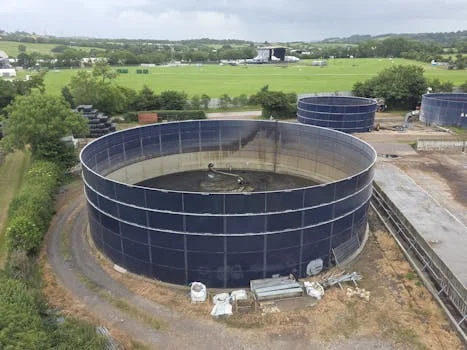
- Biochemical Oxygen Demand (BOD): < 80 mg/L
- Total Suspended Solids (TSS): < 150 mg/L
- Chemical Oxygen Demand (COD): < 150 mg/L
- pH: 6–9
- Fecal Coliform: < 1,000 MPN/100 mL
ROI Calculator: How to Justify Wastewater Treatment Costs in Sindh (Industrial vs Municipal)
Justifying the capital and operational expenditure of a wastewater treatment plant in Sindh requires a clear understanding of the return on investment (ROI), which varies significantly between industrial and municipal projects. Quantifying the benefits beyond mere compliance is essential for budget approval and stakeholder buy-in. Industrial ROI Drivers: For industrial facilities, the primary drivers for ROI stem from avoiding penalties and reducing operational costs.- Avoidance of SEPA Fines: Non-compliance can result in fines ranging from Rs500,000 to Rs2 million per violation, along with potential shutdowns. Avoiding these recurring costs directly contributes to ROI.
- Reduced Water Costs: Treated effluent can be reused for non-potable applications like cooling towers, boiler feed (with further polishing), or irrigation. This can cut freshwater intake by 30–50%, leading to substantial savings, especially as water tariffs rise.
- Lower Sludge Disposal Fees: Producing NEQS-compliant sludge (e.g., < 40% moisture) can significantly reduce disposal costs, as non-compliant sludge may incur higher charges or require specialized (and more expensive) handling.
- Enhanced Brand Image: Demonstrating environmental responsibility can improve public perception and market competitiveness.
- Reduced Health Costs: Treating sewage prevents the spread of waterborne diseases, which are estimated to increase by 20–30% in areas like Karachi due to untreated discharge. Improved public health reduces healthcare burdens and increases productivity.
- Improved Property Values: Cleaner local environments, free from sewage discharge, can lead to higher property values and attract investment.
- Environmental Preservation: Protecting rivers, lakes, and groundwater from pollution maintains ecosystems and supports biodiversity, which has long-term economic benefits (e.g., fishing, tourism).
- Water Reuse Potential: Treated municipal effluent can be utilized for urban irrigation, industrial cooling, or aquifer recharge, mitigating water scarcity.
| Capacity (MGD) | Project Type | Estimated CAPEX (Rs Million) | Annual OPEX (Rs Million) | Annual Savings/Benefits (Rs Million) | Estimated Payback Period (Years) |
|---|---|---|---|---|---|
| 5 | Industrial (Textile) | 100 (Conventional) | 15 | 25 (Fines, water reuse) | 4 |
| 5 | Industrial (Food Processing) | 150 (DAF+Bio) | 20 | 30 (Fines, pre-treatment) | 5 |
| 10 | Municipal (Urban STP) | 500 (MBR) | 60 | 80 (Health, environment, reuse) | 6-7 |
| 20 | Municipal (Regional STP) | 1,200 (Conventional) | 100 | 150 (Health, environment, reuse) | 8 |
Funding and Grants for Wastewater Projects in Sindh: How to Secure Government or International Support
Frequently Asked Questions
What is the cost of a 1 MGD wastewater treatment plant in Sindh?
A 1 MGD wastewater treatment plant in Sindh typically costs between Rs15–40 million for industrial applications using conventional activated sludge, and Rs50–120 million for municipal projects, depending on the chosen technology, land acquisition costs (Rs5–15 million per acre in Karachi), and the required effluent quality.How much does MBR technology cost compared to conventional systems?
MBR technology has a higher capital expenditure, ranging from Rs25–60 million per MGD, compared to conventional activated sludge systems at Rs15–30 million per MGD. However, MBR offers superior effluent quality (95–99% BOD removal), a significantly smaller footprint (300–500 m²/MGD), and produces near-reuse quality water, often eliminating the need for extensive tertiary treatment.What are the NEQS limits for wastewater discharge in Sindh?
The National Environmental Quality Standards (NEQS) for wastewater discharge in Sindh mandate limits such as: BOD < 80 mg/L, TSS < 150 mg/L, COD < 150 mg/L, pH between 6–9, and fecal coliform < 1,000 MPN/100 mL. Adherence to these limits is enforced by the Sindh Environmental Protection Agency (SEPA).How long does it take to get SEPA approval for a wastewater treatment plant?
The SEPA approval process for a wastewater treatment plant in Sindh typically takes 30–60 days for industrial projects and 60–90 days for municipal plants. The duration is heavily dependent on the completeness and quality of the Environmental Impact Assessment (EIA) and other submitted documentation. Permit fees range from Rs50,000–500,000 based on plant capacity.Can treated wastewater be reused in Sindh?
Yes, treated wastewater can be reused in Sindh for various non-potable applications such as agricultural irrigation, industrial cooling towers, or certain industrial processes. However, to meet NEQS reuse standards, additional tertiary treatment and disinfection (e.g., using chlorine dioxide or UV systems) are required to ensure the water is safe and compliant with specific quality parameters.Related Equipment
- Underground package sewage treatment plants for industrial zones in Sindh — view specifications, capacity range, and technical data
Need a customized solution? Request a free quote with your specific flow rate and pollutant parameters.