Define the hotel's wastewater and discharge route
For a hotel in Haiti, compare three routes: connect to a confirmed municipal sewer, install a buried A/O package plant, or use an MBR system. Start with the hotel’s actual wastewater duty and discharge destination, then eliminate options that lack a lawful discharge route, adequate site conditions, or required effluent quality. Sewage treatment plant sizing depends on average and peak flow, occupancy, laundry and kitchen contributions, and the confirmed receiving point. Caribbean evidence links inadequate sewage treatment and disposal with eutrophication, coral-reef impacts, and public-health problems, so receiving-water sensitivity must be resolved before equipment selection.
Ask the operator for average daily flow, peak flow, occupancy range, laundry contribution, and kitchen or pool discharge data. Also request wastewater characterization, including oil and grease, suspended solids, nutrients, salinity, and pH where relevant. A Caribbean sewage treatment route comparison provides useful decision context, but it does not establish Haitian discharge criteria.
Confirm whether the discharge point is a municipal sewer, an on-site soak or drainage point, a sensitive coastal receiving water, or a reuse point. Obtain the applicable Haitian approval route from the responsible authority and record whether sewer connection is legally available, hydraulically accepted, and technically accessible.
Site-specific exposure assessment should remain separate from general environmental concern. A Mexico coastal study by GeoHealth associated modeled 2017–2019 conditions with wastewater exposure, but it did not establish Haiti-specific criteria. Use it to justify checking the actual outfall, drainage path, and receiving environment—not as a substitute for Haitian approval.
Compare sewer, A/O package and MBR routes
The discharge route determines the feasibility of equipment alternatives. Sewer connection is viable only where the authority confirms the connection point, available receiving capacity, connection conditions, and ownership responsibilities. A buried A/O package plant becomes a candidate where on-site treatment is required and the footprint and installation conditions suit an underground biological process. MBR becomes a candidate when the confirmed project requirements justify the additional process, space, controls, and operating demands associated with membrane separation.
| Discharge route or influent problem | Governing rule or process option | What data settles it |
|---|---|---|
| Municipal sewer is available | Select sewer connection only after confirming authority approval, receiving capacity, connection conditions, and responsible parties. | Written confirmation from the sewer authority; connection location; available capacity; required works and charges. |
| On-site discharge to a sensitive receiving environment | Compare a buried A/O package sewage treatment plant with an MBR wastewater treatment system against the confirmed effluent and reuse requirements. | Approved discharge route, applicable targets, sensitive receptors, reuse objective, and receiving-water assessment. |
| Limited footprint or modular expansion is required | Consider parallel package modules and controlled flow distribution rather than assuming one oversized vessel. | Average and peak flows, footprint, access, staged expansion plan, and supplier duty calculation. |
| Hotel wastewater varies substantially with occupancy | Require a documented peak-flow method and operating strategy; do not size from average occupancy alone. | Occupancy history, seasonal profile, meal periods, laundry schedule, kitchen discharge, and storage requirements. |
One commercial modular precedent provides a configuration check: BIOROCK states that its MULTIROCK system serves 60–300 people, with up to nine units installed in parallel and a flow-control chamber distributing wastewater among them. This is a vendor-specific precedent, not a Haitian design standard or a substitute for hotel-specific calculations.
For the A/O-versus-MBR decision, request a side-by-side process comparison based on hotel sewage treatment A/O versus MBR comparison. Keep treatment capacity separate from effluent quality: a supplier’s nominal capacity does not establish compliance at the site’s actual hydraulic and organic loading.
Check site, climate and operating constraints
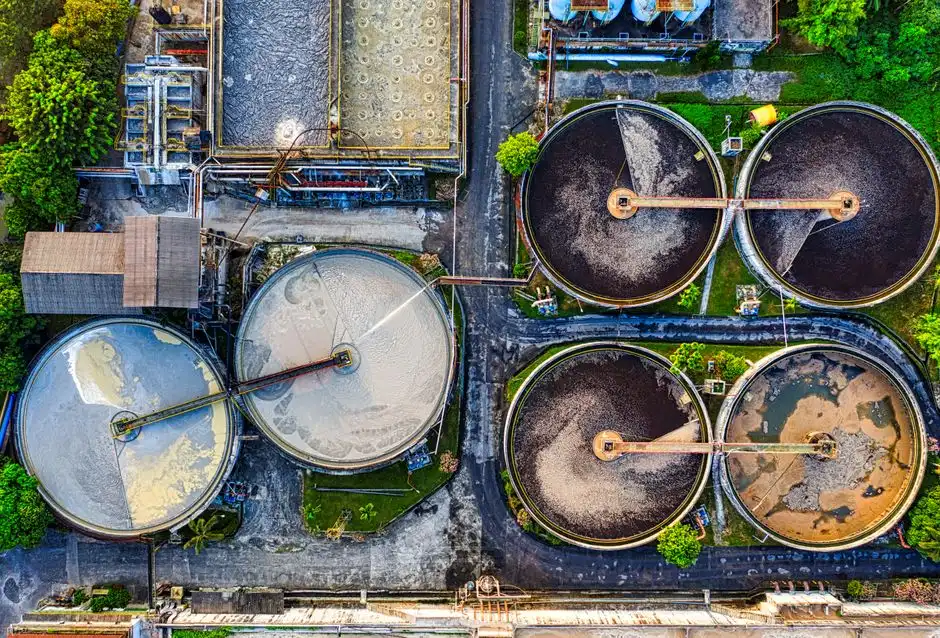
Reject a process option that cannot be installed, accessed, or operated safely at the hotel. Request a surveyed footprint, burial depth, excavation access, bearing conditions, and separation from occupied buildings and guest areas. The buried A/O package sewage treatment plant must still be assessed against the site; burial is not a substitute for geotechnical and access checks.
Confirm the highest groundwater level, flooding exposure, surface-drainage arrangements, and the consequences of flooding or surface discharge. Ask for the site survey, flood information, and proposed drainage concept. Where flood exposure is unresolved, require the supplier to state whether the plant, electrical equipment, or treatment process would remain operable or require shutdown.
Verify the electrical supply, backup-power arrangement, remote-control connectivity, spare-parts access, and required operator skill level. For an MBR wastewater treatment system, require an explicit description of membrane-related operations, membrane cleaning, condition monitoring, and replacement responsibility. These are scope questions, not assumed performance advantages.
Resolve sludge generation, storage, access for removal, final destination, and local handling responsibility before accepting the quotation. The contract should identify whether sludge removal, transport, disposal, and associated permits are supplier or hotel obligations, and state who bears the cost when service is performed.
Convert the selection into an RFQ and acceptance schedule
Issue the RFQ as a measurable scope, not as a request for a generic packaged sewage treatment plant for hotels in Haiti. State the design flow, peak-flow method, inlet characteristics, effluent targets, reuse objectives, applicable Haiti approval route, site conditions, and operating assumptions. Require each bidder to identify exclusions rather than silently leave them undefined.
| Quote line item | Technical scope to specify | Red flags to check before signing |
|---|---|---|
| Equipment and process | Selected treatment process, design and peak duty, duty cycle, treatment capacity, automation, alarms, sampling points, and modular arrangement. | Capacity stated only as a people-equivalent; no calculation basis; missing peak-flow method; catalogue claim substituted for site performance data. |
| Civil works and installation | Excavation, foundations, burial, access, pipework, flow-control arrangements, drainage, testing, commissioning, and site restoration. | Unclear responsibility for ground conditions, dewatering, occupied-area works, or connections to the confirmed discharge route. |
| Power and control | Electrical supply requirements, backup power, remote monitoring, alarms, and power-loss operating response. | Backup power or remote monitoring excluded without a stated cost or alternative. |
| Performance acceptance | Documented process performance, sampling method, test conditions, witnessing, corrective actions, and compliance with the project’s confirmed discharge route. | Acceptance based only on installation completion; no sampling protocol; no defined remedy for failed performance. |
| Operations and maintenance | Training, manuals, operator skill requirement, preventive maintenance, consumables, sludge removal, and final disposal. | Maintenance, sludge handling, or consumables treated as optional or left without responsibility and price. |
Make final acceptance dependent on documented process performance and compliance with the discharge route confirmed for the project. Require the supplier to explain how each acceptance test relates to the stated design flow, influent characteristics, and effluent targets. The containerized sewage treatment plant sizing for Haiti provides additional sizing context, but the hotel’s own flow and site data must govern the quotation.
Frequently Asked Questions
How should a Haitian hotel size a packaged sewage treatment plant?
Size it from documented average and peak wastewater flows, not guest-room count alone. Provide occupancy ranges, laundry and kitchen data, seasonal variation, the peak-flow method, inlet characteristics, and the selected reuse or discharge objective. Require each bidder to show the calculation and operating assumptions in the quotation; do not accept an unexplained capacity figure or a generic precedent as the design basis.
When is an MBR justified instead of a buried A/O package plant?
Compare MBR and buried A/O only against confirmed project requirements, including effluent targets, reuse objectives, footprint, groundwater and flood conditions, power availability, operator capability, and maintenance access. An MBR should be selected only where its process, membrane management, and operating burden are justified by those requirements. If those inputs remain unavailable, request them before making the technology decision.
What should a hotel include in a wastewater treatment plant quotation?
Require separate prices and scope statements for equipment, civil works, power supply, installation, commissioning, training, monitoring, preventive maintenance, consumables, sludge removal, and final disposal. Also identify permits, authority submissions, taxes, access works, backup power, and exclusions. Obtain at least two quotations using the same site inputs and technical schedule so that differences reflect scope rather than assumptions.
Which acceptance tests and supplier commitments belong in the purchase contract?
Specify the design flow, test conditions, sampling points, parameters, witnessing party, test duration, acceptance criteria, corrective-action process, and retesting procedure. Tie final acceptance to documented process performance and the confirmed discharge route. Require named supplier commitments for commissioning, operator training, manuals, spare-parts availability, maintenance support, and sludge handling, with the remedy for non-performance stated in the contract.