Establish the source water and product-water basis
The right industrial reverse osmosis water treatment system in Haiti depends on the source water and the required quality of the treated water, rather than a standard package. RO uses pressure to move water through a semipermeable membrane and can remove dissolved salts and other dissolved contaminants [S1][S5]. Its feasibility depends on feedwater quality, operating pressure, recovery, pretreatment, energy supply, and concentrate handling [S5]. This guide converts those inputs into a supplier-ready selection table and RFQ checklist. Haiti-specific source-water and regulatory parameters were not established by the supplied evidence and must be verified before equipment selection.
A representative source-water analysis is more accurate than a generic “Haiti water” assumption. Request current laboratory results covering conductivity, TDS, hardness, silica, turbidity, SDI, organic content, and any contaminants relevant to the process or receiving environment. Identify the sampling location, sampling time, and operating condition represented by each result. The RO desalination system maintenance protocol is also relevant when the supplier must explain how its design protects membranes during startup, shutdown, and routine operation.
Define the intended use before requesting equipment. A boiler feed application, manufacturing wash water, irrigation, process dilution, wastewater reuse, and potable supply do not share the same permeate or reuse criteria. For each use, state the required product-water quality and identify the applicable Haitian authority, industrial requirement, or receiving-water constraint. Where no applicable criterion has been verified, request written confirmation from the responsible authority or customer standard rather than accepting a supplier’s generic claim of “high quality.”
RO removes dissolved salts, dissolved contaminants, and many dissolved impurities, though actual performance depends on the feedwater characteristics and treatment objectives [S5]. The buyer needs a measured design basis, not only a projected output specification. Confirm whether the source is groundwater, surface water, process water, or treated wastewater and whether its composition changes seasonally or by production campaign.
Match the RO process to the influent condition
RO acts as the polishing or desalination stage when dissolved contaminants determine the required product quality [S1][S5]. Pretreatment removes the constituents that would compromise membrane performance or prevent stable operation, ensuring the design follows from the source analysis.
| Discharge route or influent problem | Governing rule or process option | What data settles it |
|---|---|---|
| Dissolved salts or dissolved contaminants are the primary treatment requirement | Consider an industrial industrial RO water treatment system as the principal separation step, with pretreatment selected from the feed analysis [S1][S5]. | Representative conductivity, TDS, hardness, silica, relevant ion or contaminant concentrations, and the required product-water quality |
| Turbidity, suspended solids, or colloidal material could load the RO membranes | Request multi-media pretreatment for RO; the relevant multi-media pretreatment for RO is specified for SDI values suitable for downstream membrane protection. | Turbidity, suspended-solids data, SDI test results, and the membrane manufacturer’s feedwater limits |
| Wastewater contains biodegradable organic matter or treatment has a biological stage | Evaluate biological pretreatment as a case-specific requirement within the broader membrane or hybrid treatment configuration [S2]. | Wastewater origin, biological condition, organic loading, treatment-stage effluent analysis, and the required reuse target |
| The project requires deployment away from permanent treatment infrastructure | Evaluate whether containerization or modular construction fits the site, while retaining the same source-water and acceptance basis. | Footprint, access route, drainage, weather exposure, utility connections, operating staffing, and concentrate route |
For industrial wastewater reuse, separate raw-water desalination from wastewater treatment. A review of membrane and hybrid configurations places RO within broader treatment trains, including streams with chemical, biological, or radiological contamination [S2]. Ask suppliers to identify the biological and pretreatment stage before pricing the RO section. Where ultrafiltration is proposed, the UF pretreatment for industrial wastewater guide provides a technical reference for defining the wastewater-specific role of that barrier.
Set pressure, recovery, and energy assumptions

The supplier must identify whether the design is conventional or low-pressure RO and justify that choice against the verified feedwater analysis. Low-pressure RO uses specialized membranes to achieve contaminant rejection at lower feed pressures when feedwater quality is appropriate [S5]. Feedwater characteristics, treatment objectives, and system design determine whether lower operating pressures are suitable [S5].
Ask for the operating basis behind the proposed system recovery rate. The quotation should identify the net product-water output, the feed flow used for sizing, and how the recovery calculation accounts for pretreatment backwash, membrane cleaning, downtime, and peak demand. Do not compare headline recovery values when their feed assumptions or calculation boundaries are missing.
Energy requirements should be checked against the available electrical supply rather than inferred from a low-pressure description. Request pump duty, connected load, control strategy, and the supplier’s energy calculation [S5]. If valves or a broader pretreatment train require review, identify the applicable scope under the water-treatment valves and filter-media scope. The result should be an installed concept that fits the site, not a membrane-only calculation.
Build a scope-complete RFQ and acceptance checklist
Issue the same design-basis schedule to every bidder so quotations can be compared without treating undefined performance claims as equivalent. Each bidder should identify feedwater assumptions, product-water targets, recovery approach, membrane configuration, pretreatment, controls, utilities, performance testing, and exclusions.
| Quote line item | Technical scope to specify | Red flags to check before signing |
|---|---|---|
| Design basis and feedwater analysis | List every source-water parameter used, sampling context, intended use, product-water target, and the party responsible for confirming the basis | Assumed Haitian water quality, obsolete data, or a design basis without a defined sampling location and sample condition |
| RO train, recovery, and membrane configuration | State membrane arrangement, feed and product-water basis, stated recovery calculation, cleaning strategy, and performance obligations | Recovery or energy claims without calculation assumptions; membrane selection not linked to feedwater quality |
| Pretreatment and chemical dosing | Define each barrier, backwash or cleaning provision, chemical compatibility, controls, and automatic chemical dosing requirements | Equipment shown without feedwater justification, duty limits, or ownership of ongoing chemical supply and monitoring |
| Controls, utilities, and site interface | Specify instruments, alarms, connectivity, electrical supply, drainage, footprints, weather protection, and concentrate-management interfaces | Generic utility lists, undefined alarms, unavailable power assumptions, or no responsibility for the concentrate route |
| Delivery, installation, commissioning, and training | Define Incoterm or supply scope, freight, unloading, foundations, installation, commissioning method, operator training, and handover documents | “Delivered” scope that excludes freight, installation, commissioning, training, local permits, or site preparation |
| Testing, warranty, spares, and support | State the acceptance test, agreed feed and product-water criteria, test instruments, correction remedies, warranty boundary, spare-parts list, and maintenance support | Unconditional performance guarantees, unspecified test conditions, excluded membrane replacement, or no named support responsibility |
Make performance acceptance conditional on agreed feedwater and product-water criteria. No Haitian discharge, reuse, or drinking-water limit is established by the available technical evidence. The buyer must identify the applicable authority and intended-use requirement before the contract uses “compliant,” “reusable,” or “potable.” Ask bidders to show how a deviation would be detected, which party would correct it, and whether retesting is included [S5].
Confirm local execution and implementation risk
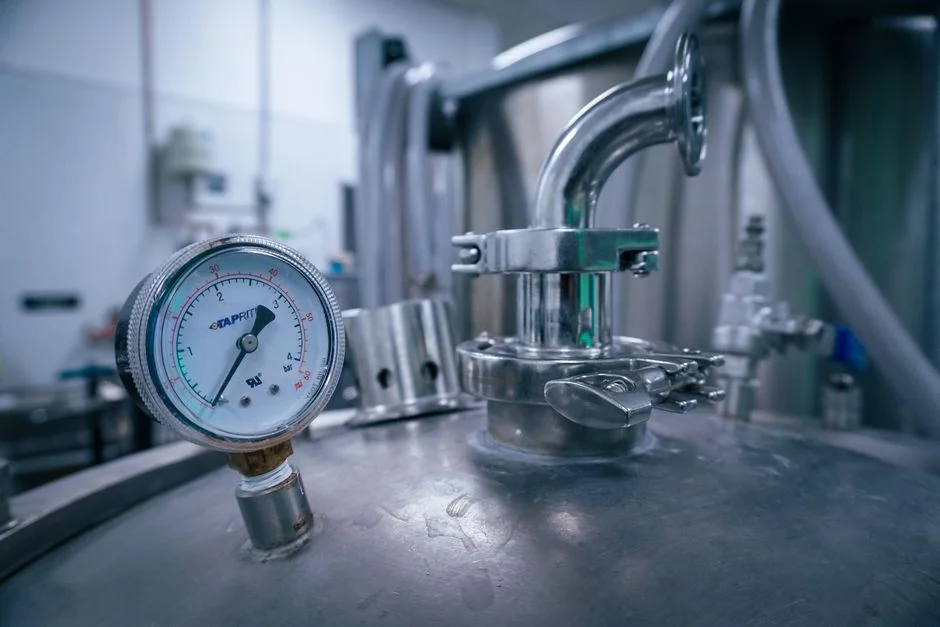
Confirm the physical site before freezing the layout. Obtain the available power supply, floor area, equipment-access dimensions, drainage route, ventilation needs, weather protection requirements, and concentrate-disposal route. The Haiti containerized treatment plant sizing reference is relevant if containerization is being considered, but it does not establish the buyer’s source-water values or regulatory obligations.
Ask the supplier to document membrane protection, cleaning, controls, alarms, operator training, and maintenance support. Integrated CIP can simplify membrane maintenance when appropriately included in the design [S5]. Confirm whether CIP is manual or automatic, which cleaning chemicals are required, who performs routine cleaning, and what laboratory or field checks support the stated cleaning intervals.
Resolve compliance before procurement. Identify the Haitian authority or customer standard responsible for the intended discharge, reuse, or process-water application and obtain confirmation of the route to approval. For industrial wastewater reuse, document the wastewater source and biological condition separately from raw-water desalination requirements [S2].
Assign operating responsibility. Confirm who will log operating data, respond to alarms, replenish treatment chemicals, perform membrane cleaning, and maintain the pretreatment media. A quotation that leaves these duties undefined transfers operational risk to the buyer regardless of the equipment configuration.
Frequently Asked Questions
How much does an industrial reverse osmosis water treatment system in Haiti cost?
No supported price or quotation range is available, so the budget cannot be stated responsibly. Request itemized quotations on the same design basis, including RO membranes and vessels, pretreatment, controls, skid or enclosure, chemical dosing, freight, installation, commissioning, testing, training, spares, warranty, and concentrate-management interfaces. Separately identify site-preparation and utility costs because suppliers may exclude them.
When should a buyer request UF, multi-media filtration, or biological pretreatment?
Request multi-media filtration when source-water turbidity, solids, or colloids require control before RO. Use UF where the wastewater-specific barrier and feedwater assessment support it, rather than treating UF as a universal pretreatment default. Evaluate biological pretreatment when the source contains biodegradable organics or the process requires a biological treatment stage [S2]. The source analysis and membrane feedwater limits must settle the selection.
What information should an industrial RO quotation contain?
The quotation should state the design feedwater, intended use, product-water target, recovery calculation, membrane configuration, pretreatment, controls, utilities, performance test, exclusions, delivery terms, installation, commissioning, training, documentation, spares, and warranty. Also require the basis for the stated energy use and the responsibility for concentrate [S5]. A bid that omits any of these cannot be compared fairly with a complete bid.
What should be agreed before signing an RO supplier’s acceptance and delivery terms?
Agree the feedwater and product-water criteria, test instruments, acceptance procedure, remedy for failed performance, commissioning responsibilities, operator training, handover documents, delivery boundary, installation scope, warranty boundary, maintenance support, and spare-parts supply. Use the applicable Haitian authority or customer requirement for the intended use rather than an unsupported regulatory claim. This prevents a technically adequate RO train from failing at handover because its site, utility, or concentrate interfaces were left undefined.