Start with the discharge route and wastewater duty
Select an industrial effluent treatment plant and DAF system in Lithuania by first identifying the discharge route, then matching a representative wastewater analysis and peak flow to a treatment sequence. DAF is usually a physical and chemical pretreatment step, not a complete solution for biodegradable dissolved organics or strict reuse requirements. The supplied information does not establish Lithuanian discharge limits, permitting authorities or a site-specific approval route, so those matters must be confirmed before equipment is ordered.
Request representative samples and process records covering pH, COD, suspended solids, oil and grease, sulphide and process-specific pollutants. Provide both average and peak industrial effluent flow rates, including the timing and duration of discharge peaks. Also obtain the required final-discharge or sewer-discharge limits and the applicable Lithuanian permitting route from the client, environmental consultant and relevant authority.
Use the industrial wastewater treatment equipment selection in Lithuania to frame that site data, but do not treat it as evidence of current site-specific limits. Assess an industrial wastewater pretreatment and effluent equalisation tank before sizing DAF where flows vary, coarse solids are present or shock loads are possible. Equalisation is not merely a storage vessel: it can moderate flow, pH and pollutant concentrations before coagulation, flocculation and solids separation.
Model verification must account for the actual wastewater rather than relying on average conditions. In one case study, DAF effluent modelling used COD, pH, turbidity and TDS collected during an eight-hour monitoring period. The preprint reported that static and dynamic models behaved differently under shock loads and that past data affected predictions. This supports dynamic verification and shock-load testing before final sizing, not a universal performance guarantee.
Compare DAF, biological and membrane treatment routes
Choose the route from the contaminants and required receiving-water or reuse outcome, not from nominal plant flow alone. DAF is suitable where floatable material and conditioned suspended solids must be separated. Biological treatment becomes necessary when biodegradable dissolved organics must be reduced. UF, RO or another polishing stage is justified when the reuse specification requires it; a DAF unit alone does not establish that outcome.
The following matrix turns the initial site data into a treatment decision. It also identifies the evidence needed before including downstream equipment in an RFQ.
| Discharge route or influent problem | Governing rule or process option | What data settles it |
|---|---|---|
| Variable flow, coarse solids or shock loads | Screening and effluent equalisation tank before DAF; establish mixing, aeration, pH adjustment and solids-removal requirements. | Average and peak flow records, flow-duration data, coarse-solids observations and representative pH and pollutant analysis. |
| Floatable oil, fats, fibres and coagulable suspended solids | DAF with preconditioning through pH adjustment, coagulation and flocculation, followed by automatic floating-sludge removal. | Oil and grease, suspended solids, pH, COD and process-specific constituent data, plus jar or pilot testing of chemical conditioning. |
| Biodegradable dissolved organics | DAF as a solids-removal stage followed by biological treatment if required by the discharge or reuse specification. | Biochemical oxygen demand or another verified biodegradability assessment, COD profile and the final receiving-environment requirement. |
| Strict water reuse or residual-solids constraint | Add membrane or other polishing only where the reuse specification requires it. | Permitted reuse end use, required water quality, membrane-feed characteristics and disposal route for concentrate. |
| Sulphide-bearing stream | Consider separate oxidation before combining it with other effluent; apply this only after stream-specific testing. | Sulphide concentration, stream segregation data, oxidation test results and confirmation of the required sulphide condition. |
The sequence follows the contaminant logic described in the industrial wastewater reuse-system comparison for Lithuania and the best DAF unit selection framework for industrial wastewater. Compare each route against the discharge destination, reuse specification and sludge constraint.
Define the DAF system and pretreatment scope
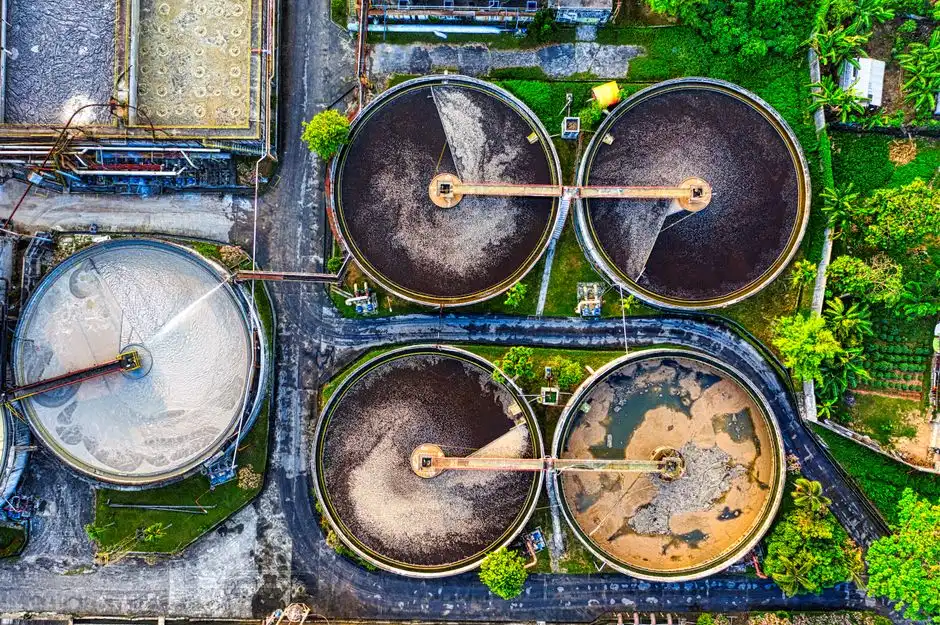
Define the complete operating chain as separate work packages; a DAF vessel without pretreatment, chemicals or sludge removal is not a complete industrial effluent treatment plant. Separate the quotation into screening, equalisation, pH adjustment, coagulant and polymer dosing, DAF separation, floating-sludge removal, sludge transfer or dewatering, downstream treatment, controls, utilities and site services.
The tannery installation at Articulos de Piel los Favoritos provides application-specific scope evidence. Coarse solids were screened from segregated effluents. The flows were combined and mixed in an aerated balancing tank, after which aluminium sulphate and polymer were added before DAF. Flocculated solids floated, an automatic scraper removed the floating layer, and sludge was pumped to a holding tank before dewatering with a high-pressure belt press. This is a tannery example, not a universal DAF configuration.
Specify the industrial dissolved air flotation system around its verified duty: flow range, wastewater characteristics, DAF recirculation arrangement, floatation loading, surface-skimming or sludge-removal method, materials, controls and required access. Specify an PLC-controlled chemical dosing system for the selected coagulant and polymer duties, including tanks, metering pumps, calibration provisions, interlocks and chemical-consumption monitoring.
Do not transfer the tannery sulphide result to another site without matching wastewater. The cited installation reduced sulphide from 1,100 mg/l S2– to 0.19 mg/l after eight hours of oxidation. The supplier must demonstrate applicability through representative testing. Use the DAF system engineering specifications to develop a comparable technical schedule and identify omissions.
Turn performance requirements into acceptance criteria
Define acceptance criteria before quotations are compared. State the influent sampling point, sample frequency, test parameters, laboratory method and sample-preservation requirement for each guarantee. Use the same characterisation method before performance testing and for discharge compliance. Where no final limit has been verified, describe the contractual target separately from the legal obligation.
- Establish the guaranteed average and peak influent basis, including representative wastewater composition and operating duration.
- Define DAF-stage targets for suspended-solids separation, floating-sludge removal and the relevant chemical-conditioning duties.
- Define separate targets for the complete plant, including any biological or polishing stage.
- State which laboratory or field procedure verifies each result and how disputed results are resolved.
- Define demonstration conditions for variable flow, shock loads, start-up, chemical availability, power interruptions and operator training.
Do not accept a DAF guarantee as a guarantee for COD removal, reuse quality or the complete effluent treatment plant. Those claims require their own process basis and test method. The industrial effluent plant acceptance-testing framework should be converted into a project-specific protocol, including the permitted operating envelope and the consequences of a failed test.
Check the quotation scope before signing
Require a line-by-line quotation that exposes omitted work and undefined interfaces. Each supplier should identify missing site information, assumptions, exclusions, estimated utility and chemical consumption, and dependencies affecting delivery or commissioning. Use the industrial effluent and DAF procurement-scope framework as a comparison aid, not as evidence of Lithuanian requirements.
| Quote line item | Technical scope to specify | Red flags to check before signing |
|---|---|---|
| Industrial wastewater pretreatment | Screen sizing, solids-removal method, equalisation volume basis, mixing, aeration and inlet-outlet hydraulic design. | Peak flow omitted; equalisation volume unexplained; coarse-solids or shock-load duties excluded. |
| DAF and DAF recirculation | Verified flow duty, flotation area, recycle arrangement, conditioning interface, surface-skimming system and accessible internals. | Equipment selected from average flow alone; no recycle basis; performance guaranteed on an unrepresentative wastewater. |
| Chemical dosing | Coagulant and polymer preparation, metering, pH control, calibration, interlocks, storage and safety provisions. | Dosing omitted; chemical consumption unquantified; no provision for changing wastewater conditions. |
| Floating-sludge handling | Scraper, transfer pump, holding arrangement, thickening or dewatering and final disposal interface. | “Sludge removed” stated without transfer, dewatering or disposal responsibility. |
| Downstream treatment | Identify biological, membrane or polishing scope only where required by the verified discharge or reuse specification. | DAF presented as a complete plant; reuse quality or COD claims unsupported by process testing. |
| Controls and utilities | PLC or equivalent controls, instrumentation, power, compressed air, water, drains, access, training, commissioning and service scope. | Utility requirements unstated; installation, commissioning, training or after-sales service excluded without clarification. |
Reject or revise an offer that gives an unexplained performance guarantee, omits sludge handling or assumes an untested peak-flow duty. Check the maintenance requirements in the DAF maintenance and troubleshooting protocol, and require the supplier to state which tasks are routine, which require consumables and who provides local service.
Frequently Asked Questions
How is a DAF system sized for an industrial effluent plant in Lithuania?
Size it from representative wastewater characteristics, the average and peak flow basis, required separation duty and the effects of equalisation, chemical conditioning and shock loads. Request the supplier’s calculation basis and verification method. Do not derive a guaranteed DAF capacity from flow alone or transfer a tannery result to another site without testing.
Which wastewater characteristics determine whether DAF, biological treatment or a combined route is suitable?
Floatable and coagulable suspended material points toward DAF; biodegradable dissolved organics can require biological treatment; strict reuse requirements may justify membrane or other polishing. The decision should be confirmed by representative analysis, biodegradability assessment where relevant, and the applicable discharge or reuse specification.
What should an industrial wastewater DAF quotation include and what should a supplier clarify?
Require separate prices for pretreatment, equalisation, DAF, chemical dosing, floating-sludge handling, controls, utilities, installation, commissioning, training and service. Ask the supplier to state exclusions, assumptions, estimated consumption, missing site data, delivery dependencies and whether the quoted guarantee applies only to DAF or to the complete treatment chain.
How are factory acceptance, site acceptance and performance guarantees verified before delivery or handover?
Define each stage separately in the acceptance plan. Factory inspection should verify construction, instrumentation and documented functions; site acceptance should verify installation, utilities, leakage, controls and operator training; performance testing should use agreed sampling points, methods, influent conditions and duration. Include a clear process for failed tests, corrective work, retesting and handover.