

Choose the discharge route before selecting equipment
The first decision for a hospital in France is the discharge route: pre-treat and discharge to a municipal sewer, install onsite biological treatment, or use a compact treatment-and-disinfection unit where local conditions permit. French hospital wastewater is considered industrial and should be pretreated before discharge into the municipal sewer network or municipal wastewater treatment plant. Select the route by obtaining the receiving authority’s written acceptance conditions, confirming the site’s wastewater characteristics, and checking flow variability, available space and maintenance capacity before ordering equipment.
For a sewer route, ask the hospital’s sewer authority for the applicable acceptance criteria, required pretreatment and any restrictions on discharge. There is no universal France-wide numerical limit for hospital effluent, so a supplier’s generic compliance statement is not enough. For hospitals without an efficient municipal connection, ask the project designer and permitting authority whether onsite treatment can discharge to the environment; a sewer connection cannot be assumed.
The SUM’EAU monitoring figures provide surveillance context, not hospital effluent standards. SUM’EAU monitors SARS-CoV-2 across 54 wastewater treatment plants in mainland France, but that network does not establish a hospital discharge route or a site-specific treatment limit.
| Discharge route or influent problem | Governing rule or process option | What data settles it |
|---|---|---|
| Available municipal sewer | Hospital wastewater is treated as industrial wastewater and is pretreated before discharge to the municipal sewer network or municipal treatment plant. | Written acceptance criteria from the sewer authority, including required analyses, pretreatment conditions and discharge restrictions. |
| No efficient municipal connection | Assess onsite biological treatment or another treatment route; do not assume direct environmental discharge is permitted. | Site footprint, maintenance access, final discharge point and requirements from the permitting and water authorities. |
| Compact treatment proposed for a small clinic or medical facility | A compact unit can combine multi-stage filtration with ozone disinfection, but suitability must be established from site data. | Average and peak flow, wastewater characterization, available footprint and the required final discharge route. |
| Radioactive, cytotoxic or concentrated pharmaceutical stream identified | Provide a dedicated collection or pretreatment decision rather than assuming the general biological unit will remove it. | Source segregation records, hazard classification and written direction from the hospital’s radiation-safety or environmental adviser. |
For broader route criteria and supplier evidence, see the hospital wastewater treatment engineering specifications.
Map contaminants and hydraulic loading to the treatment train
Hospital treatment trains must be sized using site-specific average and peak flow data rather than flow rate alone. First, obtain average and peak hospital wastewater flow, then characterize COD, BOD, TSS, ammonia, pH and microbiological characteristics. These are site inputs, not assumed design values. The biological process must be checked against the organic and nitrogen load, while pretreatment and disinfection must be checked against the contaminants that can pass through or interfere with the selected process.
- Ask the hospital for average and peak flow in m³/h, operating periods and any abnormal discharge events.
- Request a wastewater characterization covering COD, BOD, TSS, ammonia, pH and microbiological indicators.
- Screen the site for chemicals, pharmaceuticals, pathological biological agents, radioisotopes and other relevant hazards.
- Ask the sewer authority for its acceptance conditions and the project designer for the applicable discharge and permitting requirements.
- Use these inputs to define pretreatment, biological treatment, filtration, disinfection and monitoring boundaries.
Flow and composition can vary between and within days because of precipitation, industrial discharges and domestic usage. The design therefore needs a documented basis for both hydraulic and contaminant variation; one average flow does not resolve peak loading or short-duration discharges.
French urban wastewater regulations use 24-hour flow-proportional composite sampling routinely at the inlet of treatment plants with nominal capacities exceeding 600 kg BOD per day. That sampling practice does not establish a hospital treatment-sizing rule. It can, however, prompt the hospital and designer to define an appropriate sampling protocol for hospital wastewater flow characterization.
Where radioactive, cytotoxic or concentrated pharmaceutical streams are identified, separate collection or pretreatment should be evaluated. Standard hospital treatment equipment is not designed to remove radioisotopes. A hospital dialysis wastewater MBR case study may help structure the technical questions, but its project data must not be transferred to the French site.
Compare biological treatment, MBR and compact disinfection systems
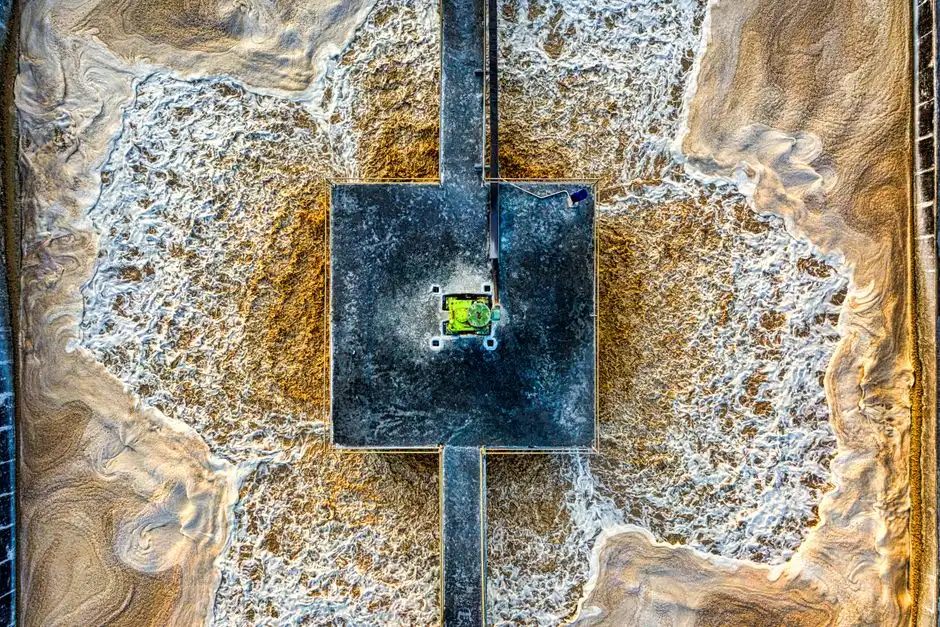
The system architecture should be chosen only after fixing the route and treatment objective. An MBR addresses biological treatment and solids separation, while a compact unit may provide a smaller pretreatment-and-disinfection package; neither is a default route based on equipment description alone.
- Onsite biological treatment: evaluate it where a municipal connection is unavailable or unsuitable and where the permitted treatment route, footprint and operating resources support biological operation.
- MBR membrane bioreactor: request the MBR membrane bioreactor for hospital wastewater as one option to compare against the confirmed route, treatment objectives and maintenance capability.
- Compact treatment and disinfection: the compact hospital wastewater treatment and disinfection unit combines multi-stage filtration with ozone disinfection and is described for clinics and small medical facilities. A larger hospital requires a site-specific applicability check rather than an automatic substitution.
The sequence described in commercial evidence is mechanical pretreatment followed by disinfection. This may form part of a treatment train, but the process objective determines whether biological treatment, filtration or additional removal is required.
Do not make ultrafiltration the default primary biological process. In the available product evidence, ultrafiltration removes bacteria, colloids and suspended solids, making it more relevant as a filtration or reverse-osmosis pretreatment stage. Ask the supplier to identify each process step, its purpose, the required pretreatment and the evidence for each performance claim.
The comparison should also cover reuse requirements, available footprint, underground access, utilities, sludge or concentrate handling, fouling control, operator competence and maintenance access. Use the European hospital wastewater compliance guide to structure document requests, not as a substitute for French site-specific requirements.
Select and verify the disinfection stage
Disinfection selection depends on the required performance basis, the contaminants present, the final discharge route and the ability to monitor and maintain the process. Ask each supplier to define the monitored organism or performance indicator, dose or concentration, contact time, fouling controls and the evidence required at final discharge.
- Ozone: the compact treatment concept uses ozone after multi-stage filtration. Require the equipment proposal to state the application conditions, residual-monitoring approach, contact arrangement and site-specific performance evidence.
- UV-C: the available technical description states that UV-C is chemical-free, produces no disinfection by-products and is effective against chlorine-resistant Cryptosporidium and Giardia. Site validation must still address actual UV transmittance, dose and fouling.
- Chlorine dioxide: on-site generation is available for water and wastewater disinfection, but specification requires a model-specific datasheet and documented application review.
- Peracetic acid and sodium hypochlorite: the supplied academic comparison addresses disinfection by-product formation, but its 2012 publication date does not establish a current French regulatory preference. Ask for current site-specific evidence instead.
Request a ozone generator application review for the ozone route, but require the same level of technical detail for UV-C and chemical alternatives. Compliance claims should identify the exact tested parameter, jurisdiction, issuing or approving party and applicable obligation.
Build an RFQ and acceptance checklist before ordering

Require bidders to separate equipment, civil works and performance evidence. Final acceptance should remain conditional on the site wastewater characterization, written sewer acceptance where relevant, installed-flow verification and representative performance testing.
| Quote line item | Technical scope to specify | Red flags to check before signing |
|---|---|---|
| Design basis and treatment objective | Average and peak flow, wastewater characterization, final discharge route, required unit operations and identified hazardous streams. | Bed count or flow used as the sole basis; no site data; final route left undefined. |
| Equipment and process stages | List each pretreatment, biological, filtration and disinfection stage, including the purpose and exclusion of each stage. | Treatments described only as “complete”; UF presented as the default biological process; hazardous streams omitted. |
| Disinfection system | Method, monitored organism or performance basis, dose or concentration, contact time, fouling controls, monitoring and site validation. | Unsupported claim of universal compliance; no model-specific application evidence. |
| Utilities, controls and civil works | Power, water, drainage, access, underground space, controls, alarms and interfaces. | Supply boundary and civil works are ambiguous; footprint or access assumptions are unverified. |
| Commissioning and acceptance | Installed-flow verification, representative sampling, test protocols, acceptance parameters, training, warranty and defect correction. | Acceptance is promised before site characterization or receiving-authority requirements are available. |
| Operations and exclusions | Maintenance, spare parts, sludge or concentrate disposal, monitoring, consumables and hazardous-stream responsibilities. | Sludge disposal, chemicals, sampling or permit costs omitted; compliance delegated without supplying evidence. |
For a sewer route, obtain the receiving authority’s requirements through the hospital. For direct discharge, the project designer and permitting authority should identify the applicable French local and water-authority requirements. A quoted directive name alone does not establish compliance: require the exact obligation, jurisdiction, tested parameter and issuing or approving party. Further specification questions can be structured using hospital wastewater treatment engineering specifications.
Frequently Asked Questions
How should a hospital wastewater treatment and disinfection system in France be sized?
Size it from average and peak flow, the wastewater characterization, treatment objective and final discharge route—not from hospital bed count alone. Request the hospital’s flow records and characterization, then require the bidder to show which unit and disinfection design criteria follow from those inputs.
What should be checked before choosing municipal-sewer pretreatment?
Request the sewer authority’s written acceptance criteria before selecting the pretreatment route. Check the required analytes, discharge restrictions, pretreatment obligations and any monitoring conditions against the proposed process; a generic statement that equipment is compliant is insufficient.
Which disinfection evidence should be requested from suppliers?
Request the test protocol, performance guarantee and site-validation procedure. The scope should identify the monitored organism or parameter, dose or concentration, contact time, fouling controls, sampling method and the party that verifies performance.
How should cost and supplier selection be compared?
Ask each bidder to price equipment, civil works, utilities, installation, commissioning, sludge disposal, monitoring, training, maintenance and spare parts separately. For delivery and lead time, require a written schedule with site prerequisites, approvals and acceptance responsibilities identified. Use the hospital wastewater treatment procurement checklist to compare quotation completeness, without treating another site’s figures as French project evidence.
