Select the treatment route from the hotel's design criteria
Choose a central sewer connection for a hotel in The Gambia where it is feasible and permitted; otherwise, compare a buried A/O package plant with an MBR membrane bioreactor system. A/O is the practical starting point for conventional treatment, while MBR requires consideration where the required effluent quality or reuse application demands tighter solids separation. The defensible choice depends on verified average and peak flows, greywater streams, site constraints, discharge or reuse criteria, and the full operating scope—not room count or catalog capacity alone.
Begin with a wastewater balance for kitchens, laundry, pools, spas, guest accommodation and any other connected greywater. A single treatment train may be inappropriate if grease, lint, high-strength wash water or pool chemistry would upset biological treatment. The supplier should identify which streams enter the sewage system, whether pretreatment or equalization is required, and how seasonal occupancy changes the load.
Establish the effluent route before proceeding to technical specifications. If the water will be discharged, irrigation is planned, or hotel reuse is required, obtain the applicable project-specific criteria from the relevant Gambian authority. The available research contains no verified Gambia-specific discharge limits, approval procedure or reuse standard, so those requirements must be confirmed rather than inferred from generic product literature.
| Discharge route or influent problem | Governing rule or process option | What data settles it |
|---|---|---|
| Central sewer connection is feasible and approved | Use the sewer route only after confirming connection availability, required pretreatment, capacity acceptance and the applicable sewer conditions. | Written confirmation from the sewer authority or operator, together with connection requirements, fees and discharge criteria |
| Conventional treatment and controlled discharge | Compare the WSZ underground A/O package sewage treatment plant with the quoted treatment objectives, site constraints and residual-handling scope. | Measured average and peak sewage flows, effluent criteria, footprint, soil and groundwater conditions, and power availability |
| Advanced treatment or hotel effluent reuse | Request an MBR membrane bioreactor system proposal only after defining the reuse application and required performance. | Reuse schedule, end-user requirements, treated-water demand, membrane cleaning strategy and replacement provisions |
| Kitchen, laundry, pool or spa flows enter the sewage system | Determine whether grease, lint, temperature, disinfectant or chemical control requires separation or pretreatment before the selected process. | Stream-by-stream flow and composition data, discharge points, proposed pretreatment and confirmed final effluent route |
Match site conditions to A/O and MBR package systems
Site comparison relies on process scope, physical installation and operator requirements. A quoted unit that omits solids removal, disinfection, pumping, controls or civil interfaces is not comparable with a complete installed package.
The WSZ series combines anoxic/aerobic biological contact oxidation with sedimentation and disinfection in a single buried package unit designed for hotel applications. It can be installed below grade with landscaping above or mounted on a trailer for mobile deployment. These installation options make the available footprint, excavation access, burial depth, soil conditions and groundwater level relevant to the commercial offer.
For the MBR comparison, request a separate statement of the membrane separation stage, membrane cleaning requirements, permeate handling, sludge concentration, controls and expected operator attendance. Do not assume one route has a lower operating burden based on its process name; the quotation should identify which tasks remain with the hotel.
- Obtain the preliminary process flow diagram and design basis.
- Check the treatment sequence, duty limits, solids handling, disinfection, controls and operating strategy against the hotel's wastewater streams.
- Confirm the physical footprint, access, power, drainage and residual-handling interfaces.
- Compare the complete systems using the same flow, effluent, operating-hour and performance-test assumptions.
Build an RFQ that suppliers can price consistently
A comparable quotation must define the result being purchased and identify every commercial boundary. Ask each bidder to state the design average flow, peak-flow treatment method, treatment process, effluent basis, power demand, footprint, lifting or access requirements and expected operator involvement. These are design assumptions that must be priced, not optional clarifications left for later.
| Quote line item | Technical scope to specify | Red flags to check before signing |
|---|---|---|
| Design and supply | Design flow basis, treatment sequence, duty limits, materials, equipment schedule, controls, drawings and specification documents | A unit offered without a documented design basis, process description or electrical and controls schedule |
| Freight and logistics | Incoterm, destination, packing, shipment dates, lifting weights, transport permits and delivery responsibilities | Freight or import responsibilities omitted from the stated price |
| Installation and civil works | Excavation, foundations, access roads, drainage, connections, electrical supply, backfill, landscaping and discharge works | “Installation included” without a civil-work drawing, quantities schedule or exclusion list |
| Commissioning and performance testing | Factory test, shipment inspection, installation supervision, start-up, training, sampling protocol and signed performance test | An unspecified guarantee with no tested flow condition, method, parameter list or remedy for non-compliance |
| Chemical dosing, where required | Include the automatic chemical dosing system only if the proposed process requires it; state duty, controls, chemical consumption, storage, safety provisions and complete scope | A dosing system included without a process reason, duty definition, reagent supply arrangement or operating responsibility |
| Spares, warranty and support | Recommended spares, consumables, warranty duration, exclusions, technical support, response arrangements and operator-training scope | “Standard warranty” without exclusions, commencement conditions or a defined support arrangement |
Check delivery, commissioning and handover requirements
Acceptance criteria must be defined before the purchase order, with a stated remedy if the system fails the agreed test. The contract should identify whether the quotation covers a complete packaged system or equipment only, then list every excluded civil, electrical, drainage and discharge work. A clear exclusions schedule prevents the hotel from discovering later that connections, controls, testing or statutory approvals remain outside the supplier's scope.
Require factory testing, shipment inspection, installation supervision, start-up, operator training and a signed performance test. Before acceptance, the hotel should have the approved process drawings, operating manual, as-built drawings, test records, spare-parts list, maintenance schedule, control narratives, risk assessments and training records.
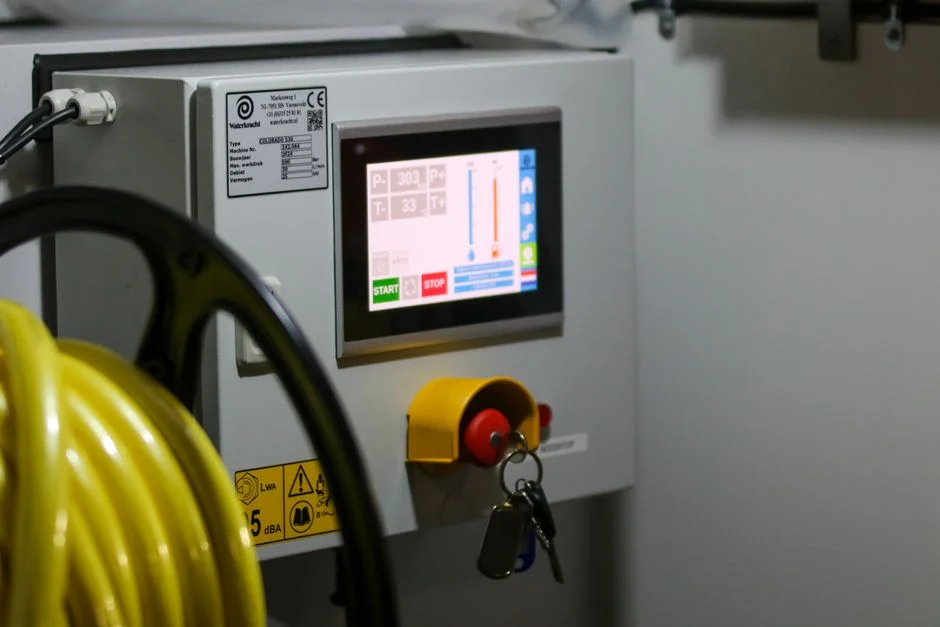
Remote monitoring and instrumentation requirements ensure operational visibility. A useful reference for the RFQ is wastewater flow and level sensor selection; require the supplier to identify sensors, ranges, signals, power supply, fail positions, calibration, maintenance and alarm functions rather than accepting an unspecified control system.
Plan sludge handling and future operating needs
The residuals plan is part of the treatment decision, not an afterthought. Specify how frequently sludge will be removed, where it will be stored, how it will be transported and which disposal route the relevant authority permits. Confirm whether removal, storage and disposal are supplier responsibilities or hotel obligations, including the cost and frequency of the chosen route.
If the purchase includes mechanical sludge dewatering, evaluate the plate and frame filter press; its catalog lists filtration areas from 1 m² to 500 m². The appropriate selection requires the supplier's calculated solids quantity, feed characteristics, operating schedule, filtrate-disposal route and cake-handling method.
Energy recovery should not be treated as a guaranteed hotel saving. An external source states that publicly owned wastewater-treatment biosolids have a calorific value of about 12 MJ/kg, but that evidence concerns US facilities and does not establish a resource-recovery case for a Gambian hotel. Any energy-recovery proposition requires its own mass and energy balance, equipment scope, operating assessment and local approvals.
Build future growth into the supplier's stated assumptions: occupancy growth, seasonal loading, additional greywater connections and any future reuse upgrade. Ask whether additional flow can be accommodated within the stated process, what equipment changes would be required and which assumptions would invalidate the original performance guarantee.
Further Reading
Frequently Asked Questions
How should a package plant be sized for a hotel without relying on room count?
Request measured or verified average and peak sewage flows in m³/day, including occupied-room and seasonal variations. The hotel sewage flow calculation must also cover kitchen, laundry, pool, spa and other greywater streams. Require the supplier to state the design average flow, peak treatment method, operating strategy and associated duty limits so that two quotations can be compared on the same basis.
When is an MBR system preferable to A/O treatment?
Consider MBR when the confirmed effluent or reuse objective requires the solids-separation performance offered by membrane technology and the hotel can support its additional process, maintenance and replacement obligations. Ask the supplier for the proposed treatment sequence, membrane specification, cleaning method, power demand, operator interventions, consumable costs and performance evidence; an A/O proposal is more defensible where those requirements are not established.
What cost information is needed for a comparable hotel wastewater budget?
Request separate prices for design, supply, freight, installation, civil works, commissioning, training, spares, warranty and identified exclusions. Also ask for chemical consumption, expected operator involvement, sludge removal and disposal, and power requirements. No verified Gambian plant price or hotel-project cost is available here, so a defensible budget requires project-specific quotations rather than a generic unit price.
Which delivery, testing and handover items should be written into the purchase order?
Write down the delivery scope, factory and shipment inspections, installation supervision, start-up, training, test flow condition, sampling protocol, parameter list, acceptance certificate and remedy for non-compliance. Also attach the approved drawings, manuals, spare-parts list, maintenance schedule, control functions, warranty and technical-support arrangements. These items establish who must provide evidence before the hotel accepts the system.