Start with the water you need to produce
An industrial reverse osmosis water treatment system in Gabon should be selected by matching the source-water analysis, required permeate quality and concentrate-disposal route to the process—not by choosing capacity first. RO uses pressure to force feed water through a semi-permeable membrane, producing permeate and a reject stream. Pretreatment must protect the membranes, while the recovery target must reflect the water chemistry and available disposal or reuse route. For an RFQ, request feed-water results, flow and operating hours, permeate targets, recovery expectations, utilities, footprint and local discharge requirements. These project-specific inputs determine the final configuration; general RO energy and recovery figures are not Gabon-specific design guarantees.
First establish whether the project needs industrial process water, purified water or wastewater reuse. Veolia identifies process-water production and wastewater recovery as RO applications. The required use determines the acceptance specification: conductivity may be sufficient for one process, while constituent limits or additional polishing may be necessary for another. Record the required permeate conductivity, any constituent limits, production rate and operating hours before asking suppliers to size equipment.
Do not use a generic energy figure as a local guarantee. A review hosted by the National Center for Biotechnology Information reports a global decrease in RO energy consumption from 20 kWh/m³ of purified water in the 1970s to 2.5 kWh/m³ today. That figure describes the cited global trend, not the expected consumption of a Gabon installation. Obtain a site-specific energy calculation using the proposed feed water, recovery, equipment and operating profile.
For a comparable RFQ format, see the industrial RO treatment route and RFQ checklist. Compare the relevant equipment scope as an industrial RO water treatment system proposal rather than as a capacity-only package.
Classify the feed water before selecting the RO route
Classify the actual feed water before accepting a treatment route. Request the feed flow, operating hours and a complete analysis covering TDS, hardness, silica, chloride, iron, turbidity and SDI. These results determine whether filtration, softening, antiscalant control or another treatment step is required; feed pressure alone cannot establish membrane compatibility.
| Discharge route or influent problem | Governing rule or process option | What data settles it |
|---|---|---|
| Suspended solids, turbidity or colloids | Require filtration and membrane-protection assessment before RO rather than assuming the RO pump can handle the feed. | Turbidity, suspended-solids results and SDI from representative source-water samples. |
| Hardness or scaling constituents | Assess softening and the need for scale-control measures against the actual hardness, silica and concentrate profile. | Complete hardness, silica, TDS and operating-temperature data, plus the supplier’s scaling calculation. |
| Iron or other metals that may foul membranes | Identify the appropriate removal step and confirm the selected pretreatment duty. | Feed iron concentration, treatment-step performance data and the supplier’s membrane-protection basis. |
| Wastewater reuse with dissolved contaminants | Determine whether RO is the recovery step and identify upstream or downstream treatment required. | Application-specific constituent limits, feed analysis and the intended reuse or discharge route. |
CRC Press describes reverse osmosis as a method for removing ions and low-molecular-weight substances, including treatment of water containing excess nitrate. That supports RO as a separation step, but it does not prove suitability for a particular Gabon feed. The supplier must show how the measured constituents affect membrane selection, pretreatment and expected concentrate composition.
For preliminary route comparisons, request a multimedia filtration option and a separate softening option: multimedia filtration equipment and industrial water softener equipment. These are candidate pretreatment stages, not default inclusions. Their necessity and duty should follow from the site analysis.
Match pretreatment to membrane protection and process risk
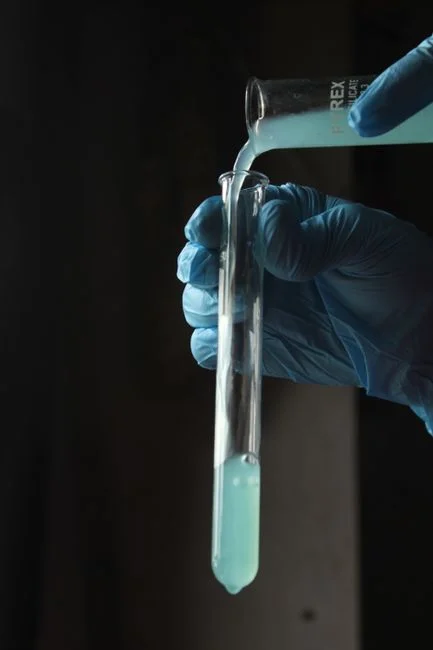
Match pretreatment to the contaminant and scaling profile, not to a preferred equipment configuration. Compare multimedia filtration, ultrafiltration and softening according to suspended solids, colloids, hardness and the risk of membrane fouling or scaling. Each option should have a stated duty, required feed data and measurable performance criterion in the quotation.
- If the feed contains material that can foul the RO membrane, evaluate UF pretreatment for RO against the measured turbidity, solids and SDI. Require the proposed UF outlet quality rather than accepting “UF pretreatment” as an unqualified description.
- If hardness creates a scaling concern, require a softening or other control option supported by the feed-water analysis and supplier calculation. Request the intended operating basis and replacement or regeneration responsibilities.
- If very low dissolved-solids polishing is required after RO, evaluate EDI separately. Do not ask the base RO skid to deliver an ultrapure-water specification unless the supplier has expressly designed and warranted it.
Veolia notes that RO can work with continuous electro-deionisation and ultrafiltration. The final pretreatment train should include interfaces, bypasses, controls, cleaning provisions and responsibility for maintaining the membrane-protection conditions agreed in the acceptance test.
Set recovery and concentrate management as one decision
Set recovery and concentrate management as one decision because increasing recovery changes the reject flow and composition. Specify recovery as a measured design objective, then request the calculation basis: feed chemistry, feed flow, permeate production, operating conditions, recovery definition and expected concentrate composition. “Maximum recovery” without those inputs is not a usable performance commitment.
The reject route must appear in the RFQ as disposal, recycling or further treatment. A review in the National Center for Biotechnology Information identifies brine generation and receiving-water contamination as major concerns, describing reverse osmosis concentrate as a brine that can cause environmental impacts when discharged into receiving waters. The buyer needs the applicable local discharge or reuse requirements before accepting a recovery figure.
| Discharge route or influent problem | Governing rule or process option | What data settles it |
|---|---|---|
| Permit discharge to a receiving environment | Do not accept recovery based on permeate demand alone; assess the reject quantity and composition against the applicable local requirements. | Expected concentrate flow and constituent concentrations, discharge point, local limits and the receiving-water assessment. |
| Concentrate returned to another process | Confirm that the receiving process can accept the concentrate flow and composition without creating another fouling or accumulation problem. | Receiving-process demand, operating hours, chemistry limits and interface details. |
| Further treatment required before disposal | Include the treatment objective and interface with RO in the same quotation where it affects recovery, cost or performance guarantees. | Required final discharge specification, proposed treatment scope, energy demand and residual-disposal route. |
| No confirmed disposal or reuse route | Treat recovery and reject handling as unresolved design conditions, not as a completed treatment route. | Written confirmation from the site owner or authority covering the permitted route and operating responsibility. |
Where the project includes a reject-stream treatment package, request its valves, controls and media or treatment duties separately. This is necessary when the RO proposal is being compared with an integrated industrial water purification route, as an omitted reject component can leave the quotation incomplete.
Turn the treatment route into a quotation and acceptance test

Compare quotations against identical acceptance criteria. Require every offer to state the feed-water basis, pretreatment duties, RO recovery basis, permeate quality, reject route, utilities, controls, testing, commissioning responsibilities and exclusions. If suppliers use different feed analyses, production definitions or recovery boundaries, their prices and guarantees are not directly comparable.
| Quote line item | Technical scope to specify | Red flags to check before signing |
|---|---|---|
| Feed-water and duty basis | Named source, complete analysis, feed flow, operating hours, production rate and required permeate specification. | “Typical” feed water is stated, or the supplier excludes responsibility for sampling and analysis. |
| Pretreatment and membrane protection | Each unit’s treatment duty, outlet criterion, controls, cleaning method and replacement or regeneration responsibility. | Filtration, softening, antiscalant or UF is included without a stated purpose or measurable outlet requirement. |
| RO recovery and permeate | Recovery definition, calculation basis, permeate flow, conductivity and relevant constituent guarantees. | Recovery is described only as a percentage, or permeate guarantees are omitted or tied to undefined feed conditions. |
| Concentrate route | Estimated reject flow and composition, discharge or reuse point, further-treatment duty and operating responsibility. | Reject disposal is excluded, or the route remains “to be advised” after contract award. |
| Utilities, controls and site interface | Power, water, drain, footprint, utilities consumption, controls philosophy and required site works. | Electrical supply, drains, connections, civil works or utility scope are undefined. |
| Testing and handover | Factory and site testing, membrane cleaning, operator training, documentation, spares, delivery terms and warranty conditions. | Commissioning responsibility, training, initial membrane replacement, spares or warranty exclusions are not stated. |
Define the acceptance test around the agreed feed conditions and permeate requirements. Identify which party verifies feed water, permeate quality and recovery, how deviations are recorded, and what corrective action applies. The water treatment commissioning timeline provides a useful planning reference, but dates, delivery terms and site access must be confirmed in the offer.
Before signature, resolve ownership of site data, membrane materials, controls, testing, operator training, spares, delivery, installation and warranty. Missing information is a commercial risk even when the quoted RO equipment is technically suitable.
Frequently Asked Questions
What inputs are needed to request a defensible industrial RO price for a Gabon project?
Request the feed-water flow, operating hours and complete analysis—including TDS, hardness, silica, chloride, iron, turbidity and SDI—plus the required permeate quality, production rate, recovery objective, utilities, footprint and reject route. Ask each supplier to state exclusions and the price basis against those same inputs. A meaningful quotation requires site-specific information rather than a generic figure.
How should a buyer select an RO supplier when sizing and compliance risk are unresolved?
Compare suppliers on the same documented duty and acceptance basis: feed analysis, permeate specification, recovery definition, concentrate route, utilities, testing and commissioning scope. Require the supplier to identify who owns site sampling, discharge permitting, installation and handover. Treat an unresolved concentrate route or undefined feed-water basis as a pre-signature compliance risk.
Does the global RO energy figure of 2.5 kWh/m³ apply to a Gabon installation?
No. The National Center for Biotechnology Information review reports 2.5 kWh/m³ of purified water as the global figure “today,” while also citing 20 kWh/m³ in the 1970s. Require a site-specific energy calculation based on the proposed feed water, recovery, equipment and operating profile.
When should EDI be added to an RO treatment route?
Add an EDI evaluation when the required permeate specification calls for very low dissolved-solids polishing after RO. Veolia identifies continuous electro-deionisation as an RO-compatible purification process. Ask the supplier to demonstrate the post-RO composition, polishing duty and final acceptance criterion; otherwise, do not include EDI as an unqualified performance item.