Choose the disposal route before selecting equipment
Domestic sewage treatment in Port Harcourt should begin with the disposal route: connect to a verified sewer, install an on-site biological treatment plant, or use treatment followed by controlled reuse or discharge. A Port Harcourt hotel study evaluated activated sludge on clay-laden soil by analysing COD, BOD, TSS, ammonia, sulphate, TDS and salinity; its truncated excerpt reports COD starting at 45mg/l but does not provide the complete final result. Buyers should compare routes using measured flows, wastewater characteristics, available land and soil, discharge obligations and maintenance capacity rather than nominal capacity alone.
For a sewer route, obtain written confirmation that a public sewer serves the property, that the connection will be accepted, and that downstream capacity can accommodate the proposed flow and wastewater characteristics. Identify the organisation responsible for connection approval, capacity confirmation and any applicable discharge criteria. A sewer appearing nearby on a plan is not sufficient evidence of connection availability.
For an on-site route, the Port Harcourt hotel study shows why wastewater characterisation should precede equipment selection. The biological treatment process evaluated was activated sludge. The reported COD starting value of 45mg/l is an initial wastewater measurement within that study, not a discharge limit and not proof of a final effluent result.
The comparison of sewer and buried A/O treatment routes provides a useful route-selection framework, but the final choice must reflect the property’s confirmed sewer access, site conditions and receiving-environment obligations.
Compare sewer, buried A/O and MBR against site conditions
Select the route that follows the confirmed disposal path and site constraints, not the route with the most equipment. Sewer discharge depends on verified network availability, connection acceptance, downstream capacity and agreement with the responsible receiving party. A buried A/O package combines anoxic and aerobic biological contact oxidation with sedimentation and disinfection in one unit for domestic or decentralised sewage duties. An MBR configuration combines activated sludge with submerged membrane filtration; its process complexity must be justified by the required separation, outlet conditions and available operating support.
| Discharge route or influent problem | Governing rule or process option | What data settles it |
|---|---|---|
| No verified public sewer at the property | Compare an on-site biological route with the receiving-party approval required for any proposed sewer extension or connection. | Written network-capacity confirmation, connection-acceptance criteria and the responsible authority’s written response. |
| Sewer exists but proposed flow or wastewater acceptance is uncertain | Do not place equipment order until downstream capacity and connection conditions are confirmed. | Average and peak flow, current discharge arrangement, sewer connection process and confirmation of downstream acceptance. |
| Space is limited and a compact installed footprint is required | Request comparison of the underground A/O package sewage treatment plant and the MBR membrane bioreactor system. | Available footprint, burial depth, groundwater level, soil conditions, maintenance access and required effluent quality. |
| Influent characteristics vary or remain untested | Use the Port Harcourt hotel activated-sludge study to define the wastewater tests needed for due diligence; it does not establish one process as universally superior in Port Harcourt. | Laboratory results for COD, BOD, TSS, ammonia, sulphate, TDS and salinity, together with representative flow data. |
Use the hotel sewage treatment comparison of A/O and MBR to frame the technical questions, but require every proposed configuration to demonstrate suitability against the actual Port Harcourt site data.
Resolve the site inputs that control equipment selection
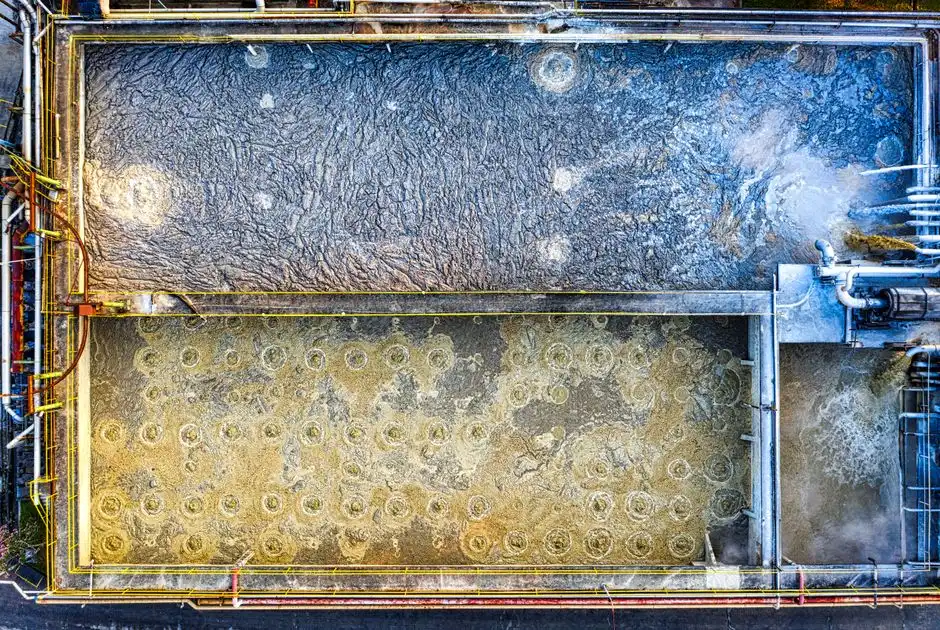
Equipment selection cannot be finalised while flow, influent and site data remain missing. Send one written information request to the property owner, consultant, laboratory and civil contractor so that quotations respond to the same basis.
- Request average and peak domestic sewage flows, flow-duration data and details of the current septic-tank or discharge arrangement. Record whether the flow estimate comes from meter records, occupancy data or another identified method.
- Obtain laboratory results for COD, BOD, TSS, ammonia, sulphate, TDS and salinity, using the parameters examined in the Port Harcourt hotel study. Include sampling dates, sampling points and laboratory accreditation details where available.
- Confirm soil conditions, groundwater level, proposed burial depth, available footprint, vehicle and personnel access, maintenance access and the route for sludge removal.
- Record power availability, the backup-power arrangement and site-access constraints. These inputs determine whether the proposed operating and maintenance concept is credible.
- Identify the receiving-water or reuse destination. Obtain the applicable criteria directly from the authority responsible for that receiving environment rather than assuming that a treatment supplier’s stated outlet specification satisfies the discharge obligation.
Request the information as a wastewater influent characterisation package. Where a value is unavailable, record it as unknown and identify the party responsible for measurement; do not allow a quotation to fill the gap with an unsupported assumption.
Build quotations around performance and acceptance criteria
Make the quotation auditable by requiring a common design basis and clear acceptance responsibilities. Each offer should identify design flow, treatment process, process-stage capacities, duty mode, footprint, utilities and installation boundaries. It should also state the influent basis, expected treated-effluent characteristics, sludge-production assumptions, maintenance tasks and monitoring included in the price.
| Quote line item | Technical scope to specify | Red flags to check before signing |
|---|---|---|
| Design basis and process capacity | State average and peak flow, duty mode, treatment stages, capacities and the wastewater characteristics used for sizing. | Capacity stated without its flow basis; average flow supplied but peak duty omitted; reused data from another site or project. |
| Treatment process | Identify the biological process, solids separation, disinfection or polishing, outlet arrangement and any controlled-reuse provisions. | Process selected from a photograph or brochure rather than the site data; no membrane or solids-handling scope where the route requires it. |
| Civil works and installation | Define excavation, foundations, pipework, access structures, power connection, backup arrangements, commissioning interfaces and site restoration. | Equipment price excludes major civil works, installation, power or commissioning without clearly pricing them as exclusions. |
| Sludge, maintenance and residuals | State sludge-production assumptions, removal interval, access provision, maintenance tasks, monitoring and the residual-water disposal point. | No responsible party for sludge removal or residual disposal; routine maintenance and consumables omitted from the commercial boundary. |
| Performance and acceptance | Define sampling points, test parameters, commissioning evidence, acceptance method and the responsibilities of supplier, contractor and buyer. | Unspecified sampling method; claim of compliance without an identified criterion; final performance value presented without complete supporting evidence. |
| Price and programme | Separate equipment, freight, installation, civil works, utilities, commissioning, training, maintenance, spares and exclusions. | Unclear exclusions, provisional sums or delivery wording that does not identify responsibility, site readiness or acceptance dependency. |
Compare A/O and MBR proposals using the same site inputs, outlet requirement and commercial scope. The packaged A/O versus MBR selection guide can support that structured comparison. Define sampling points, test parameters, commissioning evidence and acceptance responsibilities in the supply contract; the available hotel-study excerpt does not establish a universal numerical limit for Port Harcourt.
Frequently Asked Questions
Should a Port Harcourt property connect to sewer or install an on-site sewage treatment plant?
Choose sewer connection only after the network operator confirms service availability, connection acceptance, downstream capacity and the applicable wastewater criteria. If no verified sewer is available, compare an on-site A/O or MBR package with the land, soil, groundwater, access, power and receiving-water constraints.
What flow and wastewater data should be included in a packaged sewage treatment quotation?
Include average and peak flow, flow-duration information, the current discharge arrangement, and laboratory results for COD, BOD, TSS, ammonia, sulphate, TDS and salinity. Also include soil, groundwater, footprint, burial-depth, access, power, sludge-removal and residual-disposal data. State the sampling method and identify any value that remains unknown.
Which acceptance tests should be written into the equipment supply and commissioning agreement?
Specify the sampling points, test parameters, test responsibility, commissioning evidence and acceptance procedure in the contract. Use the receiving authority’s applicable criteria where an outlet is regulated. Do not adopt the study’s initial COD measurement as a final performance limit or accept an unstated performance claim.
How should a buyer compare and select a packaged sewage treatment supplier?
Compare suppliers on one common scope: design flow and duty, process configuration, capacities, outlet requirement, footprint, utilities, civil interfaces, sludge handling, maintenance, monitoring, installation boundaries, commissioning and commercial exclusions. Request written confirmation of any unverified assumption, and make price approval conditional on resolving it. No supported quotation is available here, so request itemised pricing rather than rely on an unverified price comparison.