Choose the Sewer Route or a Site-Based Treatment Plant
For domestic sewage treatment in Pokhara, select a sewer connection only after the responsible service provider confirms that a connection is physically available, legally usable and accepted for the property. Otherwise, assess an underground A/O package plant against site conditions and the required effluent quality, adding a membrane bioreactor only when its footprint, reuse value and controls justify the added complexity. A defensible quotation starts with verified flow, influent, effluent, site and operating data—not population alone.
Ask the responsible Pokhara service provider for written confirmation of the service boundary, connection requirements, connection charge basis, ownership of treatment, pretreatment obligations and discharge route. A nearby sewer or a map indicating infrastructure is not enough to treat sewerage as available.
If sewer access is absent or unreliable, use a site-based decentralized sewage treatment route only when the proposed process can meet the applicable effluent or reuse criteria and can be installed, operated and maintained at the property. Relevant guidance on decentralized domestic-sewage treatment supports the qualitative suitability of decentralized systems, but it does not establish a Pokhara design or performance value.
Do not transfer observations from “Taj Baj Khan Pokhara” to Pokhara, Nepal. That locality is in Hajipur, Vaishali, Bihar, India, so its temperature and pH observations are geographically unrelated. The comparison of sewer, A/O package plant, and MBR options provides a useful decision structure, but any Pokhara-specific conclusion still requires local verification.
| Discharge route or influent problem | Governing rule or process option | Data data settles it |
|---|---|---|
| Public or private sewer may serve the property | Use sewerage only after service availability and connection requirements are verified in writing. | Service boundary, ownership, connection charge basis, pretreatment requirement, legal discharge route and applicable approval holder |
| No dependable sewer access | Evaluate an underground A/O package sewage treatment plant for decentralized treatment. | Daily flow, peak-hour flow, influent characteristics, required effluent quality, footprint, installation depth and operating capability |
| Site-based treatment must serve a demanding discharge or reuse objective | Assess an MBR membrane bioreactor system when tighter process control and reuse requirements justify it. | Effluent and reuse criteria, available footprint, automation needs, membrane maintenance provisions, operator competence and lifecycle support |
| Local evidence is geographically mismatched | Exclude observations from Taj Baj Khan Pokhara, Bihar, India from the Pokhara design basis. | Site-specific temperature, pH, wastewater characteristics and local authority requirements for Nepal |
Match the Treatment Train to the Project
Selecting the right treatment train relies on project-specific service and site constraints rather than generic equipment labels. To bridge the gap between initial selection and execution, follow a structured verification process.
Choose the treatment train from the required service and site constraints, not from a generic equipment label. A sewer route removes the need for a decentralized treatment plant at the property, but it does not remove the need to verify connection feasibility and any pretreatment requirement. An A/O package plant is the baseline site-based option to examine; an MBR should be justified by the project’s effluent, reuse, footprint and operating requirements.
- Establish whether the sewer is available, acceptable and responsible for treating the property’s wastewater.
- Define the required effluent quality and destination before selecting a process.
- Match the process to flow, influent characteristics, land availability, installation depth and access.
- Check whether automation, reuse value and lifecycle capabilities justify an MBR rather than a simpler treatment train.
- Confirm that power, maintenance, sludge handling and operator handover are feasible.
Compare an underground A/O package sewage treatment plant with an MBR membrane bioreactor system only on the same quotation basis. Confirm whether the stated capacity represents average flow, peak flow, daily flow or a duty/standby arrangement. These are not interchangeable design bases, and a capacity figure without its operating basis cannot support sizing.
For sludge handling, define where residuals will be removed, stored and finally disposed of. Effluent quality alone does not close the treatment scope because the remaining sludge still requires a controlled route.
Build the Site-Data Pack Before Sizing Equipment
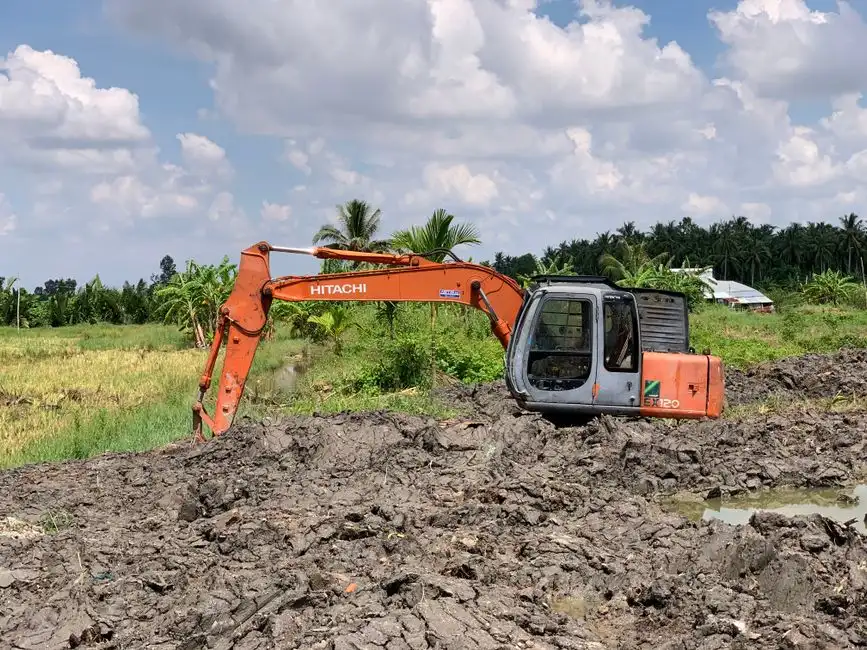
A usable site-data pack resolves design flow, treatment performance, installation feasibility, compliance and operations. The following steps ensure that equipment sizing is based on accurate site requirements rather than occupancy estimates alone.
- Establish flow and occupancy: obtain current and projected occupancy, average daily domestic sewage flow, peak-hour flow and intended expansion from the owner or design consultant.
- Characterize the influent: obtain representative laboratory results for BOD, COD, suspended solids, pH and grease-and-oil concentrations. Use a qualified local laboratory, and document the sampling conditions and dates.
- Fix the discharge and reuse requirements: confirm the effluent destination, required effluent quality, intended domestic wastewater reuse, sampling points and the authority responsible for verifying compliance.
- Survey the site: record available footprint, soil conditions, groundwater level, installation depth, delivery and maintenance access, electrical supply, backup-power requirements and flood exposure.
- Define operations: establish electrical availability, backup-power requirements, operating-staff capability, remote or local controls, routine maintenance access and the supplier’s post-commissioning support.
- Close the sludge route: define expected sludge quantity and characteristics, removal method, storage arrangement, final disposal route and any local approval requirements.
The packaged sewage treatment plant project guidance illustrates why project conditions and delivery responsibilities belong in the brief. It should not, however, be treated as evidence of climate, wastewater characteristics, authority requirements or performance in Pokhara.
Turn the Technical Scope into a Comparable Quotation
Standardizing the quotation process allows for a direct comparison of total installed costs across different suppliers. To facilitate this, move beyond equipment lists and define the full project scope.
Make quotations comparable by requiring the same design basis and an itemized installed scope. A lower equipment quotation is not necessarily lower installed cost if civil works, utilities, controls or sludge handling are omitted.
No Pokhara-specific effluent limits or treatment guarantees were established for this guide. Require the applicable discharge or reuse criteria to be attached to the quotation, together with the authority, parameter, test method, sampling point, test condition and acceptance rule. Generic statements such as “high-quality effluent” are not testable guarantees.
| Quote line item | Technical scope to specify | Red flags to check before signing |
|---|---|---|
| Design basis and process | Design flow definition, treatment process, duty arrangement, process stages, equipment dimensions and installation depth | Undefined flow basis, omitted duty mode or generic process description that cannot be checked against project requirements |
| Performance guarantee | Agreed influent and effluent parameters, test protocol, sampling points, test conditions and responsible verifier | Performance claimed without defined test conditions or unattached Pokhara discharge and reuse criteria |
| Civil and installation works | Inlet and outlet works, excavation, foundations, access, backfill, drainage and site restoration | Equipment-only price with civil works excluded or installation depth and site conditions left undefined |
| Utilities and controls | Pumping, electrical supply, controls, automation, power requirements and backup-power interfaces | Unclear utility boundaries, omitted electrical works or connections for which no party is responsible |
| Commissioning and handover | Testing, training, operator handover, documentation, warranty, spare parts and post-commissioning support | Commissioning or training excluded without a substitute responsibility, or warranty commencement left uncertain |
| Sludge handling | Expected sludge characteristics, removal, storage, disposal route and periodic service responsibilities | Residual handling excluded without identifying who owns and funds the final disposal route |
| Local approvals and support | Named responsibilities for local approvals, installation quality, response times and local service capability | Supplier and contractor roles overlap without a written responsibility matrix |
Use the domestic sewage route-selection framework to challenge exclusions, but resolve every Pokhara approval, authority and site requirement through the responsible local parties. This keeps the decision traceable and prevents a generic treatment proposal from becoming an uncontrolled installation obligation.
Frequently Asked Questions
Is sewerage available for a domestic sewage treatment project in Pokhara?
No verified evidence establishes sewer availability for a particular Pokhara property. Ask the responsible service provider for written confirmation of the service boundary, connection requirements, connection charges, treatment ownership, pretreatment obligations and applicable discharge route. Until that confirmation is received, keep both sewer and site-based treatment routes in the procurement plan.
Can equipment capacity be selected from the number of residents alone?
No. Capacity requires average daily flow, peak-hour flow, current and projected occupancy, influent BOD, COD, suspended solids, pH and grease-and-oil data, plus the required effluent criteria. Use the containerized treatment-plant sizing discussion as a question framework, not as evidence of sizing values applicable to Pokhara.
What should the purchaser do before accepting a treatment plant?
Attach documented acceptance criteria to the purchase order. They should identify the agreed influent conditions, required effluent parameters, sampling points, test method, test period, responsible verifier and remedy for non-compliance. This converts a general performance promise into a verifiable handover condition.
How can a buyer compare supplier prices for an A/O or MBR plant?
Require separate prices for equipment, civil works, inlet and outlet works, utilities and controls, installation, commissioning, training, warranty, spare parts, sludge handling and ongoing service. Request the quotation to state the design-flow basis and identify all exclusions. Then compare the complete installed scope rather than the equipment subtotal; because no supported Pokhara quotation was provided, the buyer must request project-specific pricing based on the completed site-data pack.