What decision must the site data support?
Choose an industrial reverse osmosis water treatment system in Estonia by first defining the required permeate quality, the source-water contaminants and the discharge or reuse route. RO uses pressure to force feed water through a semi-permeable membrane, producing purified permeate and a concentrate stream. In Estonia, the equipment decision should be site-specific: request feed-water analysis, flow and operating data before selecting pretreatment or recovery. Evidence shows that RO can form part of a treatment train, but it may not be the first process. A supplier should price the complete route, identify membrane-protection requirements and state measurable acceptance criteria.
Start with the intended use of the permeate: reuse in an industrial process, wastewater recovery, discharge, or another application. The procurement file should identify the required water quality, feed flow, operating-hour profile, available footprint and site utilities. It should also assign responsibility for supplying representative feed-water analysis, including conductivity, pH, hardness, silica and turbidity.
The rejected stream must have a defined route. RO separates contaminants into a concentrate stream, which may require further treatment, disposal or reuse. Do not select a recovery rate independently of that route: first ask the bidder to calculate the resulting concentrate volume and identify the required monitoring, storage and handling provisions.
Use the industrial RO water treatment system as one option within a complete treatment decision. Ask each supplier to state which water-quality parameters they used for sizing and which information remains the buyer’s responsibility.
Which treatment route fits the contaminant profile?
Select RO only when pressure-driven membrane separation can meet the required permeate quality, the feed does not require untreated biological or physico-chemical stages, and the concentrate has an acceptable route. The cited RO process removes dissolved solids and other listed contaminants; a commercial source describes its removal performance as over 99% for contaminants such as dissolved solids, organics, bacteria and pyrogens, but that is contextual information rather than an automatic project guarantee.
Landfill-leachate evidence shows why a stand-alone RO assumption can be weak. The academic review states that heavily contaminated landfill leachates require treatment before direct discharge, and that combinations of biological pretreatment followed by physico-chemical processes are used in this context. The same source identifies reverse osmosis among the processes relevant to old leachates, alongside chemical oxidation, coagulation–flocculation, precipitation, ozonation and activated-carbon adsorption. The buyer should ask which upstream steps are necessary for the actual feed, rather than copying a treatment route from another industry.
Acidity and material compatibility also need a site-specific check. An academic study on industrial condensate examined diluted condensate at a pH value of approximately 2.2. That value is a warning about the need to assess acidity and compatible materials, not a default design value for every Estonian site.
| Discharge route or influent problem | Governing rule or process option | What data settles it |
|---|---|---|
| Reuse of industrial condensate or process water | Assess whether RO is the final separation step or whether upstream conditioning is required. Use an UF pretreatment system where suspended solids or membrane-fouling risks justify it, based on the feed analysis. | Feed-water analysis, flow and operating-hour profile, required permeate quality, and evidence of the intended reuse. |
| Leachate-like water with mixed organic and inorganic contamination | Do not assume stand-alone RO. Evaluate biological and physico-chemical pretreatment, then compare the resulting feed with the RO membrane and system limits. | Raw and treated-feed analysis, contaminant loading, treatment-step performance data and the proposed process flow diagram. |
| Acidic industrial condensate | Check pH, corrosion risk and material compatibility before fixing membrane, piping, seals and treatment materials. | Representative pH measurement, temperature, chemical composition and the bidder’s material-selection basis. |
| Concentrate from the proposed RO route | Define whether it is discharged, treated further or reused. The concentrate volume is part of the process and commercial scope, not a residual detail. | Feed flow, proposed recovery rate, concentrate chemistry, available disposal capacity and applicable local discharge requirements. |
How should pretreatment and recovery be specified?
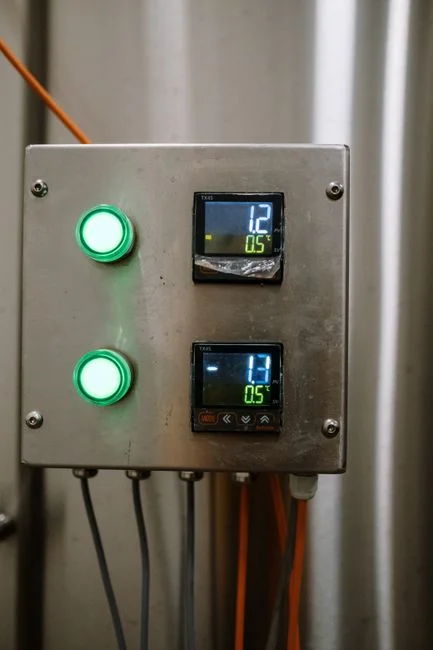
Require each bidder to link every pretreatment stage to a measured feed-water parameter and an identified membrane-protection function. Ask for the sequence proposed for the actual feed-water analysis, including filtration, coagulation or other chemical dosing, biological treatment, UF, cartridge filtration and pH adjustment where applicable. The RO and UF membrane filter elements and water-treatment parts, valves and media should be identified by function, quantity and proposed supply responsibility.
Specify recovery as a tested operating condition rather than a headline percentage. The quotation should state the feed flow, recovery definition, permeate flow and concentrate flow used for the guarantee. It should also identify storage, reuse or discharge arrangements for both streams, together with monitoring points, alarms, interlocks and automatic controls. If a bidder cannot explain how the concentrate will be handled, the route is incomplete.
Tie the recovery target to membrane maintenance and operating conditions. Ask for the membrane make and model, expected operating envelope, cleaning provisions, spare-parts list, replacement interval assumptions and maintenance access. Use the membrane-fouling troubleshooting guide to define the monitoring and cleaning information requested from the supplier.
- Obtain the feed-water analysis and operating profile.
- Identify contaminants that could foul or damage the RO membranes.
- Compare pretreatment sequences against those identified risks.
- Set recovery, permeate quality and concentrate handling as one linked design basis.
- Price membrane availability, cleaning and replacement responsibilities.
What should an Estonia-ready RFQ and acceptance test include?
Make the RFQ traceable: every equipment line should connect to a feed-water parameter, a process function, a utility requirement and an acceptance test. Request a process flow diagram, P&ID, equipment schedule, membrane make and model, duty data, controls philosophy and utility consumption. The integrated water-purification system should be presented as one possible configuration only if the bidder explains why its included stages fit the actual feed and required outcome.
| Quote line item | Technical scope to specify | Red flags to check before signing |
|---|---|---|
| Feed-water analysis and design basis | Named parameter list, sampling source, responsibility for supply, flow profile and the data used for membrane and equipment sizing. | Preliminary or assumed analysis without a defined method, sampling date or responsibility for replacement data. |
| Pretreatment train | Process flow diagram, P&ID, equipment schedule, media or membrane specifications, controls and membrane-protection rationale. | Stages are listed without design duties, guarantees or connection to the feed-water analysis. |
| RO system and membranes | Membrane make and model, feed flow, permeate flow, recovery basis, operating conditions, cleaning method and spare parts. | No membrane identification, no defined recovery basis, or performance claims without test conditions. |
| Concentrate management | Storage, discharge, further treatment or reuse route; monitoring points, alarms and required interfaces. | Reject handling is excluded or described only as “to site” without a documented route. |
| Controls and utilities | Controls philosophy, PLC or automation scope, alarms, power, water, drain and chemical connections, and utility consumption. | Electrical supply, site connections, commissioning support or utility limits are left undefined. |
| Installation, commissioning and training | Clear allocation of civil work, installation, commissioning, training, documentation and long-term spare parts. | Scope excludes anchorages, wiring, drainage, flushing, disposal of test water or operator handover without a stated remedy. |
| Performance acceptance | Contractual test methods and limits for permeate flow, permeate quality, recovery rate, leakage, noise, control response and stable operation at agreed test conditions. | Acceptance is based only on a general contaminant-removal claim. The contextual claim that RO eradicates over 99% of listed contaminants is not a substitute for project-specific limits. |
Before signature, assign the party responsible for feed analysis, pretreatment, feed-water tank, reject handling, electrical supply, installation, commissioning, training and long-term spare parts. Also confirm the applicable local discharge requirements for the intended concentrate route; do not treat a general statement about connection to a sewer as proof of direct-discharge compliance.
Further Reading
Frequently Asked Questions
What site data is required before selecting an industrial RO system in Estonia?
Request the feed-water analysis, flow and operating-hour profile, required permeate quality, available footprint, utilities, and the proposed discharge or reuse route for the concentrate. Assign the responsible party for supplying and updating that information before comparing an industrial RO water treatment system.
When is UF or another pretreatment system needed before RO?
Specify UF or other pretreatment when the feed analysis indicates a contaminant risk that the proposed RO train cannot accept. Require the bidder to identify the measured parameter, treatment objective and membrane-protection function. A RO versus UF treatment comparison can help structure the technical questions.
How should recovery rate and reject-water disposal affect the quotation?
Ask for recovery to be stated with feed flow, permeate flow, concentrate flow, test conditions and operating limits. Require the quotation to price concentrate storage, monitoring, discharge, further treatment or reuse, including the interfaces with site systems.
Which delivery, commissioning and acceptance terms should be fixed before signature?
Fix the delivery scope, electrical and utility interfaces, installation responsibilities, commissioning activities, training, documentation, spares and contractual acceptance tests. The acceptance schedule should define test methods and limits for permeate flow and quality, recovery, leakage, noise, control response and stable operation at agreed conditions.