Define the duty before selecting the RO configuration
Industrial reverse osmosis supports process-water, boiler-feed, food and beverage, and pharmaceutical applications in Eritrea, but the correct system depends on the feed-water source and required permeate quality. Seawater RO operates at up to 70 to 80 bar; therefore, feed-water testing, pretreatment, recovery, monitoring, and brine disposal must be included in the RFQ. Eritrea has limited natural freshwater sources and highly seasonal rivers, making a complete water analysis essential before selecting equipment. A modular industrial RO system is one option when its recovery and capacity match the application.
A project brief must convert the intended use into measurable requirements: required permeate flow, operating hours, application, recovery rate, permissible impurity levels, and end-use contamination limits. The available evidence identifies pharmaceutical, healthcare, food and beverage, seawater desalination, wastewater recovery, and process-water production as RO applications, but it does not establish an application-specific flow or water-quality requirement for an Eritrean site.
Request a complete RO feed-water analysis covering salinity or conductivity, hardness, silica, turbidity, SDI, iron, manganese, chlorine, and microbial indicators. Add temperature, pH, scaling indicators, and any process-specific contaminants that could affect membrane materials or product quality. A source name is not a water analysis: samples should be taken from the proposed intake and during relevant seasonal conditions.
For commercial comparison, a published range of 500–175,000 GPD provides a reference point for a commercial reverse osmosis plant. This range is not an Eritrea site requirement and cannot replace design flow or recovery calculations based on the actual feed water.
Select the feed-water route and treatment sequence
Differentiate between groundwater, seasonal-river, Red Sea coastal, and treated-wastewater duties before requesting quotations, as salinity, variability, and pretreatment demands differ materially. Eritrea’s groundwater occurs in several geological units, while most rivers are seasonal and the country has no natural fresh surface-water bodies. Do not assume that groundwater, surface water, and coastal water can share one design basis.
For a seawater screening exercise, use the stated pressure of up to 70 to 80 bar as an early constraint, then require a detailed design to confirm the configuration and high-pressure equipment. Brackish-water RO should be evaluated separately; published modular systems accommodate different feed-water qualities and single- or double-pass arrangements, with continuous dissolved-solids recovery stated at up to 80%+ by Newterra. That claim is a vendor specification, not an assumed Eritrea recovery rate.
Where suspended solids, colloids, or turbidity could threaten the membranes, evaluate multi-media filtration, UF pretreatment for industrial RO, or another justified treatment stage. If very low dissolved-solids water is required, evaluate RO followed by EDI polishing; the product catalogue describes EDI as polishing RO permeate without acid or caustic regeneration.
| Discharge route or influent problem | Governing rule or process option | What data settles it |
|---|---|---|
| Groundwater from a mapped geological unit | Design brackish-water RO only after checking salinity, hardness, silica, iron, manganese, microbial indicators, and scaling risk at the proposed abstraction point. | Source-specific laboratory analysis, seasonal sampling records, and the selected abstraction depth. |
| Seasonal river water | Evaluate multi-media filtration or UF when suspended solids, colloids, or turbidity could compromise membrane protection; include the influence of wet- and dry-season quality. | Raw-water flow and quality records across relevant seasonal conditions. |
| Red Sea coastal water | Use the stated seawater RO pressure of up to 70 to 80 bar for initial screening, then require detailed equipment and energy calculations. | Intake salinity, temperature, turbidity, microbial data, intake location, and power availability. |
| Treated wastewater | Separate this duty from natural-source RO because residual treatment requirements and end-use contamination limits may dominate the design. | Final effluent analysis, upstream treatment records, and the required industrial process-water quality. |
Set recovery, energy and monitoring requirements
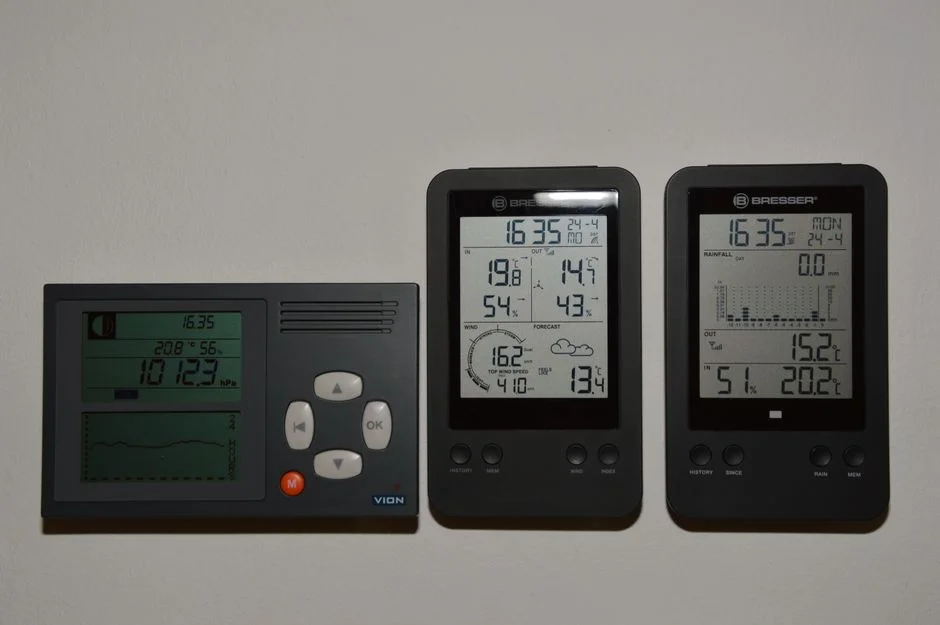
Define the operating results that control the plant, including feed flow, feed and permeate pressure, permeate flow, conductivity, and concentrate flow. These variables must be measured so the membrane modules remain within their design limits, according to KROHNE’s instrumentation guidance. Add permeate conductivity monitoring and alarms tied to the product-quality limit.
Set recovery as a supplier-guaranteed operating parameter tied to the final feed-water analysis, rather than accepting a generic percentage. A large-scale desalination study cited in the brief identifies combined solar power and RO for water demands over 25,000 m³/d, but that finding belongs to a large-scale solar-desalination study and is not a universal requirement for an Eritrean industrial installation. The project owner must document available power, operating hours, energy target, and backup arrangements.
Require automatic controls, high-pressure protection, permeate and concentrate monitoring, membrane-cleaning provisions, and safe operator access. Define who will diagnose membrane fouling, what cleaning chemicals are included, how replacement elements will be stored, and which maintenance tasks remain with the site operator. These requirements should also be covered under the supplier’s valves, media and water-treatment parts scope.
Resolve the brine-disposal route before award
Make the concentrate-disposal route a condition of award. Ask the project owner and environmental authority for the receiving water, permitted discharge point, applicable permit route, concentrate-quality requirements, and the method of recording compliance. None of those site-specific facts can be established from the available information.
The general RO process description states that reject can be disposed of or recycled, but that statement does not authorize a discharge at a specific site. Confirm whether the reject stream can enter an approved outfall, return to another process, or requires further treatment. A practical DAF system for dissolved-air flotation may need evaluation where wastewater characteristics justify it, but it should not be specified before the stream and receiving route are known.
Include collection, storage, monitoring, and final-disposal responsibilities in the RFQ. The proposal must identify what will be measured, where the sample will be taken, who will interpret the result, and what corrective action applies if the concentrate route becomes unavailable.
Do not treat a vendor’s drinking-water claim as site compliance evidence. Pure Aqua states that it designs systems to meet World Health Organization requirements, while the applicable permit and legal route still require project-specific verification. The same distinction applies to industrial process-water treatment: equipment capability does not establish discharge authorization.
Convert the technical brief into an RFQ and acceptance checklist
Require each bidder to state its feed-water assumptions, design flow, recovery rate, permeate quality, operating pressure, energy demand, membrane arrangement, and concentrate flow. A published capacity range cannot substitute for project sizing. The RFQ should also state the evidence used to select each design parameter, including the final feed-water analysis and the intended operating scenario.
Break the offer into identifiable scope lines so omissions are visible. Include pretreatment, high-pressure pumps, membrane vessels, controls, instruments, cleaning chemicals, spare membranes, commissioning, training, and maintenance documentation. Define site preparation, electrical supply, installation, permits, brine disposal, operation, maintenance, and replacement membrane supply separately; responsibility for each remains project-specific.
Make acceptance tests conditional to the final feed-water analysis. The contract should define the test duration, sampling points, instrument calibration, permeate flow and quality criteria, permeate and concentrate pressure, leakage checks, control response, operator training, and documentation. A representative test at the works does not replace site performance verification.
Use vendor claims as comparison information only. Pure Aqua states that it has over 20 years of B2B water-treatment experience; that statement does not replace local references, verification of supplied equipment, or contractual acceptance criteria. For a comparable decision sequence, the industrial RO treatment-route and RFQ checklist provides a useful structural reference, while the industrial effluent treatment selection for Eritrea remains relevant where the feed is an industrial effluent.
| Quote line item | Technical scope to specify | Red flags to check before signing |
|---|---|---|
| Feed-water and process design | Source analysis, design feed flow, recovery, permeate quality, operating pressure, energy demand, membrane arrangement, and concentrate flow. | Capacity or recovery quoted without assumptions; generic performance claims replacing calculations. |
| Pretreatment | Define whether media filtration, UF, or another stage is included, together with duties, controls, and replacement media. | “Suitable pretreatment” left undefined; media, cleaning strategy, or cartridge changes excluded. |
| Membranes and high-pressure equipment | Identify membrane elements, vessels, pump duty, materials, connections, and included spares. | Membrane material or array unspecified; operating envelope not tied to the feed-water analysis. |
| Controls and instrumentation | Require feed and permeate flow, feed and permeate pressure, permeate conductivity, concentrate flow, alarms, and automatic protection. | Critical measurements omitted; control signals and data logging excluded. |
| Concentrate management | State collection, storage, monitoring, discharge or reuse route, and permit responsibility. | Reject stream described as “disposable” without an authorized receiving point. |
| Commissioning and acceptance | Define site testing, calibration, permeate flow and quality, pressure, leakage, control-response, and training criteria. | Only a factory demonstration is required; site test conditions and acceptance limits are vague. |
| Operations and maintenance | Include manuals, operator training, cleaning chemicals, spare membranes, maintenance support, and replacement supply responsibility. | Chemicals and critical spares excluded; operating support ends at handover without documentation. |
Frequently Asked Questions
How much does an industrial RO system for Eritrea cost?
No universal site-specific price is available for Eritrea. Request a quotation using the selected feed-water analysis, required permeate flow, permeate-quality limits, recovery rate, operating hours, power supply, pretreatment scope, and brine-disposal route. Ask the bidder to show how each of those inputs affects equipment cost, energy consumption, pretreatment, controls, and concentrate management.
What water analysis is required to size an industrial RO system?
Request salinity or conductivity, hardness, silica, turbidity, SDI, iron, manganese, chlorine, and microbial indicators, together with temperature, pH, and relevant scaling and process-contaminant data. Use representative samples from the proposed source and include seasonal variation where it affects supply quality. This analysis is needed to select membranes, pretreatment, recovery, and cleaning strategy.
Should seawater or brackish-water RO be selected for an Eritrean industrial site?
Select the route from the actual source analysis, not from the site’s general proximity to the Red Sea. Evaluate Red Sea coastal water as a seawater duty, using the stated 70 to 80 bar pressure range for early screening. Evaluate groundwater or surface water as a brackish-water duty only after its salinity, hardness, silica, turbidity, iron, manganese, chlorine, and microbial indicators are known.
What should be included in an industrial RO supplier’s quotation and factory acceptance criteria?
The quotation should separately identify feed-water assumptions, design flow, recovery, permeate quality, pressure, energy demand, membrane arrangement, concentrate flow, pretreatment, pumps, controls, instruments, cleaning chemicals, spares, installation, and commissioning. Factory and site acceptance criteria should define test conditions, calibrated instruments, permeate flow and quality, pressure, leakage, control response, training, and documentation. Do not accept a capacity range or generic vendor claim in place of these measurable requirements.