Define the DAF control duty before requesting a panel
A DAF control panel for Saudi Arabia plants should automate the complete clarification sequence, not merely start a recycle pump. Define its duty from influent and chemical conditioning through pressurization, bubble release, flotation, skimming, sludge removal and treated-water discharge. Fluence describes DAF as a physical-chemical process for separating solids, grease and oils, with sludge thickening as another application. The RFQ must remain open until site data, the permitted discharge route and selected equipment establish the required functions, interfaces and acceptance tests.
Request the wastewater duty and operating philosophy before selecting the PLC architecture. For each stream, obtain the flow range, wastewater analysis, utility availability, pressure requirement, installation access and sludge route. Also identify whether the panel controls only the DAF skid or coordinates plant-wide treatment, reuse and supervisory systems.
Use the industrial DAF system with automatic skimming to establish the mechanical process scope, and use the PLC-controlled automatic chemical dosing system to define the treatment and dosing boundary. These scopes need not be identical; the selected supplier must reconcile them.
Keep two evidence categories separate. The process sequence and published DAF ranges describe operating principles. Saudi-specific requirements require project-specific confirmation: obtain the applicable permit route and discharge criteria from the project authority, and verify site electrical, control-room and installation conditions with the plant engineer.
Match wastewater conditions to automatic control functions
Map each wastewater risk to a measurable control function before issuing the I/O schedule. Fluence states that the pressurized recycle stream operates from 4 to 6 bar before mixing with incoming wastewater. Ask the supplier to identify the pressure transmitter, control valve or variable-speed drive, alarm points and sensor location that will maintain this documented range (Fluence).
Fluence identifies DAF as particularly suitable for neutral-density, buoyant or slowly settling particles. For oil and grease duties, require the supplier to confirm emulsion-breaking chemicals, polymer feed, compressed-air treatment and skimmer operation against the actual wastewater before finalizing the automatic controls (Fluence).
| Discharge route or influent problem | Governing rule or process option | What data settles it |
|---|---|---|
| Variable wastewater flow | Provide recycle-pump sequencing, compressor control, pressure regulation and automatic skid sequencing. | Peak and average flow, flow-duration profile and required operating modes. |
| Oil, grease or emulsions | Coordinate conditioning, polymer or emulsion-breaking dosing, air release and surface skimming. | Oil and grease analysis, emulsion characteristics, chemical products and dosing rates established by process design. |
| Suspended solids or slowly settling material | Use dissolved air flotation controls for clarification and surface sludge removal. | Suspended-solids analysis, particle characteristics, flow variation and treated-water objectives. |
| Tank overfill or loss of containment | Apply level interlocks, high-level shutdown and defined alarm escalation. | Level instrument locations, fail positions, tank operating limits and plant containment requirements. |
| Sludge accumulation or withdrawal failure | Include skimmer and sludge-handling interlocks with run-status indication. | Sludge route, extraction method, residual-solids duty and required handling sequence. |
Do not convert these functional requirements into unsupported performance thresholds. Obtain laboratory and operating data for suspended solids, oil and grease, COD and BOD, flow variation and chemical dosing. If the panel must guarantee a particular removal result, define that result in the performance schedule with a compliant sampling method and acceptance condition.
Set the PLC, HMI and instrumentation scope
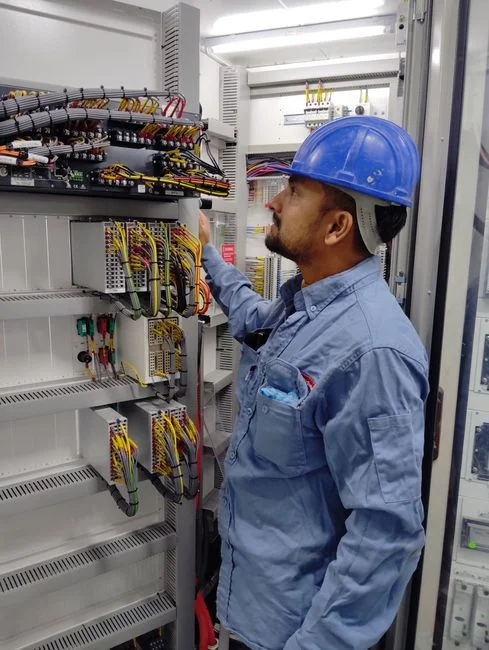
Require a written control narrative before accepting the panel quotation. It must define automatic and manual modes, permissives, interlocks, alarms, shutdowns, restart logic and the operator response after power loss. Without that document, quoted functions cannot be compared reliably.
List the PLC CPU, I/O modules, HMI, variable-frequency drives, pressure and level instruments, motor protection, isolators, panel lighting, alarms and approved power supply. Define digital, analog and communication signals for the selected recycle pump, compressor, valves, dosing skid, skimmer, sludge system and plant supervisory network. State whether the chemical-dosing package is supplied separately and define its handshake for tank low level, pump run, flow confirmation and dosing enable.
Make document handover a contractual deliverable. Request the final I/O list, control narrative, electrical and instrument drawings, as-built records, operating manual, PLC program backup and controller configuration. If source code is required, specify that requirement and the permitted use before award rather than assuming it is included.
The automatic chemical dosing package should be treated as a defined interface, not an implied accessory. Require the supplier to identify who supplies the tanks, pumps, instruments, agitators, duty/standby arrangement, local controls and PLC signals.
Build an RFQ schedule that produces comparable quotations
A comparable quotation starts with the same site-data form and scope boundaries. Attach peak and average wastewater flows, wastewater analysis, available power, compressed-air capacity, installation space, maintenance access, utilities, sludge route and desired operating modes. Ask each bidder to state which items are measured, supplied, installed, commissioned and excluded.
Fluence publishes compact DAF capacities of up to 30 m³/h to 130 m³/h for wastewater treatment. Use this only as a commercial reference point; the same source separately identifies capacities of up to 5 m³/h to 20 m³/h for digestate thickening (Fluence).
| Quote line item | Technical scope to specify | Red flags to check before signing |
|---|---|---|
| DAF equipment | Manufacturer, model, duty basis, recycle configuration, dimensions, process connections, power, voltage and control-voltage requirements. | Capacity stated without a duty basis, or model selection deferred without a dated technical submittal. |
| DAF control panel | PLC CPU and I/O, HMI, drives, instrumentation, alarms, panel materials, communications, drawings and documentation. | Functions shown only as “PLC-controlled,” with no I/O quantity, signal list or control narrative. |
| Chemical-dosing package | Tanks, pumps, duty/standby arrangement, instruments, controls, chemicals and PLC handshakes. | Package omitted from the price or supplied by a third party without an interface allocation. |
| Field instruments and site electrical work | Supply and installation boundaries, cable routes, power distribution, earthing and connections to the PLC. | Instrument supply included in one line but excluded from the control-panel price, creating a scope gap. |
| Freight, import and documentation | Shipment terms, destination, import-document responsibility, customs scope and delivery schedule. | “Delivered” price excludes import documentation, site charges or technical release. |
| Installation, training and commissioning | Site labor, testing, training, manuals, spare parts, support period and warranty response commitment. | Commissioning is stated without site utilities, travel, access, or a responsible site contact. |
Request separate prices for the DAF equipment, control panel, chemical-dosing package, field instruments, site electrical work, freight, import documentation, installation, training and commissioning. Require the quotation to identify delivery time, warranty and commissioning scope. Any price should be accepted only against a complete scope and commercial assumptions, not as a standalone panel price.
Define factory tests and site acceptance before signature
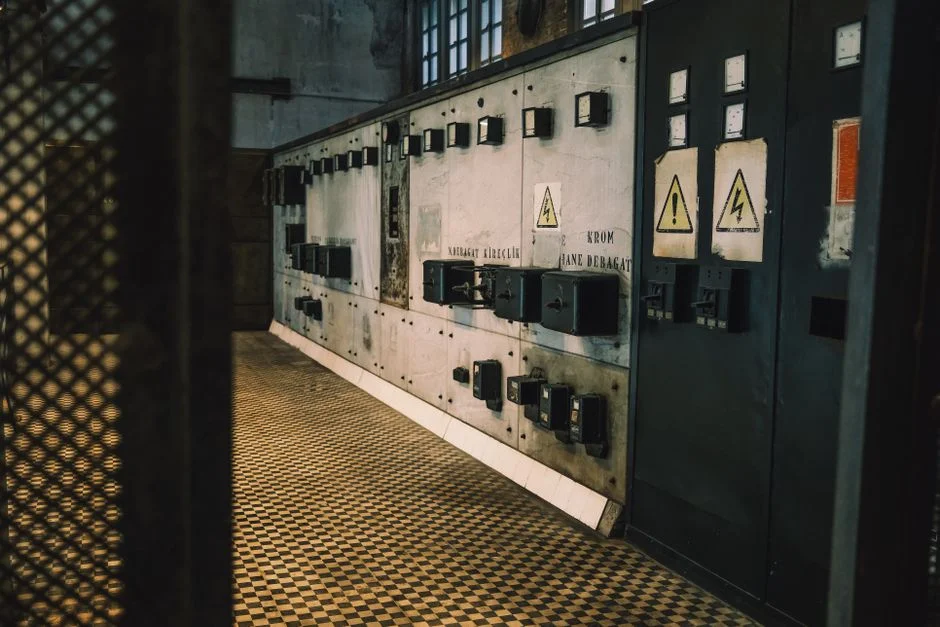
Convert control promises into witnessed tests with agreed procedures, acceptance criteria and recorded results. Factory testing should cover panel construction, wiring, power distribution, PLC I/O simulation, HMI operation, pump and drive control, instrument signals, alarms and communication with connected equipment.
Site acceptance should exercise wet operation, automatic sequencing, level and pressure interlocks, chemical-dosing handshakes, skimming, sludge withdrawal, power-loss behavior and emergency-stop response. Require the supplier to demonstrate each permissive, alarm and shutdown path against the approved control narrative rather than relying on a general statement that the system “operates automatically.”
Make closure dependent on agreed test records, punch-list completion and final operating manuals. The available process references do not establish Saudi legal acceptance thresholds; obtain the applicable project criteria from the relevant authority and receiving system, then state them in the acceptance matrix.
Attach training, recommended spare parts, warranty response time, remote-support arrangements and technical support during commissioning to the commercial schedule. The related industrial effluent plant and DAF system selection also provides useful context for defining equipment and project-support scope, but it does not replace a project-specific control and acceptance schedule.
Further Reading
Frequently Asked Questions
How much does a DAF control panel cost for a Saudi industrial plant?
Panel price depends on the selected DAF capacity and equipment, I/O quantity, variable-frequency drives, instrumentation, HMI communications, documentation, delivery and commissioning scope. There is no defensible generic price without those inputs. Request itemized quotations against the same site-data form and require separate pricing for the panel, DAF equipment, dosing package, field instruments, freight, import documentation, installation and commissioning.
How should the PLC-controlled DAF package be sized for the plant?
Size it from actual peak and average wastewater flows, wastewater characteristics, treatment objectives, utility availability and required operating modes. Fluence’s published compact-unit capacity range is a reference point, not a plant design. Require the selected model to state its process duty and recycle configuration and show how it handles the measured influent variation.
Which controls should be included in the DAF HMI and interlocks?
Request automatic and manual modes for recycle-pump sequencing, compressor control, pressure regulation, tank-level interlocks, dosing coordination, skimming and sludge handling. Require a written narrative for every permissive, alarm, shutdown, restart path and power-loss response. Also request the final I/O list and HMI screens so the operating logic can be reviewed before factory acceptance.
How can a buyer compare suppliers and reduce compliance risk?
Compare Saudi project references, factory-testing capability, commissioning resources, document handover and local support—not only quoted price. Ask each supplier to identify its Saudi compliance evidence, the applicable permit route, factory test procedure, commissioning responsibilities, warranty response and support arrangements. Confirm the project’s discharge criteria with the relevant authority and receiving system rather than inferring them from general DAF literature.