Municipal sewage treatment in Sabah still lags design intent. Only 38% of wastewater meets MSIG-aligned performance, and oxidation ponds still dominate 82% of plants (ECD Sabah 2002 survey baseline, still cited in planning). Local authorities budgeting RM 3.2M–RM 45M in 2026 must choose between land-hungry ponds and compact MBR, DAF, or package A/O trains. They also have to hit BOD, COD, and TSS limits set under the Environmental Quality (Sewage) Regulations 2009. This guide gives cost bands, compliance checks, and an equipment decision path for Sabah’s 18 local authorities.
Municipal sewage treatment gaps in Sabah: status and 2026 priorities
Sabah treats only about 38% of municipal sewage to MSIG-aligned compliance, and oxidation ponds still make up 82% of plants. Imhoff tanks cover roughly 12% of the stock and septic tanks about 6%. Advanced MBR or DAF trains remain uncommon even where coastal towns need compact secondary treatment.
Between 2000 and 2020, sewage load in Kota Kinabalu rose by 42%, pushing many suburban ponds into hydraulic overload and intermittent bypass. According to UNEP (2023), about 65% of Sabah’s wastewater treatment plants discharge to rivers or coastal waters, a pathway linked to reef stress around Tunku Abdul Rahman Marine Park. Most plants we size for West Coast towns still run at the lower end of design PE because peak tourism and wet-season infiltration arrive together.
| Parameter | Current Status (Sabah) | 2025 Target/Priority |
|---|---|---|
| MSIG Compliance Rate | 38% | >75% (Urban Centers) |
| Dominant Technology | Oxidation Ponds (82%) | Integrated A/O & MBR |
| Load Growth (2000-2020) | 42% (Kota Kinabalu) | Modular Expansion Capability |
| Discharge Risk | 65% to Coastal/Riverine | Tertiary Treatment & Disinfection |
| Primary Infrastructure Type | Decentralised/Aging | Regional Centralised Plants |
For 2026, the split strategy is clear: compact high-efficiency plants for Kota Kinabalu and Sandakan, and low-maintenance decentralised trains for districts such as Keningau and Tawau. Replacing obsolete Imhoff units with aerobic vs. anaerobic systems for Sabah’s STPs remains central to the state’s 2030 sustainability targets.
Does Malaysia Standard B require secondary treatment?
Malaysia Standard B sewage discharge for new treatment systems is a secondary-treatment duty, not a primary-settling target. Under the Environmental Quality (Sewage) Regulations 2009, new-system Standard B limits are BOD 50 mg/L, COD 200 mg/L, and suspended solids 100 mg/L. Standard A tightens those to BOD 20 mg/L, COD 120 mg/L, and SS 50 mg/L (EQSR 2009). Primary-only works such as communal septic tanks or Imhoff tanks were granted higher legacy limits only for pre-1999 approvals; they do not define the current Standard B design case.
Earlier industry summaries often quoted BOD <20 mg/L, COD <120 mg/L, and TSS <50 mg/L as the MSIG working envelope. Those numbers match Standard A for new systems. Standard B remains less stringent on concentration but still needs biological secondary treatment, with nutrient polishing when discharge enters stagnant water bodies. Standard A applies to Third Schedule catchment waters upstream of intakes; Standard B covers other inland waters and Malaysian waters (WEPA Malaysia briefing, 2025).
Sabah’s regulatory framework: MSIG design rules, ECD licences, and compliance checklist
MSIG remains the design handbook for municipal STPs, while Sabah’s Environmental Conservation Department (ECD) issues discharge licences and inspects plants under the Environment Protection Enactment 2002. Non-compliance penalties under that Enactment can reach RM 500,000. Separately, federal EQSR 2009 Reg. 26 sets a fine not exceeding RM 100,000 or imprisonment up to five years for sewage offences in jurisdictions applying the federal regulations (WEPA, 2025). Procurement teams should confirm which licence class and enforcement track applies to each receiving water.
Process design still carries hard numbers. Oxidation ponds are commonly held to an HRT of at least 12 hours for natural degradation. Mechanical plants may use about 4 hours HRT when removal performance is proven. Microbiological control near recreational or residential waters typically targets E. coli <100 MPN/100 mL. MSIG 2020 Section 6.3 still requires dewatered sludge at ≥20% dry solids before haulage, which is why a sludge dewatering to meet MSIG’s ≥20% dry solids requirement belongs in most RFPs.
SPAN’s MSIG 2025 planning update revises sewage generation from the older 225 L/person/day figure to 210 L/person/day and refreshes peak-flow factors and land-area tables. Use the newer 210 L/person/day rate for 2026 PE calculations unless the approving authority issues a project-specific override.
Procurement Compliance Checklist for Sabah STPs:
- Site Assessment: Verify soil bearing capacity and flood levels (Sabah’s high rainfall requires elevated control rooms).
- License Verification: Confirm the ECD discharge license class (Standard A vs. Standard B) based on the receiving water body.
- Design HRT: Ensure mechanical systems meet the minimum 4-hour HRT per MSIG 2020.
- Disinfection Protocol: Include MSIG-compliant ClO₂ disinfection for Sabah’s STPs in the RFP to meet E. coli standards.
- Sludge Handling: Specify equipment capable of achieving >20% dry solids content.
- Redundancy: Ensure 100% duty/standby redundancy for all critical blowers and pumps.
- Monitoring: Mandate real-time SCADA integration for BOD and TSS sensors.
- O&M Manuals: Require Bahasa Malaysia and English documentation for local operator training.
- Chemical Dosing: Specify automatic dosing systems for pH correction and phosphorus removal.
- Buffer Zones: Adhere to MSIG-mandated distance requirements between the STP and nearest residential dwelling (typically 30m–150m depending on technology).
Treatment technologies compared: oxidation ponds vs MBR, DAF, and integrated A/O
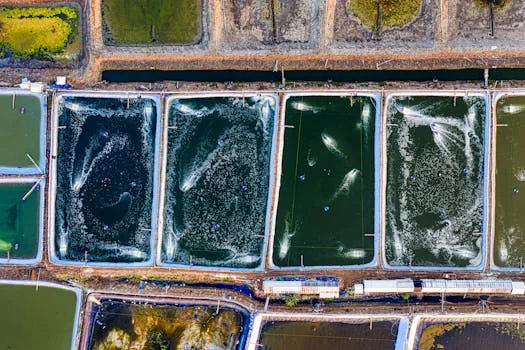
Oxidation ponds remain common because energy use is low at about RM 0.05/m³ treated. Their footprint is large: 1–2 hectares for every 5,000 PE. In urban Sabah, rising land cost makes new ponds hard to justify when Standard A catchments or reuse duties apply.
MBR plants combine biological treatment with membrane filtration and reach 95–98% BOD removal in a footprint under 10% of a pond field. Capex is high at RM 12,000–RM 18,000/PE, yet Kota Kinabalu and Sandakan upgrades often need that density. Specifying high-efficiency MBR systems for urban Sabah (Kota Kinabalu, Sandakan) keeps capacity inside existing fence lines.
DAF is most useful as pre-treatment where coastal sewers pick up FOG from wet markets and food stalls. Adding DAF pre-treatment for Sabah’s coastal STPs with high TSS/FOG loads protects aeration tanks and can push TSS removal above 90% before biology.
| Technology | BOD Removal | Footprint (m²/PE) | O&M Cost (RM/m³) | Primary Application |
|---|---|---|---|---|
| Oxidation Pond | 60–75% | 2.0–4.0 | 0.05–0.15 | Rural/Large Land Area |
| MBR System | 95–98% | 0.1–0.2 | 0.80–1.20 | Urban/Water Reuse |
| DAF (Pre-treatment) | 30–40%* | 0.3–0.5 | 0.40–0.70 | High FOG/TSS Loads |
| Integrated A/O | 85–92% | 0.5–0.8 | 0.30–0.60 | Decentralised/Housing |
| Imhoff Tank | 30–50% | 1.0–1.5 | 0.10–0.20 | Obsolete (Legacy only) |
*Note: DAF is primarily for TSS/FOG removal; BOD removal is a secondary benefit of solids separation.
For housing schemes and rural clinics, an Underground Package Sewage Treatment Plant (WSZ Series) or similar integrated A/O package offers up to about 92% BOD removal with far less land than ponds. That modular pattern mirrors Selangor’s approach to decentralised STPs and fits Sabah’s Interior and West Coast settlement pattern.
How should municipal aeration equipment be specified?
Municipal aeration equipment should be sized on measured peak oxygen demand, not catalogue PE alone. For Sabah mechanical plants, use 24-hour composite influent BOD, wet-season infiltration allowance, and duty/standby blowers with 100% redundancy. Fine-bubble grids typically need dissolved-oxygen setpoints of 1.5–2.5 mg/L in aerobic zones at design temperature; ponds relying on surface aerators should still prove the 12-hour HRT case above.
Procurement documents should lock in specific oxygen transfer efficiency at site elevation and water temperature, spare diffuser holdings, and Bahasa Malaysia O&M manuals. Energy often dominates OPEX on MBR and A/O trains at 0.8–1.2 kWh/m³. Most district plants we commission run blowers at the lower turndown band overnight; oversized fixed-speed machines waste power and strip floc.
2026 cost benchmarks for municipal STPs in Sabah
Capital cost for a 2,000 PE plant still spans about RM 8.5M for an oxidation pond to over RM 24M for a full MBR works, excluding land. Across the wider 500–10,000 PE band, published project brackets run RM 3.2M–RM 45M depending on technology. Those figures cover civil works, equipment, and commissioning under 2025–2026 tender conditions.
OPEX decides long-term affordability for local councils. Ponds look cheap until desludging every 3–5 years arrives without on-site dewatering. Mechanical plants spend more on power but cut compliance risk and sludge trucking when paired with plate and frame filter presses. Solar-assisted aeration is increasingly tendered for rural ponds with weak grid supply.
| Capacity (PE) | Oxidation Pond (RM) | Integrated A/O (RM) | MBR System (RM) |
|---|---|---|---|
| 500 PE | 3.2M – 4.5M | 4.0M – 6.0M | 8.0M – 12.0M |
| 2,000 PE | 6.5M – 8.5M | 10.0M – 14.0M | 18.0M – 25.0M |
| 10,000 PE | 15.0M – 22.0M | 25.0M – 35.0M | 40.0M – 45.0M |
Upgrade ROI is driven by avoided ECD penalties (up to RM 500,000 per event), lower sludge logistics, and protection of coastal tourism. Tourism contributes about RM 2.1 billion annually to Sabah (UNEP 2023), so chronic nearshore pollution is more expensive than the CAPEX gap between ponds and secondary plants. Hospital and clinic flows need a tighter train; see specialised treatment for Sabah’s hospital wastewater when clinical loads share the municipal sewer.
What do STP disinfection systems typically cost?
STP disinfection cost depends on dose, contact time, and whether the duty is continuous or standby. For Sabah municipal plants targeting E. coli <100 MPN/100 mL, chlorine dioxide or hypochlorite packages are usually a mid-single-digit percentage of electromechanical CAPEX, while UV skids rise with poor UV transmittance after secondary clarification. Budget contact tanks for 15–30 minutes at peak flow unless membrane effluent already meets the microbial limit.
Include automatic residual control, spare dosing pumps, and chemical storage above flood level. Coastal sites with high FOG should not dose disinfectant upstream of DAF or primary solids removal; organics consume oxidant and inflate OPEX without improving compliance.
Procurement decision tree for Sabah districts
Procurement teams for Sabah’s 18 local authorities should lock technology choice before civil design freezes:
- Characterize the Influent: Conduct 24-hour composite sampling to establish baseline BOD, TSS, and FOG levels. If the influent BOD exceeds 300 mg/L or contains high industrial FOG, pre-treatment via DAF is mandatory.
- Evaluate Land Constraints: Determine the available footprint. If the site is less than 0.2 hectares per 1,000 PE, oxidation ponds are physically impossible; MBR or integrated package plants must be prioritized.
- Assess Operator Skill: Mechanical systems (MBR/AS) require daily monitoring by certified operators. If the district cannot provide trained personnel, low-maintenance integrated A/O or enhanced oxidation ponds are the only viable options.
- Calculate Lifecycle Costs: Compare the 20-year Total Cost of Ownership (TCO). A system with higher CAPEX (like MBR) may have a lower TCO if it eliminates the need for frequent sludge hauling or expensive land reclamation.
- Verify Compliance: Cross-reference the design against MSIG 2020 Table 4.1. Ensure the RFP includes specific requirements for disinfection and sludge dry solids percentage.
"If the project site is urban with limited land and the effluent must meet Standard A (BOD <20 mg/L) → Select MBR. If the site is rural with available land and low operator availability → Select Integrated A/O or Enhanced Oxidation Ponds."
Package A/O units such as the integrated A/O systems for Sabah’s rural and decentralised STPs sit in the middle of that tree. Use them when land is tight but full MBR OPEX is not justified.
Who this is for / Next step
Sabah local-authority engineers, EPC designers, and procurement officers sizing 500–10,000 PE municipal plants are the primary readers. Buyers chasing only industrial effluent packages or Peninsular IWK takeover projects should look elsewhere. If you need a PE-based equipment list and Standard A/B compliance check for a live Sabah site, request a municipal STP quote with influent data and land constraints attached.
Frequently Asked Questions
What is the largest STP in Malaysia?
The Pantai 2 Sewage Treatment Plant in Kuala Lumpur is currently the largest, serving about 1.42 million PE with a capacity of 320,000 m³/day. In Sabah, the largest municipal reference commonly cited is the Kota Kinabalu STP at roughly 50,000 PE. Capacity claims should always be checked against the current operating licence and actual connected PE, because tourism and sewer extensions change the duty year to year.
Does Standard B mean only primary treatment is enough?
No. For new sewage treatment systems, Standard B still requires secondary biological treatment to meet BOD 50 mg/L, COD 200 mg/L, and SS 100 mg/L under EQSR 2009. Primary units alone were tolerated mainly under legacy approvals for older septic and Imhoff plants. If the discharge point falls in a Third Schedule catchment, design to Standard A instead (BOD 20 mg/L, COD 120 mg/L, SS 50 mg/L).
What sewage system model does Sabah use?
Sabah relies mainly on decentralised municipal plants and septic systems managed by local councils under ECD oversight, not the Peninsular Indah Water Konsortium franchise model. About 60% of Malaysia overall is often described as centralised under IWK, but that figure is Peninsular-weighted. Sabah buyers should plan O&M staffing and spare parts locally rather than assuming a national operator will absorb the asset.
How much does a 1,000 PE STP cost in Sabah?
Based on 2025–2026 benchmarks scaled from the 500 and 2,000 PE tables, a 1,000 PE STP in Sabah typically lands between about RM 6M and RM 12M. Lower figures suit integrated A/O packages on rural housing sites. Higher figures cover MBR trains on tight urban plots with stricter land and reuse constraints, excluding land purchase.
What disinfection budget should a municipal STP carry?
Plan disinfection as a dedicated electromechanical package with residual control, not a token dosing pump. For E. coli limits near <100 MPN/100 mL, chlorine dioxide or hypochlorite with 15–30 minutes contact at peak flow is the usual municipal path; UV needs clearer secondary effluent. Coastal FOG sites should complete solids and oil removal first so oxidant demand stays predictable.
Further Reading
Explore these in-depth articles on related wastewater treatment topics: