Choose the treatment route from the project design basis
Choose between a buried WSZ A/O package plant and an MBR system by matching the confirmed design flow and influent characteristics to the required treated-water quality, reuse or discharge route, site constraints and operating resources. Do not select from population or footprint alone. A defensible residential wastewater package plant quotation should begin with measured or contracted sewage flow, wastewater sampling, a defined effluent objective and site investigations. If those inputs are incomplete, request a budgetary quotation with explicit assumptions rather than treating it as a fixed design.
Obtain the design population, daily sewage flow and peak factor from the developer or consultant. A population estimate identifies the project scale, but it does not establish hydraulic capacity. Request the daily flow basis, contributing population and occupancy assumption, wet-weather allowance and expected peak profile.
Provide influent COD, BOD, suspended solids, grease, salinity and pH, supported by sampling at representative times. State the required treated-effluent quality and whether the water will be reused for irrigation, discharged through an approved route or both. Treated wastewater reuse irrigation requires a defined application, otherwise the supplier cannot select a treatment and disinfection train or demonstrate suitability.
Confirm the available footprint, excavation depth, soil conditions and groundwater level. These inputs affect excavation, buoyancy control, access, lifting, corrosion protection and the civil-interface risk of a buried installation. Compare a buried WSZ A/O package plant with an integrated MBR wastewater treatment system only after those constraints are documented.
WSZ or MBR: compare the conditions that change the decision
Select MBR when the project needs a compact treatment footprint, a high-quality effluent train or irrigation reuse that requires tighter solids separation than a conventional A/O route. Select WSZ where the site can accommodate the buried civil works, the operator can service the process without membrane handling, and the required effluent and reuse objectives can be met by A/O treatment.
The local reference case supports MBR feasibility but does not create a universal residential requirement. S5 documents a 100 m³/day physical-treatment-plus-MBR wastewater plant at Djibouti University that started up in 2019 and remained operational; its effluent water was used for irrigation inside the university premises. That installation establishes an operating reference in Djibouti, not a flow or effluent standard for another development.
Use the decision variables in this fillable route-selection matrix. Replace each missing entry with a measured value, consultant calculation, approved requirement or supplier assumption that must be resolved before price comparison.
| Discharge route or influent problem | Governing rule or process option | What data settles it |
|---|---|---|
| Design flow and hydraulic peaks | Both routes must be sized for the confirmed wastewater-generation basis and expected peak profile. | Daily flow, peak factor, contributing population, occupancy pattern and wet-weather allowance |
| Buried installation and groundwater exposure | WSZ transfers more excavation, burial, access and site-work interfaces to the civil package. | Available footprint, excavation depth, soil report, groundwater level and access for lifting and maintenance |
| High-grade reuse or irrigation objective | MBR may be preferable where membrane separation and a compact treatment train support the specified reuse route. | Reuse application, required effluent parameters, disinfection requirement and approving authority |
| Operation and maintenance capability | WSZ depends on routine access, inspection and sludge removal; MBR adds membrane cleaning and replacement obligations. | Operator competency, attendance expectations, maintenance access, spare-parts strategy and remote-support capability |
| Power and control requirements | Compare connected load, backup-power expectations, controls and automatic operating modes for the proposed duty arrangement. | Electrical supply, generator provision, duty/standby concept and control-panel requirements |
For the wider comparison method, use the A/O versus MBR packaged treatment comparison as a question checklist, not as evidence of site performance in Djibouti. Also require bidders to explain any proposed treatment stages rather than quote only a product name.
Use Djibouti reuse and commissioning evidence to set expectations
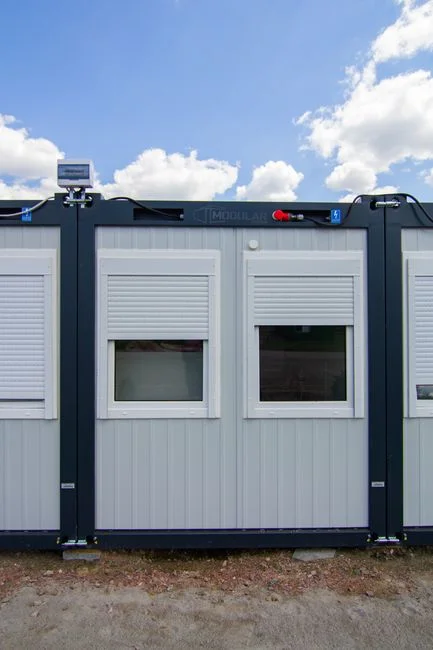
Commissioning demonstrates hydraulic and biological performance with actual wastewater rather than confirming that the equipment starts. S4 states that raw-wastewater commissioning channels wastewater through every treatment unit, verifies hydraulic and biological performance, and initiates gradual startup and adjustment of operating settings.
The same S4 account says gradual ramp-up is intended to verify biological stability, optimize efficiency and prepare the units for long-term operation. Translate that into three contractual stages: startup, biological stabilization and performance demonstration. The supplier should state how influent sampling, operating logs, effluent testing and corrective actions establish completion of each stage.
The reuse objective also requires a defined receiving application. S4 reports that the Douda capacity extension is intended to enable treated-water irrigation of over 400 hectares. That is the scope of the reported extension; it does not establish an irrigation-water limit or prove suitability for a private residential scheme.
Permit due diligence belongs in site development. S2 states that EIAs for wastewater treatment plant components are required by national legislation. The buyer needs a named person to confirm the applicable approval and EIA-screening pathway, including discharge authorization, reuse conditions and any environmental submission required before equipment release.
Use containerized sewage treatment plant sizing in Djibouti to assemble site and compliance inputs, and the containerized sewage treatment sizing method to test whether the bidder has calculated capacity and hydraulic response rather than copied a catalogue flow.
Build the RFQ scope before comparing supplier prices
A comparable quotation must allocate technical inputs, civil interfaces, approvals, commissioning obligations and exclusions. Ask each bidder to state design flow, process route, unit count, treatment stages, duty/standby arrangement, power demand, control philosophy and proposed dimensions.
Specify who performs surveys, obtains permits and completes EIA screening, and who designs and constructs foundations, excavation, burial, pipework, electrical supply, fencing and access roads. Installation supervision, local civil works, freight to Djibouti, customs responsibilities, commissioning attendance, training, O&M documentation, initial chemicals and consumables, membrane replacement, spare parts and warranty support must be explicit line items or stated exclusions.
| Quote line item | Technical scope to specify | Red flags to check before signing |
|---|---|---|
| Design basis and process selection | Design flow, peak basis, influent characterisation, treatment stages, duty/standby concept and proposed effluent use | Flow is stated only from population; no influent data; no explanation of why the selected route meets the reuse or discharge objective |
| Equipment and dimensions | Unit count, treatment stages, control philosophy, connected power, dimensions, access and lifting provisions | Equipment dimensions are not coordinated with the site plan, access route or civil works |
| Survey, permits and EIA screening | Named responsible party, site information required, approval pathway and approval conditions | Environmental approval or discharge/reuse permission is deferred until after order |
| Civil works and installation | Excavation, foundations, burial, pipework, electrical supply, fencing, lifting, local labour and site supervision | “Delivery complete” excludes installation, commissioning or civil works |
| Commissioning and training | Startup, stabilization, performance testing, operator training, attendance duration and required records | Commissioning is limited to a power-on demonstration without actual wastewater |
| Performance guarantee and exclusions | Contract flow, agreed effluent parameters, test protocol, remedies and list of excluded costs | Unverified discharge limits are adopted; freight, membrane replacement or warranty travel is omitted |
| Spare parts and O&M support | Recommended spares, replenishment lead times, chemicals, cleaning materials, technical support and warranty terms | No local support plan or no defined membrane and consumables replacement responsibility |
Require proposed performance guarantees and a test protocol covering hydraulic capacity and the agreed effluent parameters. Do not import an unverified discharge limit into the RFQ. Until the receiving authority confirms the route, write the requirement as the project’s agreed treated-water specification and identify approval as a condition precedent where necessary.
Set acceptance tests and handover requirements
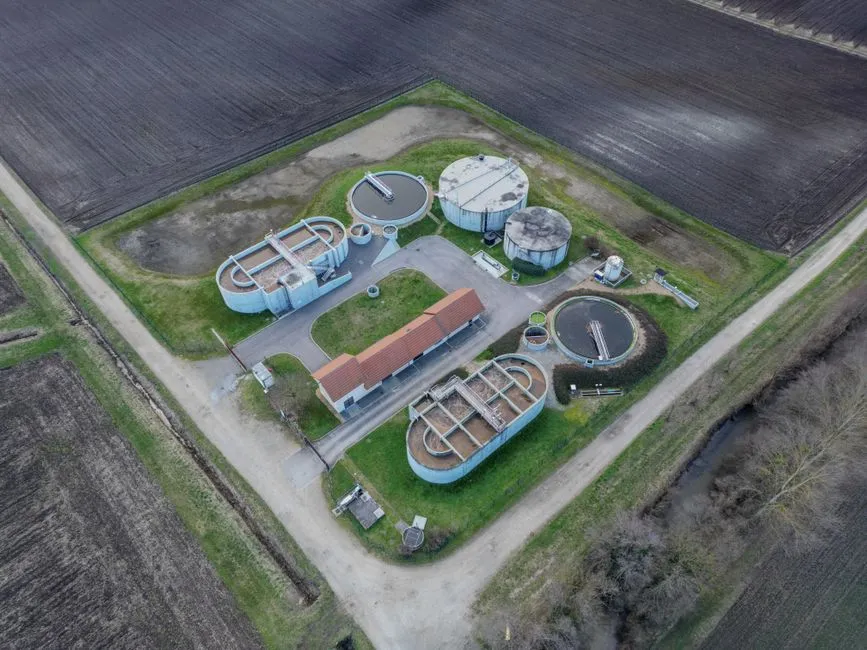
Final acceptance demonstrates that the complete installed train operates stably at the contract design flow and produces the agreed treated-water quality. Include leak and functional checks, demonstrations of automatic controls, stable operation, sampling and signed test records. A supplier’s statement that the plant is commissioned is not sufficient without operating evidence.
For MBR, require confirmation of membrane area, cleaning methods, replacement provisions, fouling monitoring and the operating indicators used to trigger intervention. For WSZ, require safe access, lifting provisions, inspection openings and a defined sludge-removal arrangement. These checks distinguish a maintainable installation from equipment merely delivered to site.
Handover should include commissioning records, operating manuals, as-built drawings, PLC settings, training records, spare-parts lists, test certificates and the warranty or support agreement. The maintenance reference for wastewater equipment maintenance practices can structure the O&M schedule, but the supplier must provide project-specific intervals for the offered equipment.
Before releasing the equipment order, the buyer’s named representative, the consultant and the supplier should verify who will obtain local approvals and confirm the applicable reuse or discharge route. The consultant should also close out site inputs against the selected process and check that the civil works match the manufacturer’s installation requirements.
Frequently Asked Questions
How should a Djibouti residential project size a packaged sewage treatment plant?
Start with confirmed daily wastewater flow and peak factor, not population alone. Request representative influent sampling for COD, BOD, suspended solids, grease, salinity and pH, then apply the measured design basis to the selected process. Require the bidder to show the unit count, treatment stages and hydraulic response. The request for a containerized sewage treatment sizing method should return calculations and assumptions that can be independently checked.
When is an MBR system preferable to a WSZ A/O package plant?
MBR is suitable when the specified reuse or discharge objective requires a compact train with membrane solids separation, particularly where excavation and footprint are constrained. WSZ may be more appropriate when A/O treatment meets the confirmed objective and the site can support its excavation, burial, access and sludge-removal arrangements. S5 documents a 100 m³/day physical-treatment-plus-MBR plant at Djibouti University that started in 2019, remained operational and used its effluent for irrigation within the premises, but that reference does not decide another project’s route by itself.
What should a supplier quotation include for delivery, installation and commissioning in Djibouti?
Require separate pricing or explicit exclusions for freight to Djibouti, customs responsibilities, delivery route, installation supervision, local civil works, electrical supply, commissioning, training, initial consumables, spare parts and warranty support. Also require the supplier to identify who handles site surveys, permits, EIA screening and discharge or reuse approval. Compare quotations only after these responsibilities and exclusions have been normalized.
Which performance tests and handover documents should the buyer require before acceptance?
Require hydraulic testing at the contract flow, effluent sampling against the agreed treated-water specification, leak and functional checks, automatic-control demonstrations and evidence of stable operation of the complete train. Accept handover only with commissioning records, operating manuals, as-built drawings, PLC settings, training records, spare-parts lists, test certificates and the executed warranty or support agreement. For MBR, add membrane-area confirmation and fouling-monitoring records; for WSZ, add access, lifting, inspection and sludge-removal verification.