Establish the Treatment Route Before Choosing Equipment
For domestic sewage treatment in Biratnagar, first establish whether the property can connect to a reliable sewer and what effluent route must be used. If it cannot, compare an underground A/O package plant with MBR treatment: A/O suits straightforward biological treatment with sedimentation and disinfection, while MBR is relevant when a compact installation or very low suspended solids are priorities. A 2024 Nepal review reports that more than 85% of urban households rely on onsite sanitation and have limited access to septage treatment facilities, but it does not establish Biratnagar-specific site conditions or discharge limits. The quotation should therefore begin with measured flow, receiving conditions, available land, soil and groundwater constraints, and sludge-disposal arrangements.
Use national context without treating it as a property finding
The Nepal-wide review identifies insufficient sewer coverage, deficient treatment and sludge-disposal facilities, and inadequate treatment infrastructure. Its more-than-85% figure concerns urban households nationally and reflects a review that drew on material from government organizations, research, review articles and reports published from 1999 to 2023. It does not prove that a particular Biratnagar property lacks sewer access, nor does it establish the capacity, reliability or legal status of a local connection.
Ask the municipal or relevant utility office for written confirmation of the sewer service zone, connection point, ownership and condition of the lateral connection, available flow capacity, connection charge and required approval. If the response is only informal or the receiving sewer lacks proven capacity, treat on-site treatment as the working route for evaluation.
Document the existing septic tank, soakage pit, pumping arrangement and any stormwater connections. Biratnagar’s fecal-sludge collection and disposal problems are evidence of a citywide sanitation-management issue, not proof that a particular packaged plant or MBR system will operate successfully at the site. For the broader route logic, see the Nepal sewer versus A/O treatment comparison.
Compare Sewer, Underground A/O and MBR Routes
Choosing the correct disposal method requires a rigorous comparison of available infrastructure against site-specific constraints. Choose sewer disposal first when a reliable, permitted connection is available. Otherwise, compare an underground A/O package treatment plant with an MBR membrane bioreactor system using the required discharge route, footprint and operating constraints—not a generic claim that one technology is always better.
A/O biological treatment is a sensible first option for conventional domestic treatment where the process can provide biological treatment, solids separation and the required disinfection stage within the available footprint. An MBR domestic wastewater system merits comparison when compact equipment arrangement and a low suspended-solids outcome are central priorities. These are selection logic statements, not claims of guaranteed performance: the required effluent characteristics and test protocol must come from the confirmed receiving conditions.
A small-plant study from Kyiv National University of Construction and Architecture describes proposed domestic sewage facilities for individual homes and similar sites without centralized sewer networks, including gravity collection without electricity. Use that work as design context only; its proposed constructions and stable sanitary environment are not a Biratnagar performance guarantee.
| Discharge route or influent problem | Governing rule or process option | What data settles it |
|---|---|---|
| A legal, reliable sewer connection is available | Evaluate sewer discharge before investing in packaged treatment. | Written utility confirmation of connection availability, sewer capacity, connection conditions and the property’s legal route to the receiving network. |
| No reliable sewer is available and conventional biological treatment is adequate for the receiving route | Evaluate an underground A/O package sewage treatment plant. | Measured flow, treatment-stage requirements, footprint, soil, groundwater, access, power and the required effluent characteristics. |
| Footprint or solids separation is the controlling constraint | Compare MBR treatment against A/O at the same duty and receiving conditions. | Required footprint, process-stage list, membrane maintenance provisions, utilities, operator requirement and acceptance criteria. |
| Existing septic-tank effluent requires treatment or septage remains in the scope | Define the influent boundary and fecal-sludge handling route before selecting equipment. | Tank drawings, pump details, septic-tank effluent characteristics, collection responsibility, transport route and approved disposal arrangement. |
Collect the Site Inputs That Change the Selection
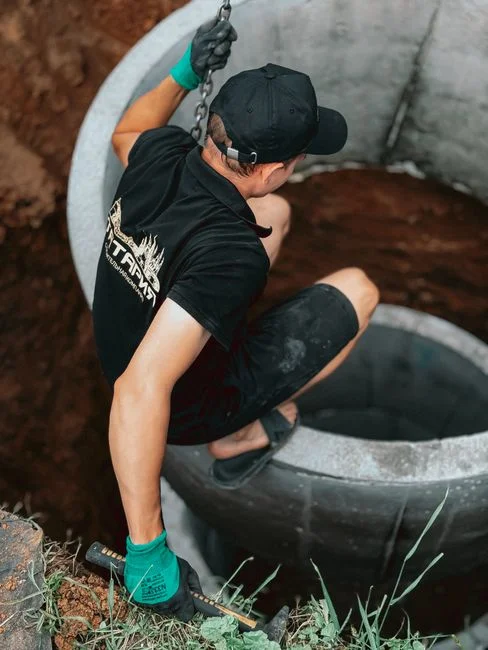
Obtain measured flow rather than sizing from occupancy alone. The quotation request should state average and peak domestic sewage flow in m³/day, the contributing population or occupancy basis, and the current septic-tank, soakage-pit and pumping arrangement. Obtain flow records from the property owner or operator rather than copying a generic domestic wastewater design figure.
Define the receiving environment next. Record the intended discharge point, whether it is a sewer, surface-watercourse, irrigation route, soakaway or another approved destination, and the physical conditions affecting the discharge. Identify the responsible local authority and ask for the applicable approval route and permit evidence. Do not apply a generic national limit or another jurisdiction’s effluent specification to the project without confirmation.
Complete the physical-site brief with the available footprint, underground services, access route for excavation and equipment delivery, soil boring information, groundwater observations, flood-level constraints, electrical supply and operator-maintenance limitations. Ask the civil surveyor and geotechnical investigator for the drawings or reports needed to support those statements.
Separate septage management from the treatment package. Name who will inspect, dewater, remove, transport and dispose of sludge, and identify the approved receiving facility and required records. Equipment for domestic sewage treatment in Biratnagar cannot close this obligation by itself.
Specify the Quotation and Performance Tests
Issue one integrated RFQ with a clear battery limit. Require the bidder to state the process basis, design flow, treatment-stage list, equipment schedule, drawings, utility requirements, controls scope, installation boundary and commissioning plan. The quotation should identify which civil works, process connections, controls, sampling points and safety provisions are included or excluded.
Make sludge handling an explicit line item. Request expected sludge-generation basis, removal frequency, dewatering and storage provisions, operator training, spare parts, maintenance intervals and continuing technical support. Ask who owns the routine service visits and membrane or media inspection where applicable.
Set acceptance around the agreed design flow, clarified and treated-effluent characteristics, automatic-control operation, alarm response and stable operation under a written test protocol. Performance-guarantee values and acceptance limits should be agreed after the jurisdiction, discharge route and site data are confirmed because no Biratnagar numerical effluent specification is established here.
| Quote line item | Technical scope to specify | Red flags to check before signing |
|---|---|---|
| Process and equipment basis | Design flow, treatment stages, equipment schedule, drawings, utilities, controls and performance-test method. | No flow basis, omitted stage, unidentified equipment or a performance claim without a defined test protocol. |
| Civil works and installation boundary | Excavation, foundations, backfill, pipework, electrical supply, access, sampling points and site restoration. | Equipment price shown as a turnkey installation while civil work, utilities or connections remain unassigned. |
| Sludge and septage handling | Generation basis, storage, removal, dewatering, transport and approved disposal responsibility. | Sludge disposal or periodic collection is left as an unpriced future obligation. |
| Commissioning and acceptance | Pre-start checks, training, test flow, effluent sampling, controls demonstration, alarm response and handover records. | Acceptance is subjective, relies only on start-up, or is deferred to a generic performance guarantee. |
| Operation and support | Preventive maintenance, inspection intervals, spare parts, technical support and named service responsibilities. | No maintenance schedule, operator qualification requirement or membrane/media replacement responsibility. |
Plan Installation, Commissioning and Long-Term Operation
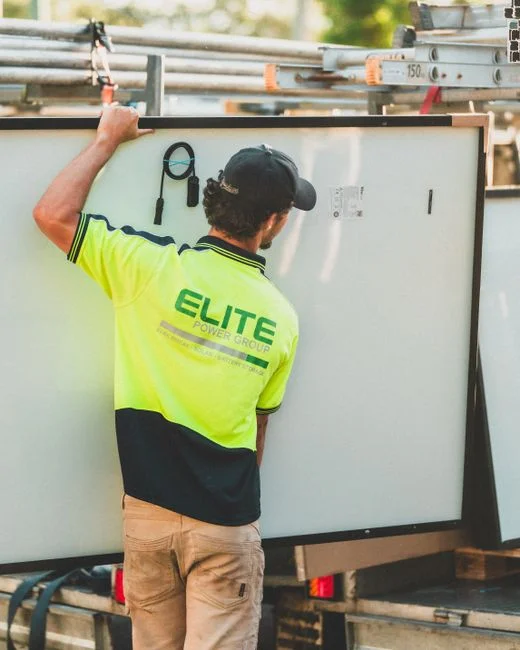
Confirm the delivery method before accepting the layout. An underground package plant requires excavation, lifting, burial and site restoration; a mobile above-ground arrangement changes the civil and access requirements but may have different space and protection needs. Ask for excavation details, lifting plan, delivery route and reinstatement responsibility.
Assign interfaces clearly. The supplier should define equipment, controls, internal process connections, sampling points and equipment-specific safety provisions; the civil contractor should define excavation, supports, external pipework, electrical interfaces and site restoration. Confirm power availability and required operator involvement rather than assuming unattended operation.
Before handover, complete operator training, maintenance schedules, membrane or media inspection where applicable, sludge-removal arrangements and emergency-response responsibilities. The small-plant study’s gravity collection without electricity is useful design context, but it does not establish Biratnagar applicability or remove the need for local geotechnical, electrical and operational verification.
Further Reading
Frequently Asked Questions
Can an A/O package plant be used for domestic sewage treatment in Biratnagar without a sewer connection?
Yes, it can be evaluated as an on-site route when a legal discharge route is available and the site data support the required process and installation conditions. Ask the municipality or receiving authority to confirm the permitted effluent destination, then obtain flow measurements, soil and groundwater information, available footprint and power arrangements before selecting the package. A package plant does not itself authorize discharge or solve sludge disposal.
When is MBR preferable to an A/O package plant?
MBR should be compared with A/O when compact treatment and very low suspended solids are central priorities, but the decision must follow the receiving conditions and required guarantees. Request both bids on the same measured flow, footprint, discharge specification and acceptance protocol, including membrane maintenance and replacement responsibilities. Also compare the A/O versus MBR packaged sewage treatment considerations.
What information is needed for an accurate domestic sewage treatment quotation?
Provide average and peak flow in m³/day, occupancy, current septic-tank and pumping details, the proposed discharge point, applicable approval requirements, footprint, access, soil, groundwater, flood level, power and operator availability. Also define who will remove, transport and dispose of sludge. These inputs let suppliers establish the process basis, installation boundary and acceptance test rather than quote an unidentified unit.
What delivery, commissioning and acceptance services should be included?
Require delivery and installation responsibilities, civil-work exclusions, utility interfaces, operator training, maintenance documentation, spare parts, start-up checks, test-flow procedures, effluent sampling, controls and alarm demonstrations, and handover records. Pricing should be requested against these defined items, with the MBR membrane bioreactor system scope stating its own commissioning and service boundaries. Do not accept a handover certificate without an agreed test protocol.