Industrial Wastewater Treatment in Mwanza 2025: Engineering Guide with Costs, Compliance & Equipment Checklist
Industrial wastewater treatment in Mwanza requires systems that meet Tanzania Bureau of Standards (TBS) effluent limits while handling high organic loads from slaughterhouses, food processing, and textiles. The Mwanza City Slaughterhouse (MCS) facility, for example, achieved 97.4% BOD5 removal and 158.2 m³/day biogas production using a biodigester-aeration-clarifier-wetland system. This guide provides 2025 compliance parameters, cost benchmarks ($0.8M–$3.2M for 50–300 m³/h systems), and technology comparisons tailored to Mwanza’s industrial sectors.
Mwanza’s Industrial Wastewater Challenge: Compliance, Costs, and Case Studies
The Tanzania Bureau of Standards (TBS) enforces the TZS 866:2020 standard, which mandates strict effluent limits for any facility discharging into public sewers or the Lake Victoria basin. Mwanza’s industrial landscape—dominated by fish processing, textile manufacturing, and large-scale slaughterhouses—faces unique challenges due to the high protein and fat content in effluents, which can quickly overwhelm conventional municipal systems. The Mwanza Urban Water Supply and Sanitation Authority (MWAUWASA) is currently expanding its sewage infrastructure (2023–2025 plan), but this expansion comes with increased pressure on industries to implement robust pre-treatment systems to avoid heavy surcharges or service disconnection.
For exporters, particularly fish processors shipping to the European Union, compliance is not merely a legal requirement but a market access necessity. Failure to meet environmental standards can lead to the revocation of export licenses. The cost of non-compliance in Mwanza typically ranges from TZS 5 million to 50 million per violation, depending on the severity of the discharge and the sensitivity of the receiving water body. the operational risk of a shutdown due to environmental non-compliance can cost a medium-sized textile mill upwards of $10,000 per day in lost production.
| Parameter | TBS TZS 866:2020 Limit | Typical Raw Effluent (Mwanza) | Required Removal Efficiency |
|---|---|---|---|
| BOD5 (mg/L) | < 30 | 1,200 – 2,500 | 97.5% – 98.8% |
| COD (mg/L) | < 100 | 3,000 – 6,000 | 96.7% – 98.3% |
| TSS (mg/L) | < 50 | 800 – 1,500 | 93.8% – 96.7% |
| Ammonium (mg/L) | < 10 | 150 – 300 | 93.3% – 96.7% |
| FOG (mg/L) | < 10 | 300 – 800 | 96.7% – 98.8% |
The Mwanza City Slaughterhouse (MCS) serves as a regional benchmark. By integrating anaerobic digestion with aerobic polishing and constructed wetlands, the facility transitioned from a pollution source to an energy-positive asset. This integrated approach is increasingly necessary as Mwanza’s industrial zones become more densely populated, limiting the availability of land for traditional stabilization ponds.
How Mwanza’s Slaughterhouse Wastewater Treatment Works: A Unit-by-Unit Breakdown
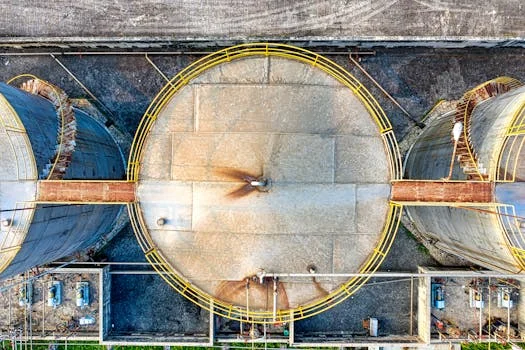
The Mwanza City Slaughterhouse (MCS) utilizes a multi-stage treatment train designed to handle extreme organic fluctuations, where BOD5 levels can peak at 2,500 mg/L during high-slaughter days. The process begins with a biodigester, which functions as the primary anaerobic stage. With a hydraulic retention time (HRT) of 24 to 36 hours, this unit achieves a biogas yield of 0.3–0.5 m³ per kg of COD removed. In Mwanza’s tropical climate, maintaining a mesophilic temperature range (30°C–38°C) is achievable without external heating, optimizing the 60–65% methane content in the produced biogas.
Following anaerobic treatment, the wastewater enters an aeration unit. For the high humidity and temperature of the Lake Victoria region, diffused aeration systems are preferred over surface aerators to maintain a dissolved oxygen (DO) level of 1.5–2.5 mg/L while minimizing energy consumption (typically 0.3–0.5 kWh/m³). This stage is critical for the nitrification of ammonium, which is prevalent in slaughterhouse blood and wash-water. For facilities with limited footprints, an underground wastewater treatment system for space-constrained sites in Mwanza can house these aerobic processes efficiently.
The clarifier (or secondary settler) follows the aeration tank. To manage the high solids load, a surface loading rate of 0.8–1.2 m/h is maintained. Lamella clarifiers are often employed here to increase the effective settling area without increasing the physical footprint. The final polishing occurs in constructed wetlands planted with Phragmites australis and Typha latifolia. These wetlands provide an HRT of 5–7 days, ensuring the removal of residual nitrates and phosphates through plant uptake and microbial denitrification. For pre-treatment of fats and oils before these biological stages, a high-efficiency DAF system for FOG and TSS removal in Mwanza’s industrial wastewater is essential to prevent clogging of the wetland media.
| Treatment Unit | Primary Function | Key Performance Metric | Mwanza Site Advantage |
|---|---|---|---|
| Biodigester | COD reduction & Biogas | 90%+ COD removal | High ambient temp aids digestion |
| Aeration Tank | BOD & NH4 removal | DO 2.0 mg/L average | Nitrate reduction for lake safety |
| Clarifier | Solids separation | Sludge recycle 75% | Compact footprint designs available |
| Constructed Wetland | Nutrient polishing | 90% NH4 removal | Low O&M, uses local vegetation |
Choosing the Right Wastewater Treatment Technology for Mwanza’s Industries
Selecting the appropriate technology in Mwanza depends on the specific industrial sector, available land, and the desired level of water reuse. For fish processing facilities near the lake, the primary challenge is high concentrations of fats, oils, and grease (FOG). Dissolved Air Flotation (DAF) is the industry standard here, often achieving 90% FOG removal before the effluent reaches biological stages. Understanding how DAF systems perform in tropical climates like Mwanza’s is vital for sizing the saturation tanks and air compressors correctly to account for lower oxygen solubility at higher temperatures.
Textile mills, such as those in the Nyakato industrial area, require specialized treatment for reactive dyes and heavy metals. A combination of coagulation-flocculation followed by DAF or sedimentation is necessary. pH adjustment is critical; reactive dyes often require a pH shift to 9–11 for effective precipitation. Conversely, breweries benefit most from anaerobic systems like the Upflow Anaerobic Sludge Blanket (UASB), which handles their high COD-to-BOD ratio effectively while generating significant biogas for boiler fuel.
For facilities where land is at a premium, an MBR system for near-reuse-quality effluent in Mwanza’s water-scarce industrial zones offers the highest performance. While MBR has a higher capital expenditure (CAPEX) than wetlands, it produces water suitable for non-potable reuse (cooling towers, floor washing), which significantly reduces MWAUWASA water bills. When deciding between biological paths, engineers must weigh aerobic vs anaerobic treatment for Mwanza’s high-organic-load wastewater, often concluding that a hybrid approach—anaerobic for bulk COD removal and aerobic for TBS-compliant polishing—is the most cost-effective.
| Industry Type | Recommended Technology | Effluent Quality (BOD) | Land Requirement |
|---|---|---|---|
| Slaughterhouse | Anaerobic + Aerobic + Wetland | < 25 mg/L | High (5-8 m²/m³/d) |
| Textiles | Chemical DAF + Aerobic | < 30 mg/L | Medium (2-4 m²/m³/d) |
| Fish Processing | DAF + MBR | < 10 mg/L | Low (0.5-1 m²/m³/d) |
| Brewery | UASB + Aerobic Polishing | < 20 mg/L | Medium (1.5-3 m²/m³/d) |
TBS Compliance Checklist: Effluent Limits, Sampling, and Permit Requirements for Mwanza
Achieving compliance with TBS TZS 866:2020 requires a systematic approach to monitoring and reporting. The first step is obtaining an Environmental Impact Assessment (EIA) certificate from the National Environment Management Council (NEMC), followed by a discharge permit from the Lake Victoria Basin Water Board. These permits specify the volume and quality of water allowed for discharge. It is critical to use PLC-controlled chemical dosing for TBS compliance in Mwanza’s industrial wastewater to ensure that pH and coagulant levels are maintained within the narrow bands required for effective treatment.
Sampling protocols are strictly enforced in Mwanza. Facilities are generally required to conduct daily pH and temperature checks, while BOD, COD, and TSS must be analyzed weekly by a TBS-accredited laboratory. In Mwanza, the Tanzania Bureau of Standards Laboratory and certain university labs provide these services. It is recommended to use composite sampling (taking samples over a 24-hour period proportional to flow) rather than grab sampling to provide a true representation of the facility's discharge, especially for industries with batch processes like textiles or breweries.
Compliance Checklist for Mwanza Industrial Facilities:
- Discharge Permit: Valid permit from Lake Victoria Basin Water Board with updated flow rates.
- Sampling Schedule: Weekly BOD/COD/TSS analysis; daily pH and DO monitoring.
- Disinfection: Installation of a chlorine dioxide generator or UV system to ensure fecal coliform levels remain below 1,000 CFU/100 mL.
- Sludge Management Plan: Documented agreement with a licensed waste hauler for disposal at designated landfill sites or approved agricultural reuse.
- Redundancy: Spare parts for critical components like aeration blowers and dosing pumps to prevent total system failure during maintenance.
Cost Breakdown and ROI for Industrial Wastewater Treatment in Mwanza
Capital investment for industrial wastewater treatment in Mwanza varies significantly based on technology. A standard DAF and aerobic system for a fish processing plant typically costs between $15 and $25 per m³ of daily capacity. In contrast, an MBR system, while offering superior water quality, ranges from $30 to $50 per m³. For large-scale slaughterhouses, the integration of a biodigester increases CAPEX but provides a significant return through energy recovery. Regional benchmarks, such as Uganda’s industrial wastewater treatment requirements and cost benchmarks, show similar pricing structures across the East African Community.
Operational and maintenance (O&M) costs in Mwanza are influenced by electricity tariffs (averaging $0.12–$0.15/kWh for industrial users) and the availability of treatment chemicals like polyaluminium chloride (PAC). O&M typically ranges from $0.20 to $0.50 per m³ of treated water. Sludge disposal is an emerging cost; landfill fees in Mwanza range from TZS 50,000 to 100,000 per ton. However, for slaughterhouses, the conversion of sludge into organic fertilizer can offset these costs, provided pathogen limits meet TBS agricultural standards.
The Return on Investment (ROI) for these systems is driven by three factors: energy recovery, water reuse, and fine avoidance. At the MCS facility, 158.2 m³/day of biogas translates to approximately 350 kWh of electricity potential daily. At current tariffs, this saves the facility over $1,500 per month in energy costs. When combined with the avoidance of TBS non-compliance fines (up to TZS 50M), most well-engineered systems in Mwanza achieve a payback period of 4 to 7 years. Financing is available through the Tanzania Investment Bank (TIB) green loans, which offer competitive interest rates (8–10%) for environmental infrastructure projects.
| Cost Component | Estimated Range (USD) | Notes for Mwanza Context |
|---|---|---|
| CAPEX (50-300 m³/h) | $800,000 – $3,200,000 | Includes civil works and equipment |
| OPEX (per m³) | $0.20 – $0.50 | Power, chemicals, and labor |
| Sludge Disposal | TZS 50k – 100k / ton | Lower if composted for agriculture |
| Payback Period | 4 – 7 Years | Faster with biogas or water reuse |
Frequently Asked Questions
What are the specific TBS limits for discharging into Lake Victoria?
Discharges into the Lake Victoria basin must adhere to the most stringent TZS 866:2020 standards, specifically BOD < 30 mg/L and COD < 100 mg/L. Total Phosphorus (< 2 mg/L) and Total Nitrogen (< 10 mg/L) are also strictly monitored to prevent eutrophication.
Can we reuse treated industrial wastewater for our factory processes?
Yes, but the level of treatment must match the reuse application. For floor cleaning or cooling towers, MBR-treated water is usually sufficient. However, for direct contact with food or fish products, additional RO (Reverse Osmosis) treatment and TBS certification are required.
How much biogas can a slaughterhouse in Mwanza realistically produce?
Based on the MCS case study, you can expect 0.3 to 0.5 m³ of biogas per kg of COD removed. For a facility processing 200 cattle per day, this can generate enough energy to cover 70-100% of the treatment plant's electricity needs.
Is chemical dosing always necessary for textile wastewater?
In most cases, yes. The dyes and metals in textile effluent are often in a dissolved or colloidal state that biological treatment alone cannot remove. Coagulation and flocculation are required to aggregate these particles for removal via DAF or sedimentation.
Are there local technicians in Mwanza to maintain these systems?
While basic maintenance can be handled by factory engineers, specialized equipment like MBR membranes or DAF compressors often requires quarterly service from certified vendors. It is recommended to choose a provider with a service presence in East Africa to ensure spare parts availability.