Confirm the Wastewater Route Before Choosing Equipment
Select a hospital wastewater treatment and disinfection system in Burundi by first confirming where the water will go and separating hazardous streams. Next, obtain stream-specific flow and laboratory data, compare an MBR with package treatment, then match final disinfection to the discharge or reuse destination. The evidence supports this workflow but does not establish a Burundi-specific permit, approval authority or numerical effluent limit, so each project must verify those requirements locally before final specification.
Separate general sewage from laboratory wastewater, pharmacy and chemical waste, radioactive wastewater, kitchen flows, laundry flows and other high-risk discharges before designing a hospital sewage treatment plant. WHO guidance states that hazardous liquids and chemical wastes must not be discharged directly to sewer, while medical-laboratory wastewater requires separate collection and appropriate pretreatment. Depending on the waste, pretreatment may include sediment filtration, acid–base neutralization or autoclaving, as described in the review of hospital wastewater management.
Do not treat a connection to a municipal sewer as proof that the same acceptance criteria apply to direct discharge. The project engineer must request the Burundi discharge authorization, identify whether the receiving point is a sewer or surface water, obtain the applicable effluent limits and confirm which authority approves the design. Similar route-setting questions are examined in the Solomon Islands route-and-equipment comparison and the Nauru hospital equipment decision guide; neither establishes Burundi requirements.
| Discharge route or influent problem | Governing rule or process option | What data settles it |
|---|---|---|
| Discharge to a municipal sewer | Confirm sewer entry conditions and whether separate hospital pretreatment is required before connection. | Burundi permit or approval letter, sewer-entry requirements, receiving authority contact record and applicable discharge limits. |
| On-site treatment followed by surface-water discharge | Define treatment and disinfection objectives against the confirmed receiving-water and authorization conditions. | Discharge point, seasonal conditions, downstream water use, locally applicable limits and required monitoring frequency. |
| Treated-water reuse | Specify the intended use before selecting biological treatment and final disinfection. | Reuse application, source-protection requirements, water-quality targets and approval conditions; do not assume non-potable reuse is automatically permitted. |
| Laboratory, chemical or radioactive streams | Collect separately and apply appropriate pretreatment; do not rely on the general hospital plant. | Stream inventory, composition, hazardous constituents, generation frequency, storage limits and locally approved handling method. |
Match the Treatment Process to the Wastewater Profile
Hospital effluent is a variable mixture that may contain pathogens, pharmaceuticals, antibiotic-resistance genes, heavy metals and radioactive material; its intrinsic toxicity has been reported as 5–15 times greater than urban effluent by the hospital wastewater management review.
- Request average and peak flows separately for wards, laboratories, kitchens, laundry and clinical wastewater.
- Obtain influent and final-effluent analyses covering COD, BOD, suspended solids, pH, nutrients, residual disinfectant and microbiological indicators.
- Add site constraints: available footprint, soil conditions, drainage route, flood exposure, electrical reliability, operator skills, spare parts and technical support.
- Compare candidate process trains against those inputs and the confirmed discharge or reuse specification.
An integrated MBR wastewater treatment system is a candidate where biological treatment, solids separation and a compact high-quality effluent are required. Process objectives, footprint, membrane maintenance and residual treatment must be confirmed by analysis. The 30 m³/day West African MBR hospital case study provides a useful reference for site data and acceptance discussions, but its flow and conditions are not transferable to a Burundi project.
A compact package plant may suit a smaller hospital or clinic where the verified wastewater profile, footprint and operating resources support it. The stated compact Medical & Hospital Wastewater Treatment System uses multi-stage filtration and ozone disinfection and occupies a footprint as small as 0.5 m², according to the supplied product information. For preliminary screening, an underground hospital package treatment plant can be compared with above-ground MBR and small medical-unit options, but final sizing still requires flow and wastewater analysis.
Use the Cameroon hospital wastewater treatment challenges to frame local operational constraints, not as a substitute for Burundi site data. Conventional treatment can leave persistent pharmaceuticals such as carbapepam and sulfamethoxazole, and a Frontiers review calls for integrated, location-specific treatment. That supports requiring removal objectives for project-relevant contaminants rather than assuming that bulk COD removal also addresses antibiotic-resistance genes or micropollutants.
Select a Disinfection Barrier That Fits the Treated Water
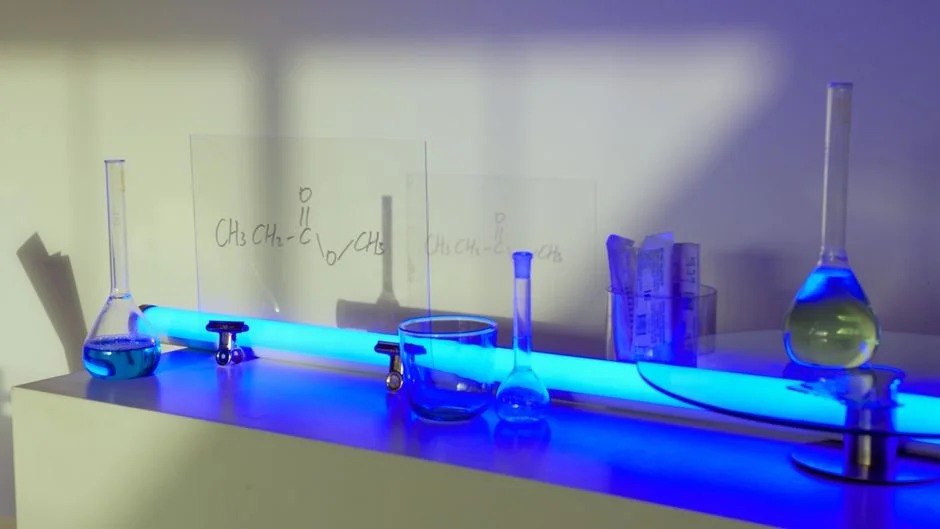
A 2026 MDPI review identifies chlorine, chlorine dioxide, ozone, ultraviolet irradiation, electrochemical treatment and combined multi-barrier schemes as relevant approaches, while noting by-products, energy use, residual protection and matrix effects.
UV offers chemical-free disinfection without disinfection by-products or taste change, making it a candidate where residual chemicals are undesirable. An open-channel or self-cleaning UV configuration should be assessed against final flow, transmissivity, fouling, lamp maintenance and power reliability. UV provides no persistent disinfectant residual, so the reuse and downstream-discharge route determines whether another barrier is needed.
The stated ClO₂ generator range spans 50–20,000 g/h and includes automated configurations for hospital-effluent disinfection. Select neither output nor dose from generator capacity alone: request final flow, required dose, target residual, contact arrangement, chemical supply and local permit conditions. Chlorine-based options require review of by-products, chemical storage and residual control; chlorine dioxide and ozone also require equipment-specific monitoring and safety provisions.
Do not validate hospital effluent disinfection with a single indicator. The 2026 review notes that culture methods may underestimate viable but non-culturable organisms, while molecular assays detect genes without directly proving infectivity or transfer potential. Require activity-informed, multi-indicator verification using the methods agreed for the project. The review gives typical treatment-performance expectations of ≥3–5 log reduction for bacterial indicators and ≥2–4 log reduction for viral surrogates where disinfection performance is required; these are not Burundi discharge limits and must be converted into project-specific acceptance criteria.
Build the Request for Quotation and Site Acceptance
Issue a quotation request only after the route, separated streams and preliminary process route are defined. Ask each supplier to identify the design basis rather than quoting a universal flow: average and peak stream flows, wastewater analyses, discharge or reuse destination, applicable Burundi approvals, pretreatment, treatment objectives, process train, disinfection, controls, utilities, sludge handling, commissioning, monitoring, training, warranty and spares.
Require the quotation to state exclusions and assumptions. A package price without civil works, electrical connection, freight, consumables, operator training or maintenance support is not directly comparable with a delivered and commissioned scope. Use the regional hospital wastewater treatment guide for Dakar for the structure of the specification request, while applying only approvals and acceptance criteria verified for Burundi.
| Quote line item | Technical scope to specify | Red flags to check before signing |
|---|---|---|
| Design basis and performance | Separate design flows, analyses, treatment objectives, receiving route and locally verified acceptance criteria. | A universal flow or effluent claim without supporting analysis, a named receiving route or project-specific criteria. |
| Medical wastewater pretreatment | Stream segregation, laboratory and chemical pretreatment, containment and controls for sludge or concentrated residues. | Assumes all hospital wastewater can enter one plant without stream-specific assessment. |
| Treatment and disinfection equipment | Process stages, duty basis, disinfection type, controls, instruments, redundancy and utilities. | Equipment offered from peak flow alone, with no contaminant data or final-effluent basis. |
| Installation and commissioning | Civil works, foundations, drainage, power connection, connections, installation, testing, startup performance and handover documents. | Freight or installation excluded without stating who supplies it; no acceptance test or operating documentation. |
| Operations and lifecycle support | Chemicals and consumables, preventive maintenance, operator training, spare parts, remote or local technical support and warranty. | No named support channel, no local spare-parts plan or maintenance cost basis. |
Frequently Asked Questions
How much does a hospital wastewater treatment and disinfection system in Burundi cost?
Request a site-specific quotation rather than a generic unit price. Give suppliers the separated stream flows, wastewater analyses, discharge or reuse route, applicable Burundi approvals, footprint and utility conditions, then require itemized pricing for equipment, freight, installation, civil works, power connection, commissioning, chemicals, training, maintenance and spares. Without those inputs and a confirmed scope, a defensible price cannot be stated.
Should we select an MBR, an A/O package plant or a small medical treatment unit?
Use preliminary screening only until the design basis is complete. Choose an MBR when the verified objectives require a compact, high-quality biological treatment and solids-separation train and the site can support membrane operation; consider package treatment where its treatment train matches the analysis, footprint and operating resources; consider a compact medical unit for a smaller facility with compatible wastewater and sufficient space. Final sizing requires average and peak flows plus COD, BOD, suspended solids, pH, nutrients, microbiological and relevant contaminant data.
How should a supplier demonstrate that the system meets the required performance?
Require startup performance testing against acceptance criteria written into the contract, using locally verified discharge or reuse requirements. The supplier should define sampling points, test methods, operating conditions, monitoring instruments and handover documentation. Treat the ≥3–5 log bacterial and ≥2–4 log viral-surrogate expectations from the 2026 review as design references only, not as Burundi limits.
What compliance documents should be checked before selecting a supplier in Burundi?
Request the discharge authorization, identified approving authority, receiving-sewer or surface-water conditions, applicable limits and any reuse approval from the relevant Burundi authority. Then ask the supplier to map each equipment, monitoring and documentation item to those verified conditions. A generic certificate or a reference to another country’s permit is not enough to demonstrate project compliance.