Choose the discharge route before selecting equipment
Hospital wastewater treatment and disinfection system selection in Bosnia and Herzegovina should begin with the discharge route and the composition of each stream, not with a generic package size. Hospital effluent may contain pharmaceuticals, disinfectants, metals, radionuclides and pathogens; academic literature reports that its intrinsic toxicity can be 5–15 times that of urban effluent (S5). If hazardous or radioactive streams are present, the literature recommends separate collection and pretreatment. After confirming flow, wastewater analysis, discharge destination and local permit conditions, compare municipal-sewer pretreatment, a compact package plant or an MBR system, with disinfection selected for the treated wastewater and receiving route.
The first decision is whether the hospital will discharge indirectly through a municipal sewer or directly to the environment. Obtain the point-of-discharge details from the sewer utility or competent environmental authority. The utility or authority must confirm the applicable connection conditions; general guidance from other jurisdictions cannot be treated as a Bosnia and Herzegovina permit requirement. The hospital wastewater treatment engineering and compliance guide provides a useful framework for separating technical treatment requirements from local authorization.
Keep two tests separate. Effluent criteria define the quality that must be achieved at the permitted discharge point. Hydraulic flow and contaminant loading determine the capacity and process stages needed to achieve that result. A plant can satisfy a stated effluent specification while still being undersized if peak flow or peak loads were omitted from the design basis.
The Circular Materials Flow Hub is a relevant project lead for potential local contacts and initiatives, but the available information does not identify its treatment technology or establish a discharge requirement for this hospital. Do not infer a system type or permit condition from that lead. Request the actual decision document from the authority responsible for the proposed receiving point.
| Discharge route or influent problem | Governing rule or process option | What data settles it |
|---|---|---|
| Indirect discharge to a municipal sewer | Pre-treatment and connection are conditional on the sewer utility’s requirements; a downstream biological plant may receive hospital-derived inhibitory compounds. | Written sewer acceptance conditions, connection point, permitted discharge quality, authority responsible for enforcement, and confirmation of whether hospital wastewater requires dedicated pretreatment. |
| Direct discharge to a receiving water | Specify the complete treatment and disinfection train against the confirmed direct-discharge criteria, rather than treating the sewer route as an alternative. | Exact receiving-water category, point of discharge, applicable Bosnian permit or decision, effluent limits, monitoring conditions and any reuse objective. |
| Package treatment at the hospital | Use a compact treatment route where it fits the confirmed duty, available footprint, operating capability and disposal route for residuals. | Average and peak flow in m³/h, wastewater analysis, hazardous-stream map, utilities, available footprint and residual-handling arrangements. |
| MBR treatment at the hospital | Consider an MBR membrane bioreactor wastewater treatment system where its treatment scope fits the required effluent quality and site constraints. | Organic and solids loading, nutrient objectives, hydraulic peaks, membrane or solids handling, operator capability, footprint and the confirmed receiving route. |
Map hazardous streams before sizing the main plant
Map and segregate hazardous streams before the main hospital wastewater treatment and disinfection system is sized. Hospital wastewater can contain pharmaceutical residues, pathogens, chemical reagents, radionuclides and other harmful substances (S5). The literature also identifies antibiotics, cytotoxics, their metabolites and X-ray contrast media as significant hospital-effluent hazards. Their presence and concentration must be established rather than inferred from the fact that the facility is a hospital.
Ask the pharmacy and laboratory managers for an inventory of pharmaceuticals, disinfectants, solvents, metals, cytostatic agents, iodinated contrast media and radionuclides, together with estimated concentrations and generation points. The cited guidance calls for separate collection and pretreatment of medical-laboratory wastewater; it identifies possible measures including sediment filtration, acid–base neutralization or autoclaving (S5). Whether any one measure is appropriate depends on the substance inventory, laboratory processes and the confirmed disposal route.
Do not allow radioactive wastewater to enter the ordinary treatment train. The guidance summarized in S5 calls for separate collection until radioactivity has decreased to a safe limit, with release after relevant radionuclide therapy managed under the applicable rules. Obtain the hospital’s radiation-protection records and the authority’s release criteria rather than setting a decay period in the equipment specification.
Identify ward sources that may contribute disproportionately to toxicity. S5 reports that urine and faeces from certain wards contribute around 50%–80% of total toxic discharge concentration to hospital wastewater. Use that finding to target sampling and segregation; it does not replace ward-level flow and concentration measurements.
Request a representative influent analysis from the hospital engineering lead and laboratory lead. It should cover pH, BOD, COD, TSS, total nitrogen, total phosphorus, oil and grease, conductivity and microbiological indicators. Add flow monitoring by ward, laboratory, laundry, kitchen and dialysis unit. For planning only, S5 cites 400–1200 L of wastewater per bed per day for a hospital in a developed country and 200–400 L per capita per day for developing countries; neither value is a Bosnia-specific design flow and neither should replace metered site data.
Compare package-plant, MBR and pretreatment options
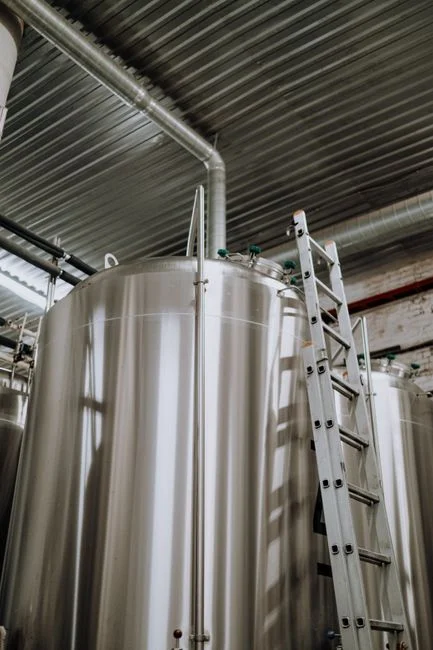
Choose the process by the required effluent result, hydraulic and contaminant duty, hazardous-stream segregation, site constraints and residual-management route. A compact package plant may suit a smaller medical facility where automated operation and a limited footprint are the controlling priorities. An MBR route may be appropriate where the confirmed treatment scope requires the separation and solids-retention functions associated with that process. Neither should be selected from a brochure before the wastewater analysis and discharge criteria are available.
For a smaller medical facility, request a comparison of a compact treatment unit incorporating ozone disinfection against the alternatives allowed by the site data. The hospital wastewater treatment route and equipment guide and the hospital wastewater MBR route and equipment explanation can support an internal technical comparison, but their locations do not define Bosnian permit conditions.
Compare disinfection by the treated-water requirements, installation constraints, chemical handling and receiving-water considerations. For chemical disinfection, request the operating parameters, residual-monitoring arrangement, safety controls and chemical supply implications of a hospital effluent chlorine dioxide disinfection system. For UV, request source duty, reactor configuration, fouling controls, UV intensity monitoring and the effect of variable flow and wastewater quality. If either method is proposed, the supplier must demonstrate the proposed configuration against the agreed duty; do not infer a Bosnia-specific limit from another jurisdiction.
Include hazardous-liquid and chemical-waste exclusion in every quotation. The literature states that direct discharge of hazardous liquids and chemical wastes—including photochemicals, aldehydes, colorants and pharmaceuticals—to the sewer is prohibited under the cited WHO-based guidance (S5). The hospital must therefore document how those streams are collected, pretreated, manifested and transferred. The main plant’s scope must state whether it receives them or excludes them.
Build the equipment RFQ and acceptance schedule
Make the hospital wastewater RFQ comparable by assigning every missing input to an owner and an acceptance document. A quotation should be based on measured average and peak flow, wastewater analysis, the hazardous-stream map, the discharge route, utilities, footprint, soil, groundwater, reuse objective and confirmed local permit. An equipment list without those attachments is not a basis for final selection.
Require each supplier to state the design duty, pretreatment requirements, process stages, materials of construction, controls, disinfection method, sludge handling, utility consumption, spare parts, commissioning tasks and warranty scope. Require payment or handover to depend on documented acceptance results against the agreed effluent criteria and hydraulic duty. Also price O&M routines, consumables, training, support arrangements and the spare-parts schedule.
| Quote line item | Technical scope to specify | Red flags to check before signing |
|---|---|---|
| Design basis and flow | Average and peak flow in m³/h, flow-duration information, occupancy basis and unit-by-unit wastewater contributions. | Equipment selected only by bed count, no peak-flow calculation, or no stated method for reconciling meter data with the design duty. |
| Influent and hazardous-stream analysis | pH, BOD, COD, TSS, nitrogen, phosphorus, oil and grease, conductivity, microbiological results and the hazardous-substance inventory. | Generic “hospital wastewater” values without analysis, undocumented exclusions, or no allocation for laboratory, pharmacy, dialysis and radioactive streams. |
| Route and permit basis | Point of discharge, receiving-water or sewer route, written authority conditions, reuse objective and treatment objectives. | Unverified local limits, reliance on guidance from another country, or no named authority or utility document. |
| Treatment and disinfection | Process stages, duty basis, pretreatment, controls, disinfection method, monitoring, sludge or residual handling and utility demand. | Unspecified performance criteria, omitted sludge route, no disinfection monitoring, or chemical and consumable costs left unpriced. |
| Site and installation | Footprint, access, soil, groundwater, power, drainage, installation method and site-specific interfaces. | Equipment shown without a site plan, underground work excluded, or no allowance for uncertain ground or groundwater conditions. |
| Commissioning and handover | Testing protocol, agreed hydraulic duty, effluent acceptance results, operator training, documentation, support and warranty scope. | Automatic handover without witnessed tests, undefined acceptance criteria, no training records, or critical exclusions hidden in general warranty language. |
The quotation schedule should identify the hospital engineering lead as owner of flow, utilities and site data; laboratory and pharmacy managers as owners of hazardous-stream inventories; the environmental authority as owner of discharge conditions; the sewer utility as owner of connection requirements where relevant; and the selected supplier as owner of process design evidence and commissioning records. The hospital wastewater equipment and quotation checklist can help structure that request, while every local compliance field must be completed from the actual Bosnian authority or utility document.
Further Reading
Frequently Asked Questions
How should a hospital wastewater treatment system be sized?
Size it from measured average and peak flow, contaminant loading and the agreed effluent criteria, not bed count alone. Ward, laboratory, laundry, kitchen and dialysis flows should be identified separately, and the analysis should include pH, BOD, COD, TSS, nutrients, oil and grease, conductivity and microbiological indicators. The supplier must show how the proposed equipment handles the stated peak duty and hazardous streams.
What should be checked before treating a local discharge requirement as confirmed?
Obtain the written permit or decision from the competent authority for the exact point of discharge, plus the sewer utility’s conditions where connection is proposed. Check the receiving-water category, applicable effluent criteria, monitoring conditions and any hospital-specific pretreatment duty. An assumption based on international guidance or another jurisdiction is not a verified Bosnia and Herzegovina permit requirement.
What should a hospital wastewater RFQ include to make supplier prices comparable?
Attach the design flow, wastewater analysis, hazardous-stream map, discharge route, local conditions, site constraints and reuse objective. Require each quotation to state process stages, pretreatment, disinfection, controls, materials, residuals, utilities, commissioning, acceptance testing, training, support, spares, consumables and warranty scope. Red flags include exclusions, unnamed performance criteria, unpriced operating items and handover not linked to witnessed acceptance results.
How should chlorine dioxide and UV disinfection be compared?
Compare each option against the confirmed treated-water requirement, peak flow, wastewater characteristics, available footprint, power and chemical-handling arrangements. For chlorine dioxide, request residual-monitoring and safety controls; for UV, request intensity monitoring and fouling-management provisions. The final selection also depends on the receiving route and applicable authority conditions, which must be verified before equipment is specified.