Define the discharge and reuse objective first
The practical choice for a sewage treatment plant in The Bahamas is between a sewer connection, an underground WSZ package plant, or an MBR system. Local environmental scrutiny and careful wastewater characterization are essential, as no universal Bahamian plant size, permit limit, or technology mandate exists. Use the receiving-water and reuse objective, design and peak flows, wastewater analysis, available land, flood level, power supply, and operator coverage to make an initial selection. WSZ suits many decentralized or low-footprint sites; MBR is relevant where compact treatment or high-quality reuse is required. Confirm all criteria with the relevant Bahamian authority and a site engineer before specifying equipment.
Start by identifying where the treated water will go. A discharge to an authorized sewer generally leaves final effluent treatment with the receiving utility, subject to connection and acceptance requirements. A discharge to the environment requires the project to define the receiving water, treatment objectives, monitoring, and permit conditions. A reuse application adds a defined water-quality specification and may require additional treatment or distribution controls.
Do not treat one effluent parameter as the complete environmental case. An academic review characterizes sewage as a multiple stressor and identifies freshwater, inorganic nutrients, pathogens, endocrine disrupters, suspended solids, sediments, and heavy metals as components that may impair coral reefs. The project team should obtain the applicable Bahamian discharge or reuse requirements, identify the receiving authority and receiving water, and document the required comparison of sewer, A/O package plant and MBR options against those conditions.
Compare sewer, WSZ and MBR routes against site conditions
The chosen route must align with both the discharge obligation and physical site constraints. Sewer conveyance is the preferred route when an authorized connection is feasible and the receiving utility accepts the wastewater. A buried package treatment system is relevant when decentralized treatment and limited above-ground space are priorities. MBR is relevant when compact treatment or reuse-quality filtration is required. The equipment offer must be matched to verified flows, wastewater characteristics, and receiving-water conditions.
| Discharge route or influent problem | Governing rule or process option | What data settles it |
|---|---|---|
| An authorized sewer is available and can accept the discharge | Sewer conveyance; treatment responsibility remains with the receiving utility | Utility connection requirements, capacity confirmation, connection route, ownership boundaries and applicable charges |
| Decentralized treatment is required and above-ground space is limited | Buried WSZ package route, subject to process and site verification | Design and peak flows, wastewater analysis, available footprint, access, soil, groundwater and flood elevation |
| Compact treatment or filtration for a defined reuse application is required | MBR route with pretreatment, aeration, membrane, sludge handling and recovery cleaning defined | Reuse-water quality criteria, influent characteristics, membrane pretreatment, operating staff and maintenance access |
| Installation depth or flood resilience is claimed without site evidence | No installation assumption should be accepted without project-specific investigation | Geotechnical report, groundwater level, site elevations, flood study and delivery-access constraints |
The WSZ underground package sewage treatment plant should be checked against design flow, peak-hour loading, biological loading, effluent requirements, and disinfection. The MBR membrane bioreactor system requires a clear scope for membrane pretreatment, aeration, sludge removal, recovery cleaning, and operator intervention. An island sewage treatment route comparison provides a useful structure, while Bahamian site data and local approvals control the final decision.
Collect the site data that fixes capacity and process selection

A quotation should begin with a signed or attributed design basis rather than a generic production rate. Obtain design flow in cubic metres per day, peak-hour flow, current and projected occupancy, and confirmation of which wastewater streams are included. Request COD, BOD, TSS, fats, oils and grease, pH, temperature, and any industrial contaminants that may affect biological treatment.
Obtain the physical and operating inputs: available footprint, access route, soil and groundwater conditions, flood elevation, power availability, backup-power needs, and operator coverage. Record who is responsible for providing each input and whether it is measured, surveyed, projected, or assumed. Missing information should remain an explicit quotation exclusion rather than becoming an embedded sizing assumption.
- Issue one site-input register with named providers and supporting documents or samples.
- Obtain flow and wastewater data before comparing equipment capacities.
- Survey access, elevations, soils, and flood exposure before fixing installation and civil scope.
- Confirm power, controls, maintenance access, and operator competence before selecting a process route.
- Resolve unresolved inputs with the site engineer and relevant Bahamian authority before equipment order.
Where a mechanical preliminary screening step is part of the project, define its duty and inclusion in the rotary mechanical bar screen scope rather than allowing it to remain an unqualified equipment line.
Protect receiving waters and prepare for reuse
Monitoring requirements must be set based on the receiving-water and reuse objective. The supplied academic review identifies freshwater, nutrients, pathogens, suspended solids, sediments, and heavy metals among the stressors associated with sewage. Research concerning sewage effects in Grahams Harbor further demonstrates why project-specific receiving-water sensitivity must inform discharge decisions.
Ask the relevant authority and site engineer to confirm the required disinfection approach, effluent monitoring, sludge handling, and reuse-water quality criteria. If reuse is intended, identify the application and whether non-contact uses, worker exposure, public access, or downstream distribution changes the required treatment and controls.
Include the proposed UV sterilizer scope and treatment integration in the overall performance review, including the stated duty, monitoring obligations, maintenance requirements, and how it supports the authorized discharge or reuse specification.
Prepare a comparable RFQ and acceptance plan
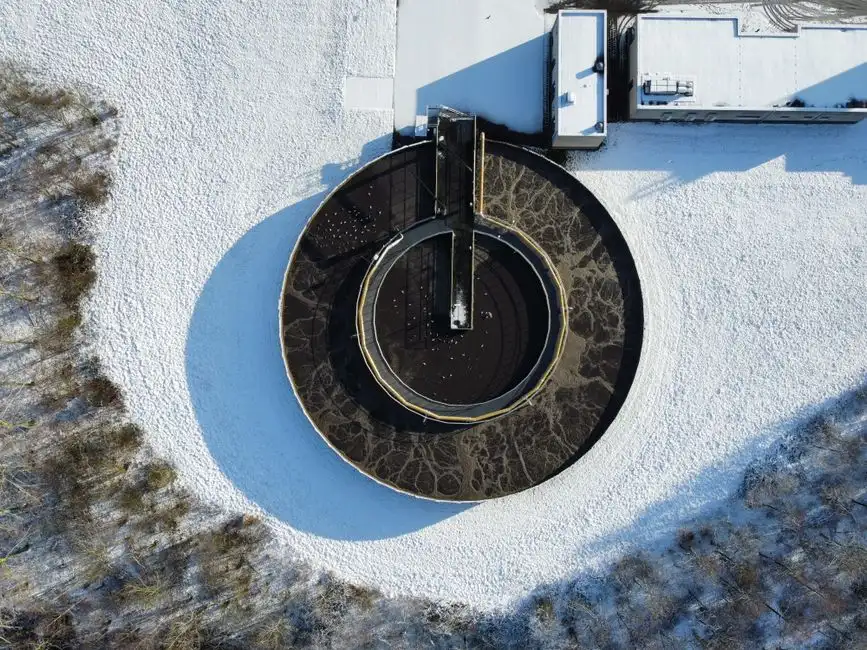
Bids become directly comparable when each bidder defines the design flow, influent basis, process route, treatment stages, guaranteed outlet values, and monitoring scope. Require site-specific acceptance tests and verified performance data; do not accept an unqualified statement that a treatment unit resolves all discharge requirements.
| Quote line item | Technical scope to specify | Red flags to check before signing |
|---|---|---|
| Process and sizing basis | Design flow, peak-hour flow, included wastewater streams, influent limits, process stages and guaranteed outlet values | Unspecified flows, generic outlet claims, excluded contaminants or reliance on buyer inputs not yet confirmed |
| Civil works and installation | Excavation, foundations, installation, backfill, connections, access, site restoration and interfaces with existing services | Undefined soil or groundwater conditions, excluded flood protection, omitted access works or site assumptions |
| Electrical, controls and backup power | Supply requirements, controls, alarms, power distribution, backup-power arrangement, remote monitoring and operator interfaces | Unstated utility voltage or capacity, excluded cabling, no alarm history or unclear backup responsibility |
| Commissioning and acceptance | Site-specific tests, demonstrated outlet performance, sampling method, acceptance authority, corrective-action process and handover documents | Acceptance based only on startup, untested guarantees, no defined sampling protocol or no responsible witness |
| Sludge, maintenance and consumables | Sludge removal, membrane or media cleaning, routine maintenance, spare parts, training, warranty support and emergency response | Consumables excluded indefinitely, no removal route, inadequate training or warranty that excludes normal operating conditions |
| Delivery and commercial exclusions | Delivery, installation and commissioning dates with site-access, lifting, power and weather assumptions; itemized taxes, duties, freight and exclusions | Unstated access restrictions, vague delivery date, bundled contingencies or exclusions that transfer major site risk to the buyer |
Compare total project cost rather than equipment price alone. Use the sewage treatment plant CAPEX and OPEX guide to structure the commercial review, while applying the data-center water treatment equipment RFQ checklist as a discipline for exclusions, documentation, and acceptance.
Frequently Asked Questions
Should a Bahamian site connect to a sewer or install decentralized wastewater treatment?
Connect to a sewer when an authorized utility connection is feasible, the utility will accept the wastewater, and the receiving utility retains treatment responsibility. Consider decentralized treatment when that connection is unavailable, unsuitable, or would not satisfy the project’s receiving-water and reuse objective. Confirm the decision with the utility, relevant Bahamian authority, and site engineer before comparing equipment.
How should a sewage treatment plant in The Bahamas be sized?
Size the system from the project-specific design flow, peak-hour flow, and wastewater analysis, including COD, BOD, TSS, fats, oils and grease, pH, and temperature. Do not use a supplier’s generic production rate as the design basis. Require the bidder to state how each quoted capacity and process stage responds to those verified inputs and to identify any operating envelope beyond which performance is not guaranteed.
What supplier evidence and acceptance tests should be requested?
Request the proposed process basis, guarantees, relevant verified performance information, commissioning plan, and site-specific acceptance protocol. The protocol should identify the sampling points, test parameters, witnessed tests, acceptance criteria, repeat-test procedure, corrective actions, and responsible authority. Reject acceptance based only on a successful startup demonstration or an unsupported claim that the unit meets all discharge requirements.
Which costs must be included so quotations can be compared?
Require separate prices for equipment, process tanks or membranes, civil works, installation, electrical supply, controls, backup power, commissioning, training, initial spares, sludge removal, maintenance, delivery, warranty support, and identified exclusions. Request site-access, lifting, power, and weather assumptions behind the delivery and commissioning programme. The buyer must request a site-specific quotation using the completed input register to determine accurate project costs.