Choose the treatment route from site conditions
Municipal and commercial sewage treatment in Tonga requires choosing between three routes: connecting to a municipal sewer, installing an underground A/O package plant, or using an MBR system. The sewer is appropriate where an accessible, permitted network exists. WSZ is suitable for smaller decentralized sites needing a compact biological treatment package. MBR is the stronger option when a small footprint and high-quality effluent for reuse justify added membrane and operational complexity. The relevant local report, “SANITATION AND WASTEWATER MANAGEMENT IN TONGA,” does not provide verifiable discharge limits, site capacities or an approval route in its accessible excerpt. Final selection requires current flow, influent testing, land, reuse objectives, sludge arrangements and applicable discharge requirements.
First establish whether the project can connect to an authorized municipal sewer, needs treatment on site, or is intended for wastewater reuse. This decision determines whether the quotation should cover network connection work, a packaged treatment train, or additional treatment and monitoring for a defined reuse application.
For a sewer route, obtain written confirmation from the utility of available network capacity, connection requirements, ownership boundaries, wastewater charges and downstream acceptance conditions. Request the applicable current requirements from the responsible Tonga authority as well. The local sanitation report should be obtained and verified, but it should not be treated as proof of a particular discharge limit or design standard without checking the controlling document.
For an on-site route, collect the current average and peak domestic sewage flows, seasonal and rainfall effects, influent analysis, available land, reuse objectives and sludge-disposal arrangements. The comparison of sewer, WSZ and MBR sewage treatment routes provides a useful framework, but the Tonga buyer still needs site-specific records before selecting equipment.
Compare sewer, A/O package and MBR treatment
Authorized network connections are the preferred route where technically available and accepted; treatment then remains within the utility’s service scope. Choose an underground A/O package for decentralized treatment where compact deployment and relatively straightforward operation dominate. Consider MBR where land is constrained, higher-quality reuse is required, or future expansion must be accommodated. Confirm every capacity claim against actual peak flow, hydraulic and organic loading, effluent objectives, redundancy and maintenance access.
| Discharge route or influent problem | Governing rule or process option | What data settles it |
|---|---|---|
| Authorized municipal sewer available | Obtain a connection route only after the utility confirms capacity, ownership, charges and downstream acceptance conditions in writing. | Utility connection approval, available network capacity, connection boundary and applicable tariff or charge. |
| Decentralized domestic sewage treatment with a compact footprint | Evaluate an underground WSZ A/O package against the measured design-flow basis and required effluent use. | Average and peak flow, influent B.O.D., COD, total suspended solids, land area and reuse objective. |
| Limited land, advanced reuse or staged expansion | Evaluate an MBR membrane bioreactor, including membrane maintenance, residual treatment and solids handling. | Peak flow, required water quality, footprint, operator resources, power and backup-power requirements. |
| Commercial wastewater with variable or seasonal demand | Do not select from average flow alone; establish peak and surge conditions before assigning equipment capacity. | Flow records, seasonal occupancy or operating data, hydraulic surge assessment and future demand forecast. |
Do not transfer a pollution statistic from another jurisdiction into the Tonga design basis. The academic source reporting that Delhi contributes more than 70% of the Yamuna’s pollution load concerns Delhi and the Yamuna, not Tonga sewage treatment, and it does not establish a Tonga treatment requirement. For hotel or resort projects, also review WSZ versus MBR for a packaged sewage treatment project to test the comparison against occupancy-driven demand and service constraints.
Build the treatment train around the wastewater
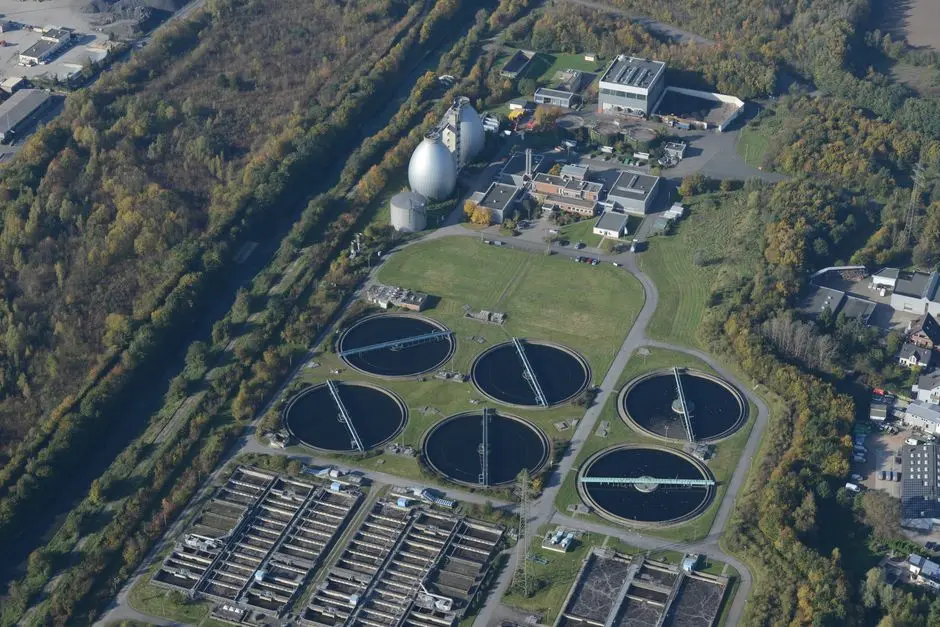
Define the treatment train from the wastewater characterization and intended destination, not from a generic equipment list. Use inlet screening and laboratory analysis to establish whether solids removal is needed before biological treatment or membrane systems. A mechanical bar screen can be considered where inlet protection is required, subject to the selected process design.
Add dissolved air flotation or clarification only where analysis shows that suspended solids, oil and grease, FOG or colloidal material require dedicated pretreatment. For a commercial wastewater plant, collect samples representing normal operations and assess the resulting pretreatment duty rather than assuming the presence or absence of FOG.
Define the reuse chain around the actual application. Filtration, disinfection and residual-quality monitoring should follow the selected reuse destination and its current requirements. A proposed reuse arrangement without an identified end user, distribution method, storage arrangement and monitoring plan is not yet a complete design.
Include the solids route in the same design decision. Specify sludge or biosolids conditioning, dewatering, storage, access, transport and authorized disposal. A plate-frame filter press may be evaluated for dewatering only after the expected sludge characteristics and disposal route are known. Municipal sewage treatment can be discussed as a resource-recovery topic, but the academic material identified for that subject does not supply a Tonga process design or a quantitative recovery claim.
- Confirm the disposal destination and current approval route.
- Measure flow and characterize the influent.
- Select pretreatment only where the wastewater data supports it.
- Define biological treatment, reuse treatment and disinfection.
- Complete the sludge, dewatering, storage and disposal route.
Specify performance, delivery and acceptance requirements
State the design-flow basis separately from average flow, peak flow, hydraulic surge and seasonal or tourism-related demand. The supplier should show how the proposed capacity responds to each condition. Do not accept an equipment size without the underlying hydraulic and organic-loading calculations.
Define guaranteed influent and effluent parameters only after confirming the applicable Tonga approval route. No numerical discharge limit is verified in the available Tonga material, so request the current requirement from the responsible authority and identify the applicable reuse standard or destination conditions separately.
Require a written process description, hydraulic calculations, general arrangement, utilities demand, control philosophy, O&M plan and training scope. The quotation should also define factory and site acceptance tests, commissioning milestones, a demonstration period, test methods, sampling points and the consequences of failed performance tests. Use the data-center water-treatment equipment RFQ checklist as a reference for identifying missing technical and commercial deliverables, while adapting it to the sewage treatment scope.
| Quote line item | Technical scope to specify | Red flags to check before signing |
|---|---|---|
| Process design and equipment capacity | Design-flow basis, hydraulic calculations, organic loading, pretreatment, treatment train, redundancy and maintenance access. | Capacity based only on average flow, with no peak assessment or unsupported performance guarantee. |
| Civil works and installation | Excavation, bedding, burial depth, access roads, drainage, lifting arrangements, site drainage and reinstatement scope. | Civil works excluded without an allowance or defined responsibility matrix. |
| Power, controls and backup | Power demand, control philosophy, alarms, backup-power requirements, communications and operator access. | Backup power omitted, or utilities listed without connection responsibilities. |
| Commissioning and acceptance | Factory and site tests, sampling points, test methods, demonstration period, training, spares, warranty and support. | No test method or sampling protocol, and no defined remedy for failure. |
| Sludge and reuse arrangements | Sludge characterization, conditioning, dewatering, storage, transport, disposal, reuse application and monitoring. | Treatment equipment quoted without a solids route or reuse destination. |
Include delivery dates, shipping terms, customs responsibilities, insurance, commissioning attendance, warranty exclusions and long-term service support in the quotation. For a packaged project, also review WSZ versus MBR for a packaged sewage treatment project when defining site delivery, commissioning and operational support.
Plan operations, reuse and measurable outcomes
Define operations before accepting the equipment: routine tasks, inspection frequency, spare-parts inventory, membrane or media maintenance, remote or on-site support, operator skill requirements and the response process for faults. An MBR membrane bioreactor for municipal sewage and reuse should be quoted with membrane maintenance provisions and replacement planning. An underground WSZ A/O package sewage treatment plant should be quoted with access arrangements that allow inspection and maintenance without unnecessary excavation.
For wastewater reuse, define the permitted application, end user, distribution method, storage and water-quality monitoring before selecting advanced treatment. Record the measurements needed to demonstrate that the treated water continues to meet the specified project requirements. If reuse is not yet approved or the application is undefined, keep it outside the guaranteed discharge performance scope and identify it as a future decision point.
Record sludge volume and characteristics at commissioning and establish an operational method for conditioning, dewatering, storage and authorized disposal. Include handling arrangements in operator training and handover documents. Handover should contain measurable deliverables: approved process drawings, equipment manuals, test records, operating procedures, maintenance schedules, training attendance, spare-parts lists and named support contacts.
Use the current Tonga sanitation requirements obtained from the responsible authority to verify the operating and disposal plan. Do not infer a Tonga design standard from the accessible report page alone. The site record should also retain the utility approval for a sewer route, or the land, power, access and sludge arrangements for an on-site route.
Related Equipment
- underground WSZ A/O package sewage treatment plant — specifications, capacity range, and technical data
- MBR membrane bioreactor for municipal sewage and reuse — specifications, capacity range, and technical data
Further Reading
- A/O package plant versus MBR for a hotel wastewater system
Frequently Asked Questions
How much does a sewage treatment plant cost in Tonga?
No verified Tonga price is available from the supplied evidence, so a responsible quotation requires the selected route, design-flow basis, treatment capacity, effluent objectives, civil-work boundary, power requirements, sludge handling, delivery terms and acceptance-test scope. Request a line-item quotation with exclusions identified rather than compare headline package prices.
What flow rate should a Tonga sewage treatment plant be sized for?
Size against the documented design-flow basis after reviewing current average and peak flows, seasonal and rainfall effects, and expected commercial or tourism demand. The supplier should submit hydraulic and organic-loading calculations and explain how the selected treatment train handles peak flow and surge conditions.
Which wastewater acceptance tests should be included in the supplier quotation?
Require factory and site acceptance tests tied to the guaranteed process performance, with stated test methods, sampling points, test duration and a demonstration period. Include training, commissioning records, spares and a defined consequence for failed tests. Effluent parameter limits should be attached only after the applicable Tonga approval or reuse requirements are confirmed.
Should a Tonga project choose WSZ, MBR or a municipal sewer connection?
Choose the sewer connection when an authorized utility confirms technical capacity, connection terms, downstream acceptance and charges. Choose WSZ for decentralized treatment where compact deployment and relatively simple operation are priorities. Consider MBR when land is limited or advanced reuse is required, after confirming operator capability, maintenance access and solids handling. The decision should be supported by the site-input checklist and the approved route matrix.