Choose the Blowdown Route from the Water Balance
UK data centers must decide whether cooling-tower blowdown should be discharged, pretreated before discharge, or treated for reuse as cooling make-up water. The choice should be driven by blowdown chemistry, required recovery, concentrate destination and the site’s discharge permit—not by generic water-saving claims. UF can protect downstream RO from colloids and suspended solids, while RO may support reuse, but scaling from silica, calcium carbonate and calcium sulfate must be checked. Conventional brackish RO typically plateaus at 75–80% recovery before scaling and operational risks increase (ide-tech.com).
Begin with the site water balance, not the treatment catalogue. Obtain the cooling-tower design flow, evaporation rate, blowdown flow, cycles of concentration and planned capacity changes. A vendor-published example states that a 100-megawatt facility can involve up to 2 million liters of water per day; use that only as a scale indicator, not as a UK design assumption (ide-tech.com).
| Discharge route or influent problem | Governing rule or process option | What data settles it |
|---|---|---|
| Permitted discharge is available and water-saving value is limited | Discharge the blowdown after confirming that its chemistry and volume are acceptable for the receiving system; add pretreatment only if required. | Cooling-tower design flow, evaporation rate, blowdown flow, cycles of concentration and planned capacity changes. |
| Discharge quality exceeds site or receiving-system requirements | Pretreat before discharge to reduce the identified constraint, such as suspended solids, colloids, hardness or selected dissolved salts. | Blowdown analysis, permit route, sewer capacity, discharge destination and the applicable United Kingdom regulatory review. |
| The project objective is data centre water reuse or lower freshwater withdrawal | Treat blowdown to the required cooling tower make-up-water specification and control the concentrate stream. | Required recovery rate, make-up-water specification, scaling and corrosion limits, operating availability and concentrate-disposal route. |
| The feed is high-turbidity reject or mixed wastewater | Apply pretreatment before membrane treatment; academic work achieved SDI15 pretreatment for high-turbidity reject water. | Representative turbidity and suspended-solids results, plus membrane-feed chemistry and the treatment provider’s pretreatment criterion. |
Use the data-center water-treatment RFQ checklist to assign missing information, and use the data-center water-use discussion only as background. The site water balance should determine whether the project prioritises discharge reduction, reuse or both.
Test Whether the Blowdown Can Be Reused
Reuse is feasible only if the recovered water meets the cooling-system designer’s make-up-water specification and the residual treatment chemistry will not create unacceptable scaling or corrosion. The supplied material identifies silica, calcium carbonate and calcium sulfate as relevant scale-forming species, but it does not establish a universal UK reuse-water specification (ide-tech.com).
Request laboratory results for both the raw make-up water and the cooling-tower blowdown. The minimum data set should cover conductivity, silica, calcium, alkalinity, sulfate, chloride, hardness, pH and residual biocide or inhibitor concentrations. Also request the required cooling tower make-up-water quality, site-specific scaling limits and corrosion limits from the cooling-system designer or operator.
Do not infer reuse suitability from the discharge route. A stream may be acceptable to a sewer receiving system but unsuitable as recycled cooling make-up water because recycle changes the chemistry challenge; residual treatment chemicals, concentrated total dissolved solids and altered pH may require additional control (waterutilityreport.com).
Use the data-center water-reuse treatment after MBR reference to frame the treatment question, and review the cooling-water treatment plant engineering specifications for the information expected from the cooling designer. The decision is settled by representative chemistry against an agreed site specification, not by a generic claim that the water is suitable for reuse.
Compare UF, RO and Softening by Function
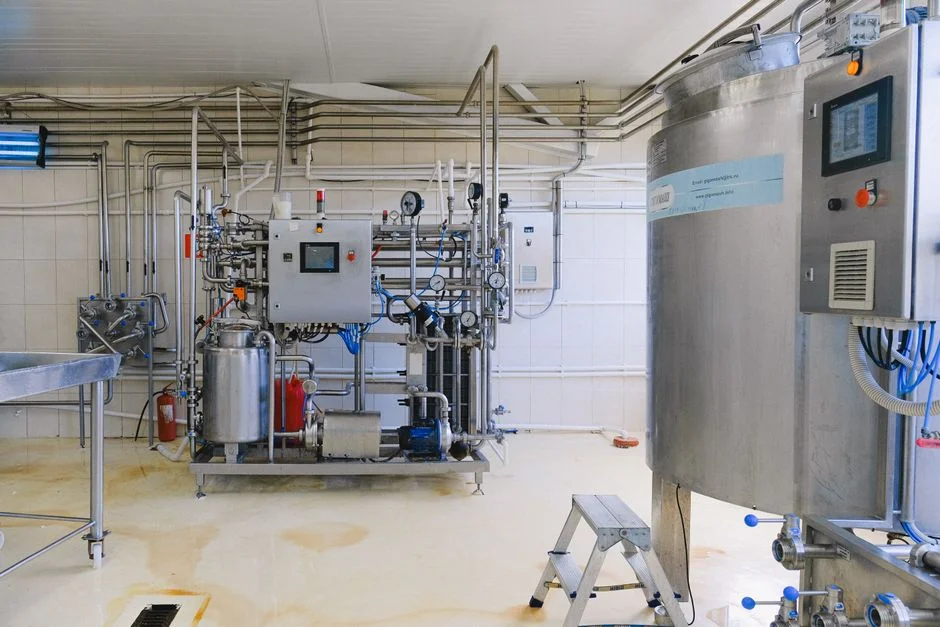
UF, RO and softening solve different problems and should be combined only where the feed analysis demonstrates a need. UF provides a membrane barrier against suspended solids and colloids; RO separates dissolved salts; softening addresses hardness. The relevant hollow-fiber UF pretreatment system protects downstream equipment, while an industrial RO blowdown treatment system addresses dissolved salt concentration when permeate quality is required.
| Discharge route or influent problem | Governing rule or process option | What data settles it |
|---|---|---|
| Suspended solids or colloids could foul downstream membranes | Use UF as pretreatment before RO when the feed contains the particulate or colloidal load that the membrane design cannot accept. | Representative turbidity, suspended-solids and SDI results; academic work used pretreatment to achieve SDI15 for high-turbidity reject water (Journal of Water and Climate Change). |
| Dissolved salts must be removed to produce cooling make-up water | Use RO for dissolved-salt separation, subject to scaling assessment, recovery definition and concentrate handling. | Feed conductivity, silica, calcium, alkalinity, sulfate, chloride, hardness, pH and the required make-up-water specification. |
| Hardness is the primary scaling constraint | Use softening where the chemistry assessment identifies hardness control as the required pretreatment function. | Calcium, hardness and alkalinity results, together with the permitted scaling-control approach and downstream membrane requirements. |
| A bidder offers one device as a general-purpose solution | Reject the comparison unless the bidder maps each barrier or separation function to measured feed properties. | Process flow diagram, membrane-feed specification, design basis, recovery definition and expected concentrate chemistry. |
HydropureWater industrial RO systems are advertised with recovery rates up to 95%, but that equipment claim does not establish the project recovery rate. The selected recovery must be supported by the actual feed chemistry, scaling assessment, operating mode and concentrate route.
Set Recovery and Concentrate Acceptance Criteria
Recovery is a system performance requirement only when feed and concentrate conditions are stated alongside it. Conventional brackish RO typically plateaus at 75–80% recovery, beyond which scaling risk, chemical consumption and operational instability increase sharply (ide-tech.com).
A vendor-reported MAXH₂O case operated at around 95% recovery and reduced silica in the permeate to about 1 mg/L (ide-tech.com). Treat this as site-specific vendor-reported evidence, not independent proof of universal performance. Require each bidder to define:
- Feed flow, permeate flow and concentrate flow.
- The recovery calculation and the operating conditions to which it applies.
- Scaling-control methods, including treatment of silica, calcium carbonate and calcium sulfate.
- Cleaning approach, operational controls and monitoring requirements.
- Expected concentrate chemistry and its destination.
Make the concentrate route an acceptance condition. A higher recovery claim is incomplete without the residual flow, salinity, handling method, storage requirements and authorised destination. Review the cooling-tower blowdown RO recovery and concentrate guide for the questions to put to bidders, and include membrane and filter-element replacements in the commercial scope through the RO and UF membrane and filter-element range.
Build a Quote-Ready UK Site Pack
A comparable quotation requires named owners for missing inputs and a written basis for every commercial line. The cooling operator should provide the water balance and cooling-water limits; the data-center owner should provide planned capacity and reuse objectives; the laboratory should provide representative analyses; the environmental consultant should review the discharge route; and the equipment supplier should define the treatment train, acceptance tests and operating documentation.
| Quote line item | Technical scope to specify | Red flags to check before signing |
|---|---|---|
| Site data and laboratory testing | Named analyses for make-up water and blowdown, including conductivity, silica, calcium, alkalinity, sulfate, chloride, hardness, pH and residual treatment chemicals. | Missing test methods, unrepresentative samples or no split between raw make-up and blowdown streams. |
| Equipment and pretreatment | State whether UF, RO and softening are required, and assign each function to a measured feed problem. | Equipment listed without a feed basis, membrane compatibility basis or scaling assessment. |
| Installation and ancillary systems | Include chemical storage, pumping, piping, controls, electrical requirements, drainage and access requirements. | Scope ends at the main unit while excluding essential tanks, dosing or installation works. |
| Commissioning and validation | Require representative feed-water testing, agreed permeate and concentrate limits, documented operating procedures and a site trial or validation plan. | Acceptance is based only on permeate flow or recovery, without water-quality or concentrate criteria. |
| Operations, maintenance and training | Price monitoring, cleaning, membrane replacement, spare parts, maintenance, training and technical support. | Long-term consumables, cleaning chemicals and operator competency are omitted. |
| Concentrate and discharge-route review | Identify destination, handling method, expected concentrate chemistry and the responsible environmental review. | No discharge destination, no concentrate owner or an unverified statement that the route is compliant. |
Require an English discharge-route and permit evidence review before order. The available research does not verify a UK permitting authority, permit threshold or discharge limit for this stream, so the site team must confirm the applicable requirements with the relevant authority and receiving wastewater operator rather than treating equipment selection as regulatory approval.
Use the data-center water-treatment RFQ checklist as the common bid template, and identify replacement valves and filter media separately through the water-treatment parts, valves and filter-media list. Make order release conditional on the approved feed analysis, treatment-route decision, concentrate destination and written acceptance criteria.
Frequently Asked Questions
How are UF and RO combined for cooling-tower blowdown reuse, and which stream data drives the design?
UF normally provides the membrane-barrier pretreatment function before RO removes dissolved salts. The design should be based on measured blowdown turbidity, suspended solids and SDI, together with conductivity, silica, calcium, alkalinity, sulfate, chloride, hardness, pH and residual treatment chemicals, then checked against the required cooling tower make-up-water specification. UF is not a substitute for dissolved-salt separation, and RO performance cannot be established without the scaling and concentrate assessment.
Why can two quotations with different recovery rates not be compared directly?
Recovery is not a standalone performance number. Ask each bidder for feed flow, permeate flow, concentrate flow, the recovery definition, feed chemistry, scaling-control method and concentrate destination. Conventional brackish RO typically plateaus at 75–80% recovery before scaling and operational risks increase (ide-tech.com); a higher claimed rate must be evaluated against its operating basis and residual handling route.
Which UK site documents and approvals should be checked before equipment is ordered?
Obtain the site water balance, representative laboratory analyses, cooling-system make-up-water specification, scaling and corrosion limits, planned capacity changes, discharge destination, sewer information and an English permit evidence review. The available material does not establish a UK permit threshold or discharge limit for cooling-tower blowdown, so the owner should confirm the route with the relevant authority and receiving wastewater operator before ordering.
What should a supplier include in a comparable operating and maintenance quotation?
Request separate prices for equipment, pretreatment, chemical storage, installation, commissioning, monitoring, training, preventive maintenance, cleaning, membrane or filter replacement, spares and concentrate-disposal activities. Exclude a price based only on a recovery percentage; require the operating assumptions, feed and concentrate limits, cleaning plan and validation documentation needed to compare proposals fairly.