Industrial wastewater treatment in Adelaide is governed by SA EPA Class C limits of BOD below 50 mg/L, TSS below 100 mg/L, and pH 6.5–8.5, while onsite systems for 50–500 m³/day typically cost $0.80–$4.50/m³. This 2026 guide covers compliance, process selection, and cost drivers.
Industrial wastewater treatment in Adelaide is governed by SA EPA Class C discharge limits—BOD <50 mg/L, TSS <100 mg/L, pH 6.5–8.5, and Chromium <0.1 mg/L—plus municipal FOG acceptance near <100 mg/L. Bolivar, Glenelg, and Christies Beach serve about 80% of the population, and Bolivar runs roughly 15% above design load. Onsite treatment for industrial volumes typically costs $0.80–$4.50/m³, against municipal base rates of $0.50–$2.50/m³ plus strength surcharges. This 2026 engineering guide covers compliance steps, process selection, equipment checklists, and cost drivers for food processing, metalworking, and pharmaceutical plants in Greater Adelaide.
Industrial Wastewater Treatment in Adelaide: Compliance, Capacity, and Costs
Adelaide industrial plants must meet SA EPA Class C limits of BOD <50 mg/L, TSS <100 mg/L, pH 6.5–8.5, and Chromium <0.1 mg/L while Bolivar WWTP runs about 15% over design load. Municipal sewer charges are $0.50–$2.50/m³ plus strength surcharges; onsite systems for 50–500 m³/day typically cost $0.80–$4.50/m³ including amortized capital and O&M.
Facilities face pressure from SA EPA standards, infrastructure limits, and sector-specific contaminants. The SA EPA sets BOD <50 mg/L, TSS <100 mg/L, and pH 6.5–8.5 for Class C waters, with Chromium restricted to <0.1 mg/L (SA EPA 2024 guidelines). Missing those limits can trigger penalties and forced process changes. For national context on industrial wastewater discharge limits, plant teams often cross-check state rules against Australia-wide acceptance practice before locking a design basis.
Most inquiries that arrive under the search phrase industrial wastewater treatment adelaide are really asking two questions: what the licence requires, and what onsite treatment costs per cubic metre. The sections below answer both with the local limits, plant data, and supplier benchmarks.
What are industrial wastewater discharge limits in South Australia?
Industrial wastewater discharge limits in South Australia are set case by case in SA EPA licence conditions, with Class C planning values of BOD <50 mg/L, TSS <100 mg/L, pH 6.5–8.5, and Chromium <0.1 mg/L widely used for design. Sewer trade-waste acceptance is set separately by SA Water, including FOG near <100 mg/L. The licence text, not a brochure number, is the enforceable basis.
Capacity at Adelaide’s municipal plants is a hard constraint. The Bolivar Wastewater Treatment Plant, serving about 80% of Adelaide’s population, operates at 15% over design load (Infrastructure Australia 2023 report). That overload restricts new industrial connections and can raise sewer surcharges for high-volume or high-strength dischargers. Most plants we size for Greater Adelaide therefore evaluate onsite pretreatment early, even when the long-term plan is still a trade-waste agreement with SA Water.
Bolivar’s scale is worth quoting precisely. Earlier briefs on this page used an 80% population-served figure; the 60% raw-sewage share is the current citable number.
Sector risks differ sharply. Food processing—abattoirs and beverage plants—generates high FOG, BOD, and TSS that block sewers and inflate organic surcharges. Metalworking deals with chromium, nickel, copper, cyanides, and pH swings that fail metal limits if precipitation chemistry drifts. Pharmaceutical wastewater often carries complex organics, Active Pharmaceutical Ingredients (APIs), and microplastics that need advanced polishing beyond simple clarification. Those profiles drive different pretreatment trains before municipal sewer or direct environmental release.
Across Greater Adelaide, the practical decision is rarely “treat everything onsite” versus “discharge raw.” Most facilities keep a trade-waste connection and add pretreatment that removes the surcharge drivers—FOG, BOD, TSS, or metals—before the sewer meter. That hybrid approach still has to satisfy SA EPA license conditions and municipal acceptance limits at the same time.
Cost drivers include municipal surcharges and the capital plus O&M of onsite trains. Municipal sewer charges in Adelaide can sit at $0.50–$2.50/m³ base, with penalties for strength exceedances. Onsite treatment for industrial volumes typically lands at $0.80–$4.50/m³ depending on complexity and scale (local supplier data from MAK Water and Hydroflux). High-strength food or plating streams often tip the five-year total cost of ownership toward onsite control. Engineers comparing city guides also review the Industrial Wastewater Treatment in Sydney: 2026 Compliance Guide when multi-site Australian plants standardize equipment packages.
| Parameter | SA EPA 2025 Discharge Limit (Class C Waters) | Typical Industrial Source | Impact of Non-Compliance |
|---|---|---|---|
| BOD | <50 mg/L | Food processing, breweries, textiles | Eutrophication, oxygen depletion in waterways |
| TSS | <100 mg/L | Mining, manufacturing, food processing | Reduced light penetration, habitat degradation |
| pH | 6.5–8.5 | Metal finishing, chemical manufacturing | Aquatic toxicity, infrastructure corrosion |
| Chromium (Cr) | <0.1 mg/L | Electroplating, metal finishing | Toxic to aquatic life, human health risk |
| FOG | <100 mg/L (municipal sewer acceptance) | Food processing, restaurants | Sewer blockages, increased municipal surcharges |
SA EPA Compliance Checklist for Industrial Dischargers in Adelaide
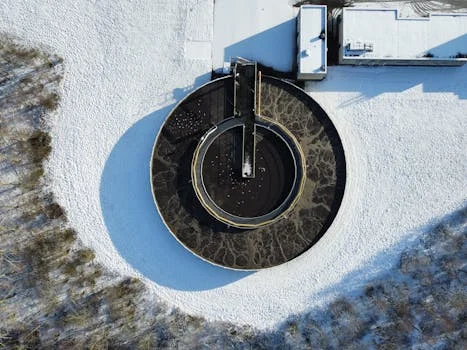
SA EPA compliance for industrial dischargers in Adelaide starts with a complete permit package and a monitoring plan that matches license conditions. The permit application process typically has a 90-day lead time. Facilities submit influent and effluent data, historical flow rates, contaminant concentrations, and proposed treatment methods (SA EPA 2024 guidelines). Early contact with the regulator reduces incomplete submissions and license delays that cascade into construction schedules.
What does Adelaide SA EPA Class C discharge compliance require?
Adelaide SA EPA Class C discharge compliance requires treated effluent inside BOD <50 mg/L, TSS <100 mg/L, pH 6.5–8.5, and Chromium <0.1 mg/L, backed by the monitoring and records the licence names. In practice that means continuous pH and flow logging, weekly composite BOD/TSS sampling, and on-time reporting. SA Water serves approximately 1.5 million people across South Australia with 24 wastewater treatment plants, so trade-waste acceptance also has to hold.
Monitoring rules are strict and continuous where the license requires it. Plants are often required to run continuous pH and flow logging, plus weekly composite sampling for BOD and TSS (SA EPA Industrial Wastewater Management Policy). Industry-specific metals, nutrients, or organics may need extra analysis on a defined frequency. Clear records and on-time reports show due diligence and catch upsets before a breach is recorded against the Environmental Protection Act 1993 framework.
Common violations in Adelaide industry include FOG above 100 mg/L from food plants, pH outside 6.5–8.5 from metal finishing, and copper above 0.5 mg/L from manufacturing lines. Causes are usually weak pretreatment, poor process control, or unclear license wording rather than a single failed sample. Teams that map sources to unit operations fix problems faster than teams that only sample the final pit after dilution.
Penalties for breaches of SA EPA industrial wastewater standards range up to $120,000 for serious cases and can include forced shutdowns (SA EPA 2023 enforcement data). Non-compliance also raises scrutiny on future expansions and can harden trade-waste conditions. A written compliance program is therefore an operating control, not a paperwork exercise. If your brief is wider than Adelaide alone, align local license language with Australia-level industrial waste water discharge requirements before you freeze sampling frequencies.
| Compliance Step | Description | Key Action | SA EPA Reference |
|---|---|---|---|
| 1. Permit Application | Submit detailed wastewater characteristics and treatment plans. | Allow 90 days lead time for review. | SA EPA 2024 Guidelines |
| 2. Influent/Effluent Monitoring | Establish continuous pH/flow logging and weekly composite sampling. | Track BOD, TSS, pH, and specific heavy metals. | Industrial Wastewater Management Policy |
| 3. Process Optimization | Ensure treatment systems consistently meet discharge limits. | Regular calibration and maintenance of equipment. | Best Practice Environmental Management |
| 4. Incident Response Plan | Develop protocols for spills, upsets, and non-compliance events. | Immediate reporting to SA EPA and corrective action. | Environmental Protection Act 1993 |
| 5. Record Keeping & Reporting | Maintain accurate records of monitoring data, maintenance, and incidents. | Submit required reports to SA EPA on schedule. | EPA License Conditions |
Industrial Wastewater Treatment Processes: How They Work and When to Use Them
Industrial wastewater treatment processes combine physical, chemical, and biological unit operations to hit SA EPA discharge limits for Adelaide plants. Selection follows contaminant class first, then flow, footprint, and reuse goals. Mixing unit operations without a mass balance usually creates sludge and energy waste rather than better compliance margins.
Physical treatment removes suspended solids, FOG, and other insoluble matter by mechanical means. Dissolved Air Flotation (DAF) systems achieve 90–98% removal of FOG and TSS (MAK Water benchmarks) by attaching fine air bubbles to particles and floating them for skimming. DAF fits food processing plants, abattoirs, and renderers in Adelaide where FOG and TSS loads dominate the surcharge bill. For robust FOG and TSS removal, Adelaide-ready DAF systems for FOG and TSS removal are a common pretreatment step before biological polishing.
How does DAF system FOG removal work for Adelaide food processing?
DAF system FOG removal for Adelaide food processing works by coagulating and floating grease and solids with micro-bubbles, then skimming the float at 90–98% removal of FOG and TSS on typical food duty. Chemistry does the first half of the job: coagulant dosing near 50–200 mg/L conditions the floc before air is added. Pair the unit with pH correction because clean-in-place chemicals swing washdown streams outside the 6.5–8.5 window biology needs.
Chemical treatment changes solubility so dissolved contaminants can be separated as solids. Coagulation and flocculation use ferric chloride or aluminium sulfate to neutralize particle charge and grow flocs for sedimentation or filtration. That path achieves 80–95% heavy metal removal (Chromium, Nickel) for metalworking plants (HydropureWater data) by precipitating metals out of solution under controlled pH. pH adjustment remains a gate step for both metal precipitation chemistry and any downstream biology that needs a stable 6.5–8.5 window.
Biological treatment uses microorganisms to convert BOD and COD into simpler products. Membrane Bioreactor (MBR) systems combine biology with membrane filtration and often reach <10 mg/L BOD/TSS on pharmaceutical and textile effluents (SA Water recycled water standards). MBRs handle complex organics, APIs, and microplastics better than conventional clarifiers when footprint is tight on urban Adelaide lots. For organic removal and reuse-grade effluent, MBR systems for pharmaceutical and textile wastewater in Adelaide provide a compact train with consistent solids capture.
A typical three-stage train starts with pretreatment (screening, DAF) for solids and FOG, then a biological stage (activated sludge or MBR) for organics, then tertiary filtration or disinfection for reuse or sensitive discharge. An Adelaide food plant might run DAF, then an aerobic reactor, then a tertiary filter before sewer discharge or non-potable reuse. Perth plants facing similar arid-zone reuse pressure often document the same staging logic in the Perth industrial wastewater engineering and cost guide.
| Treatment Process | Primary Function | Adelaide Industry Use Case | Typical Removal Efficiency |
|---|---|---|---|
| Physical: DAF | Remove FOG, TSS, colloidal solids | Food processing, abattoirs, breweries | 90–98% FOG/TSS |
| Chemical: Coagulation/Flocculation | Precipitate heavy metals, suspended solids | Metalworking, electroplating, mining | 80–95% Heavy Metals (Cr, Ni, Cu) |
| Biological: MBR | Degrade organic pollutants (BOD, COD) | Pharmaceutical, textile, high-strength organic waste | <10 mg/L BOD/TSS (effluent) |
| Biological: Anaerobic Digestion | Stabilize high-strength organic waste, biogas production | Food processing, distilleries, municipal sludge | 70–90% COD reduction |
| Tertiary: Filtration (e.g., Sand/Carbon) | Remove fine suspended solids, trace organics | Post-biological treatment for reuse or sensitive discharge | >90% residual TSS, some COD |
Equipment Selection Guide for Adelaide’s Industrial Sectors
Equipment selection for Adelaide industrial sites depends on contaminant class, peak flow, and the discharge or reuse target written into the license. Over-sizing for average flow and ignoring washdown peaks is a frequent cause of FOG breakthrough and metal carryover. Match hydraulic peaks first, then chemistry and sludge handling.
For food processing plants with high FOG, BOD, and TSS, DAF is the usual primary step. It cuts fats, oils, grease, and solids before biology or sewer discharge and protects municipal assets from grease blockages. HydropureWater DAF units, rated 4–300 m³/h, are built for FOG duty and are often paired with pH correction on acidic or alkaline clean-in-place wastes. That pretreatment lowers municipal surcharges and protects downstream biology from shock loads.
Metalworking sites with copper, zinc, and chromium typically need chemical precipitation plus solids separation. Chemical precipitation followed by lamella clarification can reach about 95% removal for Cu, Zn, and Cr when pH and coagulant dose are controlled within the process window. High-efficiency sedimentation tanks, including lamella clarifiers, keep the footprint small on constrained Adelaide lots and support SA EPA metal limits when sludge wasting is reliable.
The pharmaceuticals sector generates APIs, complex organics, and sometimes microplastics that pass conventional clarifiers. MBR trains delivering <10 mg/L BOD/TSS align with SA Water recycled water quality for high-grade reuse or sensitive discharge. Combining MBR with advanced oxidation (UV or ozone) helps degrade recalcitrant APIs that biology alone leaves behind in residual COD.
For textile wastewater with high COD, colour, and dyes, anaerobic digestion is a useful pretreatment where organic strength supports gas production. Anaerobic reactors can deliver 70–90% COD reduction and produce biogas for onsite energy use. Tertiary filtration plus oxidation or membranes then polish colour to meet SA EPA limits, as shown in local work such as the Alsco Adelaide facility about 3.7 km from the CBD.
Selection checklist (use before issuing RFQs):
- Peak and average flow (m³/h and m³/d), including washdown spikes and shift patterns.
- Influent FOG, BOD/COD, TSS, metals, and pH range with sampling dates and methods.
- Discharge point: municipal trade waste versus environmental license limits.
- Sludge class, cake dryness target, and haulage route ($/tonne assumptions).
- Footprint, odour setbacks to neighbours, and 3-phase power availability.
- Reuse target (if any) against SA Water recycled water standards.
- Local service response time and spare-parts lead time in Greater Adelaide.
| Industrial Sector | Primary Contaminants | Recommended Equipment & Process | Key Performance Metric |
|---|---|---|---|
| Food Processing | High FOG, BOD, TSS | DAF System (e.g., HydropureWater) + pH Adjustment | 90–98% FOG/TSS removal |
| Metalworking | Heavy Metals (Cu, Zn, Cr), pH imbalance | Chemical Precipitation + Lamella Clarifier | 95% heavy metal removal efficiency |
| Pharmaceuticals | APIs, complex organics, microplastics | MBR System + Advanced Oxidation (e.g., UV/Ozone) | <10 mg/L BOD/TSS effluent |
| Textiles | High COD, colour, dyes | Anaerobic Digestion + Tertiary Filtration | 70–90% COD reduction |
Cost Breakdown: Onsite Treatment vs. Municipal Sewer Discharge in Adelaide
Cost comparison for industrial wastewater treatment in Adelaide—onsite trains versus municipal sewer discharge—must include surcharges, monitoring, sludge, and fine risk—not only the published volume tariff. Five-year total cost of ownership usually decides the business case for 50–500 m³/day plants once strength penalties are modelled honestly.
What is the onsite wastewater treatment cost in Adelaide per m3?
Onsite wastewater treatment cost in Adelaide typically lands at $0.80–$4.50 per m³ for 50–500 m³/day systems when amortized capital and O&M are combined. DAF-led trains sit at the low end when FOG dominates, while MBR-led trains for reuse-grade quality sit at the top. Municipal base rates of $0.50–$2.50/m³ look cheaper until BOD, TSS, and FOG surcharges are added, so run the five-year comparison before choosing.
Municipal sewer costs for industrial dischargers in Adelaide typically start at a base rate of $0.50–$2.50/m³ (SA Water 2024 tariffs). Strength surcharges raise that figure quickly on food and manufacturing sites. SA Water may add about $0.20/kg BOD above a stated limit (for example 300 mg/L), plus extras for elevated TSS and FOG. Sites with high organic load often see surcharges dominate the monthly invoice. Bolivar WWTP capacity pressure can add scrutiny and higher conditions on new or expanding connections that push more volume into an already overloaded catchment.
Onsite treatment costs carry higher capital but can cut long-run spend when surcharges are chronic. For typical 50–500 m³/day systems, amortized capital over 10 years plus O&M often totals $0.80–$4.50/m³ (MAK Water and Hydroflux data). That envelope covers power, chemicals, spares, and operating labor for the selected train. DAF-led trains usually sit lower in the band than MBR-led trains when metals and APIs are absent and FOG is the main load.
Hidden costs move the decision either way. Municipal paths still need compliance monitoring at about $15,000–$30,000/year, plus fine risk up to $120,000 per serious incident and downtime from blockages or enforcement. Onsite paths add sludge disposal at $200–$500/tonne for hazardous or high-volume cake, plant footprint, and internal operator time. Reuse credits—cutting potable demand—can offset O&M when quality targets match SA Water recycled water expectations.
Main cost drivers to model before capital approval are wastewater volume and strength, surcharge formulas, capital amortization horizon, chemical and power intensity, sludge haulage class, monitoring scope, and any reuse credit. Most plants we size for Adelaide food duty run at the lower end of the $0.80–$4.50/m³ onsite band when DAF pretreatment carries most of the FOG load and biology stays simple.
When comparing quotes, keep the hydraulic basis identical: same peak m³/h, same FOG and BOD concentrations, and the same sludge disposal assumption of $200–$500/tonne. Changing only capital while holding surcharge risk at zero produces a false municipal preference. Re-run the five-year TCO after any SA Water tariff update, and document the $0.20/kg BOD surcharge example as a sensitivity case rather than a fixed invoice line.
ROI Calculation Template (5-Year TCO Comparison):
Step 1: Calculate Annual Municipal Discharge Cost (MC)
- (Annual Wastewater Volume × Base Rate) + (Annual Surcharges) + (Annual Monitoring Cost) + (Estimated Annual Fine Risk)
Step 2: Calculate Annual Onsite Treatment Cost (OC)
- (Amortized Capital Cost per year) + (Annual O&M Cost) + (Annual Sludge Disposal Cost) + (Annual Monitoring Cost) + (Estimated Annual Fine Risk) − (Annual Water Reuse Savings)
Step 3: Compare 5-Year TCO
- 5-Year TCO (Municipal) = MC × 5
- 5-Year TCO (Onsite) = OC × 5
- ROI = (5-Year TCO (Municipal) − 5-Year TCO (Onsite)) / 5-Year TCO (Onsite) × 100
| Cost Category | Municipal Sewer Discharge (Annual) | Onsite Treatment (Annual) |
|---|---|---|
| Base Volume Charge | $0.50–$2.50/m³ (variable by industry) | N/A (internalized) |
| Surcharges (BOD, TSS, FOG) | $0.20/kg BOD over 300 mg/L (example) | N/A (treated internally) |
| Capital Amortization (10-yr) | N/A | $0.30–$2.00/m³ (system dependent) |
| O&M (Energy, Chemicals, Labor) | Pretreatment only (if any) | $0.50–$2.50/m³ (system dependent) |
| Compliance Monitoring | $15,000–$30,000/year | $15,000–$30,000/year |
| Sludge Disposal | N/A (if no pretreatment) | $200–$500/tonne (variable by type) |
| SA EPA Fines/Risk | Up to $120,000/incident | Up to $120,000/incident |
| Water Reuse Savings | N/A | Potential for significant savings |
Local Suppliers and Installation Considerations for Adelaide Facilities
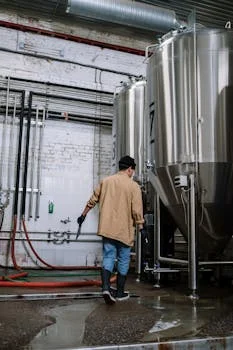
Supplier selection for Adelaide industrial wastewater projects should weigh local service, permit support, and site constraints ahead of catalogue pricing alone. A package that cannot be attended within a working day often costs more than a slightly higher capital bid with local technicians and documented South Australian references.
Supplier Checklist:
- "Do you provide SA EPA permit assistance and ongoing regulatory advice?"
- "What’s your local service response time for maintenance and emergencies in Greater Adelaide?"
- "Can you provide references from similar industrial installations in South Australia?"
- "What are the warranty terms for both equipment and system performance?"
- "Do you offer comprehensive operator training and ongoing technical support?"
Lead times vary with customization and shop loading. Custom-engineered industrial systems often need 12–24 weeks (MAK Water) for design, fabrication, and integration into existing drains and power. Package plants such as the HydropureWater WSZ series can ship in 4–8 weeks for standard layouts when civil works are ready. Those package units, including the Underground Package Sewage Treatment Plant (WSZ Series), suit smaller urban sites that lack outdoor plot space for above-grade tanks.
Installation constraints in Adelaide industry commonly include tight footprints, odour control near neighbours, and 3-phase power for DAF or MBR duty. Containerized skids or underground integrated plants reduce visual impact and land take on established lots. Biofilters or chemical scrubbers manage odour on food sites where community complaints escalate quickly. Local projects such as Hydroflux Industrial’s Alsco Adelaide installation (about 3.7 km from the CBD) show that careful layout still fits constrained urban lots when hydraulics, crane access, and sludge truck routes are planned early.
Budget contingency for Adelaide installs should cover odour control, sludge haulage setup, and commissioning samples required for license proof. Skipping those line items is a common reason package-plant projects overrun after the equipment price looked competitive. Confirm whether the supplier’s 4–8 week or 12–24 week lead time includes site commissioning or only ex-works delivery.
Who This Is For / Who Should Look Elsewhere / Next Step
This guide is for plant engineers, EPC contractors, and procurement managers sizing pretreatment or full onsite trains for Greater Adelaide food, metalworking, pharmaceutical, and textile sites under SA EPA and SA Water conditions. It is less useful for domestic-only developments or sites already locked to a municipal design that forbids onsite process changes. If you need a duty-specific equipment shortlist and cost band for your flow and contaminant profile, request a technical review through our inquiry form for Adelaide industrial wastewater projects with recent lab data and peak-flow records attached.
Frequently Asked Questions
What are the SA EPA discharge limits for Adelaide industry?
SA EPA Class C water limits commonly used for industrial planning are BOD <50 mg/L, TSS <100 mg/L, and pH 6.5–8.5, with Chromium <0.1 mg/L where metals apply. Municipal FOG acceptance is often <100 mg/L for sewer protection. Exact license numbers still depend on your EPA conditions and receiving environment, so confirm against the current permit before design freeze.
How does Bolivar WWTP capacity affect industrial connections?
Bolivar WWTP operates about 15% above design load while serving roughly 80% of Adelaide’s population, which can restrict new high-strength connections and raise scrutiny on existing trade-waste agreements. Wikipedia’s Bolivar article separately records 60% of metropolitan raw sewage and 135 million litres per day treated at the plant. Many facilities therefore size onsite pretreatment to cut load before the sewer. Early hydraulic and strength data improve negotiations with the water utility and the SA EPA.
What does onsite industrial wastewater treatment cost in Adelaide?
Onsite treatment for 50–500 m³/day systems typically costs $0.80–$4.50/m³ when amortized capital and O&M are combined, based on local supplier benchmarks. Municipal base rates of $0.50–$2.50/m³ look lower until BOD, TSS, and FOG surcharges—such as about $0.20/kg BOD over 300 mg/L—are included. Run a five-year TCO before choosing the path.
Which technology fits food processing wastewater in Adelaide?
Dissolved Air Flotation (DAF) is the usual first-stage choice for Adelaide food plants because it removes 90–98% of FOG and TSS under proper chemistry and air dosing. That cut reduces organic load to biology or to the municipal sewer and lowers surcharge exposure. Pair DAF with pH control when wash chemicals swing the influent outside the 6.5–8.5 band.
When is tertiary treatment required in Adelaide?
Tertiary treatment is required when effluent must meet sensitive environmental discharge limits or SA Water recycled water standards for reuse such as irrigation. Typical polishing steps are filtration, disinfection, and sometimes advanced oxidation for residual organics or colour. Set the reuse or discharge specification first, then back-calculate the tertiary train rather than adding filters by default.
Can Adelaide plants offset treatment cost with recycled water?
Yes, when treated effluent replaces potable demand for irrigation, washdown, or cooling makeup. Wikipedia records SA Water in Adelaide as Australia’s largest recycled-water supplier at 25,047 ML, equal to 29.6% of sewage collected, so reuse infrastructure and acceptance are proven. Match effluent quality to the SA Water recycled water standard before crediting the offset in the TCO. Bolivar’s 35,000 tonnes of biosolids reused on farms since the 1960s shows the same logic on the solids line.