Chonburi Sewage Treatment Equipment Suppliers 2025: Engineering Guide with Costs, Compliance & Vendor Checklist
Chonburi’s industrial estates—including Amata City and Wellgrow—require sewage treatment equipment that meets Thailand’s IEAT/EEC standards (e.g., BOD <30 mg/L, TSS <50 mg/L) while handling high organic loads from electronics, automotive, and food processing. Turnkey projects in Chonburi typically range from $50K for package plants (10–50 m³/day) to $2M+ for MBR systems (500–2,000 m³/day). This guide compares equipment types, costs, compliance requirements, and top suppliers to help facility managers select vendors with proven Chonburi deployments.
Chonburi’s Wastewater Treatment Landscape: Industrial Estates, Regulations, and Equipment Needs
Chonburi’s top five industrial estates collectively process over 150,000 m³/day of industrial wastewater, characterized by high organic loads and fluctuating pH levels. These estates—Amata City, Wellgrow Industrial Estate, Suan Nong Bon Industrial Park, BlueTech City, and TDF Industrial Estate—host diverse industries such as electronics, automotive manufacturing, and food/beverage processing, each contributing unique wastewater profiles (CrownTech’s project data, 2024).
For instance, electronics plants in Amata City often discharge wastewater with COD levels between 500–1,500 mg/L and TSS 200–800 mg/L, while food processing facilities in Suan Nong Bon can see COD spikes up to 3,000 mg/L and pH variations from 4 to 11. Automotive plants in Wellgrow typically manage high oil and grease content alongside moderate organic loads. Meeting Thailand’s stringent environmental regulations is paramount for all operations. The Industrial Estate Authority of Thailand (IEAT) mandates effluent limits such as BOD <30 mg/L, TSS <50 mg/L, and COD <120 mg/L (IEAT Notification 2023). Additionally, the Eastern Economic Corridor (EEC) initiatives push for water reuse targets, aiming for 30% reuse by 2030, which requires advanced treatment technologies. Chonburi’s local permitting process, managed by the Provincial Waterworks Authority (PWA) and the Department of Industrial Works (DIW), typically spans 6–12 months, often prolonged by incomplete documentation or technical non-compliance.
Facility managers in Chonburi frequently face challenges such as permit delays, affecting an estimated 40% of new projects, and significant space constraints, necessitating compact or underground package plants for small industrial estates in Chonburi or rooftop systems. Another critical pain point is the inconsistent quality of after-sales support and maintenance from suppliers, leading to increased operational downtime. Reliable maintenance services, such as those provided by GEM Environmental Management, which operates and maintains the Central Wastewater Treatment Plant No.4 in Amata City, serve as a benchmark for local support.
| Industrial Estate | Dominant Industries | Typical Wastewater Characteristics (Influent) | Key Regulatory Focus |
|---|---|---|---|
| Amata City Chonburi | Electronics, Automotive, Chemicals | COD: 500–1,500 mg/L, TSS: 200–800 mg/L, pH: 6–9 | IEAT effluent limits, water reuse |
| Wellgrow Industrial Estate | Automotive, Metal Processing | COD: 800–2,000 mg/L, TSS: 300–1,000 mg/L, Oil & Grease: 50–200 mg/L, pH: 5–10 | IEAT effluent limits, heavy metals |
| Suan Nong Bon Industrial Park | Food & Beverage, Agri-processing | COD: 1,500–3,000 mg/L, TSS: 500–1,500 mg/L, BOD: 800–1,500 mg/L, pH: 4–11 | High organic load, FOG removal |
| BlueTech City | High-tech, Data Centers | COD: 300–800 mg/L, TSS: 100–400 mg/L, pH: 6–8 | Stable discharge, low volume |
| TDF Industrial Estate | Light Manufacturing, Logistics | COD: 400–1,000 mg/L, TSS: 150–600 mg/L, pH: 5–9 | Cost-effective treatment, scalability |
Sewage Treatment Equipment for Chonburi: MBR vs. DAF vs. UASB vs. Package Plants
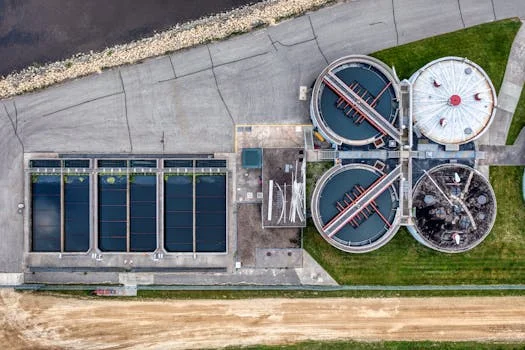
Selecting the optimal sewage treatment equipment for Chonburi’s industrial estates hinges on influent characteristics, effluent quality targets, and site-specific constraints like space and energy availability. Each technology offers distinct advantages for particular wastewater profiles.
- MBR (Membrane Bioreactor): MBR systems achieve COD removal rates of 95–98% and produce effluent with TSS consistently below 1 mg/L, making them ideal for meeting stringent IEAT standards and EEC water reuse targets. Their compact footprint, typically 60% smaller than conventional activated sludge systems, is critical for space-constrained sites like Amata City’s electronics plants that demand high-quality effluent for internal reuse. The energy cost for MBR systems, while higher than some alternatives, averages 0.8–1.2 kWh/m³ (HydropureWater’s MBR product specs), reflecting the energy intensity of membrane filtration. For high-strength industrial wastewater, MBR systems for Chonburi’s high-strength industrial wastewater are a prime solution.
- DAF (Dissolved Air Flotation): DAF systems are highly effective for removing suspended solids (TSS removal 90–95%) and fats, oils, and grease (FOG removal 95–99%), making them a preferred choice for food processing industries in Suan Nong Bon or as a pre-treatment stage for wastewater with high solid content. The capital cost for DAF systems for food processing and pre-treatment in Chonburi (HydropureWater) ranges from $20K–$150K, depending on capacity, offering a cost-effective solution for specific influent challenges.
- UASB (Upflow Anaerobic Sludge Blanket): UASB reactors are well-suited for high-strength organic wastewater, such as that from Wellgrow’s automotive or certain chemical plants, achieving COD removal efficiencies of 70–85%. A significant advantage is the potential for methane recovery (0.3–0.5 m³/kg COD removed), which can offset operational energy costs. However, UASB treated effluent typically requires subsequent aerobic post-treatment to meet IEAT compliance standards due to remaining soluble organics and nutrients.
- Package Plants (WSZ Series): These fully automated, pre-engineered units, like the WSZ series, offer capacities ranging from 1–80 m³/h. They are a cost-effective and rapid deployment solution for smaller industrial estates, such as TDF Industrial Estate, or individual factory units with lower flow rates. Their primary limitations include restricted scalability and a relatively higher sludge production rate (0.3–0.5 kg TSS/kg COD removed) compared to advanced biological systems.
For complex industrial wastewater profiles in Chonburi, hybrid systems, such as UASB followed by DAF or MBR, are often deployed for optimized cost-efficiency and compliance. For example, CrownTech’s turnkey projects often integrate anaerobic pre-treatment with aerobic polishing to manage high-strength wastewater economically while meeting strict discharge limits.
| Equipment Type | COD Removal Efficiency | TSS Removal Efficiency | Typical Footprint Reduction vs. Conventional | Energy Cost (kWh/m³) | Ideal Application in Chonburi |
|---|---|---|---|---|---|
| MBR (Membrane Bioreactor) | 95–98% | >99% (<1 mg/L) | 60–70% | 0.8–1.2 | Electronics (Amata City), high reuse demand, stringent effluent |
| DAF (Dissolved Air Flotation) | 30–60% (pre-treatment) | 90–95% | N/A (often modular) | 0.1–0.3 | Food Processing (Suan Nong Bon), FOG removal, high TSS |
| UASB (Upflow Anaerobic Sludge Blanket) | 70–85% | 50–70% | 20–30% | 0.05–0.1 (net positive with methane) | High-strength organic waste (Wellgrow automotive), energy recovery |
| Package Plants (WSZ Series) | 80–90% | 85–95% | 40–50% | 0.3–0.6 | Small industrial estates (TDF), remote sites, rapid deployment |
Cost Breakdown for Chonburi Sewage Treatment Projects: Turnkey Budgets, ROI, and Hidden Costs
Turnkey sewage treatment projects in Chonburi involve significant capital and operational expenditures, with total costs varying widely based on capacity, technology, and site complexity. For package plants designed for 10–50 m³/day, turnkey costs typically range from $50K–$200K, offering a cost-effective solution for smaller operations. Larger, more advanced MBR or DAF systems handling 500–2,000 m³/day can command budgets from $500K–$2M+. It is prudent to include a 10–15% contingency in civil works budgets, especially in Chonburi, due to the region's high water table which can necessitate deeper foundations or dewatering.
Operational costs (OPEX) are a critical long-term consideration. For MBR systems, OPEX typically falls between $0.15–$0.40/m³, while DAF systems generally incur $0.10–$0.25/m³ (HydropureWater’s internal data, 2024). Energy consumption consistently accounts for the largest portion of OPEX, often exceeding 60% for MBR systems due to aeration and membrane filtration requirements. Chemical consumption for pH adjustment or coagulation can also contribute significantly, particularly for influent with extreme pH variations.
The return on investment (ROI) for industrial estates is driven by several factors beyond direct treatment costs. Water reuse, for instance, can generate savings of $0.50–$1.50/m³ by reducing reliance on municipal or raw water sources. Avoiding IEAT non-compliance fines, which can range from THB 100K–500K per violation, is another substantial financial benefit. Additionally, Board of Investment (BOI) promotions for projects within the EEC can offer tax incentives, further improving ROI. A simple ROI calculation can be performed using the formula: (Annual Savings – Annual OPEX) / CAPEX * 100 = ROI%. For example, an Amata City factory investing $1.2M in an MBR system that generates $300K/year in water reuse savings and avoided fines would achieve a 25% ROI.
Hidden costs often surprise project owners. Permitting fees, including environmental impact assessments (EIA) for larger projects, can range from THB 200K–500K. Sludge disposal, a recurring expense, typically costs THB 2K–5K/ton in Chonburi. neglecting after-sales support and maintenance contracts can lead to higher long-term costs, often amounting to 10–20% of the initial CAPEX per year for optimal system performance and longevity.
| Cost Category | Typical Range for Chonburi Projects (2025) | Notes |
|---|---|---|
| CAPEX (Turnkey Project) | ||
| Package Plants (10–50 m³/day) | $50K–$200K | Includes civil works, equipment, installation |
| MBR/DAF Systems (500–2,000 m³/day) | $500K–$2M+ | Includes civil works, equipment, installation, commissioning |
| Contingency (Civil Works) | 10–15% of Civil Works | Accounts for Chonburi's high water table |
| OPEX (Per Cubic Meter) | ||
| MBR Systems | $0.15–$0.40/m³ | Energy (60% of OPEX), chemicals, labor, maintenance |
| DAF Systems | $0.10–$0.25/m³ | Energy, chemicals (coagulants), sludge handling, labor |
| Hidden Costs | ||
| Permits (PWA, DIW, EIA) | THB 200K–500K | One-time fees, can vary by project size |
| Sludge Disposal | THB 2K–5K/ton | Recurring cost, depends on sludge volume and type |
| After-Sales Support/Maintenance | 10–20% of CAPEX/year | Annual contracts, spare parts, emergency repairs |
Top Sewage Treatment Equipment Suppliers in Chonburi: Technical Capabilities, After-Sales Support, and Vendor Checklist
Evaluating sewage treatment equipment suppliers in Chonburi requires a structured approach that goes beyond initial quotes, focusing on technical expertise, local operational presence, and long-term support. A robust vendor evaluation framework is critical for facility managers and EPC contractors to ensure project success and sustained compliance.
Several key players operate in the Chonburi market, each with distinct strengths:
- IWRM: Primarily known for water supply and broader water management services within industrial estates, including some treatment aspects.
- GEM Environmental Management Co., Ltd.: A strong contender for operation and maintenance services, with significant experience in managing central wastewater treatment plants, such as their work on Central Wastewater Treatment Plant No.4 in Amata City. This MBR system, with a 5,000 m³/day capacity, boasts a 95% uptime (2023 data), setting a high benchmark for reliability.
- CrownTech Engineering: Specializes in turnkey wastewater treatment projects, offering planning, design, and construction services for various technologies, including MBR and MBBR. They are known for integrating hybrid systems for cost-efficiency.
- Sika Thailand: While not a direct equipment supplier, Sika provides essential chemicals and coatings for wastewater treatment plant infrastructure, crucial for durability and protection in industrial environments.
- HydropureWater: As an equipment manufacturer, HydropureWater provides a range of core technologies such as MBR, DAF, and package plants, often partnering with local EPCs for deployment in Chonburi.
When shortlisting sewage treatment equipment supplier in Chonburi, consider the following vendor evaluation checklist:
| Vendor Evaluation Checklist | Key Questions to Ask | Evaluation Criteria |
|---|---|---|
| Technical Capabilities | 1. Can you provide detailed performance data (e.g., COD/TSS removal, energy consumption) for your MBR/DAF/UASB systems for industrial wastewater? | Proven track record, adherence to IEAT standards, technology fit |
| 2. Do you have certified engineers specializing in industrial wastewater treatment? | Expertise, relevant certifications (e.g., environmental engineering) | |
| Local Chonburi Presence | 3. Do you have a service center or spare parts inventory within 50 km of Amata City or Wellgrow Industrial Estate? | Proximity, rapid response capability, local stock |
| 4. Can you provide at least three local project references in Chonburi industrial estates (Amata City, Wellgrow, Suan Nong Bon)? | Local experience, verifiable deployments, client testimonials | |
| After-Sales Support | 5. What is your guaranteed response time for emergency repairs or technical support requests? | Service level agreements (SLAs), 24/7 availability |
| 6. Do you offer comprehensive operator training and ongoing maintenance contracts? | Training programs, preventative maintenance schedules | |
| Compliance & Guarantees | 7. Can you provide a performance guarantee for IEAT/EEC compliance based on our specific influent characteristics? | Legal guarantees, risk sharing, financial penalties for non-compliance |
| 8. What relevant certifications (e.g., ISO 9001, ISO 14001, Thai Industrial Standards) do your products and services hold? | Quality management, environmental management, local standards | |
| Cost & ROI Transparency | 9. Can you provide a detailed breakdown of CAPEX and OPEX, including hidden costs like permits and sludge disposal? | Transparent pricing, no hidden fees, long-term cost projections |
| 10. Can you demonstrate the ROI for our specific project, considering water reuse savings and avoided fines? | Financial modeling, clear value proposition |
Red flags during the vendor selection process include a lack of verifiable local references, vague or incomplete cost estimates, and an absence of clear IEAT/EEC certifications or performance guarantees. A reputable supplier will be transparent and proactive in addressing these points.
Step-by-Step Guide to Procuring Sewage Treatment Equipment in Chonburi
A structured procurement process is essential to navigate the complexities of acquiring sewage treatment equipment supplier in Chonburi, minimizing risks of delays, cost overruns, and non-compliance. Following a clear, phased approach can streamline the project from conception to operation.
- Phase 1: Needs Assessment (1–2 weeks). The initial step involves a thorough characterization of the wastewater influent, including parameters like COD, TSS, BOD, pH, and heavy metals. Simultaneously, define the required effluent quality based on IEAT/EEC standards and any internal water reuse targets. Site constraints, such as available footprint, power supply, and groundwater table levels, must also be meticulously documented. This detailed assessment forms the basis for technical specifications and informs vendor discussions.
- Phase 2: Vendor Shortlisting and Evaluation (2–3 weeks). Utilize the comprehensive vendor checklist to evaluate 3–5 potential suppliers. Request detailed technical proposals, performance guarantees, and project references specific to Chonburi industrial estates. For advanced systems like MBR or DAF, consider requesting pilot tests to validate performance with your actual wastewater stream, which can mitigate technical risks and provide concrete operational data. Refer to advanced DAF system configurations for food processing wastewater for insights into pilot testing benefits.
- Phase 3: Permitting and Regulatory Approval (6–12 months). This is often the longest phase. Submit detailed engineering plans to the Provincial Waterworks Authority (PWA) and the Department of Industrial Works (DIW). Projects exceeding 500 m³/day capacity typically require a full Environmental Impact Assessment (EIA), which adds significant time to the approval process. Ensure all plans adhere to IEAT effluent limits and EEC water reuse targets. This phase may also require approval for specific chemical usage, where chemical dosing systems for pH adjustment and coagulation in Chonburi play a critical role in compliance. For broader context on compliance, review Thailand’s municipal wastewater treatment standards and equipment options.
- Phase 4: Installation and Commissioning (3–6 months). Key milestones include civil works (foundation, tank construction), equipment delivery, installation, and electrical/instrumentation hook-up. Commissioning involves startup procedures, calibration, and extensive performance testing to verify the system meets design specifications and IEAT compliance limits. This phase often requires a dedicated team to manage logistics and quality control. Insights from how Busan’s industrial estates handle high-strength wastewater emphasize the importance of robust commissioning.
- Phase 5: Operation and Maintenance. Post-commissioning, focus shifts to stable operation. Train factory staff on daily checks, troubleshooting (e.g., membrane fouling for MBR systems, sludge blanket levels for UASB), and safety protocols. Establish a preventative maintenance schedule, including quarterly service visits by the supplier, mirroring successful models like GEM’s maintenance services, to ensure consistent performance and prolong equipment lifespan.
Frequently Asked Questions
Facility managers, EPC contractors, and procurement teams often have specific questions regarding sewage treatment equipment in Chonburi’s industrial estates. Below are answers to common inquiries to aid in vendor selection and project planning.
What are the IEAT effluent limits for Chonburi industrial estates?
The Industrial Estate Authority of Thailand (IEAT) mandates specific effluent limits for industrial discharges. Key parameters include BOD <30 mg/L, TSS <50 mg/L, COD <120 mg/L, and pH between 5.5–9.0, as stipulated by IEAT Notification 2023. These are critical for avoiding fines and ensuring environmental compliance.
How much does a turnkey MBR system cost for a 500 m³/day plant in Amata City?
A turnkey MBR system for a 500 m³/day plant in Amata City typically costs between $800K–$1.5M in 2025. This benchmark includes civil works, equipment procurement, installation, commissioning, and initial permitting fees. The final cost can vary based on influent characteristics, site complexity, and specific supplier offerings.
What’s the lead time for sewage treatment equipment in Chonburi?
Lead times vary by system complexity. For standard package plants, expect 4–6 months from order to commissioning. More complex MBR or DAF systems, which often require custom engineering and longer manufacturing times, typically have lead times of 8–12 months, including the critical permitting phase.
Can I reuse treated wastewater in Chonburi?
Yes, treated wastewater can be reused in Chonburi, particularly within the Eastern Economic Corridor (EEC) which promotes water conservation. However, reuse is generally limited to non-potable applications such as cooling towers, irrigation, or toilet flushing. Achieving reuse quality often requires additional tertiary treatment steps like ultrafiltration (UF) or reverse osmosis (RO) and requires explicit approval from the Department of Industrial Works (DIW).
What’s the most common reason for permit delays in Chonburi?
The most common reasons for permit delays in Chonburi include incomplete Environmental Impact Assessment (EIA) reports, accounting for approximately 30% of cases, and the failure of pilot or commissioned systems to consistently meet IEAT’s BOD/TSS limits during initial testing, which occurs in about 25% of cases. Thorough initial planning and robust system design are crucial to mitigate these risks.