Industrial wastewater treatment in Madrid in 2026 still rests on EU Directive 2020/741 quality expectations for sensitive basins (BOD ≤25 mg/L, COD ≤125 mg/L) plus Canal de Isabel II sewer limits. Installed treatment CAPEX commonly falls in the €80–€250/m³ of daily capacity band. Dissolved air flotation (DAF) units remove 92–97% TSS on food-processing streams, while membrane bioreactors (MBR) produce <1 NTU effluent for pharmaceutical and reuse duties. New permits increasingly require documented energy-efficiency measures, consistent with Canal de Isabel II programmes that have already cut plant energy use by about 15%.
Industrial Wastewater Treatment in Madrid: Why Compliance Now Decides Capex
Madrid industrial dischargers must meet EU Directive 2020/741 sensitive-area targets and Canal de Isabel II sewer limits to obtain a permit. Typical plant CAPEX is €80–€250 per m³ of daily capacity. Food plants usually need DAF for FOG and TSS; pharmaceutical sites more often need MBR below 1 NTU. Fines can reach €500,000.
Madrid remains water-stressed. Canal de Isabel II 2024 figures show about 40% of industrial water demand already met by reclaimed wastewater. That share keeps rising as fresh abstractions face tighter scrutiny. Food processing drives roughly 35% of industrial WWTP demand, pharmaceuticals about 22%, and chemicals about 18%. Each sector brings a different design load. Food streams run high in fats, oils, and grease (FOG). Pharma streams often carry elevated COD and regulated micropollutants that need tighter polishing before sewer entry or reuse.
Enforcement of EU Directive 2020/741 tightened through 2025. The Spanish Ministry for Ecological Transition has cited fines up to €500,000 for serious non-compliance. Repeat cases risk operational restrictions or temporary shutdown. Heineken’s S. Sebastián de los Reyes plant near Madrid avoided an estimated €200,000 per year in potential fines after installing a modern DAF train. That upgrade cut FOG load before biological stages. It also simplified monthly permit reporting for the plant team.
Most plants we size for the Madrid corridor run food or light chemical loads at the lower end of the CAPEX band when civil works can share pads. Pharma and multi-stream parks sit higher because polishing and redundancy add skids. Early lab characterisation still saves more money than any later equipment swap.
Madrid Discharge Limits: EU Directive 2020/741 and Canal de Isabel II
Madrid discharge compliance stacks EU Directive 2020/741 rules with Canal de Isabel II industrial sewer contracts. For sensitive zones such as the Manzanares basin, commonly applied limits are BOD ≤25 mg/L, COD ≤125 mg/L, TSS ≤35 mg/L, nitrogen ≤10 mg/L, and phosphorus ≤1 mg/L. These numbers protect receiving waters. They also set the baseline envelope for industrial process design.
Canal de Isabel II often writes tighter contract limits for sewer discharge. Its 2024 tariff and connection guidance commonly cites BOD ≤20 mg/L and COD ≤100 mg/L for industrial users. Those local caps are stricter than the sensitive-area EU figures above. Sector add-ons apply in practice. Food plants typically face FOG ≤50 mg/L. Pharmaceutical streams often need total heavy metals ≤0.1 mg/L. Automotive oily waste is commonly capped at oil and grease ≤10 mg/L.
New industrial WWTP permits in Madrid still take about 6–12 months. Energy-efficiency audits are now part of many applications. That mirrors regional conservation targets rather than a single optional checkbox. Engineering teams increasingly submit parametric 3D BIM packages, similar to the Heineken upgrade file set. Clear hydraulic balances and compliance projections shorten clarification cycles with the authority.
When a site discharges to municipal sewers, the Canal contract is usually the binding day-to-day limit. When a site aims at reuse, Directive 2020/741 quality classes and monitoring frequency drive the polishing train. Write both pathways into the design brief before you freeze unit processes.
| Parameter | EU Directive 2020/741 (Sensitive Areas) | Canal de Isabel II Local Limits (Industrial Discharge) | Typical Industry-Specific Variances |
|---|---|---|---|
| BOD | ≤25 mg/L | ≤20 mg/L | |
| COD | ≤125 mg/L | ≤100 mg/L | |
| TSS | ≤35 mg/L | ≤30 mg/L | |
| Nitrogen (N) | ≤10 mg/L | ≤10 mg/L | |
| Phosphorus (P) | ≤1 mg/L | ≤1 mg/L | |
| Fats, Oils, Grease (FOG) | Not specified | ≤50 mg/L | Food Processing: ≤50 mg/L |
| Heavy Metals | Not specified | Varies by metal | Pharmaceuticals: ≤0.1 mg/L (total) |
| Oil & Grease | Not specified | ≤10 mg/L | Automotive: ≤10 mg/L |
DAF vs MBR vs Chemical Dosing for Madrid Industrial Effluents
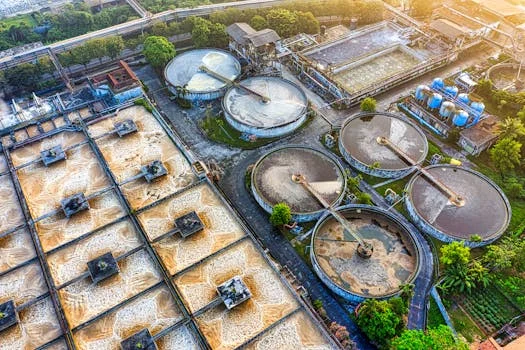
Technology choice in Madrid follows effluent profile, discharge or reuse target, and total cost of ownership. Plants with high TSS and FOG—most food processors we size for—select a DAF system for Madrid’s food processing effluents. Those units routinely deliver 92–97% TSS removal and 85–90% FOG removal. Heineken’s Madrid-area upgrade followed that pattern. Typical DAF CAPEX is €120–€200/m³ of daily capacity. OPEX sits at €0.30–€0.50/m³ treated (HydropureWater field data, 2025). Energy use stays near 0.3–0.5 kWh/m³ under normal loading.
Sites that need reuse-grade or pharmaceutical-quality water usually move to an integrated MBR system for pharmaceutical wastewater in Madrid. MBR trains hold turbidity below 1 NTU. They exceed 99% pathogen removal when membranes and disinfection run at design flux. Energy is higher at 0.8–1.2 kWh/m³ versus DAF’s 0.3–0.5 kWh/m³. CAPEX typically lands at €250–€400/m³ of daily capacity. OPEX lands at €0.60–€0.90/m³ because of power and membrane care.
Where bulk COD cut or metal precipitation is the first need, an PLC-controlled chemical dosing for Madrid’s industrial pre-treatment train is often the cheapest opener. Coagulation and flocculation commonly remove 70–85% COD. CAPEX is about €50–€100/m³. OPEX is about €0.20–€0.40/m³, though reagent spend swings with load. Hybrid trains remain common on dairy sites. Pairing DAF ahead of MBR can reach about 95% COD removal at roughly 30% lower cost than MBR alone, because solids and FOG never hit the membranes.
Compact sites without a deep civil footprint sometimes add an Underground Package Sewage Treatment Plant (WSZ Series) as a packaged biological block after primary clarification. Most plants we size for Madrid industrial parks still keep DAF or chemical pre-treatment upstream when FOG or metals are high. The package unit then holds stable BOD polishing without a large above-grade tank farm.
| Technology | Key Performance | Ideal Application | Typical CAPEX (€/m³ of daily capacity) | Typical OPEX (€/m³ of treated water) | Energy Consumption (kWh/m³) |
|---|---|---|---|---|---|
| DAF (Dissolved Air Flotation) | 92–97% TSS removal, 85–90% FOG removal | Food Processing (dairy, meat, beverages), Oil & Gas | €120–€200 | €0.30–€0.50 | 0.3–0.5 |
| MBR (Membrane Bioreactor) | <1 NTU effluent, 99% pathogen removal, high COD/BOD removal | Pharmaceuticals, Water Reuse, High-Quality Discharge | €250–€400 | €0.60–€0.90 | 0.8–1.2 |
| Chemical Dosing (Coagulation/Flocculation) | 70–85% COD removal, heavy metal precipitation | Pre-treatment, Polishing, pH adjustment, General Industry | €50–€100 | €0.20–€0.40 (varies with chemical costs) | 0.1–0.2 |
Cost Breakdown: Industrial WWTPs in Madrid (2025 Data)
Madrid industrial WWTP budgets split into CAPEX and OPEX shaped by local power, labour, and permit fees. CAPEX typically spans €80–€250/m³ of daily treatment capacity. Small specialised skids often sit at €200–€250/m³. Larger continuous flows can drop toward €80–€120/m³ once civil and mechanical packages share duty.
OPEX usually breaks down as energy 40%, chemicals 25%, labour 20%, and maintenance 15%. Madrid industrial power averages about €0.18/kWh. That sits below an EU average near €0.22/kWh and matters for MBR and aeration-heavy trains. Skilled operators commonly cost €30–€45/hour. New-plant permit fees often fall between €5,000 and €20,000 depending on complexity.
ROI rarely comes from treatment alone. Reclaimed water can save about €1.50/m³ versus fresh supply on many Madrid sites. Avoided fines above €100,000 per year change the payback math quickly. Energy rebates up to 30% appear on efficient designs that match Canal de Isabel II reduction targets. Canal programmes aimed at a 10% CO₂ cut have been linked to about €1.2 million per year in energy savings in published SWAN Forum material. Use that figure as context when you model rebate eligibility, not as a site guarantee.
Build a simple three-line model before vendor talks: CAPEX per m³/d, OPEX per m³ treated, and avoided purchase or fine value per year. Most procurement teams we support find the OPEX line decides DAF versus MBR long before the brochure specs do.
| Cost Category | Range / Breakdown | Madrid-Specific Factor (2025) |
|---|---|---|
| CAPEX (Initial Investment) | €80–€250/m³ of daily capacity | Small systems: €200–€250/m³ Large systems: €80–€120/m³ |
| OPEX (Annual Operating Costs) | Total OPEX varies by technology | |
| Energy | 40% of total OPEX | €0.18/kWh (vs. EU average €0.22/kWh) |
| Chemicals | 25% of total OPEX | Varies by effluent and treatment type |
| Labor | 20% of total OPEX | €30–€45/hour for operators |
| Maintenance | 15% of total OPEX | Includes spare parts, routine servicing |
| Permit Fees | €5,000–€20,000 | One-time fee for new WWTPs |
| ROI Drivers (Potential Savings) | Water reuse: €1.50/m³ savings Avoided fines: up to €100K/year Energy rebates: up to 30% for efficient systems |
Equipment Selection Checklist for Madrid Industrial Sectors
Equipment selection for a Madrid industrial site works best as a short engineering checklist, not a brochure comparison. Use the five steps below to lock effluent data, technology, peak flow, energy, and growth room before you freeze CAPEX.
- Step 1: Define Effluent Profile. Run lab tests or mine 12 months of history for BOD, COD, TSS, FOG, pH, and metals. Without those numbers, every later quote is guesswork.
- Step 2: Match Profile to Technology. High FOG food streams usually start with DAF systems. Pharma and reuse targets lean to MBR systems. General COD or metal pre-treatment often stays on chemical dosing. When sludge cake limits drive the back end, compare sludge dewatering options for Madrid’s industrial WWTPs before you freeze the solids train.
- Step 3: Size System Based on Peak Flow. Design on peak m³/h, not average day only. Add about 20% hydraulic buffer for seasonal spikes and modest expansion so permit limits still hold on busy shifts.
- Step 4: Evaluate Energy Efficiency. Compare kWh/m³ across shortlists. Lower specific energy cuts OPEX and can qualify for Canal de Isabel II rebates up to 30% on efficient packages.
- Step 5: Plan for Scalability. Prefer modular MBR cassettes, skid DAF cells, or a second Underground Package Sewage Treatment Plant (WSZ Series) train that expands without a full rebuild when production rises or limits tighten.
A practical decision tree starts with the load. High FOG points to DAF. Pathogen or reuse targets point to MBR. High COD or metals for pre-treatment point to chemical dosing. Only after that gate do flow, permit limits, and energy decide the final bill of materials.
Selection checklist you can paste into a bid sheet:
- Confirm Canal contract limits versus reuse class targets.
- Attach peak and average flow with the 20% buffer stated.
- State FOG, COD, and metal peaks with sample dates.
- Require vendor kWh/m³ at design flux, not nameplate only.
- Ask for spare-parts lead times into Madrid.
- Record permit fee and audit scope in the project budget.
- Define expansion modules before civil concrete is poured.
Who This Is For and Next Step
Plant engineers, EPC contractors, and procurement teams specifying food, pharma, or chemical wastewater plants for Canal de Isabel II sewers or reuse are the audience here. Teams treating only municipal sewage without industrial FOG or metals should look elsewhere. If lab data and peak-flow figures are ready, request a sized proposal through our Madrid industrial WWTP inquiry form with BOD, COD, FOG, and m³/d attached.
Frequently Asked Questions
What fines apply for EU Directive 2020/741 non-compliance in Madrid?
Penalties for serious non-compliance with EU Directive 2020/741 in Madrid can reach €500,000. Repeat violations may trigger facility restrictions or shutdown orders. Canal de Isabel II contract breaches can add surcharge and disconnection risk on top of national fines. Most plants we size treat those figures as a hard ROI input when comparing DAF or MBR upgrades against continued non-compliant discharge.
How much does an industrial WWTP cost in Madrid?
Industrial WWTP CAPEX in Madrid typically ranges from €80–€250/m³ of daily capacity. Technology, peak flow, and civil complexity set the final point in that band. Compact specialised trains often sit near €200–€250/m³. Larger shared plants can land closer to €80–€120/m³. Add permit fees of €5,000–€20,000 and OPEX driven by energy at about €0.18/kWh, chemicals, labour at €30–€45/hour, and maintenance.
What is the best treatment for food-processing wastewater in Madrid?
DAF systems are usually the first-choice core for Madrid food-processing effluent. They remove 92–97% TSS and 85–90% FOG under normal dairy, meat, and beverage loads. Typical DAF CAPEX is €120–€200/m³ of daily capacity with OPEX €0.30–€0.50/m³ and energy 0.3–0.5 kWh/m³. For broader European cost and compliance benchmarks, see DAF system benchmarks for European food processing.
Can treated industrial wastewater be reused in Madrid?
Yes. Madrid industrial reuse is feasible when advanced trains such as MBR, often with polishing, hold turbidity below 1 NTU and deliver about 99% pathogen removal. Canal de Isabel II already supplies a large share of industrial demand from reclaimed water, so reuse-ready effluent has a clear offtake path. Similar high-grade targets appear in Spain’s hospital wastewater treatment requirements for 2025.
How long does a Madrid industrial WWTP permit take?
A new industrial WWTP permit in Madrid typically takes 6–12 months from complete submission to decision. Many files now require an energy-efficiency audit alongside hydraulic and effluent projections. Submitting clear BIM or process drawings early reduces clarification loops. Incomplete effluent data is the most common cause of delay we see on Madrid industrial applications.