How Coagulant Dosing Systems Work: Mechanism, Parameters, and Limitations
Coagulant dosing systems remain the industry standard for industrial wastewater treatment, achieving 80–97% COD removal and 90–99% turbidity reduction at optimal dosages (typically 50–500 mg/L for inorganic coagulants like PACl or FeCl₃). The process relies on the neutralization of negative surface charges on colloidal particles, allowing them to overcome electrostatic repulsion and aggregate into micro-flocs. This mechanism follows a strict sequence: rapid mixing (1–3 minutes) to disperse the coagulant, followed by slow-speed flocculation (20–30 minutes) to build particle size, and finally sedimentation (2–4 hours) where gravity separates the solids from the effluent.
The efficiency of a coagulant dosing system is highly dependent on pH control and dosage precision. For instance, aluminum sulfate (Al₂(SO₄)₃) requires a narrow pH window of 5.5–7.5 to prevent the formation of soluble aluminate ions, which would otherwise remain in the treated water. Ferric chloride (FeCl₃) offers more flexibility with an optimal range of 4.5–6.5 but is significantly more corrosive to infrastructure. Overdosing is a common operational failure; exceeding the optimal dosage can lead to charge reversal and restabilization of colloids, while simultaneously increasing sludge volume by 20–40% (HydropureWater field data, 2025). Modern systems, such as HydropureWater’s PLC-controlled coagulant dosing systems, mitigate these risks by integrating real-time pH and flow sensors to adjust metering pump outputs dynamically.
| Coagulant Type | Optimal pH Range | Typical Dosage (mg/L) | Primary Application |
|---|---|---|---|
| Aluminum Sulfate (Alum) | 5.5 – 7.5 | 50 – 150 | Municipal water, low-turbidity industrial |
| Ferric Chloride (FeCl₃) | 4.5 – 6.5 | 20 – 200 | Heavy metal removal, color reduction |
| Polyaluminum Chloride (PACl) | 6.0 – 8.0 | 10 – 100 | General industrial, paper & pulp |
| Chitosan (Organic) | 6.5 – 8.5 | 5 – 30 | Food processing, eco-sensitive zones |
Electrocoagulation vs Chemical Dosing: Removal Rates, Energy Use, and Sludge Production
Electrocoagulation (EC) utilizes sacrificial anodes to release metallic cations into the wastewater, providing a removal efficiency of 92–98% for COD and 95–99% for turbidity without the addition of bulk chemicals. Unlike chemical dosing, which introduces sulfates or chlorides into the effluent, EC generates coagulants in situ via electrolytic oxidation. This process is particularly effective for emulsified oils and complex organics where traditional chemical dosing might struggle. In head-to-head comparisons, EC often achieves higher COD removal rates (up to 98%) compared to the 80–97% typical of chemical systems (per industry benchmarks, 2025).
Operational trade-offs between the two systems center on energy and maintenance. While chemical dosing requires minimal electricity (0.1–0.3 kWh/m³ for mixing), EC systems consume 0.5–2 kWh/m³ depending on the conductivity of the wastewater. However, EC generates 30–50% less sludge by volume than ferric or alum dosing because it avoids the added mass of the chemical counter-ions. Maintenance for EC focuses on electrode replacement; aluminum electrodes typically last 1,000–2,000 hours, while iron electrodes require replacement every 500–1,000 hours due to higher corrosion rates. Process parameters for EC usually require a current density of 10–20 A/m² and a residence time of 10–30 minutes, significantly shorter than the multi-hour residence times required for chemical sedimentation tanks.
| Parameter | Chemical Dosing | Electrocoagulation (EC) |
|---|---|---|
| COD Removal Rate | 80% – 97% | 92% – 98% |
| Energy Consumption | 0.1 – 0.3 kWh/m³ | 0.5 – 2.0 kWh/m³ |
| Sludge Volume | Baseline (100%) | 50% – 70% of baseline |
| Chemical Handling | High (Storage/Safety) | Low (In-situ generation) |
| Footprint | Large (Clarifiers) | Compact (Reactor cells) |
DAF Systems as a Coagulant Alternative: When Flotation Outperforms Sedimentation
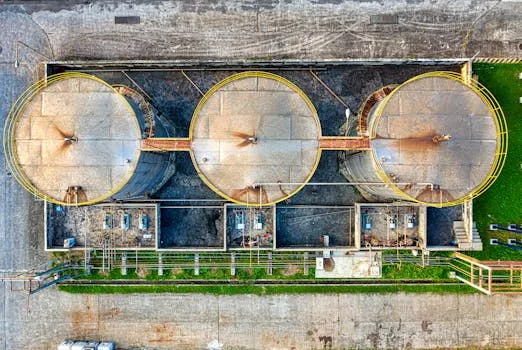
Dissolved Air Flotation (DAF) systems outperform traditional sedimentation-based coagulation in applications involving high concentrations of fats, oils, and grease (FOG) or low-density suspended solids. While traditional coagulation relies on particles sinking, DAF uses micro-bubbles (30–50 µm) to attach to flocs and lift them to the surface. This mechanical advantage allows DAF to achieve 95–99% FOG removal, whereas standard sedimentation often plateaus at 70–90%. For textile or food processing wastewater, DAF systems for high-efficiency FOG and turbidity removal provide a faster, more reliable separation phase.
The footprint of a DAF system is typically 50–70% smaller than a conventional sedimentation tank for the same flow rate, a critical factor for urban industrial sites. Data from a food processing plant in France indicated that switching from a clarifier to a DAF system reduced the total treatment footprint by 60% while maintaining compliance with local discharge limits. DAF can reduce coagulant consumption by 30–50% because the flotation process is less dependent on building large, heavy flocs; smaller, lighter flocs are actually preferred for bubble attachment. For more information on European benchmarks, engineers should consult the DAF system requirements and cost benchmarks for European markets.
Biological Treatment vs Coagulation: Cost, Compliance, and Operational Trade-offs
Biological treatment systems, such as Membrane Bioreactors (MBR), are the preferred alternative when the primary goal is the removal of dissolved organic matter (BOD) rather than just suspended solids (TSS). While chemical coagulation is effective for COD removal (80–97%), it often fails to meet strict BOD discharge limits, typically removing only 40–60% of dissolved organics. In contrast, biological systems achieve 90–98% BOD removal and 85–95% COD removal. Integrated MBR systems for near-reuse-quality effluent produce a permeate with TSS levels below 1 mg/L, making the water suitable for cooling tower make-up or irrigation.
The operational trade-off for biological systems is complexity and sensitivity. Biological reactors require a consistent food-to-microorganism (F/M) ratio and are susceptible to toxic shocks from heavy metals or extreme pH—contaminants that chemical dosing systems handle with ease. From a cost perspective, biological systems have a 20–40% higher CAPEX but offer 30–50% lower OPEX because they eliminate the recurring cost of bulk coagulants and generate 50–70% less sludge. This makes biological treatment more attractive for long-term municipal or large-scale industrial projects where sludge disposal costs are high.
| Feature | Chemical Coagulation | Biological (MBR) |
|---|---|---|
| BOD Removal | 40% – 60% | 90% – 98% |
| Sludge Yield | 0.5 – 1.0 kg/kg COD | 0.2 – 0.4 kg/kg COD |
| Sensitivity | Low (Robust) | High (Biomass health) |
| Effluent Quality | Discharge-ready | Reuse-ready |
Cost Comparison: CAPEX, OPEX, and ROI for Coagulant Dosing vs Alternatives

Procurement specialists must balance initial capital expenditure (CAPEX) against the long-term operational costs (OPEX), particularly chemical consumption and sludge management. Coagulant dosing systems offer the lowest CAPEX, ranging from $50–$200/m³/day of capacity. However, they carry the highest OPEX due to the price of chemicals and the high cost of disposing of chemical-laden sludge. In many regions, sludge disposal costs range from $50 to $200 per ton, making the 30–50% sludge reduction offered by Electrocoagulation or MBR a significant financial driver. For a detailed breakdown of these variables, refer to detailed OPEX benchmarks for industrial wastewater treatment.
The Return on Investment (ROI) for more expensive systems like MBR or DAF is typically realized within 18–36 months through reduced chemical spend and lower discharge fines. To estimate the payback period, engineers should use a 3-step framework: 1) Calculate annual chemical and energy costs; 2) Determine local sludge disposal and discharge fees; 3) Compare the total 5-year cost of ownership. For example, while an MBR system costs $200–$500/m³/day to install, the reduction in sludge volume and the ability to reuse water often offsets the price difference within three years in high-water-cost environments.
| System Type | CAPEX ($/m³/day) | OPEX ($/m³) | Sludge Disposal Cost |
|---|---|---|---|
| Coagulant Dosing | 50 – 200 | 0.10 – 0.30 | Highest |
| Electrocoagulation | 100 – 300 | 0.05 – 0.20 | Moderate |
| DAF System | 80 – 250 | 0.08 – 0.25 | Moderate |
| MBR System | 200 – 500 | 0.15 – 0.40 | Lowest |
Compliance Benchmarks: How Each System Meets Global Discharge Standards
Compliance with discharge standards such as EPA 40 CFR Part 403 or China’s GB 8978-1996 dictates the minimum required treatment efficiency. For projects in the United States, the EPA sets strict limits for TSS (<30 mg/L) and pH (6.0–9.0). A standard coagulant dosing system can meet these limits if properly managed, but fluctuations in influent quality can cause non-compliance events. In contrast, the EU Urban Waste Water Directive 91/271/EEC requires COD levels below 125 mg/L and BOD below 25 mg/L, which often necessitates a biological treatment step or a combination of coagulation and DAF.
In China, the GB 8978-1996 standard for "sensitive areas" requires COD levels to be below 100 mg/L. For many industrial wastewaters, achieving this requires a multi-stage approach: chemical coagulation for primary solids removal followed by DAF or MBR for polishing. EHS managers must also consider the downstream impact of sludge; chemical sludge from FeCl₃ dosing may be classified as hazardous in certain jurisdictions due to heavy metal concentration, whereas biological sludge is often easier to stabilize. For dewatering these varying sludge types, engineers can evaluate sludge dewatering options for coagulation and DAF systems.
| Standard | COD Limit | BOD Limit | Recommended System |
|---|---|---|---|
| EPA 40 CFR 403 | <500 mg/L | N/A (Pre-treat) | Coagulation / DAF |
| EU 91/271/EEC | <125 mg/L | <25 mg/L | MBR / Biological |
| China GB 8978-1996 | <100 mg/L | <20 mg/L | Coagulation + DAF |
Decision Framework: How to Select the Right System for Your Wastewater
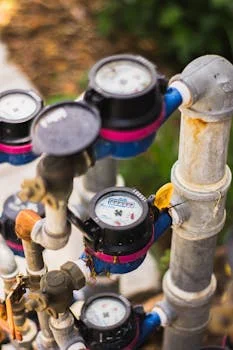
Selecting the optimal system requires a systematic evaluation of wastewater characteristics and project goals. Engineers should follow this four-step decision framework to ensure technical and financial viability.
Step 1: Characterize the Influent. Perform a full lab analysis of the wastewater. If FOG is >100 mg/L, DAF is likely required. If BOD/COD ratio is >0.5, biological treatment is viable. If the wastewater contains high concentrations of heavy metals, ferric-based chemical dosing or electrocoagulation is preferred.
Step 2: Define Treatment Objectives. Are you treating for direct discharge, sewer discharge (pre-treatment), or reuse? Reuse requires MBR or tertiary filtration. Pre-treatment for municipal sewers is most cost-effectively handled by a standard coagulant dosing system.
Step 3: Evaluate Constraints. Assess available footprint and power supply. If space is limited, avoid large sedimentation clarifiers in favor of DAF or EC. If electricity is expensive, prioritize chemical dosing over EC.
Step 4: Conduct Pilot Testing. Before full-scale procurement, run a 4-week pilot test. Track chemical consumption, sludge yield, and effluent stability across varying flow rates. This data is essential for validating the ROI and ensuring compliance with local EHS standards.
| Industrial Sector | Typical Wastewater Profile | Primary Choice | Secondary Choice |
|---|---|---|---|
| Food & Beverage | High FOG, High BOD | DAF | MBR |
| Textile / Dyeing | High Color, Variable pH | Coagulation (FeCl₃) | Electrocoagulation |
| Petrochemical | Hydrocarbons, Emulsions | DAF + EC | Chemical Dosing |
| Municipal | Consistent BOD/TSS | MBR | Chemical Dosing |
Frequently Asked Questions
What is the main difference between PAC and ACH in dosing systems?Polyaluminum Chloride (PAC) and Aluminum Chlorohydrate (ACH) are both aluminum-based coagulants, but ACH has a higher basicity (typically 83%) compared to PAC (50-70%). This means ACH consumes less alkalinity and produces less sludge, but it is more expensive per kilogram. ACH is often preferred in low-alkalinity waters where pH stability is a concern.
What happens if you add too much coagulant to the system?Overdosing leads to "charge reversal," where the excess coagulant coats the particles in a new layer of positive charge, causing them to repel each other again. This results in poor settling, high effluent turbidity, and a massive increase in sludge production—sometimes up to 40% more than necessary—which significantly inflates disposal costs.
Can electrocoagulation completely replace chemical dosing?In many cases, yes, especially for heavy metals and emulsified oils. However, for very high-flow municipal applications, the energy costs and electrode maintenance of EC can be prohibitive compared to the simplicity of bulk chemical dosing. EC is best suited for decentralized industrial treatment or where chemical storage is a safety risk.
How does bubble size affect DAF system efficiency?Optimal DAF performance requires micro-bubbles between 30 and 50 micrometers. If bubbles are too large (>100 µm), they rise too quickly and can break the fragile flocs. If they are too small, the rise rate is too slow, requiring a larger tank footprint. Precision air saturation systems are critical for maintaining this balance.