Why LG Hungary’s RO Capacity Is Not Yet a Verified Number
No verified, site-specific RO capacity for LG Energy Solution’s new Hungarian battery plant appears in the supplied 2026 evidence. A defensible estimate must start with average and peak segregated wastewater flows, subtract streams returning to production, and apply the proposed recovery chain: MBR, 0.03 μm UF pretreatment, high-pressure RO at up to 95% recovery and optional EDI polishing. The only wastewater benchmark available is 200–800 m³/day for a phased 10–20 GWh/year battery facility, but this is not an LG flow. Required RO feed capacity must therefore remain a preliminary vendor-sizing range until LG or its EPC provides the plant water balance and feed chemistry.
The regional planning figure of up to 60,000 m³/day concerns total industrial water demand in the Debrecen industrial park, not LG’s wastewater generation or RO feed. Greenpeace Hungary reported that figure in May 2025; it cannot be assigned to the battery plant or converted into membrane capacity.
The available benchmark states that a phased 10–20 GWh/year battery facility generates 200–800 m³/day of total industrial wastewater, also from Greenpeace Hungary, May 2025. Its scope is not LG Energy Solution Hungary and does not identify reusable flows, peak discharges, contaminant concentrations or operating hours. Treat this only as a screening reference during data requests, not as an RFQ duty.
Every bid should distinguish four capacity terms:
- Installed nameplate: the maximum design condition of the supplied equipment.
- Normal operating capacity: treatment under representative production and reuse conditions.
- Peak treatment capacity: the duty required during a defined transient, cleaning or batch-coalescing event.
- Guaranteed capacity: the tested feed flow and permeate or recovery performance the supplier accepts contractual responsibility for.
The Hungarian battery-gigafactory ZLD capacity methodology provides the same boundary discipline: production output is not a wastewater factor, and the treatment train must be calculated from segregated flows and operating cases. These principles ensure that RO sizing reflects the actual plant chemistry and hydraulics.
The Water Balance That Drives RO Sizing
RO feed capacity is the water entering the membrane treatment boundary after direct reuse and other approved treatment routes have been deducted; it is not the plant’s total water consumption or wastewater flow. The LG Energy Solution Hungary wastewater treatment framework identifies the stream segregation needed for that calculation.
Request average and peak flows, operating schedules, temperature, pH, conductivity or TDS, COD, oil and grease, suspended solids, NMP, nickel, manganese, cobalt, lithium and fluoride for each relevant stream. Sampling methods and variability matter because a daily average can conceal batch discharges and cleaning peaks.
| Water stream | RO-sizing decision | Information required from LG or its EPC |
|---|---|---|
| NMP condensate; cathode and anode washdown | Determine solvent recovery, direct reuse or dedicated pretreatment before any membrane feed. | Average and peak flow; COD; NMP; oil; suspended solids; temperature; reuse destination. |
| Electrolyte rinse water | Keep separate because hydrolysed LiPF6-derived compounds can affect chemistry and treatment selection. | Flow; pH; fluoride; lithium; conductivity; batch profile. |
| Machining and cleaning wastewater | Assess oil and solids removal before biological or membrane treatment. | Oil and grease; TSS; COD; cleaning chemicals; discharge frequency. |
| Contact cooling water and cooling-tower blowdown | Assess direct reuse or membrane recovery according to temperature and scaling risk. | Flow; conductivity; cycles of concentration; temperature; seasonal variation. |
| Sanitary wastewater | Keep outside the industrial RO boundary unless a documented reuse route applies. | Flow; load; discharge destination. |
| Startup, shutdown and upset dumps | Define whether equalisation, temporary storage or diversion is required. | Volume; duration; chemistry; coincidence with production. |
- List every stream entering the wastewater system.
- Assign each stream a direct-reuse destination, dedicated treatment route or permitted residual route.
- Deduct direct reuse and flows diverted to another approved treatment route.
- Apply the residual treatment sequence to the water that must enter RO.
The governing relationship is:
RO feed flow = total wastewater entering the boundary − directly reused water − flows assigned to another approved treatment route.
The cited manufacturing energy requirement of 50–65 kWh per kWh of battery-cell capacity is an energy relationship reported by Greenpeace Hungary in May 2025. It is not an RO-sizing factor, evaporation duty or recovery assumption.
From Wastewater Flow to Permeate and Concentrate
High-pressure RO systems can recover up to 95% of their feed volume, though this figure represents an upper-end process reference from Greenpeace Hungary, May 2025, rather than a guaranteed recovery rate for LG Hungary. A preliminary duty should show the calculation and the sensitivity rather than conceal the recovery assumption inside a headline capacity.
| Calculation | Preliminary relationship | Engineering qualification |
|---|---|---|
| Preliminary RO feed | Net wastewater assigned to RO | Use normal and peak flows separately. |
| Permeate flow | RO feed × selected recovery assumption | Test whether feed chemistry, fouling and product purity permit the selected assumption. |
| Concentrate flow | RO feed − permeate flow | Carry the full stream into the residual-management balance. |
| Module count | Permeate duty ÷ selected permeate flux | Do not size from module count alone. |
The cited modular reference gives 0.5–2.0 m³/h per RO stack module, based on permeate flux and TDS, with product-water purity below 0.1 μS/cm addressed through polishing; Greenpeace Hungary published that reference in May 2025. It is a preliminary selection guide, not an LG equipment guarantee. Feed chemistry, temperature, recovery, concentrate disposal route and required permeate quality must be fixed before a module count is defensible.
A higher recovered-water percentage does not automatically reduce installed RO capacity when recycle, conductivity limits, fouling, scaling or concentrate handling restrict the usable duty. Each bidder should state the recovery calculation boundary: whether permeate is counted at the RO outlet, after recirculation or after downstream polishing.
If permeate must reach conductivity below 0.1 μS/cm, the downstream EDI polishing system should remain separate from the RO feed calculation. EDI receives RO permeate; it does not increase the wastewater flow entering RO. The industrial high-pressure RO system should be quoted against a stated feed flow, recovery, permeate quality and concentrate outlet.
Protecting RO from Battery-Manufacturing Wastewater
Segregating contaminant streams before membrane treatment is more defensible than blending NMP-bearing washwater, oils, metals and cooling blowdown into one feed. The LG Energy Solution Hungary wastewater treatment framework maps several streams to dedicated removal steps.
- Oil and solids: route machining wastewater and particulate-laden washwater through dedicated clarification. The referenced DAF range is 4–300 m³/h, from Greenpeace Hungary, May 2025, but the selected duty must follow the actual stream flow and contaminant loading rather than the equipment range alone. See the DAF unit for oily and solids-bearing wastewater.
- Biodegradable organics: use an MBR treatment system where variable organic and hydraulic loads justify biological treatment. The referenced MBR concept produces permeate filtered below 1 micron and uses a footprint 60% smaller than conventional activated-sludge basins, according to Greenpeace Hungary, May 2025.
- RO protection: apply 0.03 μm UF pretreatment after MBR. UF feed acceptance should be based on MBR permeate quality, including solids, macromolecules and any demonstrated impact on downstream membranes.
- Heavy metals: place chemical precipitation and sludge dewatering around the relevant metal-bearing stream. The cited precipitation target is below 0.5 mg/L for nickel, cobalt and manganese, while plate-and-frame filter-press cake dry solids can exceed 30%, both reported by Greenpeace Hungary in May 2025. See the plate-and-frame filter press for metal sludge dewatering.
NMP-bearing streams and LiPF6-derived streams should not enter direct RO feed unless upstream treatment and representative demonstration data establish membrane compatibility, residual contaminant levels and operating stability. Required pretreatment chemistry should follow the stream analysis, including pH, COD, conductivity, NMP, fluoride, metals, suspended solids, oil and temperature.
How to Produce a Bid-Comparable Capacity Basis
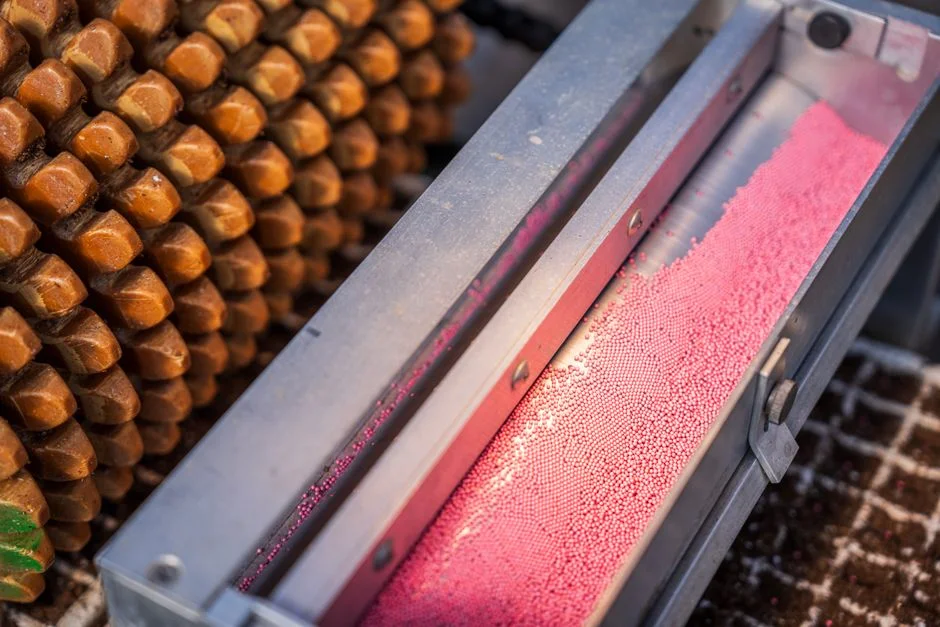
A comparable RFQ requires every bidder to quote the same feed boundary, operating cases and acceptance conditions. A larger nameplate number is not meaningful if treatment quality, redundancy or residual handling is excluded from the scope.
| RFQ item | Information each bidder must state |
|---|---|
| Guaranteed duty | Feed flow, complete feed-water analysis, permeate flow, recovery, permeate quality, concentrate outlet and operating hours. |
| Capacity definitions | Installed nameplate, normal operating capacity, peak treatment capacity and contractually guaranteed capacity, stated separately. |
| Operating cases | Normal, peak, startup, shutdown, upset, maintenance and simultaneous production-and-recovery conditions. |
| Balance and residuals | Water and solids mass balances covering pretreatment, RO, concentrate handling and final residual management. |
| Controls and compliance | CE compliance, PED 2014/68/EU pressure-vessel certification, and PLC/SCADA integration details. |
| Delivery | Ex-works schedule, transport scope, customs responsibilities and site delivery basis. |
Standardized high-pressure RO and EDI polishing skids have a stated ex-works lead time of 12–18 weeks, with a potential additional 4 weeks for European inland transport, customs and delivery, according to Greenpeace Hungary, May 2025. Suppliers should state whether their quotation includes engineering, FAT, site delivery, commissioning and spare parts.
Do not allow one bidder to price an RO-only scope while another includes equalisation, pretreatment, polishing, concentrate handling or controls. Require a common reference case, an exclusions schedule and an acceptance protocol tied to the stated feed and product-water requirements.
Hungarian Permitting and Residual-Management Risks
Battery-manufacturing facilities with cell production capacities exceeding 15 tons per day fall within revised IED industrial permitting rules, with national transposition required by July 1, 2026, according to Greenpeace Hungary via the LG wastewater treatment framework, May 2025. The formal EU battery-plant BREF and associated BAT-AEL may not be adopted until approximately 2028–2030, so permit writers may impose case-specific conditions during the interim.
Hungary’s 2024 environmental-decree amendment also requires a full EIA for battery-manufacturing activities, as reported by Greenpeace Hungary in May 2025. Before equipment is fixed, LG or its EPC should provide the approved environmental permit, sewer or receiving-water limits, waste classifications and lawful disposal routes for RO concentrate, chemical sludge and other residuals.
The concentration boundary belongs in that balance. A proposed 95% recovery does not prove zero liquid discharge, and regulatory context does not establish a site recovery rate. The heavy-metal treatment and residual-management methodology should be applied only after the permit and analytical data define the applicable route.
Frequently Asked Questions
What RO capacity should LG Energy Solution’s Hungarian plant be sized for?
Size the RO from net wastewater entering the membrane boundary after direct reuse and other approved routes are deducted. Then calculate permeate as feed multiplied by a tested recovery assumption and concentrate as feed minus permeate. Until
Frequently Asked Questions
What RO capacity does LG Energy Solution's new Hungary battery plant need?
While specific site-level capacity is proprietary, utility-scale lithium-ion battery manufacturing plants in Hungary typically require reverse osmosis (RO) systems capable of processing 150 to 500 cubic meters per hour (m³/h) of process water. This capacity is determined by the high-purity water requirements for cathode slurry mixing and electrode coating processes, which demand conductivity levels below 0.1 µS/cm.
How do I calculate RO capacity from a battery plant wastewater flow?
To calculate the required RO capacity, determine the total daily wastewater volume and apply a recovery rate factor, typically ranging from 75% to 85% for industrial battery wastewater. The formula is: Required RO Feed Capacity = (Total Effluent Flow / Recovery Rate) / Operating Hours per Day, accounting for a 10-15% safety margin to accommodate peak production cycles and membrane fouling degradation over time.
What should I include in an RO equipment RFQ for a Hungarian battery plant?
An effective RFQ must specify the influent water quality analysis (TDS, TOC, heavy metal concentrations including Lithium and Nickel), target permeate quality standards (ASTM D1193 Type II or III), and material compatibility requirements such as 316L stainless steel piping. It should also mandate CE marking compliance, energy consumption per cubic meter (kWh/m³), and specific technical documentation regarding membrane cleaning-in-place (CIP) protocols.
How much does an industrial RO system cost for battery wastewater treatment in Hungary?
Capital expenditure for a high-capacity industrial RO system in the Hungarian market typically ranges from €400,000 to €1,500,000 depending on the degree of automation, pretreatment requirements (such as ultrafiltration or media filtration), and the complexity of the concentrate management system. Operational costs generally fluctuate between €0.50 and €1.20 per cubic meter of treated water, influenced heavily by regional electricity prices and membrane replacement cycles.
What are the lead time and compliance risks for RO equipment delivery to Hungary?
Current lead times for large-scale RO skids in Europe range from 24 to 40 weeks due to supply chain constraints on high-pressure pumps and specialized membranes. Compliance risks include strict adherence to the EU Water Framework Directive and Hungarian national regulations on industrial wastewater discharge limits (especially regarding heavy metal concentrations), which may require additional post-treatment stages like ion exchange or evaporation to meet local environmental permit conditions.