What Domestic Sewage Treatment Means for Kuching Projects
Domestic sewage treatment in Kuching generally follows two routes: connect to the Sarawak centralised sewerage system or install an approved on-site treatment system. The Sarawak Sewerage Department lists Package 1 of the Kuching Centralised Wastewater Management System at 64,501 PE, serving 2,070 small-property connections and 133 large-property connections. Where connection is unsuitable, a buried A/O package plant can combine biological contact oxidation, sedimentation and disinfection; HydropureWater's WSZ Series covers 1–80 m³/h. MBR is an alternative where compactness and membrane filtration are priorities, with the HydropureWater MBR system specified for 10–2,000 m³/day.
Domestic sewage includes wastewater from residential, accommodation and institutional activities. It does not automatically include industrial process wastewater. A hotel laundry drain, commercial kitchen discharge or industrial trade effluent may need characterisation and separate pretreatment before it enters a domestic treatment train.
For a Kuching development, the route decision should begin with the receiving infrastructure, not with equipment selection. Confirm whether a central connection exists at the boundary, then assess daily and peak flow, land constraints, treatment objectives, sludge handling and the authority’s current requirements. If central service is unavailable or unsuitable, the project may require an on-site package treatment system or a hybrid arrangement combining off-site infrastructure with local treatment.
The published 64,501 PE figure provides useful infrastructure context, but it does not prove that a particular property can connect or that capacity remains available. The wider choices are explained in this domestic sewage treatment technology comparison and in the context of rural sewage treatment systems in Malaysia.
Kuching’s Centralised Sewerage Baseline
Package 1 of the Kuching Centralised Wastewater Management System has a published system coverage of 64,501 PE, with 2,070 small-property connections and 133 large-property connections. This is the official starting point for a central-connection feasibility check, not evidence of available capacity at a specific site.
Before ordering an on-site plant, obtain written answers from the relevant authority on the connection boundary, available capacity, required extension works, ownership, maintenance responsibility, discharge route, applicable consent and commissioning requirements. Also establish the programme for connection approval and physical works, because these affect the development schedule.
| Term | Meaning for this decision | Evidence required |
|---|---|---|
| Population equivalent (PE) | A design expression of wastewater contribution. | Authority-approved calculation basis for the connected development. |
| Design flow | The wastewater flow used to size hydraulic and biological components. | Average and peak project flows, with the selected design basis. |
| Instantaneous peak flow | A short-duration flow used to check pipe, pump and plant hydraulics. | Peak-flow method and the selected operating scenario. |
These three inputs are not interchangeable. A population-equivalent figure does not establish pipe capacity, and an average daily flow does not demonstrate that the system can pass a peak. If the authority confirms that central sewerage is available and acceptable for the site, the associated connection works and pretreatment obligations should be included in the project budget and programme before comparing that route with package-plant procurement.
What Local Wastewater Research Shows—and What It Cannot Prove
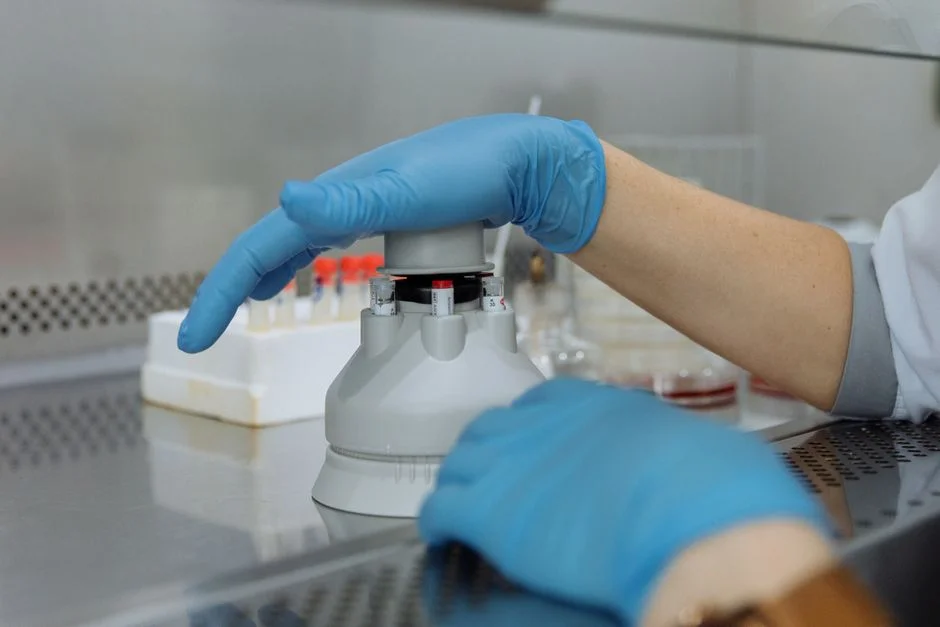
A UNIMAS study published in 2003 measured household wastewater in five Kuching residential areas, recording household water consumption of 180–371 L/c/d, wastewater flow of 47.0–92.9 L/c/d, a mean temperature of 28.0–29.5°C, and dissolved oxygen of 1.96–3.40 mg/L.
The same 2003 study found mean E. coli concentrations on the order of 10 cfu/100 mL. Residential-area loadings ranged from 9.10 × 10^8 to 5.76 × 10^9 cfu/c/d, and the researchers estimated total daily discharge of 1.64 × 10^14 cfu for an estimated population of 44,500 across the sampled housing areas. UNIMAS also published 2006 conference research titled “Treatment of domestic wastewater in Kuching City – ecological sanitation”, with constructed wetlands as its treatment topic.
| Historical UNIMAS finding | Reported scope | Engineering use in 2026 |
|---|---|---|
| Wastewater flow | 47.0–92.9 L/c/d in sampled residential areas, 2003 study. | Historical context only; not a universal sizing factor. |
| Temperature and dissolved oxygen | 28.0–29.5°C and 1.96–3.40 mg/L, respectively, in the 2003 study. | Supports the need to verify current site-specific conditions. |
| E. coli concentration | On the order of 10 cfu/100 mL in all sampled housing areas. | Shows the historical pathogen concern; it does not establish a current discharge limit. |
| Estimated daily discharge | 1.64 × 10^14 cfu for 44,500 people across the sampled areas. | Historical receiving-water risk evidence, not a design-capacity value. |
| Ecological sanitation research | Constructed wetlands were the subject of UNIMAS conference research in 2006. | Historical research topic; current projects require current approval and design inputs. |
These findings identify flows, temperature, dissolved oxygen and pathogen concerns relevant to Kuching, but they are historical research. Current sizing should use verified project flow, wastewater strength, temperature, receiving route and applicable current consent. The 2003 recommendation to channel septic-tank wastewater to central waste stabilisation ponds is receiving-water guidance, not a current approval route.
Compare Central Connections, Package Plants and MBR Systems
The central connection is the first route to test wherever service is technically and legally available because it can transfer treatment and network responsibilities to the sewerage authority. It should proceed only after confirming approval, capacity, extension works, timing, discharge route and any pretreatment obligation.
A buried A/O package plant suits sites requiring an integrated treatment process with limited visible infrastructure. HydropureWater’s buried A/O package sewage treatment plant combines anoxic/aerobic biological contact oxidation, sedimentation and disinfection in one buried unit and is catalogued at 1–80 m³/h.
An MBR wastewater treatment system is relevant where a smaller footprint, membrane separation or water-reuse positioning has value. HydropureWater combines activated sludge with submerged PVDF membrane filtration, specifies filtration below 1 μm and states a capacity of 10–2,000 m³/day. Its statement that the MBR footprint is 60% smaller than conventional systems is a manufacturer specification, not an independent Kuching site study.
| Decision factor | Central connection | Buried A/O package plant | MBR system |
|---|---|---|---|
| First technical question | Is a lawful, available connection possible? | Can the integrated process meet the verified flow, load and discharge route? | Are the footprint and treatment objectives sufficient to justify membrane treatment? |
| Catalogued capacity | Subject to authority confirmation. | 1–80 m³/h. | 10–2,000 m³/day. |
| Principal project focus | Connection works, approvals, programme and responsibility. | Process duty, excavation, installation, controls and downstream operation. | Membrane process, footprint, recovery objectives and operating requirements. |
| Key unresolved evidence | Available capacity, boundary, extension scope and consent. | Hydraulic loading, treatment duty, soil and groundwater conditions. | Effluent or reuse requirements, verified flow and operating strategy. |
Use this sequence: verify central service; confirm the discharge route; calculate flow and load; screen pretreatment needs; compare footprint and process; then verify current consent and commissioning requirements. Do not select from nominal capacity alone.
Build a Project-Specific Treatment Train
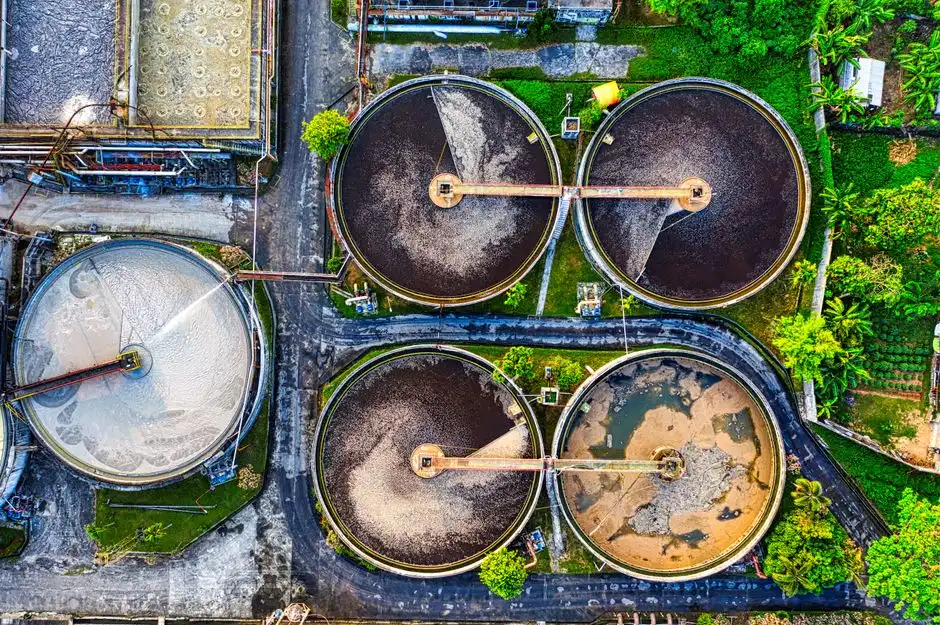
A complete treatment train starts with appropriate inlet protection. Where continuous-duty screening is needed, a municipal wastewater bar screen can remove suspended solids, rags, plastics and fibrous debris before those materials reach downstream biological, settling or membrane equipment.
For WSZ, the catalogue describes an integrated sequence of anoxic/aerobic biological contact oxidation, sedimentation and disinfection. Final hydraulic loading, biological duty, disinfection performance and site arrangement still require engineering design. For MBR, the catalogue sequence combines activated sludge treatment with submerged PVDF membrane filtration; the stated capacity is 10–2,000 m³/day and filtration below 1 μm.
| Quotation input | Information the supplier needs | Reason it affects scope |
|---|---|---|
| Design basis | Connected population or another stated basis, average flow and peak flow. | Defines hydraulic and process capacity. |
| Wastewater characteristics | Expected strength, solids, temperature and relevant industrial inputs. | Determines biological loading and pretreatment needs. |
| Site conditions | Soil, groundwater, access and available footprint. | Affects excavation, installation and civil works. |
| Treatment objective | Discharge route, required effluent quality or intended reuse. | Sets the required treatment process and testing scope. |
| Operations and residuals | Operating hours, attendance expectations and sludge-handling basis. | Defines controls, maintenance, storage and downstream arrangements. |
Discharge and reuse must be decided separately. A generic package plant does not automatically satisfy a specific reuse standard or current environmental consent. Industrial inflows also require separate pretreatment assessment before combining them with domestic sewage.
Ask Suppliers for Quotations That Can Be Compared
Comparable quotations should describe the complete engineering scope and risk allocation, not only headline treatment capacity. Ask each supplier to identify the selected technology, design flow, treatment objectives, process stages, footprint, utilities, control philosophy and expected operating attendance.
Require exclusions to be stated explicitly, including inlet works, pumping, tanks, pipework, power supply, installation, civil works, sludge handling, chemicals, commissioning, training, spares, monitoring and permit support. This prevents a quoted treatment unit from being mistaken for an installed and operational treatment works.
| Document or commercial item | What a buyer should request |
|---|---|
| Design basis | Process calculations, design flow, treatment objectives, general arrangement drawings, P&IDs and equipment schedules. |
| Testing and handover | FAT/SAT proposal, applicable sampling, commissioning requirements and third-party witnessing responsibilities. |
| Operations | O&M instructions, maintenance schedules, control descriptions and training scope. |
| Commercial boundaries | Delivery, installation, commissioning, warranty, consumables, replacement parts and exclusions. |
| Equipment configuration | WSZ at 1–80 m³/h and below-grade or trailer mounting; MBR at 10–2,000 m³/day. |
HydropureWater’s product catalogue is a source for technical comparison only. It specifies the WSZ at 1–80 m³/h, notes that it may be installed below grade or mounted on a trailer, and lists the MBR at 10–2,000 m³/day. Compliance still depends on the applicable current consent, receiving route and verified project design.
The same discipline applies to effluent projects: use this effluent treatment plant buyer’s guide to separate process performance from installation, testing and commercial exclusions.
Frequently Asked Questions
Should a Kuching property connect to the central system or install a package plant?
First verify connection availability, available capacity, required works, programme and legal approval with the relevant authority. If the connection is unsuitable, compare an on-site system against the verified discharge route, land constraints, treatment objectives and current consent. Do not choose a package plant merely because the property falls within the published Package 1 coverage area.
How should a domestic sewage
Frequently Asked Questions
Should I connect to the Kuching centralised sewerage system or install an on-site sewage treatment plant?
If your property is located within the catchment area of the Kuching Centralised Wastewater Management System, connection is mandatory under the Sewerage Services Ordinance (Sarawak). You must consult with the Kuching City North Commission (DBKU) or Kuching South City Council (MBKS) to verify if a public sewer line is accessible for your lot.
If your site is outside the coverage area, you are required to install an individual sewage treatment system that complies with the Sewerage Services Department (JPP) and the Natural Resources and Environment Board (NREB) standards. An on-site plant is only permitted when public sewer connectivity is technically or economically unfeasible.
How much sewage flow should a domestic sewage treatment plant in Kuching be sized for?
For residential developments, the design flow is typically calculated based on the MS 1228:1991 standard. A common design figure for a single residential unit is 225 liters per capita per day (lpcd), with an average occupancy rate of 5 to 6 persons per household.
For larger multi-unit developments, the plant capacity must account for peak flow factors, typically ranging from 2.5 to 3.0 times the average daily flow. Engineers must ensure the system handles the hydraulic load while maintaining a minimum retention time to allow for effective biological degradation of organic matter.
What should I ask a sewage treatment equipment supplier before requesting a quotation?
Request documentation confirming the equipment's compliance with the Department of Sewerage Services (JPP) approval list and the Environmental Quality (Sewage) Regulations 2009. Specifically, ask for the expected effluent quality in terms of Biochemical Oxygen Demand (BOD), Total Suspended Solids (TSS), and Ammoniacal Nitrogen (NH3-N) levels.
Furthermore, inquire about the maintenance schedule, the frequency of sludge removal, the power consumption in kWh/day, and the availability of local technical support in Kuching. Ask for a list of past project references in Sarawak to verify the durability of the equipment under local tropical rainfall and humidity conditions.
Is an MBR system better than a buried A/O package plant for a Kuching development?
A Membrane Bioreactor (MBR) system offers superior effluent quality, often meeting Standard A requirements, and has a smaller physical footprint compared to traditional Anoxic/Oxic (A/O) systems. It is ideal for sites with space constraints or where high-quality treated water is required for non-potable reuse.
However, buried A/O package plants generally have lower capital expenditure (CAPEX) and lower operational complexity, as they do not require the frequent membrane cleaning and high-pressure pumps associated with MBR systems. For standard residential developments in Kuching, A/O plants are often preferred for their robustness and ease of maintenance by local contractors.
What approvals and compliance documents are needed for domestic sewage treatment in Kuching?
You must obtain a "Permit to Construct" from the Sewerage Services Department (JPP) Sarawak before starting installation. This requires the submission of detailed engineering drawings, hydraulic calculations, and a site plan signed by a professional engineer registered with the Board of Engineers Malaysia (BEM).
Upon completion, you are required to conduct an effluent quality test by an accredited laboratory to ensure compliance with the Environmental Quality (Sewage) Regulations 2009. Following successful testing, you must apply for a "Certificate of Fitness" or "Permit to Operate" to legally discharge treated effluent into the public drainage system.