Best Wet Scrubber System for Industrial Use: Decision Baseline
The best wet scrubber system for industrial use depends on pollutant profile, gas flow, and permit limits. Venturi units remove about 99% of particulates >1 μm at 10–20 kPa ΔP. Packed towers reach about 95% SO2 removal at 1–5 kPa. Wet scrubber manufacturing plant cost typically runs $50–$300 per CFM (2025) when sized to EPA NSPS and EU IED targets.
Under 40 CFR Part 60 Subpart Da, electric utility steam generating units face several SO2 compliance options. According to US EPA eCFR (current as of 2026), one listed heat-input limit is 65 ng/J (0.15 lb/MMBtu) for certain solid-fuel units, alongside percent-reduction and lb/MWh pathways. Earlier guidance often cited 0.20 lb/MMBtu in related boiler contexts; Subpart Da still publishes 0.15 lb/MMBtu as an available option rather than a single universal plant-wide ceiling. Non-compliance fines cited in 2024 enforcement summaries can exceed $100,000 per day for serious or repeat violations.
In the European Union, Industrial Emissions Directive 2010/75/EU remains the core industrial air framework. Chemical plants often target VOC stack values near 20 mg/Nm³, and packed tower scrubbers are specified for about 90–98% VOC removal when solubility and L/G are adequate. For a 500 MW power plant, emission-driven forced outages can cost about $50,000 per day in lost generation, before reputational or permit effects.
According to an EPA 2023 technical report cited in prior plant case summaries, a mid-sized U.S. steel mill avoided $2.1 million in projected annual fines by replacing an aging mechanical collector with a high-energy Venturi scrubber. The retrofit also cut local PM10 complaints by 85%, showing that scrubber selection is an operating-continuity decision, not only an environmental add-on.
How does a wet scrubber system work?
A wet scrubber system removes pollutants by contacting exhaust gas with a liquid, usually water or a reagent slurry. Absorption transfers soluble gases such as SO2 and HCl into the liquid. Inertial impaction captures solid particulates when droplets and particles collide at high relative velocity.
Exhaust gas enters the scrubber vessel and meets a counter-current liquid spray. Pollutants move into the droplets as the gas rises through the contact zone. A mist eliminator then knocks out entrained liquid before the cleaned gas exits. Four parameters dominate performance: liquid-to-gas ratio (L/G), pressure drop (ΔP), residence time, and pH control.
For SO2 removal with lime, operators typically hold pH near 6.0–7.0 so calcium sulfite/sulfate can precipitate. Venturi throats often run at 45–120 m/s gas velocity, which supports about 99% capture of particles larger than 1 μm. Water use commonly runs 5–10 GPM per 1,000 CFM, so plants need wastewater treatment strategies for scrubber effluent before discharge or reuse.
| Parameter | SO2 (Gaseous) | VOCs (Gaseous) | Particulates (>1 μm) |
|---|---|---|---|
| Primary Mechanism | Chemical Absorption | Solubility/Adsorption | Inertial Impaction |
| Typical Reagent | Lime/Caustic Soda | Activated Carbon/Water | Recycled Process Water |
| Removal Efficiency | 95% - 99% | 85% - 95% | 98% - 99.9% |
| L/G Ratio (Gal/1000 ft³) | 20 - 50 | 10 - 30 | 5 - 15 |
When acid gases and heavy dust both matter, a Flue Gas Desulfurization (FGD) Scrubber System is often sized for longer gas-liquid contact so mass transfer rises without wasting reagent.
Which wet scrubber type should plants choose?
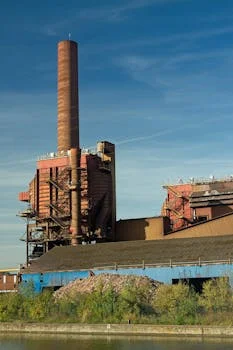
Plant engineers choose among Venturi, packed tower, and impingement scrubbers by balancing particulate load, gas solubility, pressure drop, and footprint. No single scrubber geometry wins every industrial duty; the exhaust profile decides the shortlist.
Venturi scrubbers force gas through a narrow throat into the liquid, creating high relative velocity and fine droplets. They deliver about 99% particulate removal but only about 80% SO2 absorption in many industrial duties, at 10–20 kPa ΔP. A 50,000 CFM Venturi train may need a 400 HP fan, which dominates electrical OPEX.
Packed tower scrubbers use Raschig rings or structured packing to raise contact area. They commonly reach 95%+ SO2 removal at 1–5 kPa ΔP, so fan power stays lower. High dust can foul packing; media replacement every 2–3 years can cost $20,000–$50,000 for a 50,000 CFM unit (HydropureWater field data, 2025).
Impingement scrubbers pass gas through perforated plates covered with liquid, forming a froth zone. Typical ΔP sits at 3–8 kPa, with moderate gas and particulate efficiency. Food plants and light chemical lines use them when loads are moderate and height is limited.
| Feature | Venturi Scrubber | Packed Tower | Impingement Scrubber |
|---|---|---|---|
| Particulate Efficiency | 99%+ | <70% | 90% |
| SO2 Efficiency | ~80% | 95% - 99% | 60% - 80% |
| Pressure Drop (ΔP) | 10 - 20 kPa | 1 - 5 kPa | 3 - 8 kPa |
| Height Footprint | 2 - 3 meters | 5 - 10 meters | 3 - 5 meters |
| Primary Use Case | Cement, Steel, Mining | Chemical, Acid Plants | Food, Light Mfg |
Wet Scrubber Manufacturing Plant Cost: CAPEX, OPEX, and ROI
Wet scrubber manufacturing plant cost should be modeled as CAPEX plus multi-year OPEX, not as a single equipment quote. As of 2025 benchmarks, industrial wet scrubber CAPEX still ranges from $50 to $300 per CFM of treated gas. A 50,000 CFM Venturi package with pumps, fans, and basic instruments typically installs between $1.5 million and $3 million. Stainless steel or FRP shells cost more than carbon steel but often last about twice as long in corrosive service.
Annual OPEX is driven by fan and pump power, water, and reagents. Plants commonly budget $0.50–$2.00 per 1,000 CFM treated each year, or about $25,000–$100,000 for a 50,000 CFM system. Lime slurry often trades near $150–$300 per ton, while caustic soda (NaOH) is nearer $400–$600 per ton. Automated pH loops that dose to inlet gas strength cut reagent waste. For line-item pricing factors and ROI math, see the companion wet scrubber system cost price guide.
ROI is usually penalty avoidance plus avoided downtime. If an audit path implies about $1 million per year in fines, a $2 million scrubber can show a simple two-year payback. Pairing the scrubber with sludge handling solutions for wet scrubber wastewater can cut disposal cost by about 30% when solids are thickened and water is reused.
| Industry Segment | Typical CFM | Estimated CAPEX | Annual OPEX | ROI Driver |
|---|---|---|---|---|
| Power Generation | 500,000+ | $15M - $40M | $500K - $1.2M | EPA Subpart Da Compliance |
| Chemical Processing | 20,000 - 50,000 | $800K - $2.5M | $60K - $150K | VOC/HAP Limit Adherence |
| Steel & Cement | 100,000+ | $4M - $10M | $200K - $450K | Particulate Fine Avoidance |
Compliance Mapping: EPA, EU, and World Bank Emission Benchmarks
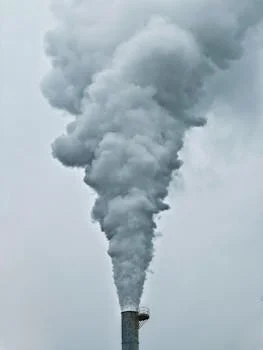
Regulatory emission limits set the minimum outlet concentration the scrubber must deliver under peak inlet load. Specifying only to today’s permit with zero margin raises retrofit risk when permits tighten or production rises.
According to US EPA eCFR Title 40 §60.43Da (current as of 2026), Subpart Da still lists 65 ng/J (0.15 lb/MMBtu) among SO2 options for specified utility steam units. Percent-reduction and output-based limits also apply by construction date and fuel. Earlier project notes sometimes treated a future 0.10 lb/MMBtu NSPS proposal as settled; that 0.10 lb/MMBtu figure was not confirmed in the current Subpart Da text reviewed for this update. Design teams should size to the specific Subpart Da pathway that applies to construction date and fuel, then add margin.
- EPA NSPS (40 CFR Part 60): Where a 0.15 lb/MMBtu SO2 heat-input option applies, lime or limestone packed towers are commonly specified for 95%+ SO2 removal.
- EU IED 2010/75/EU: To approach a 20 mg/Nm³ VOC target in chemical manufacturing, packed towers with suitable media or carbon-assisted liquids are used for about 90–98% removal when the VOC is absorbable.
- World Bank Emission Guidelines: Many World Bank-funded projects set PM near 50 mg/Nm³. Venturi scrubbers are preferred when dust dominates, because 99% removal of particles >1 μm is routine (World Bank 2023 data).
| Standard | Pollutant Limit | Recommended Scrubber Type | Required Efficiency |
|---|---|---|---|
| EPA (US) | SO2: 0.15 lb/MMBtu | Packed Tower (Lime) | 95%+ |
| IED (EU) | VOC: 20 mg/Nm³ | Packed Tower (Chemical) | 90 - 98% |
| World Bank | PM: 50 mg/Nm³ | Venturi Scrubber | 99% |
| EPA (2026 Prop) | SO2: 0.10 lb/MMBtu | Hybrid (Venturi + Packed) | 98%+ |
Keep the legacy 0.10 lb/MMBtu planning row above as historical project speculation only. Current Subpart Da text confirms 0.15 lb/MMBtu among listed options; treat any tighter internal target as a plant-specific design margin, not as a verified 2026 federal NSPS value.
Step-by-Step Wet Scrubber Selection Checklist
Engineers can move from stack data to a purchase specification with the checklist below. Each step locks a decision that later changes CAPEX or compliance risk.
1. Profile the exhaust. Measure flow (CFM), temperature (°C), moisture, and pollutant concentrations. Use EPA Method 6 for SO2 or Method 25A for VOCs. Moisture content drives dew point behavior and material selection.
2. Match pollutant to geometry. Dust-heavy streams start with Venturi. Acid-gas streams with low dust favor packed towers. If residual dust remains after scrubbing, add a high-efficiency fabric filter for post-scrubber particulate control.
3. Size L/G and ΔP. SO2 duties often need 20–50 GPM per 1,000 CFM. Fan sizing must include throat ΔP; doubling Venturi throat velocity roughly quadruples pressure drop.
4. Build a 10-year TCO. Carbon steel may win on day-one price but fail early in chloride or acid service. A corrosion-resistant HydropureWater FGD scrubber alloy or FRP shell can run 20+ years when maintained.
5. Verify outlet vs. limit. Compare calculated outlet concentrations to the EPA or EU limit that applies, then keep at least 20% margin for process swings.
6. Pilot before full CAPEX. A 30-day rented mobile scrubber confirms removal efficiency and reagent use on the real gas, reducing scale-up risk.
Who this is for: plant engineers, EPC process leads, and procurement teams comparing Venturi, packed, and impingement options for SO2, VOC, or PM control. Who should look elsewhere: sites whose primary need is NOx control alone, or water-scarce sites that cannot treat scrubber blowdown. Next step: send inlet gas data and target limits for a duty-specific sizing pass.
Frequently Asked Questions
What is the main disadvantage of wet scrubbers?
High water use and blowdown treatment are the main drawbacks. Typical liquid rates are 5–10 GPM per 1,000 CFM, so a 50,000 CFM unit can generate up to about 500 GPM of wastewater that needs pH and solids control under NPDES-style permits. In water-scarce regions, dry scrubbers or hybrid trains may be more practical despite different energy trade-offs.
How effective are wet scrubbers for sub-micron particles?
Venturi scrubbers routinely remove about 99% of particles larger than 1 μm when ΔP is in the design band. Efficiency falls for true sub-micron PM2.5 unless ΔP rises above about 30 kPa, which is often uneconomic. Fabric filters or electrostatic precipitators usually outperform wet scrubbers for sub-micron dust alone.
Can wet scrubbers remove NOx?
Wet scrubbers alone typically remove only about 30–50% of NOx because nitrogen oxides dissolve poorly in water. Reaching 90%+ NOx reduction usually needs Selective Catalytic Reduction (SCR) or a hybrid with ozone injection plus a wet stage. Treat NOx as a separate control problem when writing the air permit strategy.
What is the lifespan of an industrial wet scrubber?
A maintained 316L stainless steel or high-grade FRP scrubber typically lasts 15–25 years in industrial service. Packing media often needs replacement every 2–3 years. Venturi spray nozzles should be inspected and cleaned about every 6 months to limit erosion and plugging.
How do I reduce wet scrubber operating costs?
Lower L/G until you sit just above the compliance ceiling to save pump power, and use recycled process water or RO reject as make-up where chemistry allows. Automated pH control cut lime use by about 20% in one chemical-plant case (HydropureWater field data, 2025). Track fan ΔP trends; fouling raises power faster than reagent price swings.