Which Rules Govern Miami Sewer Discharges?
Food and beverage plants near Miami generally meet sewer pretreatment limits by installing a site-specific treatment train that removes the pollutants most likely to interfere with the receiving POTW. A defensible sequence is screening, equalization, DAF for suspended solids and FOG, biological treatment for BOD/COD, and additional nutrient or solids polishing where required. The plant must also satisfy applicable national categorical standards under 40 CFR Part 403 and any stricter local limits in its POTW permit. EPA identifies the POTW or Approval Authority as the control authority, which determines the applicable standards and enforces the most stringent applicable provisions. Miami-area facilities should therefore confirm their sewer authority, categorical subpart, sampling requirements and permit limits before selecting final equipment.
40 CFR Part 403 establishes the National Pretreatment Program framework for industrial users discharging to a POTW. EPA states that the POTW, or the Approval Authority when the POTW lacks an approved pretreatment program, identifies applicable standards and applies the most stringent requirement where several provisions govern. Pretreatment requirements can be numeric limits, narrative prohibitions or best management practices.
Categorical pretreatment standards may apply to food-related processors according to the plant’s regulated process and subpart. They do not replace the site-specific industrial user permit. The receiving POTW’s local limits form another layer intended to prevent sewer interference or pass-through, according to EPA’s Local Limits Development Guidance. That guidance expressly states that it is not a regulation.
FDEP provides Florida’s state-level environmental oversight, including attention to nutrient impacts and Everglades concerns, but that context does not establish a private plant’s sewer limits. Confirm the current Florida delegation arrangements, the receiving sewer authority and the plant’s industrial user permit. Do not infer a Miami limit from a general Florida requirement.
| Verification item | Evidence to obtain | Decision affected |
|---|---|---|
| Receiving sewer authority | POTW name, address, pretreatment contact and current delegation status | Who issues and enforces the permit |
| Industrial user classification | Process description, discharge points and categorical subpart analysis | Which national standards apply |
| Local limits | Current ordinance, permit attachment and applicable local limit table | Equipment design targets |
| Monitoring | Sampling frequency, sample type, analytical methods and reporting portal | Instrumentation and monitoring program |
| Enforcement contact | Named compliance officer, notice address and escalation process | Response planning and records |
For a broader comparison of food-and-beverage pretreatment concepts, see the regional guide to food and beverage sewer pretreatment limits. Equipment selection should begin only after the permit hierarchy is documented.
Map Every Waste Stream Before Sizing Equipment
Food-processing wastewater can be 10 to 100 times stronger than domestic wastewater in BOD and COD terms, according to Hixson’s commercial food-processing wastewater guidance; that is an industry range, not a Miami permit limit. Average flow alone therefore cannot define the treatment train.
Separate production wastewater, product losses, CIP chemicals, cooling water, boiler blowdown and stormwater before identifying what enters the pretreatment system. Batch changes, product loss and CIP cycles can change flow, BOD/COD, TSS, FOG, pH and temperature together. An unsized equalization basin can expose downstream biology to concentrated chemical or organic dumps rather than merely buffering hydraulic peaks.
The contaminant profile also depends on the product. Dairy streams can contain lactose, milk fats and proteins. Beverage streams commonly contain sugars, yeast and acids. Meat and poultry streams can contribute FOG, nitrogen and suspended solids. These are design variables, not automatic limits, so each stream needs representative characterization.
| Stream inventory item | Information required | Equipment-design consequence |
|---|---|---|
| Production wastewater | Flow pattern, BOD/COD, TSS, FOG, pH and temperature | Equalization, DAF and biological capacity |
| Product losses | Solids, oils, sugars and release timing | Screening, skimming and organic loading |
| CIP streams | Chemical inventory, concentration, duration and discharge route | Segregation, neutralization and equalization |
| Cooling water and boiler blowdown | Temperature, conductivity, chemicals and reuse potential | Segregation and heat management |
| Stormwater | Source, contamination pathway and sewer authorization | Separate routing or permitted treatment |
Sample across normal production, product changeover, product loss and representative CIP cycles. As applicable, request flow, BOD5, COD, TSS, FOG, pH, temperature, total phosphorus, total nitrogen and conductivity. Representative sampling must capture both dilute and concentrated periods. Use the canned-food wastewater solids-removal design guide to understand why solids handling must be considered alongside liquid treatment.
Build an Equalized Treatment Train for Variable Loads
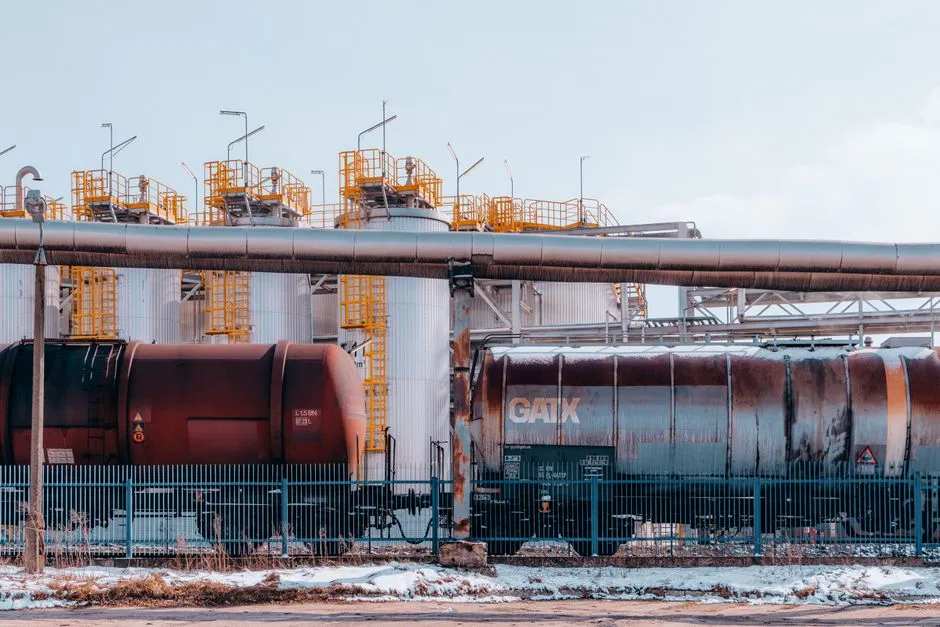
A defensible food-processing treatment train uses each stage to protect the next: screen gross debris, equalize hydraulic and concentration loads, remove floatable material, biologically reduce dissolved organics, then polish only for permit or reuse needs.
Screening is the first barrier against food particles, packaging debris and fibrous material that could clog pumps or biological systems. A mechanical screening system is an equipment option, but opening size and extraction capacity must follow the waste inventory rather than a generic specification.
Equalization buffers production surges and concentrated CIP releases. Without sufficient working volume and mixing, a plant can experience shock loading, poor pH control and downstream hydraulic exceedance. CIP segregation may be preferable where its chemistry would impair biological treatment.
DAF is the practical pretreatment step for suspended solids, FOG and colloidal material. Hixson reports poultry field results of 74% TSS removal and 99% oil-and-grease removal under optimized conditions. Hixson also reports up to 99% TSS removal, 85% BOD5 reduction and 98% phosphate removal with proper coagulant selection and operating parameters. Those results establish potential under their stated conditions; they do not guarantee performance in a Miami installation. An industrial DAF system for food-processing FOG and solids removal must be evaluated against the plant’s actual wastewater and permit.
Biological treatment then removes dissolved biodegradable organics. Hixson reports anaerobic COD removal of 89.8% to 96.5% in food-processing applications and methane yield of 0.27 to 0.33 liters CH4 per gram of COD removed. Anaerobic treatment is a candidate for suitable high-strength organic streams, but its applicability depends on biodegradability, temperature and the treatment objective.
MBR combines biological treatment with membrane solids separation. Hixson reports beverage pilot results of 16.9 mg/L effluent COD, 3.8 mg/L TSS and 92.6% COD removal. An integrated MBR membrane bioreactor for low-solids effluent is appropriate where the permit or reuse objective requires low solids and the site can support membrane operations.
| Process step | Primary function | Failure controlled | Design evidence |
|---|---|---|---|
| Screening | Remove gross solids and fibrous debris | Pump and equipment blockage | Solids inventory and screen trial data |
| Equalization | Buffer flow and concentration | Shock loading and hydraulic exceedance | Production and CIP hydrograph |
| DAF | Remove floatable solids, FOG and colloids | FOG pass-through | FOG, TSS, coagulant and recycle testing |
| Biological treatment | Remove biodegradable dissolved organics | BOD/COD exceedance | Organic loading, temperature and process suitability |
| MBR or final polishing | Separate solids and polish effluent | TSS or reuse requirement | Permit target and pilot results |
| Nutrient removal | Remove nitrogen and phosphorus | Nutrient limit exceedance | Influent nutrients and receiving POTW criteria |
Chemical precipitation or biological nutrient removal may be needed for phosphorus or nitrogen. Final solids polishing or disinfection belongs in the train only where the permit or reuse objective requires it; otherwise it is avoidable capital and operating burden.
Match Each Failure Mode to the Correct Control
FOG pass-through usually starts with the DAF stage, not the biological system. Check hydraulic loading, coagulant dose, recycle performance and scum removal before changing downstream biology.
pH excursions point first to equalization, CIP segregation and chemical dosing. Inspect the trim-control loop and verify that automatic dosing can respond to flow and pH rather than depending only on manual correction. Hydraulic overload during a long CIP event requires comparison of the event’s peak flow and strength with equalization volume and downstream capacity.
Suspended-solids breakthrough can occur at several stages: inadequate screening, poor DAF conditioning, ineffective chemical flocculation or an undersized final polisher. Isolate the failure with process trends and step testing before replacing equipment.
BOD or COD exceedance requires checking organic loading, biological health, aeration or mixing, temperature and bypasses. High-strength streams may be shock-loading the biological process or bypassing pretreatment entirely. High-rate DAF removal of BOD does not replace biological treatment for dissolved biodegradable material.
| Observed failure | First checks | Likely corrective action |
|---|---|---|
| FOG pass-through | DAF loading, coagulant dose, recycle and scum removal | Restore DAF performance and verify removal efficiency |
| pH excursion | Equalization, CIP segregation, dosing and trim loop | Correct capacity or control response |
| CIP hydraulic overload | Event peak, basin volume and downstream treatment rate | Segregate, reschedule or add equalization capacity |
| TSS breakthrough | Screening, DAF conditioning, flocculation and polishing | Repair the first failing solids barrier |
| BOD/COD exceedance | Loading, biology, aeration, temperature and bypass | Stabilize biological operation and remove bypass |
Use a repeatable root-cause sequence: verify the sample and chain of custody; review flow, production, CIP, pH and equipment trends; isolate the responsible stream; correct the upset; and document the corrective action. Automatic chemical dosing can reduce manual variability, but the system still needs verification under changing loads.
Select Equipment Using Permit and Operating Inputs
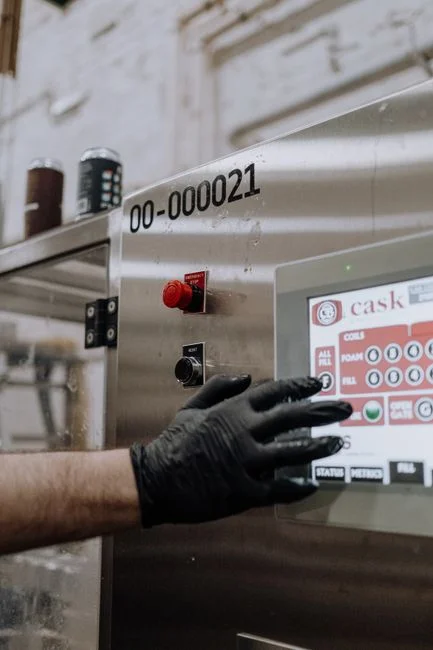
The lowest equipment price does not establish the lowest compliance risk. Equalization, DAF conditioning, biological capacity, polishing, controls and sludge handling determine whether the train remains compliant under batch and CIP peaks.
Before requesting proposals, assemble the governing permit limits, peak and average flow, raw BOD/COD, TSS, FOG, pH, temperature, total phosphorus, total nitrogen, production schedule, CIP profile and available footprint. Ask each supplier to state which design input drives each piece of equipment and which permit parameter it protects.
DAF addresses FOG and floatable solids. Conventional biological treatment addresses dissolved biodegradable organics. MBR combines biological treatment with membrane solids separation. Lamella clarification is a final solids-capture option, not a substitute for FOG removal or biological treatment. The appropriate sequence follows the pollutant and failure risk, not the shortest equipment list.
| Equipment option | Problem addressed | Key supplier evidence to request |
|---|---|---|
| DAF | FOG, oil, floatable solids and colloids | Guaranteed process duty, chemical demand, recycle performance and skimming arrangement |
| Conventional biological treatment | Dissolved BOD and COD | Organic loading basis, hydraulic capacity, aeration and temperature assumptions |
| MBR | Biological treatment plus low-solids effluent | Membrane design flow, flux basis, cleaning, controls and solids handling |
| Lamella clarification | Final suspended-solids capture | Surface-loading basis, feed chemistry and expected solids removal |
Supplier-provided DAF information lists 13 models spanning 4 to 300 m³/h, automatic skimming and capability for suspended solids, FOG, oil and grease and colloidal matter. Treat this as capability context, not a guaranteed project performance or a Miami permit limit.
Supplier-provided MBR information describes integrated activated sludge with submerged PVDF membranes, near-reuse-quality output below 1 μm filtration and a reported 60% smaller footprint than conventional systems. Require the supplier to define the comparable system baseline, power demand, membrane replacement assumptions and project duty before accepting the footprint claim.
Procurement should also address automatic controls, chemical-feed accuracy, skid delivery, local service support, instrumentation, redundancy, operator training and parts availability. Request performance testing, electrical requirements, drawings, FAT/SAT scope, O&M manuals, spare parts, warranty terms and a written allocation of compliance responsibility. A high-efficiency sedimentation tank may be relevant for solids polishing, while a plate and frame filter press addresses dewatering of the resulting sludge rather than the final wastewater permit limit.
Monitor Compliance as an Operating System
Treatment performance becomes defensible only when monitoring, laboratory results, production records and corrective actions form one operating record. Continuous pH and flow monitoring, together with permit-defined sampling for BOD, TSS, FOG and total phosphorus, are common elements of an industrial pretreatment compliance program; the plant’s permit controls the required frequency, sample type and analytical methods.
Composite sampling may be necessary for variable discharges, but it does not replace flow reconciliation. Review laboratory results against production volume, batch schedules, CIP events, pH records and chemical dosing. A passing composite cannot explain an unreported Saturday CIP excursion by itself.
SCADA alarms should cover high flow, pH deviation, DAF performance indicators and chemical-dosing faults. Date and retain each operator response, sample record, laboratory report, maintenance intervention and corrective-action entry. Confirm the receiving authority’s reporting portal and applicable electronic-submission requirements in the current permit.
Sludge handling belongs inside the compliance system. DAF skummings and biological waste sludge require an approved dewatering and disposal route. The plate and frame filter press for sludge dewatering is one equipment option; it does not replace characterization, handling and disposition of the collected solids.
Under 40 CFR 403.3(v), a significant industrial user includes users subject to categorical pretreatment standards, except designated nonsignificant categorical industrial users, and other users meeting specified flow, POTW-capacity or POTW-designation criteria. Significant industrial users may face enhanced monitoring and reporting, so classification must be completed before developing the compliance schedule.
Frequently Asked Questions
How should a food and beverage plant compare pretreatment equipment costs?
Compare installed and operating obligations rather than purchase price alone. Request a transparent scope covering equalization, screening, DAF, biological treatment, polishing, controls, chemical feed, sludge handling, utilities, maintenance and monitoring. Ask for the design basis and test protocol behind each price, because generic equipment pricing cannot establish the cost of meeting the plant’s permit.
Are DAF, MBR and clarification interchangeable equipment choices?
No. DAF targets FOG and floatable solids; biological treatment targets dissolved biodegradable organics; MBR combines biological treatment with membrane solids separation; and clarification captures settleable or flocculated solids. Select them as a treatment train matched to permit limits and influent variability.
Must every pretreatment requirement be a numeric discharge limit?
No. EPA states that pretreatment standards and requirements may be numeric limits, narrative prohibitions or best management practices. Each can affect equipment selection and operating procedures, so the plant must review the full requirement rather than screening only for concentration limits.
What should a buyer require when selecting a wastewater-treatment supplier?
Provide influent data, peak-flow and CIP information, permit limits and available footprint, then require a guaranteed process duty, FAT/SAT scope, controls description, O&M deliverables, service support and clearly bounded responsibility for compliance. A DAF versus clarifier equipment comparison can help frame contaminant-specific questions, but the final selection must use food-processing wastewater data.