Why CATL’s Arizona ZLD Capacity Is Not Public
A verified ZLD capacity for CATL’s Arizona battery gigafactory cannot be established from the available evidence because the site’s production ramp, wastewater unit intensity, water balance, and Arizona groundwater permit status are not public. For preliminary design, use the full wastewater flow, subtract the selected RO recovery, and send only the RO reject to evaporation: at 70–80% recovery, evaporator feed equals 20–30% of RO feed. The HydropureWater CATL wastewater reference estimates several thousand m³/day for a 100+ GWh-class site, but this is not an Arizona-specific figure. Final sizing requires a segregated water balance, peak-flow study, Arizona discharge and groundwater review, and vendor guarantees tied to measured influent characteristics.
No supplied source confirms CATL’s Arizona production ramp, wastewater generation per unit of capacity, internal reuse percentage, or installed ZLD flow. The “several thousand m³/day” estimate in the HydropureWater CATL reference applies to a 100+ GWh global production network and is a screening reference, not a verified plant design flow. Likewise, the 1,500 m³/day, seven-stage configuration in HydropureWater’s Arizona acquisition analysis is a reference configuration, not evidence of CATL Arizona’s actual requirement.
The search phrase “CATL Arizona gigafactory” can also refer to a proposed facility or an acquired battery-manufacturing plant. Those cases have different design bases. The engineer must first identify the legal site, permit holder, production scope and groundwater basin. HydropureWater’s analysis of Arizona wastewater requirements for a CATL plant acquisition emphasizes that permit and asset diligence must precede process sizing.
For feasibility and pre-RFP purposes, retain separate line items for total wastewater, RO permeate, RO reject, true evaporator feed and crystallizer feed. Collapsing those duties into one “ZLD capacity” number invites an equipment bid that is hydraulically oversized, chemically undertreated or commercially unsupported.
The Water Balance That Sets ZLD Capacity
The correct screening equation is: ZLD feed flow = wastewater flow after segregation and upstream water recovery × RO reject fraction. If the selected RO recovery is 70–80%, the reject fraction is 20–30%. Peak and operating-hour factors should then be applied only after the site’s batch-discharge profile and production schedule are established.
This distinction matters because MVR does not receive the full plant wastewater by default. It receives the RO reject after upstream treatment, unless another permitted brine-concentration step precedes evaporation. Likewise, forced-circulation crystallizer feed is the concentrated evaporator brine, not raw wastewater. The CATL battery gigafactory wastewater treatment process describes 70–80% RO recovery and routes the resulting 20–30% concentrate to the MVR evaporator.
- Segregate cathode coating wash water, anode coating wash water, electrolyte flush, cleaning, cooling, boiler blowdown, HVAC condensate and sanitary effluent.
- Recover NMP from the cathode stream before biological treatment or membrane handoff.
- Apply pH correction, heavy-metal and fluoride precipitation, solids removal and biological treatment as required by the actual water quality.
- Calculate RO feed, permeate and reject separately at average and peak conditions.
- Send only the calculated reject, after any permitted pre-concentration, to the MVR and crystallizer.
| Screening parameter | Engineering treatment | Required site input |
|---|---|---|
| Total wastewater flow | Sum of segregated streams; not automatically the evaporator load | Average and peak hourly flow by stream |
| RO recovery | 70–80% in the supplied CATL reference | Pilot or vendor-supported recovery basis |
| RO reject | 20–30% of RO feed | RO feed flow and confirmed recovery |
| MVR feed | RO reject after any permitted pre-concentration | Batch peaks, scaling chemistry and storage strategy |
| Crystallizer feed | Concentrated brine entering the crystallizer | Target concentration and salt-phase data |
Commingling general effluent with concentrated coating wastewater can increase chemical demand and thermal-treatment flow without an equivalent contaminant load. The Indonesian 50–200 m³/h gigafactory package range cited by Yixing Enviroequipment is evidence that battery-related plants can have materially different flow envelopes; it is not an Arizona benchmark.
Wastewater Quality Drives Equipment Selection
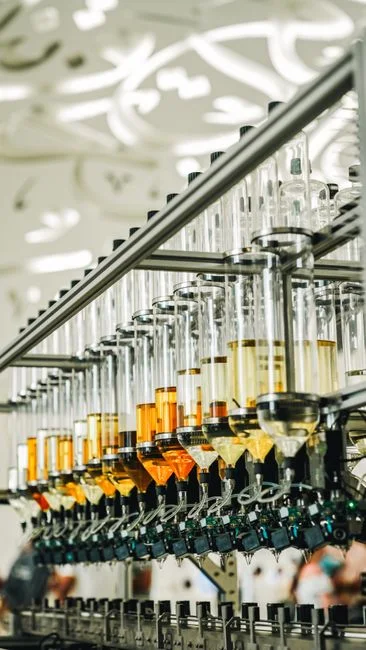
The stated cathode-stream envelope—COD 5,000–25,000 mg/L, fluoride 50–500 mg/L, suspended solids 500–3,000 mg/L and pH 2–4—requires a treatment train designed around segregated coating wastewater rather than generic industrial effluent. HydropureWater’s 2026 CATL treatment reference reports these values and describes NMP at roughly 1–5 wt% in cathode wash water.
NMP recovery should precede membrane and biological treatment. The cited vacuum-distillation conditions are 50–100 mbar and 80–120 °C, producing NMP above 99.5% purity for reuse. The same 2026 source gives a NMP market range of $2,000–$3,000/t, supporting early testing of solvent loss and recovery economics; it does not establish savings for an Arizona project.
The chemical sequence in the supplied reference starts with pH correction to 6–8, followed by heavy-metal precipitation, fluoride precipitation with CaCl₂ to a target residual below 10 mg/L, and manganese oxidation. Lithium remains soluble through hydroxide precipitation and concentrates in the RO reject. Manganese removal requires pH above 10 plus an oxidant, while nickel and cobalt precipitation is described at pH 9.5–10.5.
| Process or equipment criterion | Supplied reference value | Design implication |
|---|---|---|
| MBR biological conditions | HRT 12–24 hours; SRT 20–40 days; MLSS 8,000–12,000 mg/L | Confirm against actual COD, nitrogen and batch variability |
| MBR outlet | TSS below 1 mg/L; SDI below 3 | Protects downstream RO |
| RO feed | SDI below 3; free chlorine below 0.1 mg/L; iron below 0.05 mg/L | Specify treatment and monitoring |
| RO recovery | 70–80% | Reject equals 20–30% of RO feed |
| NMP recovery | 1–5 wt% NMP feed; above 99.5% reusable purity | Evaluate dedicated cathode-stream vacuum distillation |
| RO reject | 200,000–250,000 mg/L TDS concentrated brine at the cited crystallizer-feed stage | Requires upstream concentration; it is not raw RO-feed TDS |
Metal-bearing sludge should be dewatered in a heavy-duty filter press. HydropureWater’s 2026 Arizona reference describes a 25–35% dry-solids cake routed to licensed hazardous-waste disposal or a metal-recovery off-taker. A conventional DAF solids-removal system can precede this route, but the final waste classification and disposal plan must be resolved before procurement.
For indirect discharge, HydropureWater’s 2026 regulatory analysis cites federal 40 CFR 433 total nickel and total cobalt caps of 1.0 mg/L and site-specific Arizona ceilings of 0.2–0.5 mg/L. POTW classification and written local limits control; do not select a discharge basis from a generic battery analogy.
Arizona Reuse and Discharge Constraints
HydropureWater’s 2026 Arizona analysis identifies groundwater restrictions in Active Management Areas and states that on-site reuse or ZLD becomes the design basis there. This is a screening conclusion, not proof that every CATL-related Arizona site requires thermal ZLD. The engineer must confirm the legal site, groundwater basin, withdrawal authority, AZPDES route and permit conditions.
Arizona compliance should be separated into four tracks. AZPDES governs surface-water discharge. An Aquifer Protection Permit governs on-site land disposal, including seepage basins, drywells and recharge trenches. POTW pretreatment applies if the plant discharges to a municipal sewer. EPCRA reporting addresses chemical inventories and releases independently of the treatment decision.
| Compliance track | Project question | Effect on treatment basis |
|---|---|---|
| AZPDES | Is surface-water discharge available, and what are the limits? | May allow a discharge/reuse train without complete thermal ZLD |
| Aquifer Protection Permit | Does the proposed land application require an APP? | Can control disposal and groundwater-protection conditions |
| POTW pretreatment | Has the receiving POTW classified the discharge and issued written limits? | Sets indirect-discharge metal limits and monitoring |
| Groundwater code and AMA restrictions | Can new withdrawals support the proposed production ramp? | May force higher reuse or ZLD |
| EPCRA | Do nickel, cobalt and NMP use or release thresholds apply? | Creates a reporting obligation independent of water treatment |
The cited 30-day post-deed-recording transfer clock applies to AZPDES and APP obligations in HydropureWater’s 2026 analysis. A regulatory transfer is not a permit to defer process design: the successor should audit the existing permit file, monitoring records and known compliance history during diligence.
RO permeate can support reuse only when it meets the applicable quality class. The Arizona analysis cites Class A+ criteria including turbidity no more than 2 NTU on a 24-hour average and zero E. coli organisms per 100 mL in four of seven daily samples. It also cites total nitrogen below 10 mg/L and no detectable enteric virus in monthly testing for the described Class A+ application.
Water reuse and ZLD solve different problems. Internal reuse can reduce withdrawals and discharge volume, while thermal ZLD is required when residual brine and dissolved solids must leave the liquid train. Water Europe’s September 2024 study supports closing resource and water loops for resilience, but Arizona permit limits remain the controlling project constraints.
From Water Flow to MVR and Crystallizer Duty
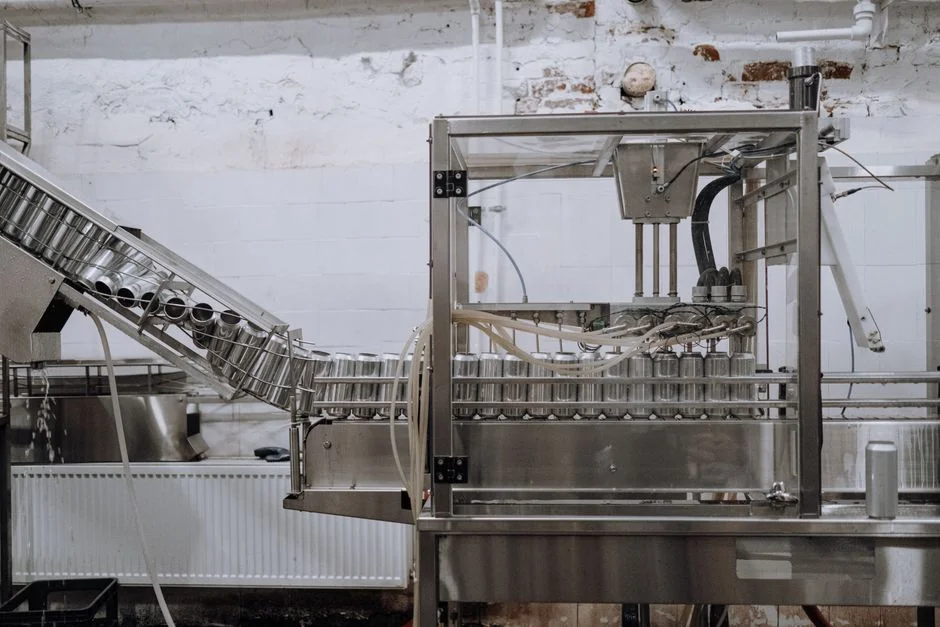
MVR feed is the calculated RO-reject flow after upstream concentration and before final crystallization. The supplied CATL reference gives MVR electrical consumption of 20–35 kWh/m³ of distillate and identifies a 200,000–250,000 mg/L TDS brine for the forced-circulation crystallizer feed. These values support an operating-cost sensitivity, not a guaranteed bid basis.
Vendor guarantees should cover distillate production, electrical consumption, feed concentration, cleanout frequency and performance under the actual batch profile. The 20–35 kWh/m³ range should remain labelled as an estimate until tied to feed chemistry, scaling tendency, steam system and operating hours.
The cited product route produces a Na₂SO₄/NaCl mixed salt cake for licensed disposal and a lithium-enriched mother liquor that may support downstream Li₂CO₃ recovery. The mother liquor is a potential resource stream, not a guaranteed economic benefit. The supplied CATL reference states an overall plant outcome of 70–90% reuse water, with the remaining 10–30% leaving as solid salt cake.
| Duty check | Basis to request | Bid or guarantee required |
|---|---|---|
| Hydraulic duty | Average and peak RO reject; batch-discharge schedule | Feed and distillate capacity at stated operating hours |
| Concentration | Permitted upstream brine concentrator | Guaranteed crystallizer-feed TDS and water balance |
| Energy | 20–35 kWh/m³ distillate reference | Electrical consumption at guaranteed feed composition |
| Solids route | Salt composition and destination | Crystal characteristics, quantity and disposal responsibility |
| Redundancy | Maintenance, cleaning and outage conditions | Redundancy philosophy and recovery sequence |
Resilience decisions should include N+1 equipment, off-design batch flows, salt-cake storage, cleaning downtime and permeate routing. Permeate should be reused where accepted rather than unnecessarily routed to the evaporator. A phased installation can follow the production ramp, but phase boundaries must be supported by the water balance rather than headline production capacity.
The CATL Vietnam ZLD capacity methodology provides the same transferable distinction between plant wastewater, RO reject and thermal duty without supplying an Arizona design flow.
Equipment, Budget, and Supplier Selection
HydropureWater’s 2026 Arizona budget analysis gives equipment CAPEX of $7 million–$12 million for a baseline DAF-MBR-two-pass-RO train, approximately $2 million–$4 million for NMP vacuum distillation and $5 million–$10 million for thermal brine concentration and crystallizers when full ZLD is needed. These are equipment-screening ranges, not installed-plant quotations, and their scopes must remain separated.
The same analysis cites a 1.5×–2.5× CAPEX premium for closed-loop treatment compared with standard discharge. The actual multiple depends on reuse quality, solvent recovery and residual-brine disposition, so it should not be applied without the project’s selected treatment scope.
| Package | 2026 equipment CAPEX reference | Scope requiring clarification |
|---|---|---|
| DAF-MBR-two-pass RO | $7 million–$12 million | Civil work, membranes, chemicals, installation and commissioning excluded or included? |
| NMP vacuum distillation | Approximately $2 million–$4 million | Cathode-stream flow, NMP concentration and required product purity |
| Thermal concentration and crystallization | $5 million–$10 million | Feed flow, concentrate duty, salt handling and redundancy |
The cited MBR product envelope is 10–2,000 m³/day, while the DAF product range is 4–300 m³/h. These are screening envelopes, not evidence that either unit matches the Arizona duty. A vendor must confirm feed quality, hydraulic peak, membrane flux, chemical demand and turndown. An integrated MBR membrane bioreactor quotation should therefore be tied to the segregated plant water balance.
Separate bids for mechanical equipment, membranes and media, chemical systems, NMP recovery, electrical and controls, civil work, installation, commissioning, waste transport, salt-cake handling and long-term O&M. Do not compare a packaged-equipment price with a turnkey installed price.
Require guarantees against the actual Arizona wastewater flow, conductivity, hardness, silica, fluoride, metals, COD, NMP, scaling tendency and batch profile. Ask each bidder for guaranteed distillate capacity, electrical consumption, crystal-purity characteristics, redundancy, cleanout frequency and documented availability.
Data Required Before the Capacity Is Frozen
The capacity cannot be frozen until the production schedule and segregated water balance are issued for the identified Arizona site. Until then, the defensible output is an equation, scenarios and equipment-screening ranges—not a claimed CATL Arizona ZLD flow.
- Production schedule: Request production by phase in GWh, operating days, shifts, coating-line count, coating frequency and expected utilization.
- Segregated water balance: Request cathode, anode, electrolyte, cleaning, cooling, boiler, HVAC and sanitary streams, including average and peak hourly flows, batch-discharge timing and maximum internal reuse.
- Representative sampling: Request at least one campaign covering pH, COD, TOC, NMP, fluoride, phosphate, TSS, conductivity, TDS, hardness, silica, chloride, sulfate, Ni, Co, Mn and Li.
- Permit and groundwater record: Request Arizona permit files, groundwater withdrawal records, AZPDES limits, APP conditions, POTW classification, written local limits and historical monitoring data.
- Reuse destinations: Request acceptance criteria for cooling-tower makeup, process rinse or other approved reuse, including sampling and piping requirements.
- Operating resilience: Request cleaning frequency, permitted storage, redundant-equipment philosophy, outage scenarios and off-design batch criteria.
Build the mass balance dynamically around the CATL or target plant’s production schedule rather than historical utility bills. Keep high-volume cooling and sanitary streams separate from concentrated coating rinses where practical, because combining them can inflate the chemical and thermal treatment envelope. HydropureWater’s 2026 Arizona diligence framework treats segregation as a prerequisite to equipment sizing.
The procurement release should include the reconciled water balance, permit pathway, representative analytical dataset, preliminary mass and heat balance, battery-case wastewater schedule, basis of design for ZLD equipment, salt and sludge disposal plan, and vendor guarantees. Any capacity estimate issued before those items are complete should be labelled preliminary and conditional.
Frequently Asked Questions
What ZLD capacity is required for CATL’s new battery gigafactory in Arizona?
No verified plant-level capacity can be stated from the supplied evidence. At 70–80% RO recovery, the RO reject and preliminary evaporator feed equal 20–30% of RO feed, not 20–30% of all wastewater. Final capacity requires the segregated average and peak water balance, production ramp and permitted treatment route.
How much does CATL Arizona wastewater treatment equipment cost?
HydropureWater’s 2026 Arizona analysis cites $7 million–$12 million for baseline DAF-MBR-two-pass-RO equipment, approximately $2 million–$4 million for NMP vacuum distillation and $5 million–$10 million for thermal brine concentration and crystallizers. Buyers should request itemized quotations because installation, civil work, waste transport and long-term O&M may sit outside these equipment ranges.
How should a ZLD equipment supplier be selected?
Compare bidders on guarantees tied to actual Arizona feed data—not generic battery-wastewater assumptions. Require guaranteed distillate capacity, electrical consumption, crystal characteristics, redundancy, cleanout frequency and documented availability, together with confirmation of peak flow, feed chemistry, scaling tendency and turndown.
Does CATL’s Arizona plant need ZLD for regulatory compliance?
That depends on the legal site and disposal route. HydropureWater’s 2026 analysis identifies groundwater restrictions in Active Management Areas and identifies AZPDES, APP, POTW pretreatment and EPCRA as separate obligations. Confirm the basin, permit file, groundwater authority and written POTW limits before selecting discharge, high reuse or full thermal ZLD.