Antofagasta's sewage treatment and reuse challenge
Antofagasta's domestic sewage treatment challenge combines a citywide capacity gap with substantial mining demand for reclaimed water. MDPI's Water study, published in 2023, reports that the existing 120 L/s activated-sludge plant treats about 10% of city wastewater, while the planned citywide system is designed around an average 900 L/s and a 400–1,300 L/s range. For hotels, residential developments, remote facilities and industrial campuses, the feasible route may be municipal connection, an underground A/O package plant or MBR treatment. Selection depends on verified flow and load data, reuse quality, site constraints and authorization.
The regional context makes this more than a compliance exercise. The MDPI study reports that approximately 90% of wastewater generated in Antofagasta was discharged into the ocean after preliminary treatment. It also estimates that mining accounted for 64% of regional water use, compared with an average of 7% in Chile's other regions. Treated wastewater therefore represents both additional treatment capacity and a potential substitute for freshwater in mining operations.
That opportunity does not make one treatment technology suitable for every site. A citywide conventional activated-sludge architecture can serve the municipal system, while a remote camp or hotel may need a smaller packaged system. Buyers should separate three questions: how much wastewater must be treated, what quality is required at the reuse destination, and whether central infrastructure is available at the proposed connection point. The broader domestic sewage treatment options across Chile provide useful context, but site-specific verification remains essential.
How the existing and planned municipal systems compare
The existing 120 L/s conventional activated-sludge plant cannot serve Antofagasta's current citywide wastewater load. MDPI's 2023 Water study states that it treats approximately 10% of generated wastewater, while the planned municipal system is intended to treat an average 900 L/s across a design range of 400–1,300 L/s.
| System | Treatment scope | Process and reuse context | Implication for a project buyer |
|---|---|---|---|
| Existing municipal plant | 120 L/s capacity; approximately 10% of Antofagasta's generated wastewater treated, according to MDPI's 2023 Water study | Conventional activated sludge | Citywide treatment capacity is limited; connection availability at a particular site still requires confirmation from the utility or authority |
| Planned citywide WWTP | Average 900 L/s; design range 400–1,300 L/s, according to MDPI's 2023 Water study | Revamped screening and grit removal, intermediate storage, a new conventional activated-sludge plant and adduction pipes connecting pretreatment, storage, treatment and mining reuse sites | Provides the municipal framework, but the study does not establish the current connection status or available capacity for an individual development |
The population basis also requires care. The MDPI study states approximately 320,000 equivalent inhabitants in its abstract and uses 314,000 equivalent inhabitants for its detailed municipal scenario. Neither figure should be converted into an equipment duty for a hotel, mine camp or housing project without measured flow and load data.
The planned works are an architecture, not a guarantee of immediate service at every parcel. A private buyer should obtain written confirmation of the proposed connection point, firm and peak discharge duties, available treatment capacity, connection conditions and the treatment quality that will apply to the project's discharge or reuse arrangement.
Choose between municipal supply, packaged A/O and MBR treatment
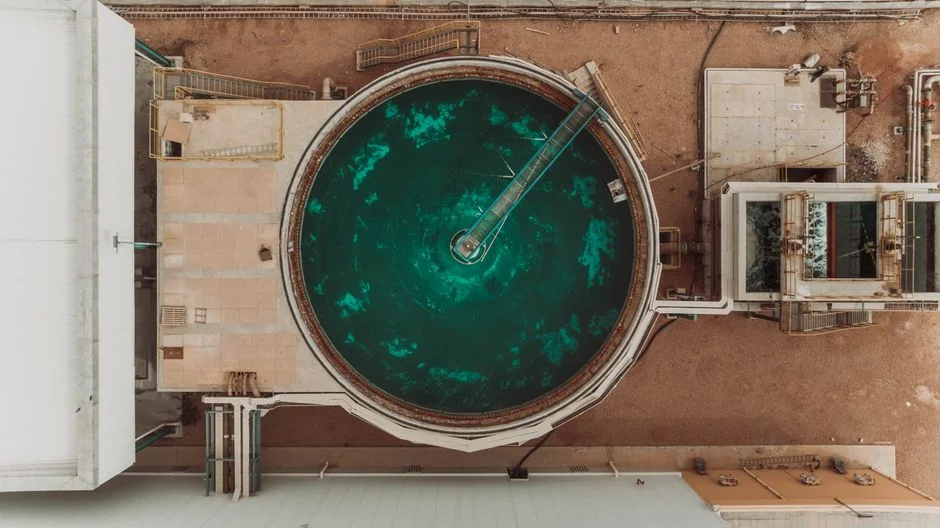
The preferred treatment route depends first on confirmed infrastructure access, then on process performance and site constraints. Selecting the correct system requires balancing these operational factors with site-specific discharge requirements.
| Decision condition | Route to evaluate | Verified basis | Checks before selection |
|---|---|---|---|
| A sewer connection, treatment capacity and acceptable discharge or reuse conditions are confirmed | Municipal supply | MDPI's 2023 Water study describes an existing 120 L/s plant and a planned citywide system averaging 900 L/s, with a 400–1,300 L/s design range | Obtain site-specific confirmation; do not infer current connection capacity from the citywide plan |
| A compact, automated biological process is required for a distributed site | Underground A/O package | The verified WSZ catalog states 1–80 m³/h, anoxic/aerobic contact oxidation with sedimentation and disinfection in one buried unit, and optional trailer mounting | Check average and peak flow, load, reuse duty, excavation access, odor control, sludge handling and maintenance access |
| Compactness and membrane separation are priorities | MBR | The verified catalog states filtration below 1 μm, a 10–2,000 m³/day range and a footprint 60% smaller than conventional systems | Check membrane fouling risk, solids loading, peak flow, cleaning, aeration, sludge handling, reuse criteria and operator capability |
An underground A/O package sewage treatment plant combines biological contact oxidation, sedimentation and disinfection in a buried unit that can be landscaped over or mounted on a trailer. Evaluate this where the project needs a compact biological train and automated operation without assuming that the catalog range alone establishes process capacity.
An MBR membrane bioreactor wastewater treatment system is more appropriate where membrane separation and compact installation are priorities. However, filtration below 1 μm does not remove the need to assess influent characteristics, solids loading, hydraulic peaks, fouling, disinfection and the final reuse specification. WSZ and MBR should be compared on verified duty, not presented as interchangeable products.
Design for Antofagasta's water, salinity and operating conditions
Local wastewater chemistry must be included in the process design rather than replaced with generic domestic-sewage assumptions. MDPI's 2023 Water study reports average influent nitrogen in the order of 50 mg/L and modeled treated total nitrogen of 39 mg/L under Scenarios 0 and 1. These results concern the study's modeled municipal scenarios; they are not guaranteed performance for a packaged plant.
Chloride is another application constraint. The same study reports treated-water chloride in the order of 1,000 mg/L and concludes that it would not interfere with mining operations. That finding is specific to the evaluated mining reuse context. Suitability for other reuse routes or a discharge authorization must be checked separately against the receiving requirement.
Before finalizing biological loading or membrane selection, request analysis of suspended solids, organic load, nutrients, salinity, pH, temperature, flow peaks and any industrial inflows entering the system. This is particularly important where a domestic-sewage facility receives mixed hotel, camp or industrial flows that do not reflect the municipal model.
The site concept should also address odor control, corrosion protection, electrical supply, backup strategy, remote monitoring and safe access for maintenance. Operators need to remove settled sludge, inspect process equipment and service constrained components. Equipment that cannot be maintained under local site conditions should not proceed merely because its nominal capacity covers the average flow.
Energy demand is a design variable, not a guaranteed commercial value. MDPI's 2023 study reports a modeled unit energy cost from external sources of 0.63 kWhe/m³ in Scenario 0, compared with 0.5–4 kWhe/m³ for reverse-osmosis seawater estimates in the same study. These figures belong to the modeled municipal analysis and cannot be presented as operating costs for WSZ or MBR equipment. Comparisons with Chilean industrial effluent treatment options should use supplier-specific consumption data.
Build the equipment specification and supplier brief
A credible equipment brief should define the duty and acceptance conditions before asking suppliers to propose a treatment route. Give each bidder the same measured flow series, wastewater analysis, reuse destination, available footprint and compliance constraints.
| Brief item | Information the buyer must provide | Information the supplier must return |
|---|---|---|
| Design basis | Average and peak flow, operating hours, equivalent population where relevant, wastewater analysis, treatment objective and reuse destination | Guaranteed duty points, process stages, hydraulic retention, biological loading basis, solids removal and disinfection |
| Mechanical and site works | Available footprint, ground conditions, access, utilities, climate exposure and seismic conditions | Buried, above-ground or engineered configuration; civil interfaces, lifting plan, excluded works and installation sequence |
| Operations and support | Operator skill level, sludge destination, maintenance access and monitoring expectations | Odor control, instrumentation, controls, sludge handling, maintenance intervals, spare-parts availability and commissioning tasks |
| Technology-specific evidence | Reuse quality and authority requirements | For MBR: membrane materials, pore size, aeration, cleaning, flux basis and replacement assumptions. For WSZ: A/O, sedimentation, disinfection and full-cycle operating method |
| Commercial and compliance evidence | Discharge authorization, reuse agreement and local electrical requirements | Power consumption, utilities demand, acceptance-test methods, local support, O&M documentation and reference projects |
For a physical plant assessment, the rotary mechanical bar screen GX is a pretreatment reference, not proof that any upstream works are required for a package plant. Ask the treatment supplier to define its own pretreatment boundary and exclude duplicated or omitted equipment from the price.
The commercial comparison should distinguish equipment price, civil works, installation, commissioning, operator training, sludge disposal, controls integration, power infrastructure and long-term support. Include authorization conditions, reuse agreements and site risks in the evaluation rather than treating them as post-award details.
Frequently Asked Questions
Which treatment capacity should be selected for a facility in Antofagasta?
Size from measured flow and loading, not population labels or catalog maxima. The verified WSZ range is 1–80 m³/h, while the verified MBR range is 10–2,000 m³/day. Submit average flow, peak flow, operating profile and wastewater analysis to each supplier, then request guaranteed duty points at the site's actual conditions.
How much will domestic sewage treatment cost to operate?
Request a site-specific capital and operating-cost model. MDPI's 2023 Water study reports modeled municipal scenario values of 0.63, 0.56, 0.20 and 0.13 kWhe/m³; these are not equipment prices or guaranteed energy costs. The quotation should itemize civil works, power, consumables, sludge handling, maintenance, monitoring and support.
How should a supplier be selected for a decentralized sewage treatment system?
Require process guarantees, acceptance criteria, drawings, O&M documentation, maintenance support, commissioning tasks and relevant reference projects. Capacity claims alone do not establish suitability. For remote locations, verify spare-parts access and technician support before accepting a fully automated operating concept.
Which authority and reuse requirements must be checked?
Confirm the applicable environmental permit and discharge conditions with the responsible authority, sewer utility and receiving system. Obtain the specific reuse agreement with the mining, agricultural, hospitality or industrial recipient. The supplied research does not establish a universal discharge standard for Antofagasta, and suitability for mining reuse does not establish compliance with another receiving route.
Are packaged systems suitable for hotels, campuses and remote sites?
They may be, after verifying local inflows, reuse needs, land or excavation constraints, power, maintenance access and operator support. An underground A/O unit may suit a compact distributed biological duty, while MBR may be justified where membrane separation and footprint are decisive. The