Which Wastewater Streams Need Separate Treatment?
A Louisville data center generally needs separate treatment scopes for sanitary sewage, cooling-tower blowdown, and smaller process streams such as water-treatment backwash and equipment-washing wastewater. Cooling blowdown typically requires pH control, removal of suspended material, and management of concentrated dissolved minerals and treatment chemicals before discharge. The preferred route is often an industrial-user permit to the sanitary sewer, while direct surface-water discharge requires an NPDES permit. Equipment selection must follow source-water characterization, discharge limits, cooling chemistry, flow, temperature, and reuse objectives—not a generic “data center package.”
Sanitary sewage is domestic waste from restrooms and kitchens. It is not cooling-tower blowdown, and it should not be used to justify the characteristics or treatment equipment selected for the industrial process stream. Cooling blowdown forms because evaporation removes water while leaving dissolved minerals, suspended solids, and treatment chemicals in the circulating water. Additional process sources can include softener or reverse-osmosis backwash, equipment-cleaning wastewater, and air-handling-unit condensate.
Process wastewater requires either a sanitary-sewer industrial-user permit or a surface-water NPDES permit. It must not be discharged through a stormwater system. Keep the streams separate through permitting, design, and cost development even if they ultimately share a discharge point. RSP Engineers’ location-specific data center blowdown treatment guide provides a useful comparison framework, while its data center wastewater treatment in a water-stressed location illustrates how reuse priorities can change with site conditions.
| Stream | Typical origin | Design treatment | Approval scope |
|---|---|---|---|
| Sanitary sewage | Restrooms, kitchens, employee facilities | Domestic or biological treatment evaluation | Separate sanitary-sewer scope |
| Cooling-tower blowdown | Evaporative cooling system | pH control, solids separation, filtration, dissolved-solids management as required | Industrial-user permit or NPDES route |
| Treatment backwash | Softeners, reverse osmosis, filters | Stream-specific separation and chemical management | Include in industrial waste characterization |
| Cleaning wastewater | Equipment and floor cleaning | Source-specific segregation and pretreatment | Do not combine before characterization |
| AHU condensate | Air-handling equipment | Characterize before deciding whether segregation is needed | Confirm with receiving authority |
Build the Louisville Design Basis Before Choosing Equipment
A defensible Louisville treatment scope begins with measured water chemistry and confirmed discharge criteria, not equipment selection. The submitted research does not establish Louisville-specific numerical discharge limits, so those limits must come from the receiving sewer authority or the applicable state and federal agencies.
Request source-water analyses for dissolved minerals, hardness, alkalinity, conductivity, chlorides, sulfates, silica, pH, temperature, and suspended solids, including seasonal variation. Document whether the facility uses evaporative cooling, closed-loop chillers, or a hybrid. Record cooling-tower design flow, makeup flow, blowdown flow, operating temperature, and target cycles of concentration.
Inventory the chemical treatment package: biocides, corrosion inhibitors, scale inhibitors, phosphonates, dispersants, and any metals that could enter through corrosion. This inventory is necessary because residual dissolved chemicals and metals may influence pretreatment even when filtration removes suspended material.
Ask the Louisville sewer authority for current industrial-user requirements, allowable discharge parameters, connection conditions, monitoring requirements, application procedures, fees, and any limits on temperature or pass-through constituents. Do not substitute a national framework or an example discharge range for local approval. RSP Engineers identifies sewer authority coordination as an early due-diligence step because restrictive limits discovered after site design can force redesign.
Cycles of concentration is the ratio of dissolved-solids concentration in circulating water to that in makeup water. The blowdown relationship is:
Blowdown as a percentage of makeup volume = 1 ÷ (cycles of concentration − 1)
Genesis Water Technologies’ data center water-efficiency analysis gives two verified planning examples: at 4 cycles, blowdown is 25% of makeup volume; at 6 cycles, it is 20%. The 6-cycle case represents a 20% reduction in blowdown volume from the 4-cycle case, not a 50% reduction. Higher cycles also require scrutiny of scaling, fouling, biological control, and downstream treatment consequences.
Finally, define the project objective: compliance-only discharge, partial reuse, or blowdown-to-makeup operation. These objectives lead to materially different treatment trains. Coordinate the required treatment-parts, valves, and filter media through the project’s mechanical and controls disciplines rather than freezing a generic package before chemistry and permit conditions are known.
| Design-basis input | Information required | Decision affected |
|---|---|---|
| Source water | Full mineral analysis, temperature, suspended solids, seasonal range | Scaling, corrosion, pretreatment, reuse quality |
| Cooling system | Architecture, design flow, makeup and blowdown flow, operating temperature, target cycles | Equipment flow capacity and hydraulic design |
| Chemical program | Biocides, inhibitors, scale control, phosphonates, dispersants, metals | pH control, residuals, chemical compatibility |
| Discharge authority | Permit route, local limits, connection and monitoring conditions | Treatment objectives and schedule |
| Reuse objective | Discharge-only, non-potable reuse, or cooling makeup | Treatment sophistication and footprint |
Choose the Permitted Discharge Route
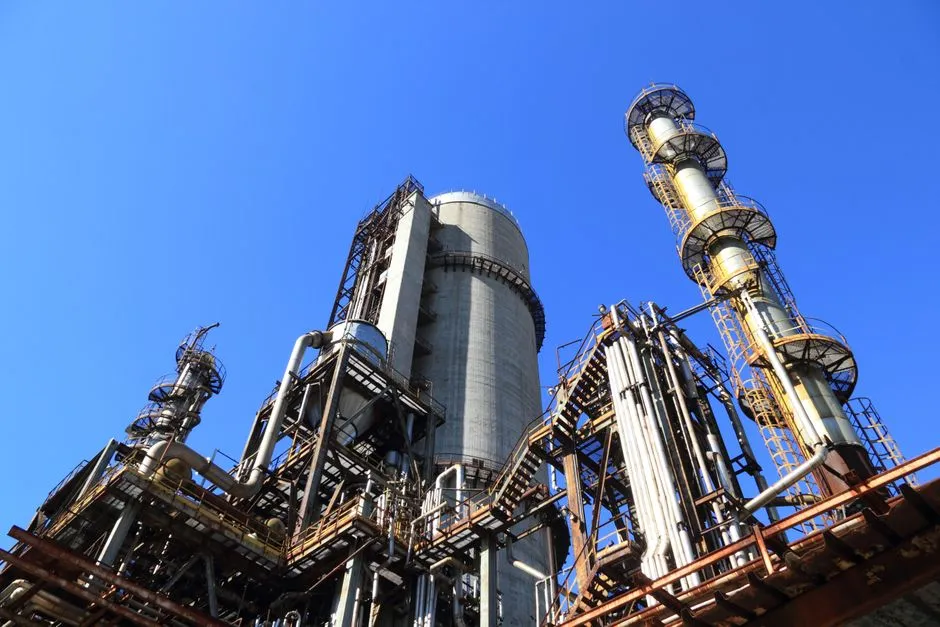
The discharge route determines the treatment criteria, approval process, and design schedule. A sanitary-sewer discharge proceeds through the local industrial pretreatment or industrial-user permit pathway. Treatment limits are based on the receiving plant’s biological process and pass-through concerns. A direct surface-water discharge proceeds under an NPDES permit and the applicable state and local water-quality standards.
For sewer discharge, submit the anticipated flow, source-water chemistry, blowdown chemistry, chemical package, proposed pretreatment train, monitoring plan, and connection details. The Louisville sewer authority must confirm the applicable discharge parameters, sampling requirements, prohibitions, fees, and pretreatment controls. The research does not provide verified Louisville numerical limits, so a concept drawing cannot be treated as an approval-ready discharge design.
Valicor’s 2025 data-center water-management article uses Google’s Council Bluffs facility as a scale reference: the site withdrew approximately 1.4 billion gallons from municipal supply in 2024, roughly 1 billion gallons was consumed through evaporation, and approximately 400 million gallons was discharged as blowdown. This example illustrates how evaporative cooling can create a large, concentrated discharge stream; it is not a Louisville flow estimate.
Temperature also requires a defined route. Hot blowdown may need cooling or holding before discharge because temperature can affect the receiving treatment plant’s biology. Treatment chemicals can create pH, residual-chlorine, or biocidal-discharge concerns depending on the chemical program. The industrial user sewer permit compliance strategy explains how an industrial discharge permit connects treatment design to documented discharge chemistry and agency review.
Utility coordination is therefore a schedule-control activity. Do not freeze the treatment skid or site layout before the discharge route, preliminary limits, connection requirements, and monitoring obligations are known.
Match the Treatment Train to the Contaminants
Each treatment step should answer a documented contaminant or site-constraint risk. Cooling blowdown is not adequately characterized by flow and pH alone because it can contain concentrated dissolved minerals, treatment chemicals, suspended solids, and corrosion-derived metals.
Use pH neutralization when acidity or alkalinity exceeds the receiving sewer requirement. RSP Engineers presents 6.0–9.0 as a commonly encountered range and pH neutralization as a typical response; that range is an example, not a Louisville limit. Confirm the permitted pH range with the sewer authority before setting the control target.
Use physical separation for suspended solids, oil and grease, or colloidal material. A DAF system for cooling-blowdown solids removal can separate floatable and suspended material before filtration or discharge. The referenced DAF equipment covers 4–300 m³/h and uses automatic skimming for suspended solids, FOG, oil and grease, and colloidal matter; the relevant capacity must be matched to the project’s actual flow and operating envelope.
Use filtration when finer suspended-solids removal or protection of downstream equipment is required. The referenced ultrafiltration system for wastewater pretreatment uses 0.03-micron PVDF membranes, removes bacteria, colloids, and suspended solids without chemicals, and accepts makeup turbidity up to 300 ppm. Those specifications define a screening basis, not automatic suitability: pretreatment, recovery, cleaning, and effluent quality still require review against actual blowdown conditions.
Use targeted chemical precipitation or ion exchange only when analysis identifies metals or dissolved species that simpler treatment cannot meet. Do not install dissolved-solids removal merely because blowdown is concentrated; define the required effluent quality first. Residual biocides and corrosion inhibitors are dissolved treatment chemicals and should not be assumed to be removed by physical separation or filtration.
Reserve advanced membrane or RO treatment for a defined reuse quality or stringent discharge specification. Valicor notes that advanced systems can treat blowdown for reuse in water-scarce regions. An automatic chemical dosing system may be needed for controlled pH adjustment or targeted coagulant and flocculant addition, but its scope depends on the chemistry and permit conditions.
Complete the site plan with temperature control, chemical storage containment, drainage, vehicle access, automatic controls, maintenance access, and replacement clearances. Equipment selection and civil design should develop together.
| Documented condition | Potential treatment step | Engineering basis |
|---|---|---|
| pH outside the confirmed sewer or NPDES requirement | Acid or caustic neutralization | Local limit and chemical demand |
| Suspended solids, oil, grease, or colloidal material | DAF or physical separation | Characterization, flow, and downstream protection |
| Finer solids removal required | Filtration or UF | Required effluent quality and pretreatment condition |
| Specific metals or dissolved species identified | Precipitation or ion exchange | Species-specific analysis and permit basis |
| Reuse requires low dissolved solids | RO or advanced treatment | Reuse objective, recovery, pretreatment, operating capability |
| Hot discharge or chemical-storage risk | Cooling/holding and secondary containment | Temperature, drainage, code, and operator access |
Decide Whether Blowdown Recovery Is Worth the Added Equipment
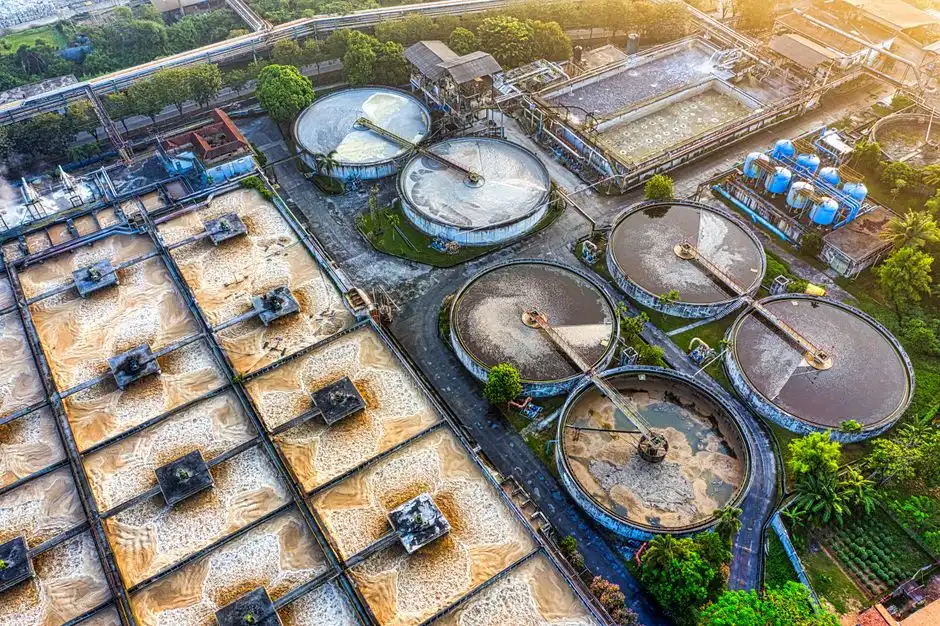
Blowdown recovery is a separate economic decision from discharge treatment. Evaporation permanently removes water from the local water cycle. Blowdown leaves the cooling system but remains available as a treatment feed if its chemistry and temperature are suitable for the intended reuse.
Valicor’s 2025 article states that evaporative losses account for roughly 80% of total makeup demand and blowdown about 20%. That ratio is an operating reference, not a universal design value; it depends on cooling-system architecture and operating conditions. The Council Bluffs example also confirms that substantial blowdown can coexist with a large evaporative consumption.
Start with lower-risk partial reuse where demand and chemistry permit: landscape irrigation, construction dust control, equipment washing, or another non-critical service. These uses can avoid some discharge without requiring the water quality needed for cooling makeup. Integrate storage, distribution piping, and stormwater interfaces into the civil design.
Genesis Water Technologies’ 2025 planning reference states that physical separation followed by targeted treatment can reduce makeup-water demand by 15–25%. Treat this as a cited screening estimate rather than a guaranteed Louisville result. The actual recovery depends on flow, contaminant removal, reuse demand, losses, and operating constraints.
The business case must include avoided water and wastewater charges, chemical consumption, maintenance, monitoring, labor, residual disposal, and compliance reporting. Valuing recovered water only at the utility water rate omits the operating cost of maintaining reuse quality.
Reserve RO and advanced reuse for facilities with a defined quality objective, suitable flow, pretreatment needs, and adequate staffing. An RO water purification system may be justified for blowdown-to-makeup service, but it should not be selected before the reuse mass balance, chemistry, recovery requirements, pretreatment, and disposal of concentrate are defined. The industrial effluent-treatment guide provides a broader treatment perspective, but the Louisville decision remains site-specific.
| Option | Water benefit | Principal added burdens | Best fit |
|---|---|---|---|
| Discharge-only treatment | No reuse benefit | Disposal, permit monitoring, treatment chemicals | Compliance is the only defined objective |
| Partial non-potable reuse | Reduces discharge and selected freshwater demand | Storage, distribution, quality control, variable demand | Documented non-critical demand and compatible chemistry |
| Blowdown-to-makeup reuse | Closes part of the cooling-water loop | Advanced treatment, pretreatment, monitoring, operator burden, concentrate management | Sufficient flow and a stringent, documented quality objective |
Plan Monitoring, Maintenance, and the Project Footprint
A treatment concept becomes permit-ready only when monitoring, maintenance, and site access are defined. Include flow and pH monitoring, sampling points, laboratory analysis, reporting ownership, and access for maintenance in the design basis. Confirm which parameters require continuous monitoring and which require periodic sampling under the selected permit.
Track makeup water, evaporation, blowdown, conductivity, pH, suspended solids, cycles of concentration, and chemical use. These records distinguish permanent consumption from recoverable discharge and reveal whether actual blowdown differs from the theoretical relationship. Include operating records for chemical rotations, control setpoints, treatment upsets, laboratory results, and corrective actions.
RSP Engineers’ process-wastewater guidance states that a simple pH-neutralization system may require a few hundred square feet, while filtration and chemical precipitation may require several thousand square feet. Those figures are screening comparisons for site planning, not Louisville equipment dimensions. Actual space depends on flow, treatment train, storage, maintenance clearances, chemical containment, and local code requirements.
Reserve space for tanks, pumps, chemical storage, controls, secondary containment, drainage, delivery access, and equipment replacement. Integrate the treatment skid into civil and site design before equipment selection is frozen. Undersized access routes and overlooked containment requirements can turn an equipment change into a site redesign.
Use automatic, PLC-controlled chemical dosing where the design requires precise addition of coagulants, flocculants, pH adjusters, or specialty chemicals. Include alarms, high-level cutoffs, leak response, chemical-use records, and operator verification. Confirm compatibility between selected valves, filter media, and treatment parts and the actual blowdown chemistry rather than relying on generic material selections.
Data Center Wastewater Treatment Decision Framework
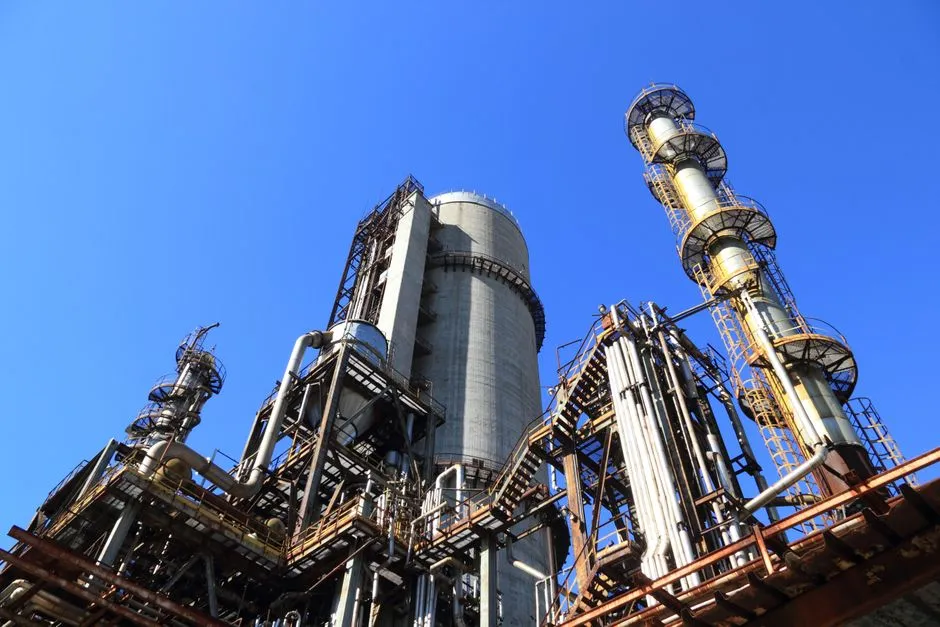
The Louisville wastewater design should proceed in six controlled steps, with each decision supported by project-specific chemistry and agency requirements.
- Separate and quantify the streams. Identify sanitary sewage, cooling blowdown, treatment backwash, cleaning wastewater, and condensate; establish design, average, and peak flows where available.
- Obtain the analyses. Characterize source water, circulating water, blowdown, and the complete chemical package, including seasonal variation.
- Confirm the discharge route. Obtain Louisville sewer or surface-water permit conditions, connection requirements, monitoring terms, and review procedures.
- Match treatment to documented risks. Apply pH control, solids separation, filtration, dissolved-solids treatment, disinfection, temperature control, and reuse steps only where the analysis and permit basis justify them.
- Compare operating scenarios. Evaluate discharge-only, partial reuse, and blowdown-to-makeup alternatives by total cost, footprint, operator burden, and compliance risk.
- Freeze equipment last. Final sizing requires actual flow, temperature, chemistry, cycles of concentration, cooling-system operating conditions, and permit limits.
This sequence turns the wastewater scope into a vendor brief and agency submittal: provide the stream inventory, water analyses, cooling-system data, chemical program, intended discharge route, reuse objective, monitoring plan, and reserved site area. The data center wastewater treatment decision example provides a useful workflow reference, while Louisville-specific approval remains a separate confirmation step.
Frequently Asked Questions
What flow and chemistry data are needed to size a Louisville data center blowdown treatment system?
Request cooling-tower design flow, makeup flow, blowdown flow, operating temperature, target cycles of concentration, source-water analyses, circulating-water and blowdown analyses, and the complete chemical-package inventory. Louisville permit limits must also be confirmed before final treatment capacity or equipment selection. Flow and chemistry are required before selecting a treatment train or equipment model.
How should a buyer evaluate wastewater treatment suppliers?
Ask each supplier to show how its capacity relates to the expected flow, identify the worst-case blowdown chemistry used in the design, define performance guarantees, and provide a control narrative. Require confirmation that the proposed treatment skid includes chemical containment, drainage, maintenance access, monitoring connections, and the space needed for safe operation. A process description without equipment sizing, chemistry assumptions, and operating controls is not a sufficient basis for selection.
Is a sewer industrial-user permit equivalent to an NPDES discharge permit?
No. A sanitary-sewer discharge follows the local industrial pretreatment or industrial-user permit pathway. Direct discharge to a surface water requires an NPDES permit and the applicable state and local water-quality standards. The supplied research establishes these separate pathways but provides no verified Louisville numerical discharge limits, so obtain the controlling requirements directly from the reviewing authorities before final design.
How should the cost and budget for blowdown reuse be evaluated?
Compare avoided water and wastewater charges with chemical use, maintenance, monitoring, laboratory work, labor, residual disposal, and compliance reporting. Request a project-specific estimate after the vendor receives the flow, water-quality analyses, cooling-system data, chemical inventory, reuse objective, and Louisville permit conditions; without those inputs and a quotation, a reliable price cannot be stated.
Does sanitary sewage belong in the cooling-blowdown treatment design?
No. Sanitary sewage is domestic waste from restrooms and kitchens and may require a separate biological-treatment evaluation. Cooling blowdown is process wastewater containing concentrated minerals and treatment chemicals. Keep their flows, treatment assessments, permit scopes, and cost estimates separate even if the project eventually coordinates their collection or discharge infrastructure.