
Start with the permit, not the treatment equipment
Fabricated metals plants near St. Augustine must first establish whether their operations are subject to 40 CFR Part 433, then obtain the receiving sewer authority’s industrial user permit and local limits before selecting pretreatment equipment. The design envelope must reflect the stricter applicable requirement for every parameter, not federal categorical limits alone. Equipment sizing then follows the permitted discharge objective, production-cycle flows, wastewater chemistry and measured batch dumps. The supplied research does not identify the receiving POTW or its numerical limits, so no universal St. Augustine limit can be responsibly quoted.
Part 433 covers forming, finishing, forging, foundry, metal spraying and machining-wash operations co-located with plating or anodizing lines. A plant shipping only dry parts to a separate finisher is generally outside that categorical description; a plant operating zinc, nickel or chromic-acid finishing lines is generally within it (HydropureWater, 2026). The permit reviewer must verify actual operations rather than infer applicability from the company name “fabricated metals.”
For an applicable source, compare the current PSES requirements for existing sources, PSNS requirements for new sources and the POTW’s limits. HydropureWater’s 2026 guidance notes that PSNS is generally tighter because it applies to sources constructed after the rule’s promulgation date. Source status, construction date and any POTW provisions applying to existing users therefore need documentary confirmation.
Local limits under 40 CFR 403.5 can add controls for copper, nickel, zinc, lead, silver, oil and grease, TSS and pH. Obtain the industrial user permit, sewer-use requirements, local-limit table and monitoring conditions directly from the receiving authority. Florida DEP’s Industrial Pretreatment Program is a regulatory reference, but it does not replace the site-specific POTW documents. A similar compliance sequence is illustrated in how metals plants meet sewer pretreatment limits.
| Control layer | What the designer must establish | Design consequence |
|---|---|---|
| 40 CFR Part 433 | Whether the plant’s operations and existing or new-source status place it within the Metal Finishing category. | Identify the applicable PSES or PSNS basis before preparing the design envelope. |
| 40 CFR 403.5 and POTW requirements | The receiving authority’s local limits, prohibited discharges, monitoring conditions and sewer-use requirements. | Apply the stricter requirement parameter by parameter. |
| Site data | Process inventory, batch dumps, production schedules, flow records and representative wastewater analyses. | Size equalization and treatment equipment for actual operating conditions. |
Map the wastewater before sizing the treatment train
The four contaminant families in metal-fabrication wastewater require different removal mechanisms and cannot be treated reliably as one undifferentiated stream. HydropureWater’s 2026 characterization identifies free and emulsified oils, dissolved metals, hexavalent chromium and suspended solids as recurring families; cyanide must also be screened where alkaline cyanide plating remains in use.
Oils originate with machining, drawing and stamping compounds. Dissolved metals can enter through plating rinsewater and acid pickling; the listed metals include zinc, nickel, copper, chromium, lead and cadmium. Hexavalent chromium is associated with chromic-acid anodizing, hard chrome and conversion coating. Suspended solids come from grinding swarf, casting sand and hydroxide floc.
HydropureWater’s 2026 field ranges are preliminary characterization, not permit criteria: oils of 50–500 mg/L, total dissolved metals of 5–200 mg/L, TSS of 100–1,000 mg/L and pH from 2 to 12 across batch dumps. The same source reports that a hard-chrome line can exceed 50 mg/L Cr(VI) and reduce pH below 2 during a rinse dump. These conditions show why a plant-wide average is an inadequate design basis.
Sample a full week of composite flow before final sizing. HydropureWater (2026) states that a short composite can miss the largest dump and undersize the equalization basin. Also request individual process-stream samples, production schedules and information about clean-in-place water, rejected batches and floor-drain routing. The DAF versus clarifier selection guide provides a useful adjacent framework for evaluating solids separation after characterization.
| Contaminant family | Typical source | Required treatment function | Sizing or performance evidence |
|---|---|---|---|
| Free and emulsified oil | Stamping, machining and drawing compounds | Physical separation or controlled chemical break followed by oil capture | Oil concentration, flow profile and captured-oil handling |
| Dissolved metals | Plating rinsewater and acid pickling | pH-controlled hydroxide precipitation | Individual metal species, total concentration and pH alkalinity demand |
| Hexavalent chromium | Chromic-acid finishing and hard-chrome operations | Chemical reduction to trivalent chromium | Cr(VI), pH, ORP and dosing demand |
| Suspended solids | Grinding, casting and metal-hydroxide floc | Flocculation followed by DAF or lamella clarification | TSS, particle characteristics, settling or flotation behavior and peak flow |
| Cyanide, where applicable | Alkaline cyanide plating | Oxidation before metals precipitation | Free cyanide, process identity and oxidation demand |
Equalize and protect downstream chemistry
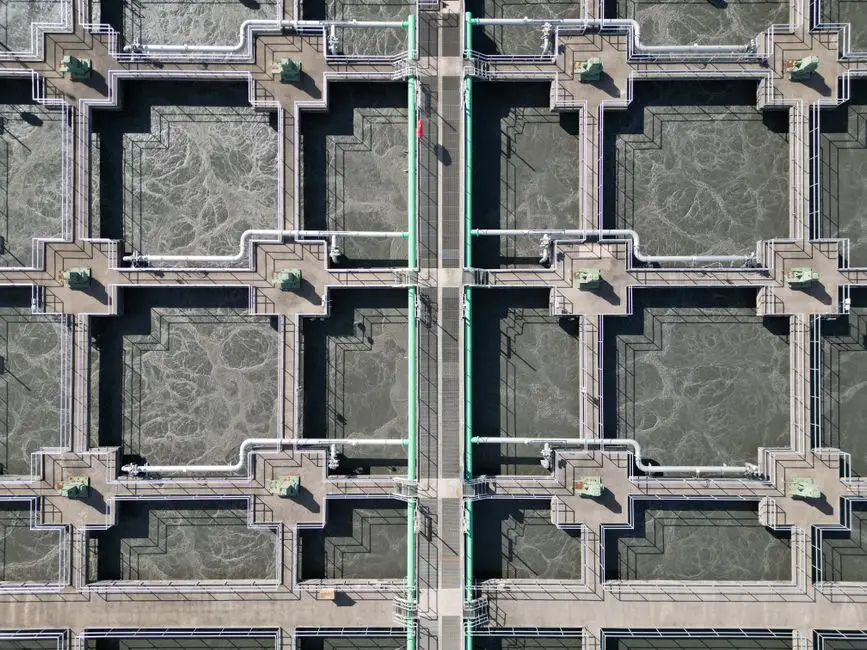
Equalization must accommodate the complete production cycle because a batch dump can change both flow and chemistry faster than downstream reactions can absorb. Sizing around average daily flow ignores the hydraulic pulse, contaminant concentration and equalization volume needed to blend the largest release. The basis should include batch dumps, clean-in-place water, rejected discharges, upset flows and the time required to divert off-spec water.
Coarse solids should be removed before pumps, clarifiers or sludge equipment. A mechanical bar screen can capture rags, wipes, tramp metal and metallic debris. HydropureWater’s 2026 research identifies upstream screening as protection for downstream pumps, valves and treatment processes and as a control against debris-related filter-press cloth failure.
Provide local level control, high-high level alarms and a diversion route back to the equalization header. A pH or ORP excursion should stop automatic discharge and retain the affected wastewater for treatment or controlled disposal. HydropureWater (2026) recommends automatic diversion on pH excursions, ORP outside the control range or excessive TSS.
The reported pH range of 2–12 also disqualifies a stable plant-wide average as the basis for neutralization. Different streams may remain at radically different conditions until combined. Equalization therefore needs enough working volume and mixing to prevent a small acidic dump from overwhelming downstream alkaline dosing, while still preserving the ability to segregate incompatible waste if necessary.
Remove contaminants with the unit operation they require
A defensible treatment train assigns a separate acceptance function to oil removal, hexavalent-chromium reduction, cyanide oxidation, metals precipitation, solids separation and final pH control. HydropureWater (2026) warns that combining these reactions in one undefined stage tends to leave at least one parameter unresolved.
- Remove oil first. Use physical separation or a controlled chemical break followed by oil capture. Oil entering the precipitation stage can impair solids separation and obscure the performance of the downstream clarifier.
- Reduce hexavalent chromium. Apply sodium metabisulfite or ferrous sulfate at pH 2–3 and approximately 250–300 mV ORP. Then precipitate the resulting trivalent chromium during the pH 8.5–9.5 precipitation stage (HydropureWater, 2026).
- Oxidize cyanide before precipitation. Cyanide must be destroyed before dissolved metals precipitate; otherwise it can resubilize downstream precipitates (HydropureWater, 2026).
- Precipitate dissolved metals. Use pH-controlled hydroxide addition and separate the metal-hydroxide floc by DAF or lamella clarification.
- Trim and verify. Adjust final pH, sample the clarified effluent and compare each result with the stricter applicable PSES, PSNS or POTW requirement.
The PLC-controlled chemical dosing skid should combine flow-paced feed with pH or ORP feedback. Each chemical pump should have a calibration column and a stroke-count totalizer, as identified in HydropureWater’s 2026 guidance. Otherwise, operators cannot reconcile chemical consumption with treatment performance and may compensate for a failed reaction by dosing blindly.
| Process stage | Control basis from HydropureWater, 2026 | Acceptance criterion | Primary failure mode |
|---|---|---|---|
| Oil removal | Physical separation or controlled chemical break | Oil and grease result at the permitted sampling point | Emulsified oil carries into precipitation or clarification |
| Hexavalent-chromium reduction | pH 2–3 and approximately 250–300 mV ORP | Cr(VI) reduction achieved before precipitation | Soluble Cr(VI) passes to the precipitation stage |
| Cyanide destruction | Oxidation before metals precipitation | Cyanide result meets the applicable requirement | Precipitates resubilize downstream |
| Metals precipitation | pH 8.5–9.5 for chromium precipitation | Regulated metals results meet the stricter applicable limit | Incomplete precipitation or chemical carryover |
| Clarification and final pH control | DAF or lamella solids separation followed by pH trim | TSS and pH comply at the designated monitoring point | Floc carryover or pH excursion |
Size DAF around the solids, not just the flow rate
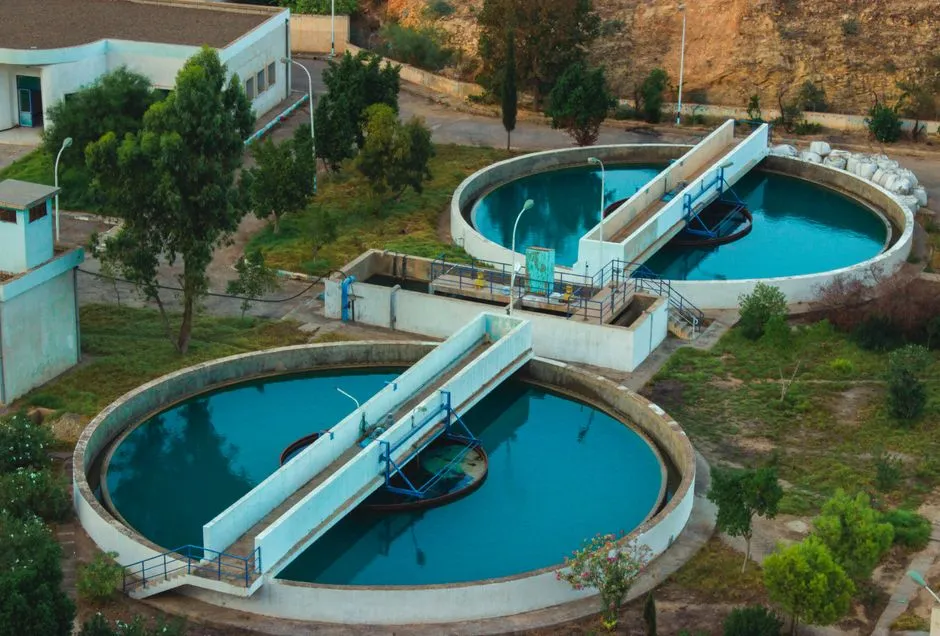
DAF capacity must be checked against hydraulic loading, air-to-solids ratio, recycle and floc behavior. HydropureWater’s 2026 guidance reports hydraulic surface loading of 4–20 m/h, depending on model and floc density; it also identifies an air-to-solids range of 0.005–0.060 with 0.02 as a typical design point, and recycle of 10–30% of forward flow. These are design inputs to evaluate, not interchangeable values for every stream.
Increasing the air-to-solids ratio may produce drier float, but it also increases blower power and can damage fragile floc. Increasing recycle can improve TSS removal while diluting chemistry and increasing equalization demand. The selected operating point must therefore be tied to measured TSS, floc characteristics and the required solids-removal performance.
Oil removal and pH-controlled flocculation must be reliable before DAF is credited with meeting the solids requirement. If the upstream reactions are unstable, a larger flotation unit will not consistently correct an underlying chemistry problem. Vendors should receive site-specific flow, TSS, oil, floc and operating-envelope data. Compare the metal-wastewater DAF system against a lamella option using actual wastewater performance data rather than tank volume alone.
| DAF design variable | Reported basis | Engineering question |
|---|---|---|
| Hydraulic surface loading | 4–20 m/h depending on model and floc density | Which value represents the selected unit and measured floc? |
| Air-to-solids ratio | 0.005–0.060; 0.02 identified as a typical design point | What air demand, float dryness and floc-damage trade-off applies? |
| Recycle | 10–30% of forward flow | How does recycle affect TSS removal, chemistry and equalization demand? |
| Feed quality | TSS, oil and floc behavior from site data | Are upstream oil removal and pH control stable at the worst batch? |
Manage the metal sludge and verify discharge compliance
Metal-hydroxide residuals are a treatment product with a disposal route, not an incidental by-product. HydropureWater (2026) reports floated sludge at 2–5% dry solids and plate-and-frame dewatering to 25–35% dry solids. The design should therefore address sludge collection, storage, dewatering, transport and the receiving hauler’s acceptance criteria.
Coarse solids reduction remains important to the dewatering train. HydropureWater identifies rags, wipes and tramp metal as a common cause of premature filter-press cloth failure. A plate-and-frame filter press can therefore be evaluated with upstream screen performance, sludge solids content and expected batch frequency included in the design basis.
Define sampling points, flow-paced or composite sampling logic, calibration frequency and analytical parameters in the permit and commissioning plan. Commissioning should cover representative production dumps, not merely clean-water startup. Measure pH, oil and grease, TSS and regulated metals at the required monitoring location and compare them with the permit and local limits.
Automatic upset controls should return flow to the equalization header when pH moves outside the control range, ORP leaves its established range or TSS becomes excessive. This protects the permitted discharge path, but it also creates an operating consequence: operators need a documented response for diverted wastewater, including treatment, authorized disposal and production restart authorization.
Decide whether polishing belongs in the initial design
Polishing should be included when the POTW limit is tighter than PSNS, rinsewater reuse requires a higher-quality stream, or a future rule changes the compliance basis. It should not be installed merely because reuse is discussed without a water-quality target, receiving-water analysis or operating-cost case.
For BOD/COD tightening or near-reuse-quality water, HydropureWater’s 2026 guidance identifies a submerged PVDF MBR system, including filtration below 1 μm. An integrated MBR treatment system may therefore fit a reuse or tightening objective. The pretreatment train still has to deliver the feed characteristics MBR requires.
For sub-ppm TDS or very tight dissolved-metal targets, the same source identifies RO as the relevant process. It gives nickel below 0.1 mg/L as an example reuse specification and requires upstream SDI15 below 3 for membrane protection. An RO water-purification system should therefore be evaluated against the actual reuse specification and pretreatment results, not against a generic desalination claim.
For PFAS, reserve footprint, utilities and connection points for anion exchange or granular activated carbon. HydropureWater (2026) states that no current numerical PFAS limit applies to chrome finishers and identifies EPA’s chrome-finishing rulemaking as evolving. Closed-loop zero liquid discharge remains a project-specific economic case, not the default pretreatment choice.
| Project condition | Applicable polishing decision | Evidence required before procurement |
|---|---|---|
| POTW limit tighter than PSNS | Select the process capable of meeting the specific tighter parameter. | Actual permit limit and representative treated-water analysis |
| BOD/COD tightening or near-reuse quality | Evaluate submerged PVDF MBR. | Target quality, reuse destination and MBR feed data |
| Sub-ppm TDS or tight dissolved-metal target | Evaluate RO with adequate upstream pretreatment. | Target analytes, SDI15, recovery and pretreatment requirements |
| Future PFAS obligation | Reserve an anion-exchange or GAC connection point. | Current permit, rule status and required analytes |
Build a procurement and acceptance checklist
Vendors should identify the federal category assumptions, POTW permit inputs, design basis, treatment sequence and performance guarantees for each regulated parameter. Require the worst-case batch flow, complete production-cycle equalization time, chemical-storage assumptions, DAF inputs, sludge yield and disposal basis. A nominal treatment rate without those inputs is not a complete offer.
Confirm PLC interlocks, high-high diversion, pH and ORP control, factory or site acceptance testing, operator training and commissioning documentation. HydropureWater’s 2026 catalog information lists DAF models covering 4–300 m³/h across 13 standard models; that range should be matched to measured peak flow and solids loading rather than treated as a universal capacity selection.
Compare offers on installed compliance performance and residual handling, not tank price or nominal throughput alone. For lifecycle review, use the industrial wastewater maintenance cost planning framework to identify chemical consumption, sludge hauling, energy, membrane maintenance or disposal assumptions. Each permit parameter should have an identified sampling point, acceptance test and operating response.
Frequently Asked Questions
Do fabricated metals plants near St. Augustine need Part 433 equipment?
Not every stamping or fabrication operation is automatically subject to Part 433. HydropureWater (2026) says the category includes forming, finishing, forging, foundry, metal spraying and machining-wash operations co-located with plating or anodizing lines; a shop shipping only dry parts to a separate finisher is generally outside it. Confirm the actual process inventory, source status, industrial user permit and POTW requirements before ordering equipment.
How should a plant size pretreatment equipment for batch discharges?
Use a full-week composite and production-cycle review, then size equalization around peak batch flow and the complete dump cycle. Include process-stream sampling, rejected batches, clean-in-place water and diversion requirements. HydropureWater (2026) specifically warns that a short composite can miss the largest dump and undersize the basin; final equipment sizing should also reflect the stricter applicable discharge requirement.
Is DAF necessary for every metals wastewater stream?
No. DAF is justified when the chemical treatment creates solids that require reliable flotation separation and site data show that the stream has suitable floc behavior. Lamella clarification may be preferable when the solids settle reliably and its performance can be demonstrated for the actual wastewater. In either case, upstream oil removal and pH-controlled flocculation must be stable.
How much should a fabricated metals pretreatment system cost?
The supplied research does not provide a defensible project price, so a buyer should request a scoped quotation tied to peak and batch flow, chemistry, equalization, tankage, controls, sludge handling, utilities and any polishing requirements. Compare offers on total installed compliance performance, chemical use, maintenance and residual disposal—not tank price alone. A useful operating-cost structure is described in this DAF-versus-clarifier purchasing guide.
When should a plant buy RO, MBR or PFAS polishing?
Buy MBR when the confirmed objective is BOD/COD tightening or near-reuse-quality water; evaluate RO for sub-ppm TDS or a tightly specified dissolved-metal target; and reserve anion-exchange or GAC connections for a defined PFAS obligation. Obtain the permit, local limit, reuse specification and representative treated-water data before selecting any polishing unit. HydropureWater (2026) states that no current numerical PFAS limit applies to chrome finishers, so an evolving rule should prompt a design reservation rather than an unsupported operating assumption.