What Valparaiso Sewer Infrastructure Means for Your Project
Valparaiso Utilities reports approximately 230 miles of sewer lines ranging from 6 inches to 72 inches in diameter, almost 5,000 manholes, and 32 lift stations. Maintenance, especially during rain events, is essential to maximizing the amount of wastewater conveyed through the system.
That inventory establishes the scale of Valparaiso’s collection system, but it does not prove that a particular address has an available connection, adequate capacity, or permission to discharge. For a domestic sewage treatment project in Valparaiso, ask the authority having jurisdiction to confirm service availability, the connection point, downstream capacity, required pretreatment, and the terms of acceptance.
There are two basic pathways. One is connection to the municipal collection system, where wastewater is conveyed for centralized treatment. The other is separate treatment and discharge under the authorization applicable to the receiving water, land use, and project. If the second pathway is required, a below-grade package treatment option such as an underground A/O package sewage treatment plant may merit evaluation.
Contractors should also investigate maintenance and wet-weather access, manhole and lift-station locations, and the route between the proposed connection and the utility network. A sewer nearby is not equivalent to a feasible connection.
Choose Between Municipal Sewer Connection and a Decentralized Plant
The correct pathway follows from verified site constraints, not from the equipment catalog. First, confirm whether sewer service exists and can lawfully receive the flow. Next, characterize the wastewater, establish the authorized discharge route, calculate the required treatment capacity, and only then compare packaged A/O and MBR alternatives.
A municipal connection is normally the simpler route when service is available, permitted, and able to receive the project flow without unacceptable pretreatment requirements. Decentralized treatment becomes relevant where that connection is unavailable, impractical, or unsuitable.
| Decision factor | Municipal sewer connection | Decentralized treatment |
|---|---|---|
| Initial infrastructure question | Does a service connection exist at an approved location, and does downstream capacity accept the proposed flow? | What discharge or reuse route is legally and technically available? |
| Treatment scope | Treatment responsibility depends on the utility’s service terms. | The owner must procure treatment, controls, maintenance, sludge handling, and monitoring. |
| Preferred process fit | Use where connection capacity and receiving requirements are confirmed. | Evaluate an underground A/O package sewage treatment plant for a compact biological train, or a submerged PVDF MBR wastewater treatment system where fine solids separation or reuse potential is important. |
| Principal procurement risk | Assuming that proximity guarantees connection approval or capacity. | Assuming catalog capacity or process performance establishes discharge compliance. |
An A/O package plant can reduce the need for a conventional multi-unit civil layout. An MBR should be evaluated when the project prioritizes fine solids separation, a smaller footprint, or water-reuse potential; the catalogued MBR range is 10–2,000 m³/day. Neither architecture automatically satisfies Chilean discharge requirements, so the applicable permit, receiving-water criteria, and client pretreatment limits must be confirmed separately.
Size the System from Verified Project Inputs
System capacity must be established from verified wastewater flows and characteristics rather than building occupancy alone. Give suppliers the design horizon, average daily flow, peak-hour flow, wastewater fraction, and seasonal or occupancy changes. A hotel, hospital, or residential development can have different flow profiles even when their occupancy is similar.
Require influent sampling or a defensible wastewater characterization covering BOD, COD, suspended solids, and operating characteristics relevant to the selected process. These inputs determine whether the stated treatment architecture has sufficient process basis and whether upstream equalization, screening, or solids removal is required.
| Procurement input | Why it matters | Evidence to request |
|---|---|---|
| Hydraulic demand | Defines treatment throughput and equalization requirements. | Average daily flow, peak-hour flow, wastewater fraction, and seasonal variation. |
| Wastewater quality | Establishes the biological and solids-management basis. | Representative BOD, COD, and suspended-solids data, plus relevant operational characteristics. |
| Catalog capacity | Provides an initial equipment-screening reference. | WSZ catalog range of 1–80 m³/h, checked against peak and surge conditions; MBR catalog range of 10–2,000 m³/day, checked against required daily flow and operating strategy. |
| Resilience and maintenance | Prevents an incomplete comparison between nominally equal bids. | Redundancy, emergency storage, power-failure strategy, sludge handling, and maintenance access as site-specific inputs. |
The supplied sources do not define redundancy, emergency storage, sludge removal, or access requirements for a specific Valparaiso installation. Treat those as design items to agree upon with the supplier and authority having jurisdiction, rather than accepting them as included features.
Compare A/O Package Plants and MBR Treatment
The WSZ package combines anoxic/aerobic biological contact oxidation, sedimentation, and disinfection in one buried unit, while the MBR combines activated sludge with submerged PVDF membrane filtration below 1 μm. These systems solve different project constraints: the A/O package emphasizes an integrated biological train, whereas MBR adds membrane solids separation.
According to the HydropureWater verified product catalog, the WSZ handles 1–80 m³/h, is fully automated, requires no operator, and can be installed below grade with landscaping above or mounted on a trailer for mobile deployment. The MBR catalog gives a capacity range of 10–2,000 m³/day and states that its footprint is 60% smaller than conventional systems.
| Selection criterion | A/O package plant | MBR system |
|---|---|---|
| Catalog treatment sequence | Anoxic/aerobic biological contact oxidation, sedimentation, and disinfection in one unit. | Activated sludge combined with submerged PVDF membrane filtration below 1 μm. |
| Catalog capacity | 1–80 m³/h. | 10–2,000 m³/day. |
| Deployment | Below-grade installation with landscaping above, or trailer mounting for mobile deployment. | Site-specific arrangement; footprint stated as 60% smaller than conventional systems. |
| Primary procurement attraction | A compact, integrated decentralized biological option. | Fine solids separation and a smaller-footprint alternative with potential for reuse applications. |
| Items requiring project definition | Loading basis, excavation, access, utilities, effluent route, and sludge removal. | Membrane cleaning, permeate handling, biological loading, reuse destination, and sludge removal. |
Do not treat automation as an elimination of maintenance. Biological treatment produces sludge, and both technologies require inspection, control-system support, consumables, or replacement planning and an operator-access strategy. The final selection should follow verified effluent targets, site conditions, and life-cycle requirements, not catalog capacity alone.
For broader context on domestic sewage treatment options across Chile, use the catalog specifications as screening information, then require the supplier to demonstrate how the proposed equipment handles the site’s actual flow, wastewater profile, and discharge obligation.
Build a Treatment Process That Fits the Site
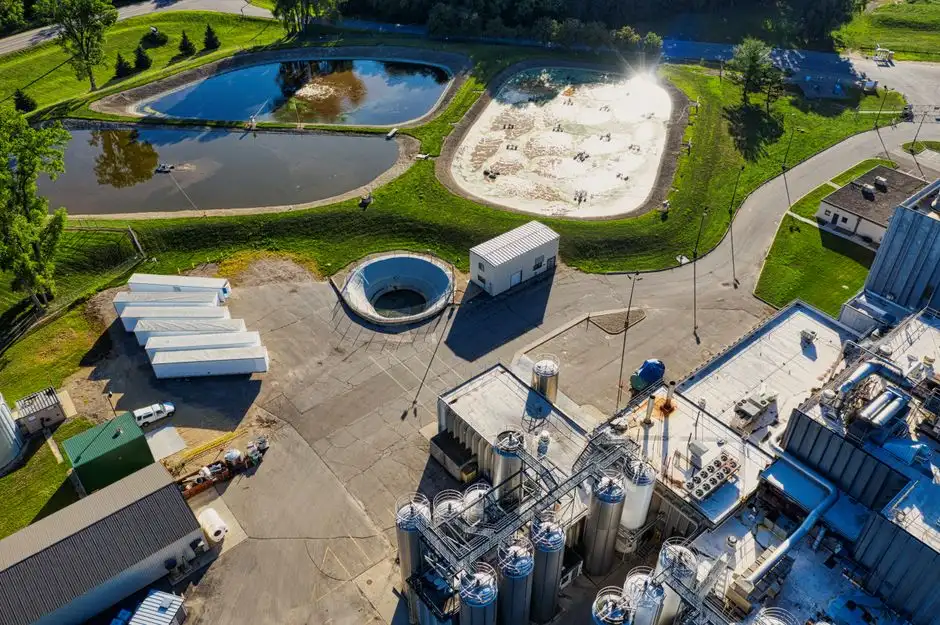
A treatment system is a connected process, not an isolated vessel. Map the route from incoming domestic sewage through collection, biological treatment, solids separation, disinfection, monitoring, and the authorized discharge or reuse destination. Each transfer, storage, and disposal point needs a defined operating and maintenance responsibility.
For an A/O package project, confirm inlet screening, flow equalization, the WSZ treatment unit, effluent sampling, and the final connection or reuse arrangement. For an MBR project, confirm the biological reactor, submerged PVDF membrane section, membrane-cleaning provisions, permeate handling, and any downstream disinfection or reuse requirements. These elements should appear in the process flow diagram and equipment list.
Separate domestic sewage from industrial, stormwater, and landfill-derived streams at the design stage. If landfill leachate enters the wastewater stream, require a dedicated compatibility assessment. In the 2010 Ingeniería e Investigación study, 10%, 20%, and 30% leachate mixtures were monitored for 30 days; only the 10% leachate mixture with 90% domestic sewage showed no significant inhibitory effects under that study’s conditions. The same study found potential inhibition effects at higher leachate percentages.
That result is not a universal operating ratio. The tested leachate, mixture basis, monitoring method, and project conditions were specific to the 2010 research. For a different site, obtain current project-specific data rather than transferring the result directly to design. The study supports the need for landfill leachate COD removal assessment where mixed streams are proposed.
Verify Compliance, Installation and Lifecycle Support
The equipment proposal should identify the applicable permit, discharge destination, client pretreatment limits, and effluent-monitoring parameters. No Valparaiso-specific numeric effluent limits were supplied, so the buyer should obtain the controlling criteria from the authority having jurisdiction rather than accept a generic compliance statement.
Require a site-specific process basis, hydraulic calculations, process drawings, control philosophy, equipment list, and commissioning plan. These documents should reconcile catalog capacity with verified peak and surge conditions and show how the proposed treatment train meets the identified discharge route.
| Procurement area | Acceptance evidence to request |
|---|---|
| Regulatory and discharge | Named permit basis, authorized destination, applicable effluent criteria, pretreatment limits, and monitoring parameters. |
| Process design | Verified flow basis, wastewater characterization, hydraulic calculations, process drawings, and mass-loading basis where applicable. |
| Below-grade installation | Excavation, groundwater, soil-bearing, access, power, odor-control, weather-protection, and finish-grade requirements. |
| Mobile deployment | Transport, positioning, connection, and operating restrictions for the trailer-mounted WSZ configuration. |
| Lifecycle support | Routine inspection points, spare-parts availability, control-system support, sludge-removal method, and contractual response times. |
| Commissioning | Acceptance tests, sampling plan, training, documentation handover, and performance criteria tied to the site-specific basis. |
Check catalog claims against these documents rather than treating them as permits. The WSZ catalog supports the stated capacity, automation, and deployment options, but local approval, construction suitability, and effluent compliance remain separate decisions. Ask each bidder to state which proposal items are catalog features and which require site-specific design.
Frequently Asked Questions
Should a Valparaiso property connect to the municipal sewer or install an onsite treatment plant?
Start by confirming whether sewer service is available at a lawful connection point and whether downstream capacity can receive the proposed flow. Decentralized treatment becomes relevant when a suitable connection is unavailable, impractical, or unsuitable. The authority having jurisdiction must confirm connection terms, pretreatment requirements, and discharge conditions before equipment selection.
How much does a domestic sewage treatment plant cost in Valparaiso?
No reliable local price was supplied, so a defensible quotation cannot be stated from the available evidence. Request comparable pricing based on the same verified flow, wastewater profile, treatment target, discharge route, site conditions, installation scope, and commissioning requirements. Include connection fees, civil works, controls, sludge management, monitoring, and long-term operation so bids remain comparable.
Is an A/O package plant or MBR better for a Valparaiso project?
Choose A/O when the project needs an integrated biological package and its verified hydraulic loading fits the WSZ catalog range of 1–80 m³/h. Evaluate MBR when fine solids separation, footprint, or reuse potential justifies the added process complexity; the MBR catalog range is 10–2,000 m³/day with submerged PVDF filtration below 1 μm. Neither catalog range establishes site-specific compliance.
How do I select a sewage treatment equipment supplier in Chile?
Request a documented process basis, local regulatory review, site-specific design, installation and commissioning plan, O&M scope, spare-parts support, and measurable acceptance criteria. During technical review, ask how each bid handles peak flow, power loss, sludge removal, membrane cleaning if applicable, monitoring, and maintenance access.
What information is needed to prevent compliance risk?
Obtain the verified discharge route, applicable permit, effluent criteria, influent characterization, flow data, and monitoring plan