What Can Be Confirmed About BYD's Texas EV Plant Wastewater?
A defensible DAF capacity for BYD’s new EV plant in Texas cannot be calculated from the supplied public information because no verified wastewater flow, TSS, FOG or discharge limit is available for the facility. DAF capacity must be selected as a clarification duty, not simply as the plant’s peak wastewater flow. HydropureWater’s 2026 design basis uses 3–5 gpm/ft² hydraulic loading, 10–30 minutes retention, 0.005–0.060 lb air per lb TSS and 20–50% recycle. The equipment RFQ should be based on the 85th-percentile daily flow, verified wastewater characterization and the applicable Texas permit—not an unsupported headline capacity.
The supplied evidence confirms only BYD-related EV-market activity through ACMobility. Ayala’s 2024 filing states that ACMobility supports the Philippine EV push as the national distributor of BYD and is building charging stations in that country. It provides no Texas plant wastewater flow, contaminant characterization, discharge profile or permit limit. It therefore cannot support a DAF sizing calculation for the facility discussed in this analysis of BYD EV plant expansion treatment strategy.
Automotive manufacturing wastewater can change with production stage, equipment cleaning, shift pattern and batch releases. A buyer should therefore request separate data for coating, process rinse, washdown, cooling, stormwater and sanitary streams before deciding whether they should be segregated, equalized or combined before DAF.
| Item | Status in supplied evidence | Procurement treatment |
|---|---|---|
| BYD-related EV-market activity | Confirmed by Ayala’s 2024 filing through ACMobility’s Philippine BYD distribution role. | Does not establish Texas wastewater design data. |
| Wastewater flow and discharge profile | No verified BYD Texas values supplied. | Request flow records, production schedule and batch-discharge data. |
| TSS, FOG, pH and temperature | No verified BYD Texas values supplied. | Request site-specific wastewater characterization. |
| Applicable discharge criteria | No verified permit or sewer criteria supplied. | Obtain the current authorization before defining the removal target. |
| Early budget estimate | Can use a clearly labelled planning allowance. | Do not convert it into an issued procurement capacity. |
| DAF procurement capacity | Cannot yet be calculated from public evidence. | Base the RFQ on verified influent, permit and operating data. |
An early estimate is acceptable for conceptual budgeting if its assumptions and exclusions are visible. An issued DAF procurement capacity requires measured or otherwise verified influent data, the applicable permit or sewer criteria and documented operating variability. Without that record, a single BYD-specific m³/h value would create false precision rather than an auditable engineering basis.
The Wastewater Inputs Needed to Calculate DAF Capacity
The design flow should be the 85th-percentile daily flow, with peak excursions documented separately, according to HydropureWater’s 2026 sizing guide. That source also recommends accepting brief excursions above the hydraulic loading limit. Batch-discharge periods must nevertheless be identified because a short spike can change local hydraulic loading, recycle demand and float stability even when it does not determine the daily design flow.
Concentrations alone do not establish clarification duty. The buyer should request TSS and FOG concentrations together with mass-loading rates at the design flow. A stream carrying the same concentration at a higher flow presents a greater solids duty and may require different air, recycle, retention or treatment area. The discharge TSS target must also be defined from the permit or sewer criteria; passing incoming water through a tank is not the same as meeting that target.
Request pH, temperature, flow variability, constituent wastewater streams, chemical-conditioning needs, current treatment-system drawings and the applicable discharge authorization. Ask the supplier to confirm whether its selected design point is the 85th-percentile daily flow, how brief peaks will be handled and whether excursions above the hydraulic loading limit affect float stability or collection.
| Required input | Why it affects DAF selection | Evidence needed |
|---|---|---|
| 85th-percentile daily flow | Sets the normal clarification duty and tank area. | Measured flow record and documented calculation method. |
| Peak and batch-discharge profile | Identifies hydraulic excursions and recycle demand. | Sub-hourly or production-linked flow data where available. |
| TSS and FOG | Defines solids loading and the need for air and conditioning. | Concentrations, mass-loading rates and stream variability. |
| pH and temperature | Influence conditioning and saturator performance. | Seasonal and diurnal measurements. |
| Stream composition | Determines segregation, equalization and material compatibility. | Source-by-source wastewater characterization. |
| Discharge criteria | Defines the required suspended-solids removal performance. | Current permit or industrial sewer discharge criteria. |
| Chemical-conditioning requirement | Links coagulation and flocculation to A/S and capture efficiency. | Jar or pilot-test results and proposed dosing basis. |
Segregation and equalization should be resolved before final DAF selection. The DAF system engineering specifications provide the appropriate starting point for this data request, but project wastewater remains the controlling authority. If incompatible or intermittently released streams will enter the DAF, the proposal should define where they are held, blended or treated separately.
How to Turn Verified Flow into a DAF Sizing Envelope
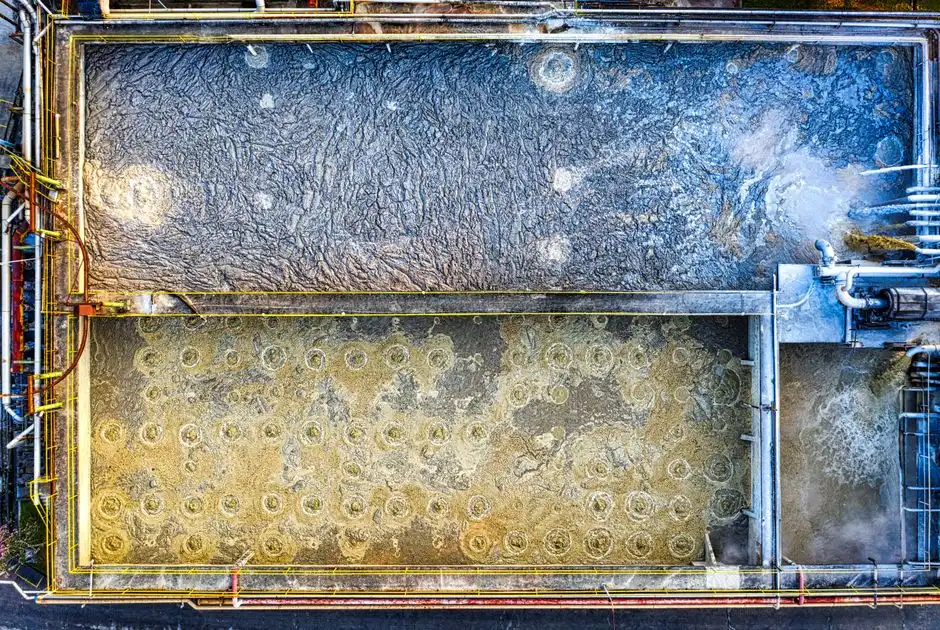
HydropureWater’s 2026 sizing guide establishes 3–5 gpm/ft² as the normal industrial hydraulic loading band and identifies 4 gpm/ft² as the typical design point. This is the first calculation for a verified design flow: area equals design flow in gpm divided by the selected hydraulic loading in gpm/ft². The result is then checked against available equipment and clarified using contaminant loading and operating variability.
For wastewater above 2,000 mg/L TSS, the 2026 guide recommends a 20–30% hydraulic safety margin and a lower loading target of approximately 2.5–3.5 gpm/ft². This adjustment cannot be applied until BYD-specific TSS has been verified. It is a project rule, not evidence that the Texas plant produces high-strength waste.
The calculation should produce an envelope rather than a false point estimate. The lower and upper area bounds can reflect the selected hydraulic loading range, while the A/S, retention and recycle checks determine whether that footprint remains workable. If the required duty falls outside the available catalog envelope, the result points to parallel trains or custom fabrication rather than an arbitrary adjustment to retention or recycle performance.
| Calculation step | Method | Decision output |
|---|---|---|
| 1. Establish design flow | Use the verified 85th-percentile daily flow; record peak excursions separately. | Normal hydraulic duty in gpm and m³/h. |
| 2. Select hydraulic loading | Normally use the HydropureWater 2026 band of 3–5 gpm/ft²; apply project-specific criteria only where influent data supports them. | Selected loading rate. |
| 3. Calculate area | Area = design flow in gpm ÷ selected loading in gpm/ft². | Minimum clarification area and a loading-based area envelope. |
| 4. Check solids duty | Compare TSS mass loading and A/S requirements with the verified discharge target. | Conditioning and air-demand basis. |
| 5. Check coupled operation | Confirm retention, recycle, bubble contact and float-stability conditions. | Feasible equipment envelope. |
| 6. Match equipment | Compare calculated duty with the 4–300 m³/h standard range and identify parallel or custom options. | Train configuration for RFQ. |
HydropureWater’s 2026 guide explains why this remains a coupled calculation. Increasing hydraulic loading shortens effective retention and reduces bubble–floc contact; reducing recycle or pressure can starve the contact zone even when tank dimensions are correct. The method is set out in its DAF capacity and sizing methodology. A calculation that alters only one variable is not a defensible sizing submission.
Why DAF Capacity Must Be Checked Against Four Coupled Variables
A DAF quotation should specify four coupled values: hydraulic loading of 3–5 gpm/ft², an A/S ratio of 0.005–0.060 lb air per lb TSS, 10–30 minutes retention and 20–50% recycle, based on HydropureWater’s 2026 sizing guide. A tank flow rating by itself does not demonstrate that the equipment can meet the discharge TSS target under the plant’s actual wastewater conditions.
Hydraulic loading sets the clarification footprint. A/S depends on coagulant and flocculant performance because the resulting floc characteristics determine how much air is needed. Retention supports floc growth and bubble attachment. Recycle supplies the pressurized flow and microbubbles entering the contact zone. These variables interact: a higher hydraulic loading can shorten retention and weaken attachment at the same time.
The 2026 guide reports 92–97% TSS removal in its worked example for properly conditioned wastewater. That is a conditional worked example, not a guaranteed BYD performance figure. The supplier should show how its proposed chemistry and operating values support the required discharge target.
Saturator performance, recycle-pump delivery and saturation pressure must be checked explicitly. HydropureWater’s 2026 guide identifies 60–80 psig as typical saturation pressure. The nominal recycle ratio is not sufficient unless the pump actually delivers the required flow at the required pressure. Temperature also matters: colder water holds more dissolved air, and the guide recommends a 10–15% summer-service derate of the saturator pump for an unheated stream.
| Variable | HydropureWater 2026 band | Engineering check |
|---|---|---|
| Hydraulic loading | 3–5 gpm/ft² | Calculated area and float-stability conditions. |
| Air-to-solids ratio | 0.005–0.060 lb air per lb TSS | Chemical conditioning, influent TSS mass rate and saturator delivery. |
| Retention time | 10–30 minutes | Floc growth and bubble–floc attachment. |
| Recycle ratio | 20–50% | Recycle-pump flow, saturation pressure and contact-zone microbubble supply. |
| Saturation pressure | 60–80 psig typical | Verified at the saturator discharge rather than assumed from equipment selection. |
| Summer service | 10–15% saturator-pump derate for an unheated stream | Applied only after stream temperature and heating conditions are confirmed. |
For an automotive manufacturing wastewater package, automatic dosing may be part of that clarification duty rather than an accessory. A PLC-controlled automatic chemical dosing system should be evaluated against the proposed coagulant and flocculant programme, with dosing accuracy included in the supplier’s performance basis.
Matching the Calculated Duty to Standard or Custom Equipment
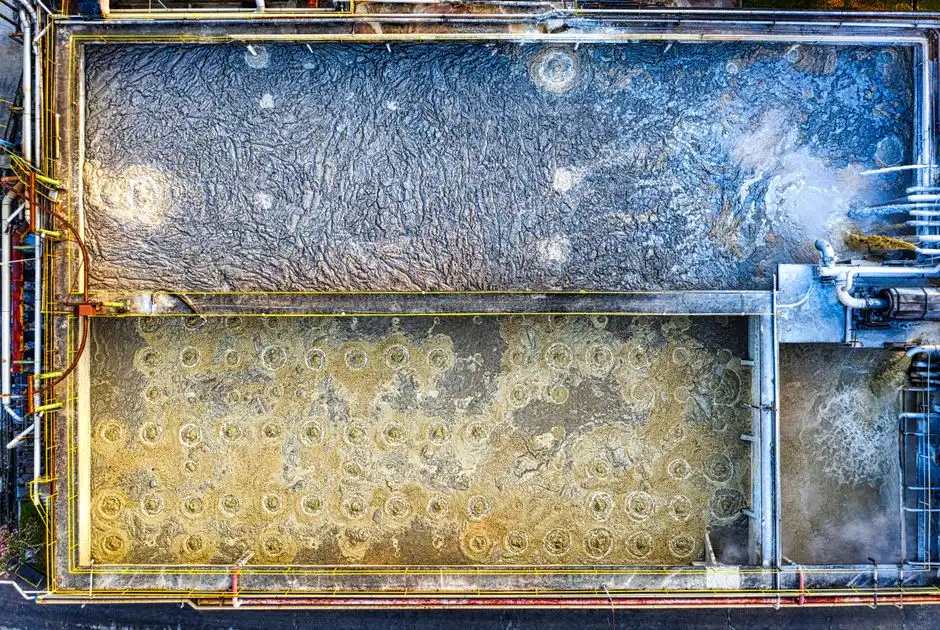
HydropureWater’s DAF catalog covers 4–300 m³/h across 13 standard models. Smaller units commonly use factory-integrated floc tubes, while larger units are typically skid-packaged. Above 300 m³/h, the 2026 guide identifies parallel standard trains and custom-fabricated rectangular tanks as the two principal configurations.
Parallel trains require engineered flow distribution. A symmetrical layout does not guarantee equal flow: the inlet manifold must distribute wastewater so neither train is overloaded nor starved. Custom rectangular tanks may be preferable where flow is variable, a single scum-removal arrangement is required, or the site cannot accommodate multiple trains with their associated systems.
| Selection condition | Equipment decision | Supplier evidence required |
|---|---|---|
| Calculated duty is within 4–300 m³/h | Select the nearest suitable standard model, then verify its area and operating bands. | Model drawing, hydraulic calculation and performance duty. |
| Calculated duty exceeds 300 m³/h | Compare parallel standard trains with custom fabrication. | Train arrangement, manifold design and site-constraint comparison. |
| TSS is at or below 1,000 mg/L and FOG is at or below 500 mg/L | Standard catalog assumptions may be relevant. | Written confirmation of the duty basis. |
| TSS exceeds 1,000 mg/L, FOG exceeds 500 mg/L or conditions differ from catalog assumptions | Apply a project-specific check. | Mass loading, A/S, retention, recycle and hydraulic calculations. |
| Chemical conditioning is required | Include automatic dosing and controls in the package. | Dosing philosophy, control sequence and performance basis. |
The standard catalog assumptions are not plant guarantees. HydropureWater’s 2026 guide states that catalogue flow ratings assume TSS ≤1,000 mg/L, FOG ≤500 mg/L and standard A/S. Any deviation requires verification against the verified wastewater and required removal performance. An industrial dissolved air flotation system should therefore be evaluated against clarification duty, not selected because its nominal flow rating appears closest to the influent peak.
An RFQ-Ready Engineering Decision Framework
The RFQ should move from uncertainty to a reproducible equipment recommendation. The buyer first requests site wastewater characterization, production schedules, batch-discharge information, permit requirements and existing treatment-system drawings. The design flow is then defined as the 85th-percentile daily flow, with peak excursions documented separately.
- Verify and segregate the wastewater streams that will enter the DAF.
- Establish the 85th-percentile daily flow and peak-discharge profile.
- Calculate hydraulic area using the selected loading rate.
- Check A/S, retention, recycle ratio, bubble contact and float stability.
- Compare the calculated duty with the 4–300 m³/h standard range.
- Determine whether parallel trains or custom fabrication are required.
- Require the final proposal to reproduce every calculation from the same influent and permit data.
The deliverable should include the selected design flow and source data, loading rate and calculated area, contaminant mass rates, A/S calculation, retention time, recycle flow and pressure, control strategy, equipment drawings, exception assumptions and a priced equipment schedule. This is the decision logic developed for DAF selection for automotive EV wastewater, adapted to the verified inputs required for the Texas site.
A catalogue flow rating can support budgetary screening, but it should not be the sole basis of award. The final evaluation should demonstrate that the proposed clarification area and operating values remain capable of meeting the discharge target under the same wastewater assumptions used to calculate them.
Frequently Asked Questions
Why is no verified DAF capacity available for BYD’s Texas EV plant?
The supplied public evidence contains no verified BYD Texas wastewater flow, TSS, FOG, pH, temperature, discharge profile or permit limit. Ayala’s 2024 filing confirms BYD-related EV-market activity through ACMobility in the Philippines, not Texas plant wastewater data. A defensible capacity therefore cannot be calculated from the available evidence.
What project data is required before issuing a DAF RFQ?
Request the 85th-percentile daily flow, peak and batch-discharge profile, stream-by-stream TSS and FOG concentrations, contaminant mass-loading rates, pH, temperature, chemical-conditioning needs, production schedule and applicable discharge criteria. Existing treatment drawings and any equalization or segregation plan are also required. These inputs can be organized through the DAF system engineering specifications.
How should a supplier demonstrate that its DAF has been sized properly?
Require the supplier to reproduce the hydraulic area, A/S, retention, recycle ratio and pressure calculations from the same verified influent data. HydropureWater’s 2026 basis is 3–5 gpm/ft² hydraulic loading, 0.005–0.060 lb air per lb TSS, 10–30 minutes retention and 20–50% recycle. The proposal must also show saturator and recycle-pump delivery, float-stability assumptions and compliance with the discharge target.
What should the buyer budget, and how should standard versus custom equipment be selected?
Request a priced RFQ using the verified 85th-percentile flow, contaminant data, permit criteria, duty check and delivery scope; the supplied research contains no BYD-specific quotation, so a project price cannot be stated responsibly. Compare the resulting duty with the 4–300 m³/h standard range. Above that range, request an engineered comparison of parallel trains and custom fabrication, including manifold distribution, footprint, controls, chemical equipment, delivery schedule and warranty scope.
Related Equipment
- industrial dissolved air flotation system — specifications, capacity range, and technical data