What Wastewater and Cooling Blowdown Treatment Does a Jambi Data Center Need?
A Jambi City data center needs treatment designed separately for sanitary wastewater, cooling-tower blowdown, and any process or liquid-cooling waste stream. Cooling blowdown may contain dissolved solids, suspended matter, biocides and corrosion inhibitors, so it generally needs flow and water-quality monitoring, solids removal, pH or chemical control and disinfection before discharge or reuse. UF can remove colloids and suspended solids, while DAF is more relevant where oil, grease or floatable contaminants are present. MBR is stronger when sanitary or process wastewater requires biological treatment and high-quality reuse.
The practical answer is therefore not a universal treatment plant. It is a modular treatment train selected after the source-and-discharge diagram, water balance, source-water analysis and receiving route are established. Cooling technology may be air-cooled, liquid-cooled, hybrid or two-phase, and facility size, computing load, Jambi climate and water availability influence the selection. The data center cooling blowdown treatment in a warm coastal location provides a useful comparison, but its conclusions are not Jambi-specific.
Water use effectiveness, or WUE, must not be confused with discharge suitability. The Congressional Research Service defines water consumption as water permanently removed through evaporation or another irreversible process and notes that water-cooled chiller systems with cooling towers generally have higher WUE than compared approaches because of cooling-tower use. That metric describes facility-level consumption; it does not establish whether blowdown can enter a sewer or receiving water. The discharge destination, constituent profile and applicable Indonesian approval remain separate design criteria.
Map Every Water Stream Before Selecting Equipment
A correct equipment boundary requires every water source and destination to appear on one diagram, including makeup water, evaporation, drift, blowdown, sanitary sewage, condensate, cooling-equipment washdown, chemical-room waste and storm or surface-water contacts. Combining these streams by default can dilute a low-flow contaminated stream with a much larger sanitary flow, obscuring both the treatment duty and the discharge risk.
Cooling-tower blowdown and once-through thermal discharge are different streams. In an open-loop evaporative system, evaporation leaves salts and treatment chemicals behind, progressively concentrating the circulating water; controlled blowdown removes that concentrated water. A once-through system instead returns heated water to the receiving water, making temperature and thermal impacts central to its assessment. The regional data center wastewater treatment framework illustrates the value of resolving local routing and reuse decisions before equipment selection.
| Stream or destination | Information required | Treatment decision boundary |
|---|---|---|
| Sanitary wastewater | Peak and average flow; biodegradable organics; suspended solids | Decide between sewer acceptance, on-site biological treatment or a defined reuse endpoint |
| Cooling-tower blowdown | Makeup and blowdown flow; conductivity or TDS; suspended solids; chemistry; chemical inventory | Set blowdown recovery, reuse quality and discharge route before selecting solids, disinfection and polishing steps |
| Once-through cooling discharge | Flow and temperature | Assess the receiving water and thermal-discharge route separately from evaporative blowdown |
| Equipment washdown or process wastewater | Constituents including oil, grease, solids and any process chemicals | Determine whether equalization, DAF, biological treatment or hazardous-waste handling is required |
| Direct-to-server liquid-cooling waste | Coolant identity, concentration, contamination and disposal route | Apply a coolant-specific management plan rather than assuming compatibility with water reuse |
Obtain at least one full operating campaign covering flow, pH, conductivity or TDS, suspended solids, turbidity, hardness, temperature and oil and grease where relevant. Include the cooling-water chemical program because Commercial Water Lab identifies biocides, corrosion inhibitors and other treatment chemicals as constituents that may be present in cooling-tower blowdown. For each stream, record the intended route: sewer, on-site treatment and discharge, internal reuse, irrigation, toilet flushing or hazardous-waste management.
Treat Cooling Blowdown for Discharge or Reuse
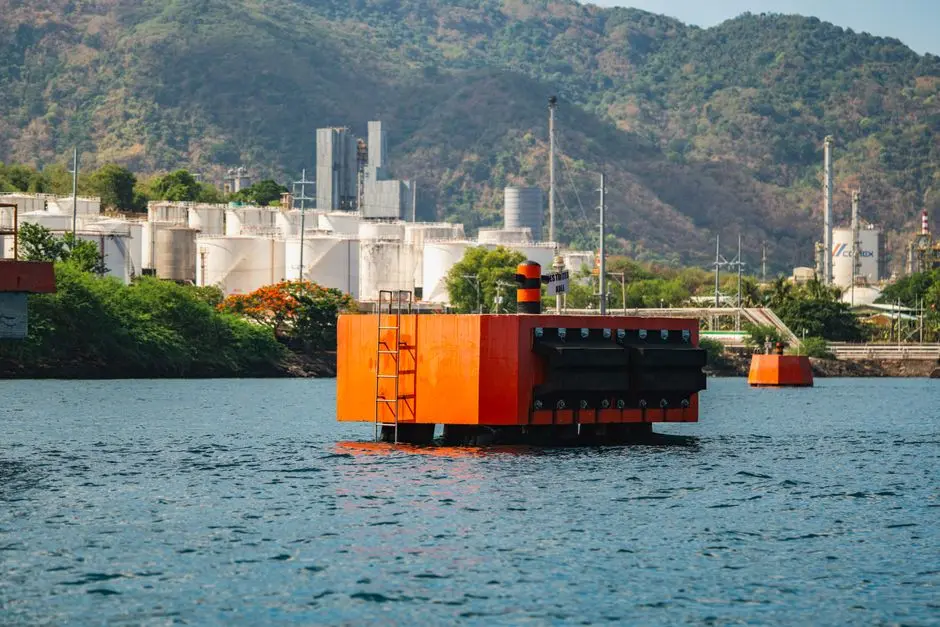
Cooling-blowdown treatment begins with removing suspended solids and colloids that could foul downstream equipment, followed by chemical control and disinfection only as required by the water chemistry and risk assessment. The Congressional Research Service identifies cooling towers as a major water-use concern in water-cooled chiller systems, which explains why recovery is attractive, but the discharge destination still determines the required treatment quality.
Use source filtration or clarification before sensitive equipment. Where the objective is low-turbidity water without chemical coagulants, a 0.03-micron ultrafiltration system for blowdown pretreatment is a candidate. HydropureWater specifies PVDF membranes, flow options from 2,000 to 40,000 L/h, turbidity up to 300 ppm and automatic backwash with air scour. These are equipment specifications, not evidence that the product meets a Jambi discharge permit.
Where floatable material, oil and grease, FOG or colloidal matter are present, place a DAF system for oily or solids-rich cooling wastewater ahead of sensitive biological or polishing equipment. HydropureWater specifies capacities from 4 to 300 m³/h, micro-bubble flotation and automatic skimming. The suitable flow rating must be checked against measured peak blowdown and any washdown or process flow assigned to the same unit.
- Establish the cooling-water chemistry and calculate the required cycles of concentration.
- Remove suspended solids, colloids and floatable contaminants appropriate to the stream.
- Control pH, corrosion, scale and microbiological risk without assuming that chemical addition is harmless to downstream reuse.
- Apply validated disinfection where the reuse assessment or receiving authority requires it.
- Verify treated-water quality against the selected discharge or reuse endpoint.
Aggressive chemical dosing can increase dissolved-solids loading in the blowdown and may impair downstream reuse. A chlorine dioxide generator for treated-water disinfection is one available disinfection option; HydropureWater offers generator capacities from 50 to 20,000 g/h, including an automated industrial configuration. The selected disinfectant, dose and residual must still be validated for the application. No single product automatically satisfies Indonesian environmental, sewer-discharge or reuse requirements; confirm these with the competent authority and receiving utility.
Choose a Wastewater Train for the Intended Reuse
The reuse endpoint determines the wastewater treatment train because cooling-tower makeup, toilet flushing, irrigation and higher-grade reuse have different quality requirements. A sanitary or process stream containing biodegradable organics generally requires biological treatment before membrane polishing when high-quality effluent is the objective.
For sanitary wastewater or biodegradable process wastewater destined for high-quality reuse, an MBR system for sanitary wastewater and high-quality reuse combines biological treatment with membrane separation. HydropureWater specifies capacities from 10 to 2,000 m³/day and filtration below 1 μm. UF is not a substitute for biological treatment of a high organic load unless upstream biodegradation has already reduced the wastewater to the required reuse specification.
| Wastewater condition | Potential treatment sequence | Selection test |
|---|---|---|
| Biodegradable sanitary wastewater | MBR, or another biological process followed by filtration as required | Does the confirmed reuse quality require biological removal and membrane polishing? |
| Decentralized sanitary treatment with lower-complexity installation | Packaged A/O biological plant | HydropureWater specifies 1–80 m³/h, automated operation without an operator, and below-grade or trailer-mounted installation options |
| Washdown or process water containing oil, grease or suspended solids | Equalization and DAF ahead of biological treatment where the constituent profile supports that sequence | Have the constituent profile confirmed by sampling rather than inferred from the stream name |
| Cooling-tower makeup reuse | Solids removal, chemistry control, disinfection and any required further polishing | Confirm the receiving cooling system’s water-quality and chemical-compatibility specification |
| Direct-to-server liquid-cooling waste | Coolant-specific recovery or disposal train | Does the coolant require separation from ordinary wastewater or regulated disposal? |
Where decentralized sanitary treatment is appropriate, a packaged A/O biological plant may offer a simpler installation path. HydropureWater specifies automated operation without an operator and provides below-grade or trailer-mounted options. The treatment-selection framework for a non-data-center facility can support comparison logic, but flow, effluent target and local standards must remain project-specific. Set the intended endpoint before ordering equipment; otherwise, “reuse” is too broad to support a defensible specification.
Size the Plant from a Water Balance and Concentration Model
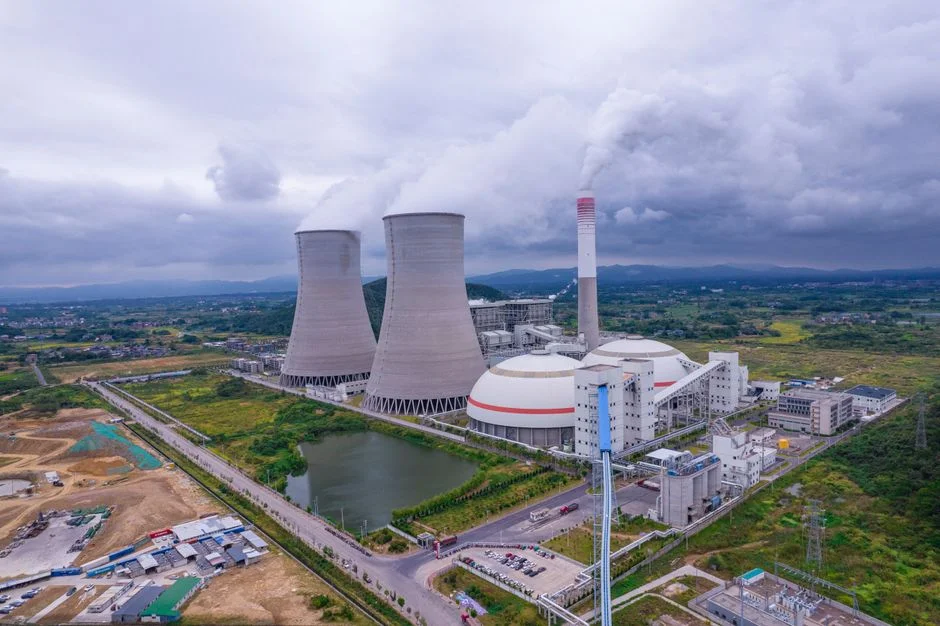
Plant sizing must begin with measured source and discharge flows, not an assumed data-center capacity. Build the cooling-water balance from makeup flow, evaporation, drift, blowdown, analytical water additions and measured operating days, then reconcile the result against meter readings and the operating profile.
Cycles of concentration relate circulating-water solids concentration to makeup-water concentration. Genesis Water Technologies states that at 4 CoC, blowdown equals 25% of makeup-water volume, while at 6 CoC it equals 20%. The change is therefore five percentage points of makeup-water volume, or a 20% relative reduction in the original blowdown—not 50%. This distinction matters because the operational benefit and the resulting treatment flow cannot be calculated correctly if the percentage reduction is overstated.
Higher cycles can reduce blowdown but increase scaling, fouling and microbiologically influenced corrosion risk unless treatment and control are upgraded. The source-water chemistry, make-up quality, heat load, drift, chemical program and allowable conductivity or hardness determine the practical operating limit. None of those site inputs is supplied for an unspecified Jambi facility, so no final m³/day capacity can be stated responsibly.
- Measure makeup, blowdown and each separated wastewater stream.
- Calculate evaporation and drift from the measured water balance and validate the operating assumptions.
- Model cycles of concentration against scaling, fouling and corrosion constraints.
- Check treatment flow against peak blowdown and peak wastewater flow.
- Assess equalization and storage from the diurnal and seasonal operating profile.
Use the engineering framework for wastewater treatment planning to document assumptions and interfaces. A treatment unit should not be selected from an average daily flow alone; interrupted operation, storage turnovers, bypass conditions and maintenance strategy also affect hydraulic and biological loading.
Match the Treatment Decision to the Discharge Route
The discharge route determines which approval and quality criteria govern the project. Sewer, surface-water, internal-reuse and zero-liquid-discharge concepts have different treatment objectives and cannot share one generic acceptance specification.
| Selected route | Buyer action before equipment selection | Principal risk to resolve |
|---|---|---|
| Municipal sewer | Obtain the receiving pretreatment or industrial wastewater acceptance criteria and submit the proposed constituent profile | Concentrated solids or cooling chemicals may be unsuitable without additional treatment |
| Surface water | Determine the applicable Indonesian environmental permit, receiving-water conditions, temperature constraints and monitoring obligations through the competent authority | Permit limits may address parameters not captured by the initial reuse specification |
| Internal reuse | Define the end use, required water quality, treatment train, storage, distribution and cross-connection controls | Water-quality drift could affect cooling equipment, sanitary fixtures or occupational safety |
| Zero liquid discharge or high recovery | Complete a separate mass-balance and feasibility study covering brine, energy, chemicals and residual handling | Recovery can create a larger concentrate-management problem than it solves |
For sewer discharge, send the proposed constituent profile—not merely the wastewater flow—to the pretreatment program. Cooling-tower blowdown can contain concentrated dissolved solids and treatment chemicals, so municipal acceptance must be confirmed before selecting equipment.
For surface-water discharge, establish the applicable Indonesian environmental permit and monitoring conditions through the competent authority. For internal reuse, specify the exact end use and protect the distribution system through validated water quality and cross-connection controls.
Zero-liquid-discharge or high-recovery concepts require a separate study because brine concentration, energy demand, chemical use and residual management can change project economics. The U.S. NPDES and industrial-pretreatment frameworks described by Commercial Water Lab demonstrate why discharge destination governs treatment, but they are not substitutes for Indonesian approvals.
Build Monitoring and Automation Into the Project
Compliance and equipment protection require continuous operating data, not periodic grab samples alone. The initial monitoring set should include makeup water, blowdown and wastewater flow, estimated evaporation, pH, conductivity or TDS, turbidity and suspended solids. The selected parameters should then be tied to the cooling program, treatment train and discharge or reuse specification.
Trend cycles of concentration, chemical dosage, filtration differential pressure, disinfection performance and treated-water reuse flow. For an operational cooling tower, these trends reveal whether an apparent blowdown reduction is caused by genuine water-balance improvement, altered chemical dosing, sensor error or an increase in unmeasured losses.
Automatic dosing is appropriate where the control strategy requires repeatable pH adjustment or other chemical addition. HydropureWater’s PLC-controlled chemical dosing for cooling-water treatment is specified for coagulants, flocculants, pH adjusters and specialty chemicals. Selection must still include chemical compatibility, storage, containment and operator procedures.
Define alarms and diversion rules for abnormal pH, conductivity, turbidity, flow or disinfectant residual before discharge or reuse. A failed treatment train should not remain connected to the destination. Trend consumption separately from water returned to the source: the Congressional Research Service defines consumption as water permanently removed through evaporation or another irreversible process. This distinction supports both water accounting and recovery-performance verification.
Plan Procurement, Commissioning and Long-Term Operation
A defensible procurement package requires measured flow, complete water analysis, destination limits, reuse target, site footprint, power availability, backup requirements and operator skill level. Without those inputs, a vendor capacity or price comparison is not a basis for award. The project should not publish a final treatment capacity, budget or plant capacity until the water balance and receiving requirements are confirmed.
- Issue the performance specification and identify applicable Indonesian permit conditions.
- Require suppliers to state treatment objectives, duty, controls, utilities and acceptance criteria in the same format.
- Clarify membrane or media life, cleaning frequency, chemical compatibility, control philosophy, spare parts, local service capability and verification testing.
- Use factory acceptance testing followed by site acceptance testing against agreed influent and effluent criteria.
- Commission the complete flow balance, cycles of concentration, blowdown control, solids removal, disinfection, automatic controls and representative reuse applications.
Compare bids on total cost of ownership, including media replacement, chemicals, energy, sludge or concentrate handling, labour and downtime. The supplied research contains no Jambi project cost basis, so no numerical budget or equipment-price range can be justified. Request a transparent cost breakdown tied to the agreed design flow and water analysis, together with assumptions for consumables, residual handling and local service. The engineering cost breakdown in Pune and Johor Malaysia cost framework provide comparative procurement structures, not Jambi quotations.
Frequently Asked Questions
How much treatment capacity does a Jambi data center need?
The required capacity cannot be calculated without peak and average flow for each separated stream, measured water quality and a completed cooling-water balance. Ask the bidder to show how makeup, evaporation, drift and blowdown reconcile, then check equipment duty against peak rather than average flow. Do not accept a plant capacity based only on sanitary sewage flow or building area.
Should cooling-tower blowdown be treated with MBR or UF?
MBR is appropriate when the stream contains biodegradable organics and biological treatment is required for the reuse target; HydropureWater specifies filtration below 1 μm. UF is a physical pretreatment and solids-polishing option but does not independently provide biological degradation of a high organic load. Select from the confirmed constituent profile and required endpoint, not from the equipment label.
What does a cooling-blowdown treatment system cost?
No supported Jambi quotation is available, so request a site-specific total-cost-of-ownership comparison. Require prices and operating assumptions for the selected flow, membranes or media life, chemicals, energy, sludge or concentrate removal, labour, spares and disposal. Compare alternatives using the same duty and destination limits; equipment price alone does not establish lifecycle value.
Can untreated cooling blowdown be discharged to a municipal sewer in Indonesia?
Do not assume permission. Submit the stream’s flow and constituent profile to the receiving pretreatment program and obtain written acceptance criteria before ordering equipment. Concentrated dissolved solids, suspended material, biocides and corrosion inhibitors make direct discharge a compliance risk. Where acceptance is uncertain, treat the blowdown on site to an agreed specification first.
Which treatment is easiest to operate at a smaller Jambi facility?
A modular physical treatment train may be operationally simpler than reverse osmosis or a zero-liquid-discharge system, but only if measured flow and quality support that selection. Check automatic controls, chemical storage, maintenance access and operator competence. A packaged MBR offers automated operation, while the UF pretreatment option addresses solids and colloids without replacing biological treatment where it is required.