
Which Limits Govern a Sergeant Bluff Sewer Discharge?
A food and beverage plant near Sergeant Bluff complies with sewer pretreatment limits through the plant’s current industrial pretreatment permit, applicable categorical pretreatment standards, and the receiving POTW’s written discharge authorization. EPA defines pretreatment standards as pollutant discharge limits for industrial users under 40 CFR 403.3(j); general prohibited-discharge standards appear in 40 CFR 403.5, while site-specific local limits are developed under 40 CFR 403.5(c). Local limits protect the POTW from interference and pass-through. Equipment sizing must therefore start with the controlling permit and measured wastewater, not a generic treatment specification or catalog capacity.
“Interference” under 40 CFR 403.3(k) is a discharge that inhibits or disrupts the POTW, its treatment or sludge processes, or sludge use or disposal. “Pass-through” under 40 CFR 403.3(p) is a discharge that exits the POTW in quantities or concentrations that cause violation of the POTW’s NPDES permit (EPA, as cited in HydropureWater’s 2026 pretreatment article). These definitions explain why a plant must consider not only its own effluent quality but also POTW capacity, sludge management and receiving-water protection.
Federal rules establish the baseline rather than the complete design basis. Request the complete permit and supporting forms from the receiving sewer authority. Hixson’s commonly cited 250 mg/L BOD5 and TSS values are jurisdiction-specific examples, not confirmed Sergeant Bluff requirements (HydropureWater’s 2026 article citing Hixson).
| Permit document or input | Why the buyer needs it |
|---|---|
| Industrial pretreatment permit and written authorization | Defines the controlling discharge requirements and authorized monitoring point. |
| Permitted pollutants, maximum and average concentrations | Establishes concentration limits and whether DAF-only performance can be credited. |
| Mass-loading basis and averaging method | Connects concentration compliance to flow and the required sampling method. |
| pH range, FOG limit and prohibited discharges | Determines chemical control, equalization and whether segregation is required. |
| Monitoring point, frequency and sampling protocols | Defines where and how end-of-pipe compliance will be demonstrated. |
| Surcharge formula | Quantifies a cost and operating exposure that must be included in the RFQ. |
Also determine whether production wastewater, clean-in-place wastewater, floor washdown and permitted stormwater are treated differently. The EPA industrial Clean Water Act compliance guide provides general background, but the current Sergeant Bluff documents remain controlling.
Characterize Every Wastewater Source Before Sizing Equipment
Food-processing wastewater must be characterized as a set of changing streams, not represented by one plant-wide average (HydropureWater’s 2026 article citing Hixson). Separate product loss, washing, rinsing, equipment cleaning, sanitization, CIP chemical waste, cooling or wash water, floor washdown and any stormwater accepted by the permit. Assign measured flow and pollutant data to each source. Identify clean and dirty streams and confirm whether dilution is permitted; clean water must not be used to disguise an exceedance without written authorization (HydropureWater’s 2026 article citing Hixson).
Source profiles differ by operation. Dairy streams can contain lactose, milk fats and proteins; meat and poultry streams can carry suspended solids, FOG and elevated nitrogen; beverage streams can contain sugars, yeast and acids (HydropureWater’s 2026 article citing Hixson). These differences determine whether the controlling problem is floatable material, soluble organics, nutrients or pH shock.
Include normal production, representative production peaks, CIP discharges and chemical-cleaning events. Hixson found that untreated food-processing effluent can be 10 to 100 times stronger than domestic wastewater on BOD5 and COD terms (HydropureWater’s 2026 article citing Hixson). That variability makes peak characterization more informative than an average that conceals short organic or chemical slugs.
| Wastewater source | Required characterization | Design consequence |
|---|---|---|
| Product loss, washing and rinsing | Flow, BOD5, COD, TSS, FOG and settleability | Sets equalization, solids-removal and biological-loading conditions. |
| Equipment cleaning and sanitization | Event flow, residual chemical, pH, temperature and duration | Defines segregation, equalization and chemical-control requirements. |
| CIP chemical waste | Chemical identity, concentration, volume and release profile | May require neutralization, controlled release or separate disposal. |
| Floor washdown and permitted stormwater | Solids, FOG, detergents and authorized entry point | Sets screening, capture and routing requirements. |
| Cooling or wash water | Flow variability, temperature and pollutant contribution | Separates low-strength dilution from concentrated process waste. |
Use flow-proportional composite samples to evaluate sustained discharge and grab samples to isolate short product or chemical slugs. Reconcile the program with the permit’s averaging method: daily averages, maximum concentrations and mass loading each require different evidence. The design dataset should include pH, flow, BOD5, COD, TSS, FOG or oil and grease, relevant temperature data, production schedules and the chemical inventory. These become the measured basis for equalization, DAF, biology, controls and monitoring.
Build the Pretreatment Train in the Right Order
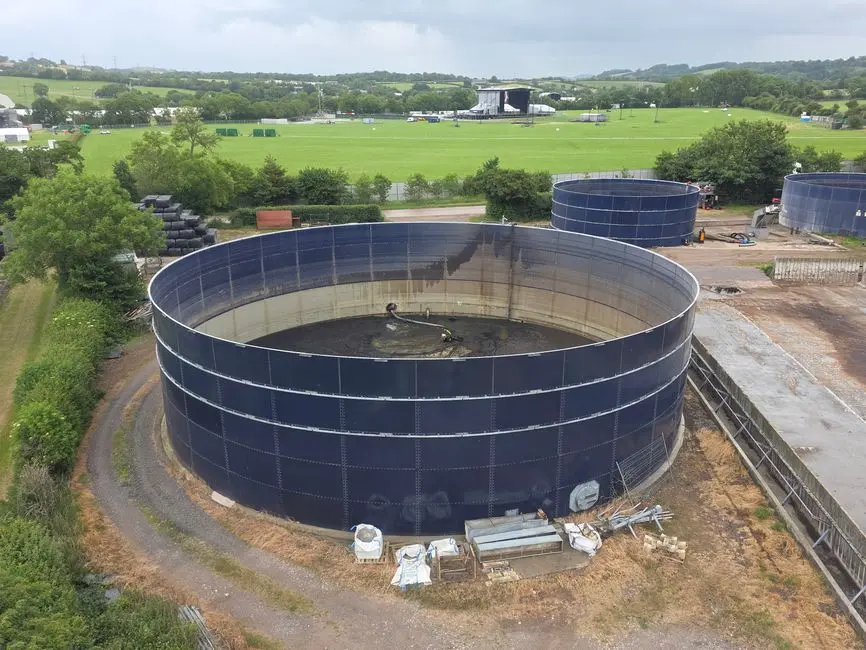
A defensible treatment train removes contaminants in the order they interfere with downstream processes: source segregation and screening, equalization, FOG and solids removal, biological treatment, conditional nutrient or solids polishing, conditional disinfection and monitored end-of-pipe discharge. The sequence follows the measured contaminant profile; it is not fixed merely because the wastewater comes from a food or beverage facility (HydropureWater’s 2026 article citing Hixson).
Start with protection from large debris. A rotary bar screen for wastewater headworks protection removes rags, plastics and fibrous material that could damage pumps, valves or downstream biological and membrane systems (HR Green, 2025-03). Equalization then dampens flow, pH, temperature and load swings created by batch production and CIP events before biological treatment (USP Technologies, as cited in HydropureWater’s 2026 article).
Position DAF as the primary separation step for FOG, oil, suspended solids and colloidal material. An industrial DAF system for food-processing FOG and solids removal protects downstream biology, but it does not establish complete soluble BOD5 or COD removal. Coagulant and polymer selection must come from measured wastewater characteristics. Where characterization confirms a need, PLC-controlled chemical dosing for pH and DAF conditioning provides a controlled response rather than a fixed recipe (USP Technologies, as cited in HydropureWater’s 2026 article).
Activated sludge or MBR handles the soluble biological load when measured requirements justify it. Biology must be checked against peak conditions because Hixson found untreated food-processing effluent can be 10 to 100 times stronger than domestic wastewater on BOD5 and COD terms (HydropureWater’s 2026 article citing Hixson).
| Process step | Compliance or protection function | Design basis required |
|---|---|---|
| Segregation and screening | Removes large solids and fibrous debris | Debris characteristics, flow and downstream equipment risk. |
| Equalization | Dampens flow, pH, temperature and load peaks | Production and CIP envelope, release rate and holding requirement. |
| DAF | Separates FOG, suspended solids and colloids | Measured load, emulsion characteristics, pH and sludge route. |
| Activated sludge or MBR | Removes soluble BOD5 and COD; MBR also separates solids | Peak organic load, nutrient requirement, footprint and reuse objective. |
| Nutrient or solids polishing | Meets a confirmed nitrogen, phosphorus or TSS requirement | Written limit and measured residual performance. |
| Disinfection and monitoring | Addresses confirmed disinfection requirements and proves compliance | Permit method, monitoring point, frequency and chain of custody. |
Nutrient polishing, disinfection and hydrogen-sulfide controls remain conditional steps tied to confirmed limits and wastewater characteristics. They should not be added automatically or designed from generic concentrations.
Choose DAF, Activated Sludge or MBR Against One Design Basis
DAF, conventional activated sludge and MBR must be compared using the same measured influent, written discharge requirements, footprint, sludge route, energy use, operating resources and future-production assumptions (HydropureWater’s 2026 article citing Hixson). Comparing catalog capacities or treatment percentages would not establish compliance at the authorized discharge point.
Use DAF when FOG and solids are the immediate interference problem. It should receive no credit for complete soluble BOD5 or COD removal. Use activated sludge when measured aeration, basin area, nutrient capability and sludge handling can meet the confirmed requirement with adequate margin. Use MBR when documented limits require higher BOD, COD, ammonia or TSS performance, expansion space is constrained, or a reuse target raises the quality requirement; the supplied research establishes no universal MBR trigger (Integrated Water Services, as cited in HydropureWater’s 2026 article).
| Decision criterion | DAF | Activated sludge | MBR |
|---|---|---|---|
| Primary role | FOG, oil, suspended-solids and colloidal separation | Biological removal of soluble organics; nutrient capability where designed | High-quality biological treatment with membrane solids separation |
| Principal decision condition | Immediate FOG or solids load must be controlled | Measured biological capacity meets the requirement | Tighter written limit, constrained footprint or reuse objective |
| Critical operating considerations | pH, conditioning chemicals, recovered solids and recycle | Aeration, mixing, settling, biomass and sludge handling | Membrane cleaning, integrity control, aeration and replacement risk |
| Permit credit | Credit measured separation performance only | Credit demonstrated end-of-pipe biological performance | Credit the complete verified treatment train |
Catalog ranges are equipment facts, not design recommendations. HydropureWater’s DAF range spans 4–300 m³/h across 13 models, while its MBR range spans 10–2,000 m³/day (HydropureWater’s 2026 article). Neither establishes the appropriate Sergeant Bluff capacity. HR Green reports flotation capability of up to 90% suspended-solids removal, including FOG, BOD and colloidal materials (HR Green, 2025-03), but supplier guarantees must be tied to the site’s measured influent.
For a more focused review, compare DAF and clarifiers for food and beverage wastewater, then use the MBR selection guide to interrogate membrane-specific requirements.
Prove Compliance at the Permitted Discharge Point

The monitoring program must match the permit’s averaging method, maximum and average limits, flow-weighted mass-loading basis, monitoring frequency and chain-of-custody requirements (HydropureWater’s 2026 article citing Hixson). Define how pH, flow, BOD5, COD, TSS and FOG or oil and grease will be sampled, calibrated, logged and reported. Assign a responsible operator to each result and connect alarms to documented response actions.
Maintain BMP records, sampling logs, chemical-dosing logs and production-mix change documentation. EPA’s local-limits guidance anticipates annual reviews and periodic reevaluations, so operating records must be continuous rather than reconstructed after an inspection (EPA, as cited in HydropureWater’s 2026 article). Record permit, POTW and supplier revisions so the treatment basis remains traceable when local limits or production conditions change.
Prepare site-specific responses for a CIP chemical slug, production surge, biological upset, DAF failure and power interruption. For each event, identify isolation and diversion equipment, hold capacity, alarm conditions, shutdown criteria, responsible personnel and the steps required to return to controlled discharge. This is an operating design requirement, not an emergency paragraph to add after purchase.
Where the permit requires disinfection, evaluate UV disinfection for the final wastewater-treatment stage against the written requirement, monitoring method and water-quality constraints. Do not assume UV is required where the permit does not require it.
Treat surcharges as a procurement input without implying a Sergeant Bluff rate. Hixson’s San Antonio example charges $1.32 per mg/L of BOD and $3.05 per mg/L of TSS above the stated threshold, multiplied by monthly discharge volume; those rates apply to San Antonio, not Sergeant Bluff (HydropureWater’s 2026 article citing Hixson). Request the local formula and fee units before comparing proposals.
Turn the Compliance Plan into an RFQ and Equipment Order
A comparable RFQ starts with the receiving sewer’s written permit, source-by-source flow and pollutant data, production and cleaning schedules, chemical inventory, reuse objectives, footprint and utility constraints, sludge expectations and operating schedule. Suppliers should then provide a unit-operation-by-unit-operation flow diagram, basis of design, removal guarantees, operating windows, test methods, controls, power demand, odor control and future-growth provisions (HydropureWater’s 2026 article citing Hixson).
Require every bidder to distinguish measured results, engineering assumptions and unresolved permit inputs. Generic concentrations must not fill gaps in the local-limit record. For an MBR system for high-quality biological wastewater treatment, the proposal should also explain membrane cleaning, integrity monitoring, critical instrumentation, spare parts and operator competency.
| RFQ package | Required supplier response |
|---|---|
| Compliance basis | Current permit requirements, applicable categorical standards, written authorization and open assumptions. |
| Measured design basis | Source-by-source flow, pollutant, pH, temperature and event data with production and CIP schedules. |
| Process and guarantees | Complete flow diagram, removal objectives, operating windows and test methods. |
| Implementation | FAT and SAT protocols, controls, power demand, utilities, operator training and maintenance access. |
| Commercial basis | Itemized capital cost, power, chemicals, sludge handling, monitoring, maintenance, disposal and surcharge assumptions. |
| Service support | Critical spares, replacement strategy and documented critical-repair response time. |
Compare proposals on the same measured basis and written limits. Separate capital equipment from operating inputs and identify disposal routes for DAF sludge, biological waste and chemical residuals. A lower equipment price does not establish the lower total cost if it omits monitoring, chemicals, sludge handling or disposal. Record unresolved permit inputs as conditions of the order so equipment selection cannot outrun the compliance basis.
Frequently Asked Questions
What discharge limits apply to a food and beverage plant near Sergeant Bluff?
The current POTW pretreatment permit, written discharge authorization, applicable categorical requirements and 40 CFR Part 403 control. Obtain the local limits and monitoring basis before selecting equipment. Hixson’s commonly cited 250 mg/L BOD5 and TSS examples are not confirmed Sergeant Bluff limits (HydropureWater’s 2026 article citing Hixson).
How much does a pretreatment system cost?
The supplied research provides no numeric Sergeant Bluff system price. Request comparable RFQs that state design flow, pollutant basis, removal guarantees, utilities, chemicals, sludge handling, monitoring, maintenance, disposal and surcharge assumptions. Then compare itemized capital and operating inputs against the same measured wastewater envelope.
Should a plant choose DAF, activated sludge or MBR?
Compare all three against the same measured influent and written limits. Use DAF for FOG and solids removal, activated sludge where measured biological capacity is adequate, and MBR where higher-quality treatment, constrained footprint or reuse justifies its added controls and maintenance demands.
What should a wastewater-equipment supplier guarantee?
Require performance against the measured influent envelope and confirmed limits, together with operating windows, FAT and SAT protocols, training, critical spares, maintenance access and a defined repair-response time. The offer should identify measured results, assumptions and unresolved permit inputs rather than substituting generic concentrations.
How should a plant size equalization and DAF for CIP events?
Include representative production peaks, batch schedules and CIP slugs during characterization, then size hydraulic and contaminant capacity from the resulting envelope. Verify the downstream train, sludge route and permitted discharge point; do not size from an average flow or a catalog maximum.