Choose by Stream Characteristics, Not by Equipment Name
For a food-and-beverage factory in Winchester, DAF is usually the stronger clarification choice when wastewater contains floatable oil, grease, food particles or other low-specific-gravity solids; a lamella or conventional clarifier is generally better suited to heavier settleable solids or lower-buoyancy loads. The correct 2026 choice depends on segregating streams, jar-testing pH and chemical conditioning, identifying discharge or reuse limits, and sizing for peak flow and solids loading. A robust food-processing train may combine DAF with downstream biological treatment rather than asking one separator to remove every pollutant.
DAF is a clarification process in which 30–50-micron microbubbles attach to flocculated particles and lift suspended solids, oils and fats to a surface-skimming step, according to Clearwater Industries’ 2026 DAF systems page. A lamella clarifier instead uses sludge recirculation, flocculation and inclined-plate separation, while a conventional gravity clarifier relies primarily on settling.
Factories should separate washdown, product-loss, floor, cooling and process streams before selecting equipment. A blended discharge can conceal both floatable FOG and heavy settleable solids, making one separator appear adequate when the streams actually require different treatment. For an initial commercial inquiry, an industrial DAF system for food-processing wastewater should be evaluated as a flotation option, not as a default replacement for every clarifier.
Stream characteristics, treatment objectives and receiving requirements determine whether a lamella clarifier for settleable wastewater solids, DAF or a combined train is technically defensible.
DAF or Lamella Clarifier: Decision Matrix
DAF is the stronger candidate when the required separation is flotation of oils, FOG, food particulates or other low-specific-gravity material; lamella clarification is the stronger candidate when the design objective is separation of heavier, settleable solids. Neither selection should be based on flow alone.
| Decision condition | Preferred starting point | Questions the supplier must resolve |
|---|---|---|
| Floatable FOG and oil are the primary target | DAF with chemical conditioning | Peak FOG and TSS loading, bubble contact, skimming, recycle flow and sludge properties |
| Heavier settleable solids are the primary target | Lamella or gravity clarification | Solids settleability, selected surface loading, sludge recirculation and removal |
| Both floatable and settleable solids are present | Combined or stage-wise treatment | Which unit removes each fraction, and where downstream biological treatment begins |
Clearwater Industries distinguishes three DAF configurations by application. FPAC is a low-profile cross-flow system for small-to-medium flows with very high TSS and FOG loads. FPBC is a high-profile separator for low-to-medium solids loads, including low-buoyancy particles, and incorporates lamella pack to reduce water velocity. FPHF combines cross-flow and countercurrent flow for high wastewater flows with low-to-large solids loads, according to Clearwater Industries’ 2026 DAF systems page and its dissolved-air flotation equipment.
HydropureWater’s catalog lists DAF systems from 4–300 m³/h across 13 models and lamella clarifiers with listed surface-loading rates of 20–40 m/h. These are catalog ranges, not project performance guarantees. Surface loading, hydraulic flow and contaminant loading must be checked against the selected geometry and stream variability before accepting a proposed unit.
A combined train may be necessary when wastewater contains floatable FOG alongside biodegradable dissolved or fine organic load. Clarification should be specified for its intended separation, with biological treatment evaluated separately for the remaining organic burden.
Map Food Factory Wastewater Before Equipment Selection
A defensible equipment basis of design begins with separate, representative streams rather than a plant-wide average. Source segregation determines whether flotation, settling, biological treatment or reuse constraints control the design.
| Data package | Information to request | Why it affects selection |
|---|---|---|
| Stream inventory | Product and equipment washes, floor washdown, ingredient residues, fruit or vegetable solids, paper and packaging fibers, cooling water and sanitary wastewater where collection permits | Identifies floatable, settleable, reusable and chemical-bearing fractions |
| Flow basis | Average and peak flow, operating schedule, production changes, cleaning cycles and water reuse | Establishes hydraulic and batch-treatment conditions |
| Water quality | pH, TSS, FOG, oil and grease, COD, BOD, temperature and turbidity for each relevant stream | Defines separation targets, conditioning needs and downstream load |
| Final destination | Discharge, reuse in washing or cooling, or municipal pretreatment | Sets applicable objectives and treatment boundaries |
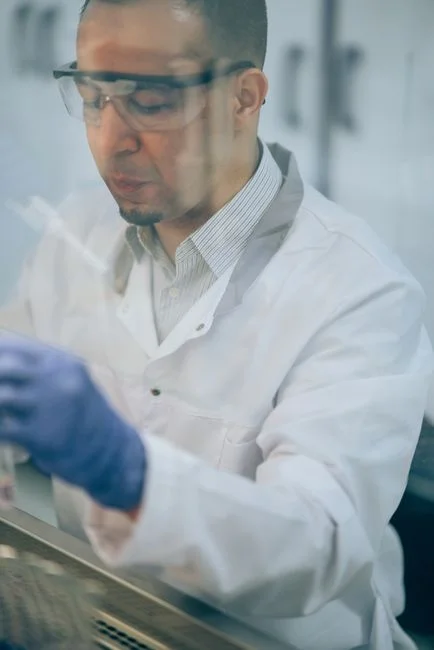
Use the plant laboratory or an appropriately qualified sampling program to characterize each stream. Average flow is not an adequate design point because food plants can experience cleaning cycles, product losses and batch discharges that create short peak loads.
Assess chemical-bearing cleaning streams separately from food-contact washwater. Their pH and chemistry can change the conditioning requirements and should not be assumed to respond to the same coagulant, polymer or mixing arrangement as dilute washwater.
For any proposed chemical-conditioning system, request the controls, duty cycle and metering arrangement for a PLC-controlled chemical dosing system. Dosing capacity should follow the chemistry established by testing rather than a generic recipe.
Design the Chemical Conditioning and Flotation Step
DAF reliability depends on making particles large and sufficiently conditioned to attach to microbubbles; Clearwater Industries recommends chemical coagulation and flocculation to increase particle size and attachment ability. Jar testing should determine chemical type, dose, pH, mixing intensity and contact time, with contact time treated as an application-dependent variable.
Two conditioning arrangements identified by Clearwater Industries are serpentine flocculation tubes and chemical mix tanks. Tubes provide flash mixing; mix tanks use impeller agitation and may suit chemicals requiring longer contact. The supplier must state which arrangement is proposed, how it will be controlled and how the selected chemicals will be introduced.
Chemical conditioning can produce a thicker, more readily dewatered sludge. Sludge volume, solids concentration, oil content and dewatering behavior must be confirmed through the actual wastewater and proposed chemical program.
For construction details, Clearwater Industries identifies 304SS as its standard DAF material, with 316SS, polypropylene and other materials available when application requirements justify them. Ask each supplier to identify wetted parts, tank fabrication, coatings and corrosion assumptions rather than accepting a generic “stainless” description.
Do not adopt a universal coagulant, polymer or pH recipe from general guidance. Require test records tied to the plant streams, chemical consumption estimates, sludge-yield projections and a contingency for changing production or cleaning chemistry. If solids dewatering is part of the scope, evaluate a filter press for DAF sludge dewatering after the conditioned sludge properties are known.
Match the Separator to the Final Treatment and Reuse Objective
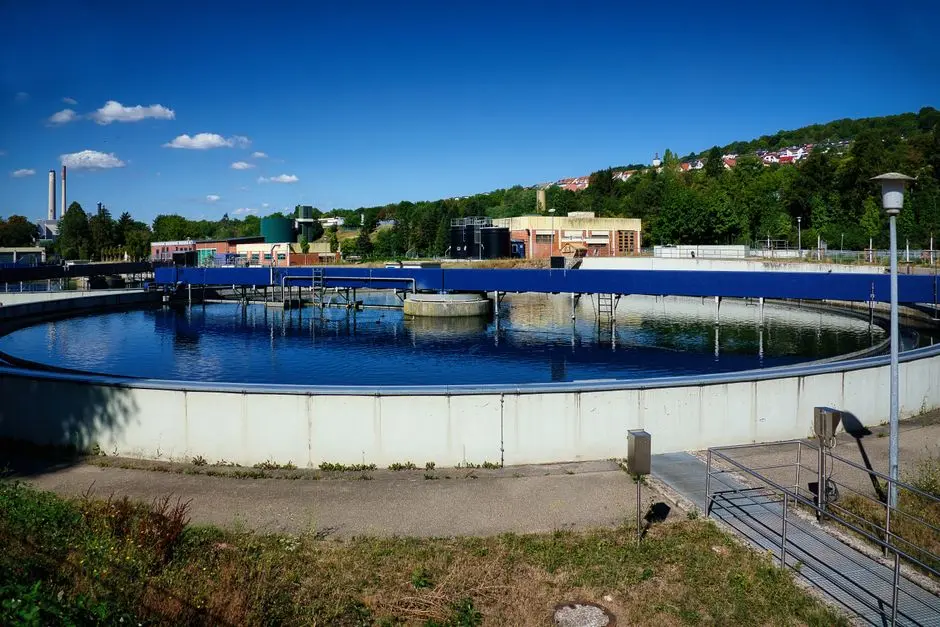
Clarification is a physical separation stage, not a complete organic-treatment or reuse guarantee. DAF should be positioned as pretreatment for oil, FOG and solids removal when those loads would interfere with downstream biological treatment.
Lamella clarification should be selected where settling is the intended separation and its listed 20–40 m/h surface-loading range is appropriate after project-specific review. The range must be reconciled with the selected geometry, settleable-solids characteristics and required performance; it should not be copied into a purchase specification without calculation.
For reuse, define the receiving process first: washing, cooling, floor cleaning or another application has different quality requirements. Require a water-quality balance for the proposed reuse and confirm the remaining parameters with the plant’s process owner and the receiving authority.
Where biological treatment follows clarification, define its feed conditions: FOG, TSS, pH, temperature, COD and BOD. If treatment includes an MBR-integrated wastewater treatment train, clarify whether the MBR is intended for polishing, solids separation, reuse preparation or another duty rather than treating it as an automatic solution to an inadequately characterized stream.
Evaluate sludge dewatering only after the separator is selected and the resulting sludge volume and physical properties are known. That sequencing prevents a filter-press selection from becoming a premature commitment based on an assumed sludge condition.
Turn the Selection into a 2026 Factory Procurement Plan
A comparable proposal should demonstrate the same calculation basis, stream definition and treatment objective for every separator under consideration. Catalog capacity alone does not establish suitability for a food-processing or beverage-plant wastewater train.
| Vendor response required | Acceptable content | Reason for the check |
|---|---|---|
| Design basis | Peak flow, TSS, FOG, oil and grease, pH, temperature, required effluent objectives, available footprint and operating schedule | Prevents comparison between different design conditions |
| Sizing calculation | Tank dimensions, selected surface-loading or flotation basis, recycle flow, compressed-air demand and chemical holdup | Shows that the proposed geometry fits the application |
| Mechanical scope | Skimming, sludge removal, materials, utilities, controls, alarms, redundancy and maintenance access | Defines installation and operating consequences |
| Treatment train | Defined stream for each unit, sampling locations, chemical-conditioning stage, downstream treatment and sludge route | Prevents equipment substitution without process review |
| Commercial schedule | Quoted equipment, installation, commissioning, utilities, chemicals, sludge handling, operator time and maintenance | Supports total-cost comparison rather than purchase-price comparison |
Issue the same technical package to DAF and lamella suppliers. Ask for sizing calculations, tank dimensions, recycle flow, compressed-air demand, chemical holdup, skimming arrangement, sludge removal, materials, controls, utilities and maintenance access. Require a proposed treatment-train concept showing where sampling, alarms and redundancy occur.
Request a pilot or bench test when stream variability makes jar-test results uncertain. A pilot should use representative wastewater and evaluate the proposed conditioning chemistry and separation sequence under relevant production and cleaning conditions.
Verify applicable Winchester discharge, reuse and pretreatment requirements with the authority having jurisdiction and the receiving utility. The industrial wastewater permitting and equipment guide can support procurement planning, but it does not replace Winchester-specific requirements or vendor quotations.
Frequently Asked Questions
How should a factory size DAF versus a clarifier for food-processing wastewater?
Use peak flow together with TSS and FOG loading; do not infer loading from flow alone. Provide stream-specific flow, solids, oil and grease, pH and temperature data, then require each supplier to show how those inputs determine the selected geometry, recycle requirements and chemical conditioning. The comparison should also identify whether flotation, settling or both are required.
What should a buyer include in the budget for DAF or clarifier equipment?
Request itemized quotations covering equipment, installation, commissioning, chemical use, recycle-pump and compressed-air demand, sludge handling, operator time, maintenance and required footprint. Compare written totals of ownership instead of relying on generic cost claims.
How can a buyer assess a wastewater equipment supplier before selecting DAF or a clarifier?
Require the supplier to show stream-specific sizing calculations, materials, utilities, controls, sludge handling, maintenance access and relevant application or reference information. A DAF versus clarifier guide for another industrial wastewater stream can help structure the questions, but the selected supplier must demonstrate experience or testing relevant to the factory’s actual wastewater.
Does selecting DAF or a clarifier establish Winchester discharge compliance?
No. Equipment selection does not establish discharge, reuse or municipal pretreatment approval. Confirm applicable requirements with the authority having jurisdiction and the receiving utility, then place the resulting objectives and monitoring conditions in the procurement specification. For a related regional framing, see the regional DAF versus clarifier factory guide.