What Is Known About Tesla’s Vietnam Gigafactory ZLD Capacity?
No verified numerical ZLD capacity is publicly available for Tesla’s new Gigafactory in Vietnam, so an m³/day or gallons/day rating would be false precision. A defensible design must be calculated from segregated stream flows, average and peak wastewater generation, batch discharges, feed chemistry, RO recovery, concentrate volume, evaporator duty and final salt output. The likely treatment architecture is pretreatment followed by biological treatment where needed, then RO recovery, mechanical-vapour-compression evaporation and crystallisation. Tesla’s Gigafactory capacity announcements cannot substitute for a site-approved water and mass balance.
The key distinction is between production scale and wastewater capacity. Gigafactories have historically been described in annual battery output, not floor area: the Nevada Tesla–Panasonic joint venture was sized at about 35 GWh/yr (MDPI 2020, as cited by HydropureWater’s 2026 Tesla Gigafactory wastewater process guide). That is a comparator, not a Vietnam design input.
Tesla has not publicly disclosed an m³/GWh or m³/vehicle water figure for any Gigafactory (HydropureWater, 2026). Industry literature places cell-manufacturing water demand at 1.5–3.0 m³/kWh, but this is an order-of-magnitude reference, not a quoted plant value; only a meaningful fraction becomes wastewater (HydropureWater, 2026). It cannot establish Vietnam’s ZLD feed flow because recovery, segregation, reuse and batch operations determine the residual liquid entering the ZLD boundary.
For comparison purposes, the Mexico Gigafactory ZLD sizing guide and the Texas Gigafactory ZLD capacity methodology illustrate how to separate an intended treatment architecture from an equipment rating. Neither comparator supplies a defensible numerical rating for Vietnam.
Which Capacity Figure Does a ZLD Bid Actually Require?
A ZLD bid must separate liquid inflow, evaporation duty and solids production because each quantity sizes different equipment and carries a different commercial guarantee.
| Capacity term | Technical definition | Equipment or procurement implication |
|---|---|---|
| ZLD feed flow | Liquid entering the agreed ZLD treatment boundary after upstream segregation, recovery and reuse decisions. | Sets pretreatment, equalisation, pumping and RO feed duties. |
| Evaporator duty | Liquid feed and evaporation load presented to the mechanical-vapour-compression or other evaporation stage. | Sets the mechanical vapour compression evaporator feed rate, evaporation requirement and utility demand. |
| RO concentrate volume | Residual concentrate leaving the RO recovery stage after permeate production. | Sets evaporator feed conditions and salt-management load. |
| Final-solids production | Expected crystallised salt or other solid output after concentration and crystallisation. | Sets crystalliser capacity, solids handling and the disposal or product route. |
| Installed nameplate | Equipment provision for normal operation plus defined peak, batch, cleaning, shutdown and availability conditions. | Must not be presented as the normal ZLD feed flow without a stated operating envelope. |
RO permeate nameplate is not an evaporation-duty substitute. The bidder should show one reconciled mass and energy balance covering every included water input, recovered permeate, RO concentrate, vapour, sludge and final solids (HydropureWater, 2026). That balance should also state whether peak batch discharges are handled by equalisation, temporary storage, equipment turndown or installed redundancy.
How Vietnam’s Wastewater Streams Change the Treatment Train
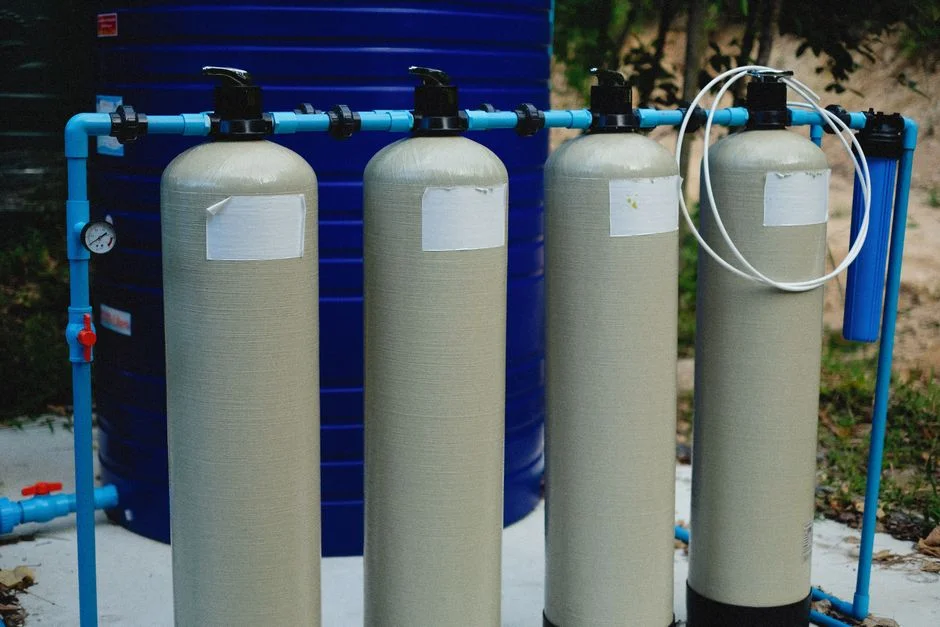
Battery manufacturing produces wastewater streams with incompatible contaminant profiles, so stream segregation determines the pretreatment and ZLD train.
| Wastewater stream | Required treatment logic | Key design issue |
|---|---|---|
| NMP solvent condensate | Vacuum distillation or evaporative recovery before biological treatment. | Recovered solvent and residual condensate chemistry define the biological load. |
| Electrode and deionised-water rinses | Clarification and chemical control before RO or ZLD polishing. | Conductivity, metals, organics and scaling constituents affect membrane recovery. |
| Paint-shop and assembly wash water | Screening, then DAF or lamella clarification for oils, solids and surfactants. | Variable FOG and suspended-solids loading require the pretreatment to be selected from stream data. |
| Sanitary sewage | Segregated MBR or MBBR biological treatment, followed by disinfection or polishing as required. | Hydraulic peaks and reuse criteria affect equalisation and final treatment. |
The four-stage sequence is rotary screening; DAF or lamella clarification; MBR or MBBR biology for sanitary and low-solvent process water; and UV, RO or ZLD polishing according to permit and reuse requirements (HydropureWater, 2026). Equipment selection can begin with a rotary mechanical bar screen and an industrial DAF pretreatment system, but catalogue dimensions do not establish the Vietnam duty.
HydropureWater’s 2026 process guide gives DAF hydraulic retention of 20–40 minutes at surface loading rates of 10–25 m³/m²·h. It also gives MBR MLSS of 8,000–12,000 mg/L, compared with 2,000–4,000 mg/L in conventional activated sludge (HydropureWater, 2026). These are design references for evaluating the biological stage, not Vietnam project guarantees.
NMP recovery must precede biology. Co-mingling NMP condensate with sanitary sewage introduces a high-BOD, poorly biodegradable solvent load to the biological stage (HydropureWater, 2026). The relevant ZLD sequence is multi-stage RO for recovery, mechanical-vapour-compression evaporation for concentrate concentration, and salt crystallisation for the final solid. An integrated MBR treatment system can address the biological portion, while an industrial RO recovery system can address recovery only after chemistry, pretreatment and recovery targets are established. A separate Vietnam water balance must reconcile inflow, recovery, evaporation and solids output.
What Data Is Needed to Size the Vietnam ZLD Plant?
A fixed-capacity quotation requires an approved Vietnam design basis rather than a production-rate multiplier.
| Information request | Required detail | Decision enabled |
|---|---|---|
| Hydraulic basis | Average and peak hourly flows, batch discharges, operating days, production scenarios, cleaning and shutdown events, and the exact ZLD boundary. | Defines ZLD feed flow and installed redundancy. |
| Stream chemistry | Oil, solids, colloids, conductivity, TDS, hardness, silica, organics, suspended solids, metals and temperature by stream. | Selects pretreatment and protects RO membranes. |
| Recovery and reuse | Approved recovery target, permeate quality, reuse demand, storage and return-to-service conditions. | Determines the required RO performance and downstream duty. |
| ZLD performance | RO concentrate flow and quality, evaporation duty, utility demand, crystalliser feed concentration, crystal yield and disposal or product route. | Sizes the MVR evaporator, crystalliser and solids-handling system. |
| Scope boundary | Whether sanitary wastewater, stormwater, cooling-water blowdown and construction wastewater enter the ZLD system. | Prevents omitted flows and cross-scope pricing. |
| Availability | Redundancy, operating envelope, upset conditions, expected availability and compliance responsibility. | Defines the commercial configuration and performance guarantee. |
The owner or EPC designer should issue a complete industrial water balance with average, peak and batch data. Each stream should remain segregated through the conceptual design so the NMP recovery, sanitary treatment, oily-water pretreatment, RO recovery and ZLD duties can be calculated independently.
Permit and reuse criteria must be included. The buyer should request the applicable Vietnam permit, any reuse requirement and confirmation of the permitted treatment boundary. The 2026 research for other Tesla sites identifies permit drivers as decisive: Shanghai used polishing filtration and UV for municipal-sewer discharge, while Nevada used RO polishing for on-site reuse (HydropureWater, 2026). Those cases are comparators, not substitutes for Vietnam requirements.
Equipment scope should also be checked against the treatment-parts, valves and filter-media specification. However, published DAF capacity of 4–300 m³/h, RO recovery up to 95% and filter-press filtration area of 1–500 m² are HydropureWater catalogue capabilities, not Vietnam project duties (HydropureWater, 2026). A plate-and-frame filter press should be priced only after the sludge characteristics and required cake properties are established.
How to Compare ZLD Suppliers Without Inflating Capacity
A low quotation based on an assumed flow or borrowed capacity from another Tesla facility is not technically comparable.
| Evaluation test | Evidence required from each bidder | Reason for rejection |
|---|---|---|
| Mass and energy balance | All included inputs reconciled to permeate, concentrate, vapour, sludge and final solids. | Missing or unreconciled flows leave equipment capacity and operating cost uncertain. |
| Source-data traceability | Approved Vietnam flows, chemistry, production scenarios and treatment boundary. | An assumed inlet flow or unrelated site’s discharge cannot establish the duty. |
| Process suitability | Stream segregation, pretreatment selection, membrane protection and recovery assumptions. | A single generic ZLD rating may omit NMP recovery or overload downstream equipment. |
| Equipment compatibility | MVR feed rate and utility demand, crystalliser feed chemistry, salt route, redundancy and availability. | Independent nameplate claims do not prove that the complete train works together. |
| Commercial responsibility | Permit compliance, performance guarantees, boundary exclusions and operating obligations. | Unclear responsibility turns a comparable bid into a disputed delivery. |
Require each bidder to state whether its quotation is based on an approved Vietnam water balance or on a planning allowance. Catalogue recovery and treatment capacity must remain separated from project commitments: HydropureWater’s stated RO recovery of up to 95% and DAF capacity of 4–300 m³/h do not prove site-wide recovery or establish the Vietnam ZLD feed flow (HydropureWater, 2026).
Use the Texas Gigafactory ZLD capacity methodology as a document-control model, not a capacity source. A defensible evaluation should demonstrate that the water balance, equipment ratings, utilities, availability and permit obligations reconcile. Where that evidence is absent, request source data rather than accepting a lower numerical headline.
Frequently Asked Questions
Has Tesla published a Vietnam ZLD capacity in m³/day or gallons/day?
No verified numerical figure is available in the supplied research. Tesla’s Gigafactory announcements do not provide the residual wastewater flow, evaporation duty or salt output required for a Vietnam ZLD rating. Any fixed capacity must therefore remain conditional until the site water and mass balance is approved.
What data should a buyer provide before requesting a fixed-capacity ZLD quotation?
Provide an approved water balance, stream-by-stream chemistry, recovery basis, peak and batch conditions, reuse criteria and ZLD boundary. Include average and peak hourly flows, operating scenarios, RO concentrate requirements,
Frequently Asked Questions
What ZLD capacity does Tesla’s new Gigafactory in Vietnam need in m³/day?
Based on projected production volumes and regional environmental discharge standards for high-tech manufacturing, the estimated Zero Liquid Discharge (ZLD) capacity for a Tesla-scale Gigafactory in Vietnam typically ranges between 2,500 m³/day and 4,000 m³/day. This capacity is calculated to handle process wastewater from aluminum die-casting, battery cell production, and painting operations while ensuring compliance with local industrial effluent regulations.
What information do I need before requesting a fixed-capacity ZLD quotation?
To obtain an accurate quote, you must provide a comprehensive water quality analysis (WQA) detailing Total Dissolved Solids (TDS), Chemical Oxygen Demand (COD), heavy metal concentrations, and oil/grease content. Additionally, you must specify the required treated water quality for recycling, the available physical footprint for equipment installation, and the local electricity and steam utility costs, which significantly influence the operational expenditure (OPEX) estimates.
How much would the Tesla Vietnam Gigafactory ZLD system cost?
A turnkey ZLD system of this scale typically requires a capital expenditure (CAPEX) investment between $15 million and $30 million USD, depending on the specific technologies selected, such as Mechanical Vapor Recompression (MVR) evaporators versus multi-stage flash distillation. Operational costs are highly variable but generally range from $3.00 to $6.50 per cubic meter of treated water, influenced heavily by the energy intensity of the concentration and crystallization processes.
Can I use the reported 231,000-gallon-per-day Texas discharge as a Vietnam sizing basis?
Using the Texas Gigafactory discharge figure as a direct sizing basis is inadvisable due to significant variations in local water chemistry, recycling mandates, and climate-specific evaporation rates. While the Texas facility manages approximately 875 m³/day, a Vietnam-based facility must account for higher humidity levels that reduce the efficiency of open-air evaporation ponds and stricter regional water recovery mandates that often necessitate more intensive closed-loop crystallization technology.
Does RO recovery of up to 95% mean the Vietnam Gigafactory will recover 95% of its water?
No, an RO recovery rate of 95% refers only to the efficiency of the Reverse Osmosis membrane stage, not the entire ZLD system. In a ZLD configuration, the remaining 5% of RO concentrate (brine) undergoes further thermal treatment, such as evaporation and crystallization, which may result in additional water losses through sludge disposal and vent gases, typically resulting in an overall facility water recovery rate between 85% and 90%.