What Is the Verified ZLD Capacity at Giga Texas?
No verified numerical ZLD capacity for Tesla’s new Gigafactory Texas is publicly stated in the supplied research. The Austin cathode active material facility is described as a closed-loop ZLD system with 100% internal water recovery and zero industrial wastewater discharge to the Colorado River, using multi-stage reverse osmosis, mechanical-vapor-recompression evaporators, and salt crystallization. A defensible capacity must therefore be calculated from actual wastewater-generation rates, recovery, concentrate volumes, and evaporation duty—not inferred from Tesla’s corporate announcements or from the separate South Texas lithium refinery’s reported 231,000-gallon-per-day discharge.
The Streamline report on Tesla’s cathode active material facility supports a qualitative design description, not an equipment rating. It identifies multi-stage RO membranes, MVR evaporators, and salt crystallization within the ZLD water plant. Those unit names establish an intended treatment architecture, but they do not establish how much wastewater enters the train, how much water is recovered, or how much water must be evaporated.
For procurement, three capacities must remain separate: treated wastewater inflow, evaporator duty, and final solids production. Installed nameplate equipment can also differ from the flow required under normal production, peak batch discharge, cleaning events, and shutdown conditions. The battery-manufacturing wastewater treatment framework provides a useful structure for comparing those quantities without inventing a Giga Texas rating.
| Parameter | What the supplied research establishes | Why it matters to sizing |
|---|---|---|
| ZLD wastewater inflow | No verified numerical flow for Giga Texas | Defines pretreatment and RO hydraulic duty |
| Water recovery | Streamline reports 100% internal recovery and zero industrial wastewater discharge to the Colorado River | Defines permeate production and concentrate generation |
| Evaporation load | MVR evaporators are named, but no numerical duty is published | Determines evaporator selection and peak-load basis |
| Final solids | Salt crystallization is named, but no crystal output is published | Determines solids handling and salt-management scope |
Keep Giga Texas Separate from the South Texas Lithium Refinery
The South Texas lithium refinery and the Austin CAM facility have different locations, processes, water balances, and compliance histories. The April 2026 KSAT/Inside Climate News investigation concerns Tesla’s lithium refinery near Corpus Christi in Robstown, not the Giga Texas CAM operation. Its reported average discharge of 231,000 gallons per day is therefore not a valid input to an Austin ZLD calculation.
The Robstown facility processes spodumene to produce battery-grade lithium hydroxide. The April 2026 KSAT/Inside Climate News report says its wastewater permit required sampling for conventional and non-conventional pollutants, including metals and toxic pollutants believed to be present. Independent testing reportedly found hexavalent chromium and arsenic in water sampled from the drainage ditch; the report also notes uncertainty over whether those results represent the refinery outfall because the sample came from the ditch rather than directly from the discharge pipe.
That context matters for separation of facts. The South Texas report concerns a permitted discharge to a drainage ditch near Robstown. By contrast, Streamline describes Giga Texas as a dry CAM process with a closed-loop ZLD architecture and zero industrial wastewater discharge to the Colorado River. A discharge flow from one site cannot be transferred to the other without evidence that their process-water generation, chemistry, reuse targets, and treatment boundaries are equivalent.
For an engineering comparison, the site owner should require the discharge permit or equivalent compliance record, stream chemistry, water balance, reuse criteria, and treatment boundary for each facility. Corporate statements such as “zero wastewater” do not replace those records. The EV and auto plant wastewater pretreatment requirements provide a useful site-specific comparison framework rather than a substitute for source documents.
| Issue | Giga Texas CAM facility | South Texas lithium refinery |
|---|---|---|
| Location | Austin area, adjacent to vehicle and 4680 battery lines | Robstown, near Corpus Christi |
| Reported treatment approach | Closed-loop ZLD with RO, MVR evaporation, and salt crystallization | Permitted wastewater discharge to a drainage ditch |
| Published flow | No verified numerical ZLD throughput | Average of 231,000 gallons per day reported in April 2026 |
| Wastewater profile | Not numerically published in the supplied research | Reported permit scope includes conventional, non-conventional, metal, and toxic pollutants |
| Permitted sizing use | Requires its own permit-approved water balance | Do not transfer the Robstown flow to Austin |
How Tesla’s Dry Cathode Process Reduces the ZLD Load
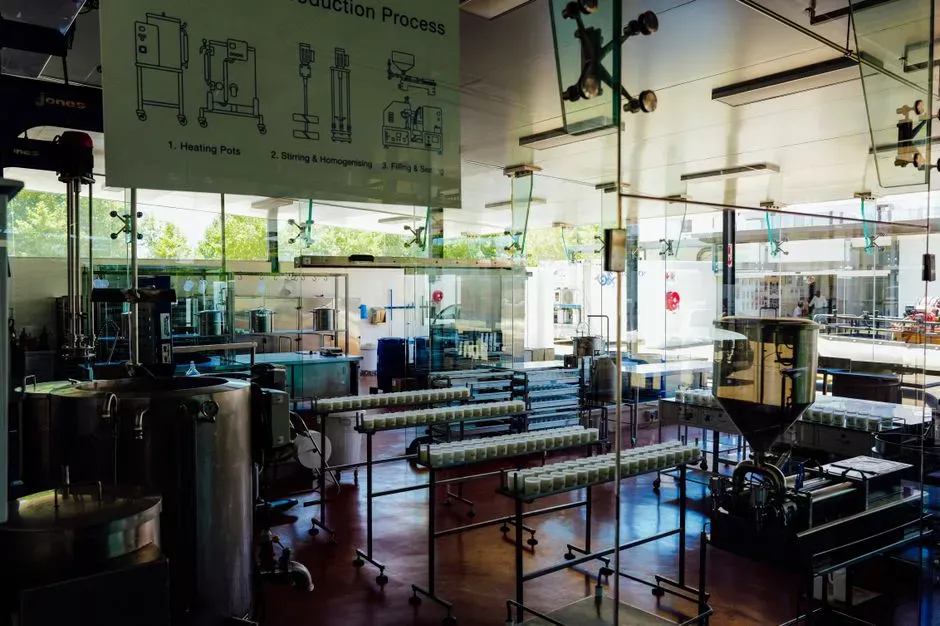
Dry cathode processing reduces the water associated with CAM synthesis, but it does not eliminate every aqueous stream requiring a site water balance. Streamline reports that Tesla blends metal oxides or dry sulfates with lithium hydroxide in high-energy mechanochemical reactors and then uses fluidized-bed calcination, replacing the multi-stage ammonia-chelating co-precipitation flow described for traditional wet CAM production.
For that traditional wet process, the same Streamline source reports wastewater generation of 10–15 m³ per ton of pCAM. This is a comparison benchmark, not a Tesla design flow. Tesla’s reported flow is based on dry synthesis, elimination of water-intensive wet washing and toxic organic solvents, and elimination of toxic ammonia reagents. The source also reports a 70% reduction in physical footprint.
The operating implication is narrower than “no wastewater.” CAM synthesis can have a lower process-water burden than wet precipitation, yet an operating complex still has utility, washing, cleaning, laboratory, floor-wash, and off-spec streams. Whether those streams enter the ZLD boundary depends on their measured generation, segregation, reuse, and permit conditions. A zero-discharge architecture may describe the intended final liquid discharge condition without proving that the plant has no wastewater inflow.
Streamline also compares CAM manufacturing costs of approximately $18–24 per kWh in-house with $35–45 per kWh for purchased CAM. That comparison supports the strategic rationale for dry processing; it is not evidence of water consumption, ZLD capacity, or an operating-water balance.
The treatment train should therefore be sized around the residual aqueous inventory, not around the volume implied by cathode production. An industrial reverse-osmosis recovery system can form part of the recovery stage only after the actual stream chemistry, pretreatment needs, and recovery target have been established.
Build a ZLD Capacity Estimate from a Water Balance
A defensible zero liquid discharge capacity calculation begins with a segregated, site-approved industrial water balance. Without measured or approved stream data, no numerical equipment rating for Giga Texas is defensible.
- Define the wastewater boundary. List cathode-synthesis water, product-washing or dry-process residuals, equipment cleaning, cooling and utility blowdown, laboratory drains, floor washings, off-spec aqueous streams, and sanitary wastewater. Mark each stream as inside or outside the industrial ZLD system. Stormwater, construction water, and domestic sewage should not enter an industrial capacity calculation merely because they occur on the same site.
- Build gross flow from operating scenarios. For each qualifying stream, obtain average and peak flow, batch discharge volume, operating days, and the associated production scenario. The gross ZLD inflow is the sum of the included streams after excluding confirmed internal reuse. Corporate production headlines do not supply these stream quantities.
- Apply the confirmed treatment sequence. The architecture reported by Streamline is multi-stage RO for recovery, MVR evaporation of residual concentrate, and salt crystallization for final solids. Suspended-solids control, filtration, chemical dosing, and monitoring should be added only after reviewing the relevant stream analyses.
- Calculate evaporation and solids duties. The evaporator feed is the RO concentrate after the selected recovery fraction. Its evaporated water and precipitated solids must then be reconciled with the required final solids concentration. The supplied research provides no numerical recovery rate, concentrate concentration, Tesla evaporation duty, or crystal yield, so those inputs must be obtained from the process designer before an MVR is selected.
- State the procurement envelope. Separate average duty from peak and upset duty, then identify required redundancy and availability. Include wastewater inflow, permeate recovery, concentrate feed, evaporated water, crystallization solids, operating days per year, and shutdown or upset conditions. An RO and UF membrane-element supply package should follow the confirmed hydraulic and water-quality basis rather than precede it.
“100% internal water recovery,” as reported by Streamline, is a system outcome rather than a sufficient RO design calculation. The design must still show how much feed water enters each stage, how much permeate is returned to service, how much concentrate remains, and how the liquid and solids leaving the crystallizer are managed.
| Balance output | Required input | Decision enabled |
|---|---|---|
| Gross wastewater inflow | Stream-level average, peak, and batch flows | Pretreatment and RO system sizing |
| RO concentrate feed | Confirmed feed chemistry and recovery basis | MVR feed rate and concentration |
| Evaporated water | Concentrate flow and final concentration | Evaporator duty and utility demand |
| Final crystallization solids | Concentrate chemistry and salt-yield basis | Solids handling and product or disposal route |
| Recovered water | Permeate quality and reuse demand | Water-recovery equipment and storage |
Choose Equipment Only After Confirming the Water Chemistry
Equipment selection must follow stream characterization because the same water balance can require different pretreatment depending on oil, solids, colloids, hardness, silica, metals, and scaling constituents. Streamline names RO, MVR, and salt crystallization at Giga Texas, but the supplied research does not publish stream analyses that would justify a particular pretreatment configuration or recovery rate.
Where relevant streams contain oil, grease, FOG, suspended solids, or colloids, an industrial DAF pretreatment system may be evaluated for solids capture before RO. HydropureWater’s published DAF range is 4–300 m³/h across 13 standard models; that is a catalog range, not a stated Giga Texas duty. A DAF unit would be one pretreatment component, not the complete ZLD plant.
An industrial reverse-osmosis recovery system may be considered where the chemistry supports membrane desalination and recovery. HydropureWater states permeate recovery rates of up to 95%, but that is a product capability and cannot be used as Tesla’s verified plant recovery rate. Chemical dosing, filtration, antiscalant strategy, controls, and monitoring must be selected from actual analyses.
Solids removal before RO can reduce membrane fouling and downstream salt load. However, a plate-and-frame filter press is applicable only if a filterable sludge stream exists. HydropureWater publishes filter-press filtration areas from 1–500 m²; these are catalog limits, not a verified Austin duty. MVR, salt crystallization, and much of the precipitation or polishing scope fall outside the listed equipment catalog and require an integrated ZLD OEM or EPC partner.
| Process element | Published capability | Selection condition |
|---|---|---|
| DAF pretreatment | 4–300 m³/h across 13 standard models | Relevant oily or solids-bearing streams are confirmed |
| Industrial RO | Permeate recovery stated up to 95% | Feed chemistry and project recovery target are approved |
| Plate-and-frame filter press | Published filtration areas of 1–500 m² | A filterable sludge stream and required cake properties are established |
| MVR and salt crystallization | Named in the Streamline Giga Texas description | Concentrate chemistry, evaporation duty, and salt-management route are defined |
Questions to Ask Before Ordering ZLD Equipment
The correct procurement request is a complete design basis, not a request to quote an assumed Giga Texas flow. The owner or EPC designer should release a package that can be reconciled by mass and energy balances.
| Information to request | Minimum detail | Purchase-order consequence |
|---|---|---|
| Approved water balance | Average and peak hourly flows, batch discharges, operating days, production scenarios, and ZLD boundary | Defines inflow and equipment sizing basis |
| Stream analyses | Conductivity, TDS, hardness, silica, metals, organics, suspended solids, and temperature | Defines pretreatment and recovery suitability |
| Recovery and residue targets | Recovery percentage, RO concentrate quality, evaporation duty, crystal purity, and disposal route | Defines MVR and salt-management scope |
| Boundary exclusions | Status of sanitary wastewater, stormwater, cooling-water blowdown, and construction or contractor wastewater | Prevents cross-flow and scope errors |
| Availability and upset conditions | Required redundancy, operating envelope, shutdown basis, and expected availability | Determines installed capacity and commercial configuration |
Ask for one reconciled mass and energy balance showing every water input against permeate, concentrate, vapor, sludge, and final-solid outputs. Also request the applicable permit and confirmation of any reuse criteria. Equipment descriptions should be reviewed alongside the valves, filter media, and treatment-parts specification package, but that specification should remain subordinate to the approved process basis.
Do not issue a fixed-capacity order until the owner and EPC designer have approved the source data, stream boundary, recovery target, peak conditions, and operating availability. This approach also supports the broader battery-manufacturing wastewater treatment framework without borrowing an unrelated site’s discharge figure.
Frequently Asked Questions
What is the verified ZLD capacity of Tesla’s Giga Texas?
No verified numerical capacity is available in the supplied research. Streamline describes the Austin CAM ZLD plant as having multi-stage RO, MVR evaporators, salt crystallization, 100% internal water recovery, and zero industrial wastewater discharge to the Colorado River. It does not publish wastewater inflow, permeate flow, evaporation duty, or final-solids output, so an m³/day or gallons/day rating would be false precision.
Why is the South Texas refinery’s 231,000-gallon-per-day discharge not a valid ZLD sizing benchmark?
The 231,000-gallon-per-day figure reported by KSAT/Inside Climate News in April 2026 applies to the lithium refinery in Robstown near Corpus Christi. Giga Texas is the separate Austin-area CAM and vehicle-manufacturing complex. The facilities have different wastewater profiles and treatment arrangements, so the Robstown discharge cannot be transferred into an Austin water balance.
What data are required to calculate zero liquid discharge capacity for battery cathode wastewater?
The calculation requires stream-by-stream average and peak flows, batch discharges, operating days, production scenarios, water analyses, reuse objectives, and an agreed ZLD boundary. The design must then state RO recovery, concentrate flow and quality, evaporation duty, final crystallization output, peak and upset conditions, and the required availability. Without these inputs, only the treatment sequence can be identified—not a defensible equipment capacity.
How should a buyer select an OEM or EPC partner for Giga Texas ZLD equipment?
Require bidders to demonstrate that their proposed mass and energy balance reconciles every included stream with recovered permeate, concentrate, vapor, sludge, and final solids. The evaluation should also test chemistry-specific pretreatment, membrane protection, MVR operating basis, salt-management route, redundancy, and compliance responsibilities. A low equipment quotation based on an assumed inlet flow should not outrank a technically reconciled offer.
How do the April 2026 South Texas findings affect Giga Texas compliance risk?
They do not establish a Giga Texas permit violation, but they show why site boundaries and water balances must be explicit. The April 2026 KSAT/Inside Climate News report concerns the Robstown refinery, including permit sampling scope and independent drainage-ditch testing. For Giga Texas, the owner should provide its own permit record, stream chemistry, reuse criteria, and closure of the industrial water balance before procurement. The South Texas findings should trigger document review, not be used as evidence about Austin discharge volume.