What Sewer Pretreatment Limits Apply to Lebanon-Area Metal Plants?
The enforceable sewer limits for a fabricated-metals plant near Lebanon, United States, are established by the receiving publicly owned treatment works (POTW), the plant’s own industrial-user authorization, and applicable state or local requirements—not by a generic wastewater specification. The supplied research does not identify the applicable Lebanon-area sewer authority or provide verified local numeric limits. Obtain the controlling POTW rules, discharge permit, monitoring conditions, sampling point, and resampling requirements before selecting equipment. A useful parallel is the pretreatment compliance workflow for metals plants, which shows why project-specific documents must be reviewed before design.
Do not confuse the POTW’s National Pollutant Discharge Elimination System permit with the industrial user’s obligation. The POTW’s permit governs the treatment works, while local permits, ordinances, and enforcement actions may regulate upstream industrial users; this distinction is noted in the CBIA article published by Shipman & Goodwin in 2026. A metal plant must also determine whether process wastewater, stormwater, or hauled waste falls within its discharge authorization.
| Control document | What to verify | Why it matters |
|---|---|---|
| POTW industrial-user permit and sewer rules | Permitted pollutants, local limits, monitoring frequency, sampling location, compliance schedule, and resampling terms | These are the project-specific conditions that equipment must meet |
| Existing plant discharge authorization | Approved process streams, discharge points, flow conditions, monitoring duties, and approved pretreatment equipment | Confirms the plant’s present legal and operating baseline |
| State and local requirements | Applicable discharge, pollution prevention, and reporting provisions | May operate in addition to the POTW’s local pretreatment program |
| Residual-waste obligations | Sludge, spent filters, skimmings, and other treatment residues | The sewer permit does not eliminate downstream waste-management duties |
Do not publish or design to a generic numeric pH, metals, oil-and-grease, suspended-solids, or PFAS limit unless the applicable POTW rules or permit expressly state it. Missing local data is a design and compliance risk, not permission to insert an assumed value.
Map Fabrication Wastewater Before Choosing Equipment
A fabrication wastewater characterization must follow the production process rather than collapse every discharge into one plant-wide average. Machining, cutting, grinding, deburring, washing, cleaning, coating, plating, and sanitation can generate streams with different pollutant profiles, flow patterns, and appropriate collection points. The first engineering step is therefore a process map and source inventory, followed by representative sampling.
- Locate each wastewater-generating operation and identify its discharge destination.
- Classify each stream as continuous, batch-based, or intermittent.
- Sample representative operating periods using methods and preservation procedures appropriate to the parameters of concern.
- Link analytical results to the source operation, production condition, and proposed treatment function.
The parameter list should reflect the actual process. Include pH for streams requiring pH control; suspended solids where machining, grinding, blasting, or wash water can carry particulates; oil and grease or FOG where relevant to the operation; and metals where plating, pickling, or other metal-bearing activities occur. A PFAS-use inventory can determine whether focused screening is justified, but a screening decision should not be confused with a discharge limit.
GetChemReady’s 2026 “Metal Fabrication Applications in Wastewater” page states that metal components are used in industrial pretreatment and stormwater systems and identifies bar screens and grit chambers as wastewater infrastructure. That supports treating collection and discharge pathways as part of equipment selection, rather than treating pretreatment as only the final treatment unit.
| Wastewater source | Characteristic information to establish | Segregation or source-control decision |
|---|---|---|
| Metalworking fluids, machining, cutting, and grinding | Flow pattern, suspended solids, pH, and process-oil content where relevant | Prevent uncontrolled batch releases from overwhelming equalization or solids removal |
| Deburring, blasting, and wash water | Solids generation, particulate settleability, and cleaning chemistry | Retain collection and settleable-solids removal where practical |
| Cleaning or plating-related streams | pH, metals, and process-specific chemistry | Keep incompatible chemistry separate from cleaner streams |
| Sanitary wastewater | Discharge point and local sanitary requirements | Do not use dilution or process-water mixing to mask an industrial source |
| Stormwater | Permit scope, exposure source, and collection pathway | Determine whether it is separately regulated before combining it with process wastewater |
Do not mix a variable or contaminated cleaning stream with cleaner stormwater merely to dilute a combined sample. Dilution does not remove contaminants and may conflict with source-control requirements. Preserve representative samples, chain-of-custody records, calibration information, and laboratory reports so each proposed treatment target remains tied to the actual wastewater.
Build a Pretreatment Train That Matches the Waste
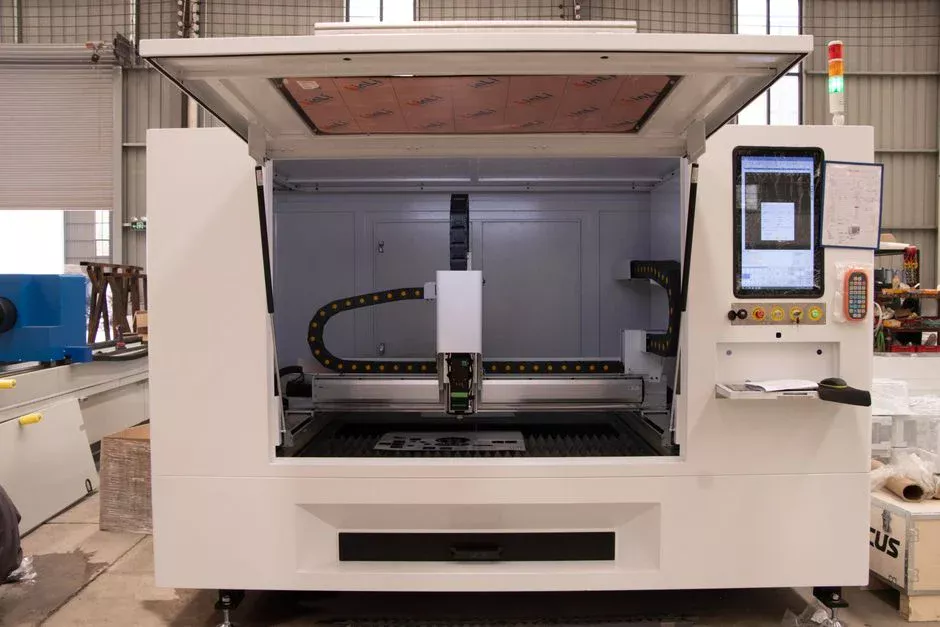
A pretreatment train works as a sequence: protect downstream equipment, equalize variable flows, remove target pollutants, control pH, and manage the resulting solids. Screening and grit removal are physical pretreatment functions; DAF or clarification addresses suspended or floatable material; chemical dosing supports coagulation, flocculation, or pH control. One unit does not substitute for another function.
Physical pretreatment should remove rags, plastics, fibrous debris, and coarse suspended material before pumps, chemical equipment, or solids-removal systems. GetChemReady lists bar screens and grit chambers among common wastewater components for fabricated-metal applications. For a plant needing continuous solids protection, the rotary mechanical bar screen is continuous-duty headworks equipment with stainless-steel rake teeth and a self-cleaning brush discharge mechanism.
DAF is appropriate when the design basis includes suspended solids, oil and grease, FOG, or colloidal matter that can be removed as float. The DAF system for metalworking wastewater uses micro-bubble technology with automatic skimming and is offered in 13 standard models, with stated coverage from 4 to 300 m³/h. Those figures describe equipment availability, not a design flow for a Lebanon-area plant; the selected capacity must come from measured flow and batch-loading data.
| Process function | Use when the evidence supports it | Required engineering inputs | Residual or downstream issue |
|---|---|---|---|
| Screening and grit removal | Rags, fibrous debris, plastics, or coarse solids could enter or damage downstream equipment | Flow range, solids characteristics, debris loading, discharge configuration | Collected screenings require appropriate handling |
| Equalization | Batch discharges or variable flows could destabilize treatment | Representative flow and load history, operating schedule, storage strategy | Retained material and odor control |
| DAF | Design targets include suspended solids, oil and grease, FOG, or colloidal matter | Flow, pollutant loading, fractionable characteristics, target removal, chemical strategy | Float and sludge require dewatering or disposal |
| Clarifier | Wastewater characteristics and operating objectives favor settling-based separation | Solids settleability, hydraulic loading, removal target, footprint and operations needs | Sludge concentration and handling |
| Chemical dosing | Coagulation, flocculation, pH adjustment, or specialty chemicals are required | Wastewater flow, loading, target dose, permit limit, chemical compatibility | Chemical inventory, control logic, residual handling |
Use an automatic chemical dosing system when controlled coagulant, flocculant, pH-adjustment, or specialty-chemical feed is needed. The supplier needs wastewater flow, pollutant loading, target dose, and the applicable permit limit. The supplied research provides no universal chemical dose or pH limit, so those values must come from characterization, jar testing where appropriate, and permit requirements.
Compare DAF with clarification according to the wastewater and operating objective; the related guide to compare DAF and clarifiers for fabricated metals wastewater provides the appropriate decision frame. Route separated solids to an approved handling route. The plate-and-frame filter press is available with filtration areas from 1 m² to 500 m² and manual, hydraulic, or fully automatic PLC-controlled operation; selection still depends on cake characteristics, cycle time, filtrate handling, and the resulting waste destination.
Verify Compliance Through Sampling and Documentation
Compliance evidence must match the permit-defined sampling location, method, frequency, parameter list, and analytical protocol. The permit controls both the required result and the procedure for demonstrating it; changing the sampling point or parameter list without authorization can invalidate the comparison.
Track influent, treatment-stage, and final-discharge results. These checkpoints distinguish inadequate treatment from an intermittent upstream upset, a sampling error, or a laboratory issue. They also show whether an operating change affected removal performance rather than merely showing that a final sample happened to pass.
| Record or evidence | Purpose | What it should connect |
|---|---|---|
| Permit and POTW correspondence | Establish the controlling obligation | Specific limit or condition to the applicable authorization and its effective date |
| Field log and monitoring record | Show what occurred at the facility | Date, time, operating condition, flow, equipment status, and sampling event |
| Chain-of-custody and calibration records | Support sample validity | Sample location, collector, preservation, container, method, and instrument checks |
| Laboratory report | Provide the analytical result | Reported parameter, result, units, detection limits, qualifiers, and accreditation information |
| Corrective-action and maintenance logs | Demonstrate response to excursions | Cause, action, retest result, responsible person, and equipment adjustments |
PFAS screening requires particular care. The CBIA article published by Shipman & Goodwin in 2026 states that EPA Method 1633 measures 40 PFAS and is increasingly included in permits, while EPA has not set PFAS-specific industrial wastewater limits under the Clean Water Act. Confirm the current permit language before adding PFAS testing; Method 1633 is an analytical method, not proof of a numeric limit.
The same source reports that more than 200 PFAS are subject to annual Toxics Release Inventory reporting and that EPA’s 2024 CERCLA designation of PFOA and PFOS has been challenged in court. Preserve relevant PFAS-use, wastewater, and residual records, and escalate changing legal requirements to qualified counsel rather than assuming those provisions establish the plant’s sewer limit.
Common Pretreatment Design and Compliance Mistakes
The most expensive design error is selecting equipment before the permit and wastewater are defined. Production output alone does not establish treatment capacity. Batch discharges, intermittent wash-water flows, stormwater mixing, and variable pollutant loads must be evaluated using representative operating and permit data before the system is sized.
- Do not install before characterization. A preliminary treatment train without representative sampling can become undersized, mismatched, or unnecessary once the actual wastewater is known.
- Do not use dilution as compliance. If the POTW prohibits dilution or imposes source-control conditions, mixing a cleaner stream with a contaminated stream does not satisfy the permit and can enlarge the treatment problem.
- Do not assign multiple functions to one unit. Screening does not remove dissolved contaminants; DAF does not replace pH adjustment; neither establishes compliance without permit-compliant monitoring.
- Do not defer solids handling. Retained solids, oil, and FOG can create storage, odor, and disposal problems even when the discharge sample appears compliant.
- Do not omit residual characterization. Sludge, skimmings, spent filters, and PFAS-bearing treatment residues require their own waste-classification and destination decisions.
Missing permit information should remain visible in the procurement record. Ask the receiving POTW which rules and limits control, obtain the plant’s current authorization, complete representative sampling, and then issue an equipment basis of design. This sequence converts uncertainty into a documented project risk instead of embedding an unsupported limit into the capital estimate.
Frequently Asked Questions
What information should a pretreatment-system supplier request before quoting?
Request the POTW rules and permit conditions, the plant’s current discharge authorization, a process wastewater map, representative analytical results, flow and batch-loading data, available footprint and utilities, chemical-delivery constraints, residual-disposal route, and required documentation. Without these inputs, a supplier can quote equipment capacity but cannot responsibly guarantee compliance.
How should flow rate, wastewater characteristics, and permit limits affect DAF versus clarifier selection?
Use flow to establish hydraulic demand, then use characterization to identify the separation mechanism needed for suspended solids, oil and grease, FOG, or colloidal material. Apply the permit limit as the required treatment outcome rather than selecting a unit and checking compliance afterward. The DAF-versus-clarifier comparison for fabricated metals wastewater provides a structured starting point, but the final selection requires site data.
Can a packaged treatment system meet local sewer limits?
A packaged system can meet a defined treatment objective, but it cannot establish that the objective satisfies an unidentified local limit. Compliance depends on matching measured wastewater characteristics and flow to the treatment process, then verifying the final discharge using the permit’s requirements. Obtain written confirmation of the applicable POTW conditions before treating a packaged-system proposal as complete.
When does PFAS screening warrant specialist review?
Specialist review is appropriate when the facility has relevant PFAS use, the POTW requests PFAS information, or emerging permit language could affect monitoring, source control, or treatment-residual handling. EPA Method 1633 measures 40 PFAS, according to the 2026 CBIA article, but EPA has not established PFAS-specific industrial wastewater limits under the Clean Water Act. Preserve the use inventory and screening records, and obtain current legal and technical review before interpreting the results as enforceable discharge criteria.