
What treatment route fits a Khon Kaen site?
Domestic sewage treatment in Khon Kaen normally depends on sewer availability, site conditions, wastewater flow and reuse requirements. A decentralized system is often appropriate where a reliable sewer connection is unavailable or a standalone treatment train is preferred. The underground WSZ package sewage treatment plant combines anoxic/aerobic contact oxidation, sedimentation and disinfection in one automated unit, with capacities from 1–80 m³/h. For higher-quality effluent or water-reuse applications, an integrated MBR membrane bioreactor combines activated sludge with submerged PVDF membranes below 1 μm and handles 10–2,000 m³/day. Final selection requires measured flow, BOD/COD loading, land availability, groundwater conditions, discharge route, sludge handling and applicable permit requirements.
Thailand operates three principal domestic wastewater treatment systems: centralized, cluster and on-site treatment, according to the Water Environment Partnership in Asia policy brief, dated March 2014. The same document notes that on-site facilities are used even within sewer-service areas and that a combination of an on-site facility and a wastewater treatment plant is the typical domestic wastewater management arrangement. A Khon Kaen property may therefore need a private sewer connection, a cluster arrangement or a standalone treatment plant rather than assuming that municipal coverage resolves the whole treatment train.
- Confirm sewer availability. Obtain the mapped service boundary, connection requirements, connection charge basis and expected commissioning status from the responsible authority.
- Establish ownership. Define who owns the collection network, treatment plant, operating obligations, electricity supply, laboratory access and sludge removal.
- Identify the receiving route. Confirm whether effluent will enter a municipal sewer, surface water, a controlled discharge point or a reuse system.
- Segregate industrial flows. Keep factory process wastewater, trade waste and high-strength kitchen or laundry streams out of the domestic design basis until their character and treatment requirements are established.
- Assess decentralized equipment. Proceed only after flow, load, land, groundwater, flood, power and maintenance constraints are documented.
Khon Kaen Municipality is a Thailand Smart City pilot, and a 2025 study in Frontiers in Sustainable Cities lists urban sewage-treatment rate among the environmental indicators used in Khon Kaen’s eco-city analysis. Neither initiative proves that a particular site has a sewer connection or meets an effluent permit. Before finalizing the concept, request the applicable sewer-connection, building, environmental and local-authority requirements from the responsible Khon Kaen authority.
Quantify the wastewater before choosing equipment
The defensible design flow comes from measured wastewater flow and pollutant load, not from building area or occupancy alone. The WEPA household benchmark provides a useful starting check: 150 L per capita per day split across kitchen, washing, toilet and bathing wastewater. Its load breakdown also shows why black water and grey water must be considered together.
| Wastewater source | Volume, L/cap/day | BOD concentration, mg/L | BOD load, g/cap/day |
|---|---|---|---|
| Kitchen | 45 | 1,800 | 81 |
| Washing | 20 | 150 | 3 |
| Toilet | 20 | 700 | 14 |
| Bathing | 65 | 260 | 17 |
| Total | 150 | — | 115 |
These values are published in the WEPA policy brief dated March 2014. The same source identifies kitchen wastewater as the largest contributor, with 81 g BOD per capita per day, and reports that grey water contributes 87.8% of household BOD loading. A design that collects only toilet wastewater can therefore miss the dominant pollutant source. Kitchen, washing and bathing flows must remain in the treatment scope or be separately characterized and accepted.
Ask the client for the following operating basis:
- Current average and peak wastewater flow, with the measurement period and method;
- Daytime and nighttime occupancy and corresponding flow pattern;
- Kitchen, laundry and process-water contributions;
- Floor area and development phasing;
- Expansion plans and planned occupancy changes;
- Any industrial trade waste or other non-domestic discharge.
Obtain wastewater sampling or defensible operating data for BOD, COD, TSS, nutrients, pH and temperature. Include site-specific contaminants where relevant to the property or receiving environment. Composite and grab samples should be selected by the project engineer according to the variability of discharge; the supplied research does not establish a universal sampling protocol for a Khon Kaen site.
Keep three hydraulic quantities separate: average daily flow, peak hourly flow and peak organic loading. Average flow can be adequate for a mass-load check but insufficient for pipe, pump and equalization design. The WEPA benchmark of 150 L/cap/day is an input, not a universal peak-flow multiplier. The project engineer must derive peak demand from documented operating data and applicable design guidance rather than inserting an unsupported allowance.
Compare decentralized treatment technologies
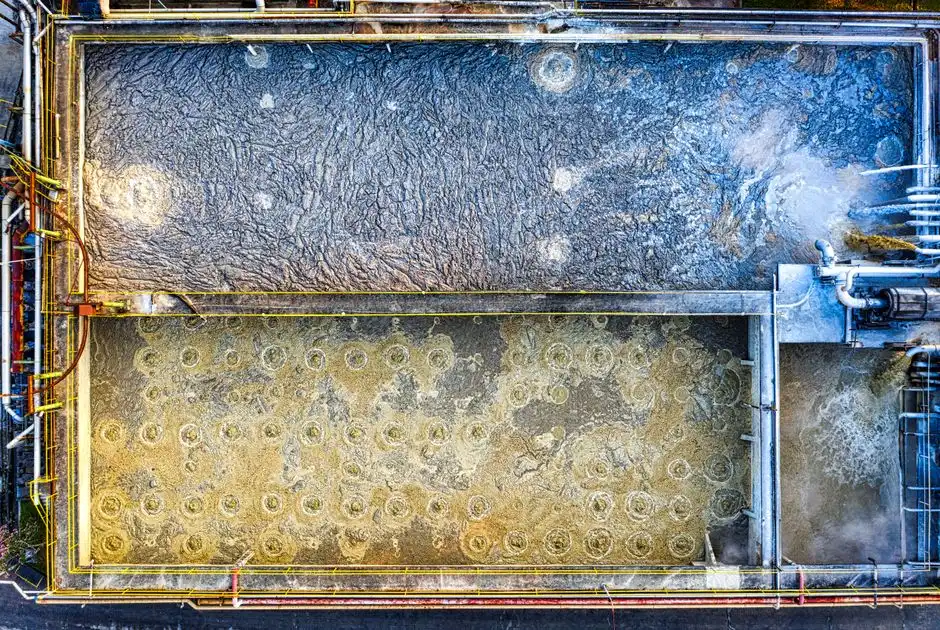
Package A/O and MBR systems serve different project objectives: the first integrates biological treatment, clarification and disinfection, while the second separates activated sludge from membrane filtration. Septic systems provide sanitation but require a defensible effluent and maintenance route.
| Option | Process and published specification | Best fit | Main buyer checks |
|---|---|---|---|
| WSZ underground package plant | Integrated anoxic/aerobic A/O biological contact oxidation, sedimentation and disinfection; fully automated with no operator required; 1–80 m³/h; below-grade or trailer-mounted installation. | Residential communities, hotels, hospitals, factories and rural areas needing a compact packaged train. | Design flow and load, excavation, groundwater, access, odor, power, standby power, sludge route and effluent requirements. |
| Integrated MBR membrane bioreactor | Activated sludge combined with submerged PVDF membrane filtration below 1 μm; 60% smaller footprint than conventional systems; 10–2,000 m³/day. | Projects requiring compact equipment, higher-quality effluent or water reuse. | Pre-treatment, membrane cleaning and replacement, controls, reuse water quality, nutrient treatment and whole-life cost. |
| Septic and cesspool systems | On-site storage and sanitation; the tested systems removed 43–59% of BOD, with average effluent BOD of 849–1,436 mg/L, according to WEPA, March 2014. | Collection and sanitation where suitable treatment or a controlled effluent route is available. | Sealed construction, groundwater risk, desludging frequency, septage transport, treatment/disposal route and discharge compliance. |
| Nature-based experimental systems | A June 2025 vermifiltration-plus-biochar experiment reported 94.28% BOD, 89.82% COD, 88.35% TDS, 95.30% TSS and 88.64% microplastic reduction. | Evaluated research, reuse and nutrient-recovery concepts rather than assumed turnkey products. | Scale-up evidence, site climate, loading, land, solids handling, monitoring and an approved discharge route. |
The WSZ configuration is attractive where excavation and above-ground space are constrained because the biological, settling and disinfection stages are consolidated in one buried package. MBR is the stronger candidate when effluent reuse or tighter solids separation justifies membrane operation and maintenance, but filtration below 1 μm does not replace biological treatment, screening, equalization or pretreatment.
Septic and cesspool arrangements should not be presented as automatic evidence of discharge compliance. In the WEPA survey of 301 Bangkok households in 2013, only 46% desludged within one year; 34% reported one year as the most common accumulation period, while 27% reported one to five years. The same research found that one-cesspool, two-cesspool and commercial septic systems removed 43–59% of BOD, but average effluent BOD remained 849–1,436 mg/L. These findings make tank condition, pumping frequency and septage treatment central procurement issues.
Choose from the required effluent quality, footprint, flow variation, reuse objective, maintenance capability and lifecycle obligations. A treatment percentage alone is not a selection criterion, particularly where the experimental vermifiltration results published in June 2025 have not yet been demonstrated at the buyer’s scale and loading.
Plan the treatment process and site integration
A treatment plant is a connected process train, not a single vessel selected by nominal capacity. The hydraulic and solids paths must remain coherent from the building drain to the final sludge destination.
- Incoming collection: confirm the sewer route, building connection, flow metering and backflow or flooding controls.
- Headworks: remove rags, plastics, fibers and other debris that could overload pumps or biological stages. Where required, include a rotary mechanical bar screen and its maintenance access.
- Equalization: provide it where flow variation, batch discharges or inhibitory influent concentrations require hydraulic and load buffering.
- Biological treatment: apply A/O contact oxidation or activated sludge according to the measured load and treatment objectives.
- Solids separation: establish whether clarification within the package or membrane separation in an MBR train is appropriate.
- Disinfection: match the process to the required water quality and any reuse specification.
- Monitored discharge or reuse: define sampling points, flow measurement, controls and the authorized discharge route.
- Sludge management: specify stabilization, storage, dewatering and removal. A plate-frame filter press may be relevant where the project must dewater sludge before transport.
The WSZ unit combines A/O contact oxidation, sedimentation and disinfection in one buried package. An MBR arrangement separates the activated-sludge and submerged-membrane stages, so its scope must also address membrane cleaning, replacement strategy, module withdrawal, pre-treatment and feed-water requirements.
Verify the available footprint, excavation access, vehicle-loading route, groundwater level, soil permeability, flood exposure, odor boundary, power supply, standby power and physical access for sludge removal. These checks can eliminate an otherwise technically suitable package.
Sludge is part of the sewage plant. Identify where it will be stored, how its condition will be assessed, how often it must be removed, where it will be dewatered and which treatment or disposal route is available. A pumpable or accessible sludge route should be established before the equipment contract is awarded, not after commissioning.
Build a 2026 equipment-selection and procurement checklist
A comparable proposal starts with one controlled design basis; otherwise capacity, price and performance claims are not comparable. Use the modular wastewater treatment systems buyer’s guide to structure technical and commercial review.
| Issue to suppliers | Required response | Buyer verification |
|---|---|---|
| Design basis | Documented flow, wastewater characterization, required effluent quality, discharge point, reuse target, site constraints, installation scope and sludge route. | Confirm that every proposal uses the same inputs and that assumptions are listed. |
| Process design | Inlet and outlet design flows, treatment stages, hydraulic-retention basis, biological loading, solids separation, disinfection, controls, duty/standby provisions and expected sludge production. | Review the sizing calculations and unresolved design assumptions. |
| Performance and handover | Guarantees, commissioning tests, operator training, remote monitoring, maintenance intervals, spare-parts availability and warranty scope. | Translate each statement into an acceptance test, deliverable or contractual obligation. |
| Lifecycle cost | Equipment, civil works, power, chemicals, labor, analytical testing, sludge transport, membrane or media replacement and disposal. | Compare the same cost boundary and operating assumptions over the proposed contract term. |
| Supplier evidence | Site trial or appropriate performance reference; transport and installation qualifications. | Verify the reference, test conditions and delivery capability for the Khon Kaen site. |
Effluent compliance remains site-specific. The WEPA policy brief, March 2014, lists maximum permitted BOD values of 20, 30, 40, 50 and 200 for building Types A, B, C, D and E respectively. These values are not an automatic permit for a proposed project. Confirm the applicable facility category, discharge route, sampling regime and current authority requirements with the responsible agency before specifying guarantees.
Compare lifecycle inputs, not equipment price alone. Define acceptance tests in the purchase contract, including the influent condition during testing, sampling methods, required results, remedy for failed performance and responsibilities for civil works, commissioning, training and maintenance support.
Operation, monitoring and risk prevention
Operating control should be written before handover because treatment performance depends on consistent influent, biological conditions, solids removal and discharge management. The maintenance plan should also follow the mechanical bar screen maintenance protocol for accessible equipment and defined corrective actions.
Prepare an operating schedule covering influent and effluent sampling, visual inspections, aeration or biological-process checks, sludge assessment, odor control and corrective-action thresholds. Include operating hours, influent and effluent results, maintenance actions, sludge removal, bypass events, corrective work and operator training in the site records.
Do not assume nutrient removal from BOD treatment alone. A 2017 study in the Asia-Pacific Journal of Science and Technology reported low nitrogen and phosphorus-removal efficiencies in both centralized and decentralized biological plants and identified combined biological and chemical treatment as necessary for nutrient control. Where nutrients are relevant to the receiving environment or reuse target, include them in the process design and monitoring scope.
Create a written escalation sequence for:
- bypass or overflow;
- rising effluent BOD or other deterioration;
- abnormal sludge accumulation;
- odor outside the agreed operating condition;
- power interruption; and
- visible solids carryover.
Each event should have a designated person, immediate containment action, notification requirement, sampling instruction and authority to stop discharge where necessary. Sludge-removal frequency should reflect actual tank condition and solids accumulation. The WEPA household findings illustrate the operational risk of long or irregular maintenance intervals; a calendar assumption alone does not establish adequate service.
Ultrafiltration should be treated as a downstream polishing or reuse option only when the feed meets the system’s turbidity and solids requirements. It is not the primary biological treatment stage for domestic sewage.
Frequently Asked Questions
Should a Khon Kaen property connect to a sewer or install decentralized sewage treatment?
Connect to a sewer when the responsible authority confirms that service is available, legally connectable and operationally suitable for the development. Consider decentralized treatment when the site is outside the service area, the connection is impractical, a controlled treatment train is required or reuse objectives justify a dedicated process. Confirm the receiving route, ownership, connection conditions and permit requirements before selecting equipment.
How should domestic sewage treatment capacity be sized?
Use the WEPA household benchmark of 150 L/cap/day only as one check. Establish average flow, peak hydraulic demand and organic load from measured data or defensible operating records, then add the kitchen, laundry, process-water and expansion inputs identified in the design basis. Select capacity only after reviewing hydraulic retention, biological loading, peak conditions and the required effluent quality.
What should a buyer request when comparing 2026 equipment prices?
Request a site-specific quotation covering equipment, civil works, installation, power, controls, commissioning, training, routine labor, chemicals, analytical testing, maintenance, sludge handling, transport and disposal or replacement. The supplied research provides no valid 2026 Khon Kaen equipment price, so any comparison should use actual quotations with one consistent scope. Include provisional sums or exclusions where the site information remains incomplete.
Which supplier qualifications reduce compliance and delivery risk?
Require documented process sizing, performance references or a suitable site trial, installation and commissioning qualifications, a clear commissioning test, operator training, warranty terms and a maintenance and spare-parts plan. Check that the supplier has demonstrated responsibility for the complete treatment train, including sludge removal. Acceptance tests and remedies for failed performance should be written into the contract.
What local approvals should be confirmed before finalizing a treatment concept?
Ask the responsible Khon Kaen authority to confirm sewer availability or the permitted alternative route, the applicable building or facility category, discharge destination, effluent limits, monitoring, connection requirements and construction approvals. Khon Kaen’s Smart City and eco-city initiatives do not establish compliance for an individual property. For a comparable regional planning approach, see the domestic sewage treatment guide for Nakhon Ratchasima.