Separate the wastewater streams before selecting equipment
An Izhevsk data center needs two coordinated but distinct treatment trains: sanitary wastewater treatment for the domestic stream and cooling-tower blowdown treatment for the concentrated cooling stream. The final choice depends on measured flows, conductivity, hardness, silica, suspended solids, biological load, discharge temperature, and the permitted reuse or sewer route. Cooling blowdown may represent 20–40% of intake water, so it is often the largest recovery opportunity. Pretreatment, reuse, and disposal must be selected from actual water chemistry and local acceptance conditions—not from generic flow assumptions.
Start with a source-by-source diagram. Map cooling makeup, evaporation, tower blowdown, once-through cooling if present, domestic sewage, equipment-room drainage, and rainwater or process-water imports. Keep sanitary wastewater separate from the cooling loop. A combined plant can obscure the sanitary biological load, create unnecessary cross-contamination risks, and make both hydraulic sizing and discharge compliance harder to defend.
Water Usage Effectiveness (WUE) is annual site water usage divided by IT equipment energy. Consumption is water permanently removed through evaporation or incorporation into products; usage also includes water withdrawn, used, and returned to the source, potentially after treatment. Genesis Water Technologies, in its commercial guidance, reports that a facility showing 0.47 gallons, or 1.8 litres, per kWh can still conceal substantial recoverable blowdown because WUE does not measure discharge quality or reuse potential.
Sample every stream independently for conductivity, pH, suspended solids, hardness, silica, temperature, biological indicators, and contaminants associated with chemicals or equipment-room operations. The data center cooling-blowdown treatment process provides a useful general framework, but its water-balance structure must be populated with Izhevsk measurements.
Before selecting equipment, obtain the current sewer-acceptance rules, permitted discharge route, local water tariff, and expected server-load growth from local authorities and the operator. The supplied research contains no verified current Izhevsk numerical discharge limits. Treating generic guidance as local compliance evidence would create an avoidable procurement risk.
Build the Izhevsk cooling-water balance from measured data
The blowdown ratio is calculated as 1/(CoC−1), where CoC is cycles of concentration, but the theoretical ratio must be checked against measured flows. Genesis Water Technologies reports a 25% blowdown ratio at 4 CoC and 20% at 6 CoC. Moving from 4 to 6 CoC therefore reduces blowdown by 5 percentage points, or 20% relative to the 4-CoC case—not by 50%.
Instrument evaporation and blowdown separately rather than inferring the entire loss from makeup-water data. Genesis Water Technologies reports that actual blowdown can exceed theoretical calculations by 15–30% because of unmeasured losses and emergency dumps. Include makeup flow, circulating flow, evaporation, blowdown, drift, and any emergency discharge in the same measurement period.
| Calculation or input | Evidence or required project value | Use in the Izhevsk design basis |
|---|---|---|
| Blowdown ratio | 1/(CoC−1), according to Genesis Water Technologies | Calculate an initial estimate, then replace it with metered performance. |
| 4 CoC scenario | 25% blowdown ratio | Reconcile against actual cooling operation and chemical-control limits. |
| 6 CoC scenario | 20% blowdown ratio | Evaluate scaling, biological control, and measured-blowdown effects before specifying. |
| Sourced illustration | 15 million gallons monthly intake at a 10 MW facility and 4 CoC produces 3.75 million gallons monthly of recoverable blowdown | Use only to explain the calculation; this is not an Izhevsk flow estimate. |
| Uncertainty | Actual blowdown can exceed theoretical calculations by 15–30%, according to Genesis Water Technologies | Size equalization around verified peaks and operational dumps. |
Request seasonal profiles for the Izhevsk site. Winter conditions can change cooling demand and evaporation, so an annual average can conceal peak blowdown and temporary storage requirements. Confirm that wet-bulb design data, peak cooling load, operating schedules, and emergency-dump assumptions represent the proposed facility rather than a default data-center profile.
The supplier’s source-field checklist should include measured or guaranteed cooling flow, design heat load, wet-bulb temperature, makeup-water analysis, cycles of concentration, chemical program, drift, and emergency-dump history. These inputs reveal whether additional concentration or treatment is technically justified. They also distinguish a genuine water-saving opportunity from a change that merely transfers water between use and discharge.
Match each contaminant and reuse target to the right process
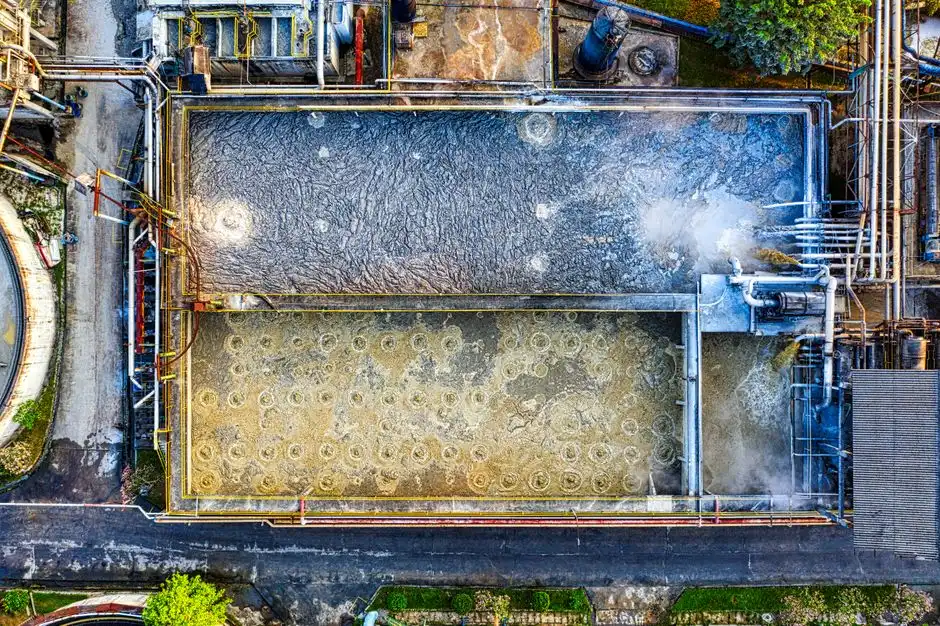
Industrial wastewater pretreatment should follow a defined sequence: source control; equalization and screening; physical separation or membrane pretreatment; targeted chemical adjustment; disinfection where required; then reuse or authorized discharge. Each step answers a specific contaminant or operational problem. A generic skid cannot substitute for that design logic.
Use physical separation when suspended solids, colloids, oil and grease, or floating material threaten downstream equipment. Genesis Water Technologies identifies media filtration and dissolved air flotation as physical-separation options for blowdown treatment. A DAF system for cooling blowdown pretreatment is therefore a candidate where floatables or bulk solids are present, subject to site chemistry and vendor design.
Use ultrafiltration where low suspended solids, colloids, and bacterial removal are required ahead of sensitive treatment. The published hollow-fiber ultrafiltration for blowdown pretreatment has a stated capacity range of 2,000–40,000 L/h and uses 0.03-micron PVDF membranes. Its published feed specification accepts turbidity up to 300 ppm and includes automatic backwash and air scour. These are product-selection limits, not proof that UF is required at an Izhevsk site.
Reverse osmosis should be considered only after membrane compatibility and concentrate handling are resolved. IDE states that conventional brackish-water reverse osmosis typically reaches 75–80% recovery before scaling becomes unmanageable. That range is a conventional BWRO design constraint, not a universal physical limit. Higher recovery requires deliberate chemistry and salt management.
IDE reports an industrial desalter operating at around 95% recovery with permeate silica reduced to about 1 mg/L. Its design combines controlled precipitation of sparingly soluble salts with dynamic membrane operation. That is an application-specific case involving blended industrial streams, not a guaranteed result for Izhevsk cooling blowdown. A generic multi-stage RO train should not be presented as an automatic path to the same recovery.
| Process | Primary role | Decision condition | Main issue to resolve |
|---|---|---|---|
| Media filtration | Remove suspended material | Solids load threatens later equipment or water quality | Backwash waste and verified removal rates |
| DAF | Remove suspended solids and floating material | Bulk solids or floatables require separation | Feed chemistry, sludge handling, and recovery |
| UF | Remove low solids, colloids, and bacteria | A sensitive downstream process requires a controlled filtrate | Published system capacity and feed specification must be checked against site data |
| Conventional BWRO | Remove dissolved salts | High-quality reuse or discharge reduction is required and concentrate can be handled | IDE reports 75–80% recovery before scaling becomes unmanageable |
| High-recovery salt management | Increase recovery beyond conventional BWRO | A project-specific chemistry assessment supports precipitation and advanced membrane operation | IDE’s around 95% application result is not an Izhevsk guarantee |
Apply the reuse hierarchy in ascending quality order. Verify non-contact uses first, such as suitable wash or toilet-flushing demand where local operating rules permit. Cooling-tower makeup requires more stable chemistry. Only then should the project consider higher-quality reuse that needs additional desalination or polishing. The cooling-tower blowdown reuse and treatment alternatives discussed in the cooling blowdown reuse and treatment alternatives show why the destination water specification, not the treatment equipment name, should define the objective.
Choose a treatment route by discharge reality
Three discharge routes are possible, and their selection depends on confirmed site constraints rather than recovery percentages alone.
| Route | Treatment objective | Required evidence |
|---|---|---|
| Authorized discharge after treatment | Meet the receiving system’s acceptance conditions while reducing avoidable discharge volume | Written limits for flow, pH, conductivity, temperature, suspended solids, and relevant chemical or biological parameters |
| Lower-demand reuse | Supply a non-contact or otherwise lower-demand application with treated blowdown | Recipient-process quality limits, local reuse rules, seasonal demand, and treatment performance |
| Closed-loop blowdown-to-makeup reuse | Recover high-quality permeate for cooling-tower makeup | Stable membrane performance, scaling control, and a permitted concentrate destination |
No verified current Izhevsk numerical discharge limits were included in the supplied research, so the receiving system’s requirements must be obtained directly from the relevant operator or authority. Route A cannot be declared compliant from temperature, conductivity, or flow alone.
Route B should be evaluated first where a legitimate non-contact use exists and local operating rules allow it. The objective is to replace freshwater demand while controlling the quality of the receiving process. It may avoid unnecessary desalination, but it still requires a stable treatment train and an auditable discharge balance.
Route C is the most demanding. It requires permeate quality suitable for cooling makeup, stable membrane performance, and a permitted concentrate destination. IDE reports that conventional BWRO commonly reaches 75–80% recovery before scaling, while higher-recovery arrangements need deliberate chemistry and salt management. A closed loop should therefore be treated as a project-specific option rather than the default specification.
Genesis Water Technologies reports that modular physical separation followed by targeted treatment can reduce makeup demand by 15–25%. Actual savings depend on stream quality, recovery, reuse acceptance, and the baseline water balance. The location-specific data center wastewater treatment guide illustrates why discharge route and local conditions must be resolved before selecting equipment.
For Izhevsk resilience, require protected equipment, freeze-safe routing where relevant, operating redundancy, remote monitoring, and spare membrane or dosing capacity. Confirm whether outdoor equipment, piping, and controls are exposed to seasonal freezing and whether summer cooling loads change equalization requirements.
Size the system from peak flow and future expansion
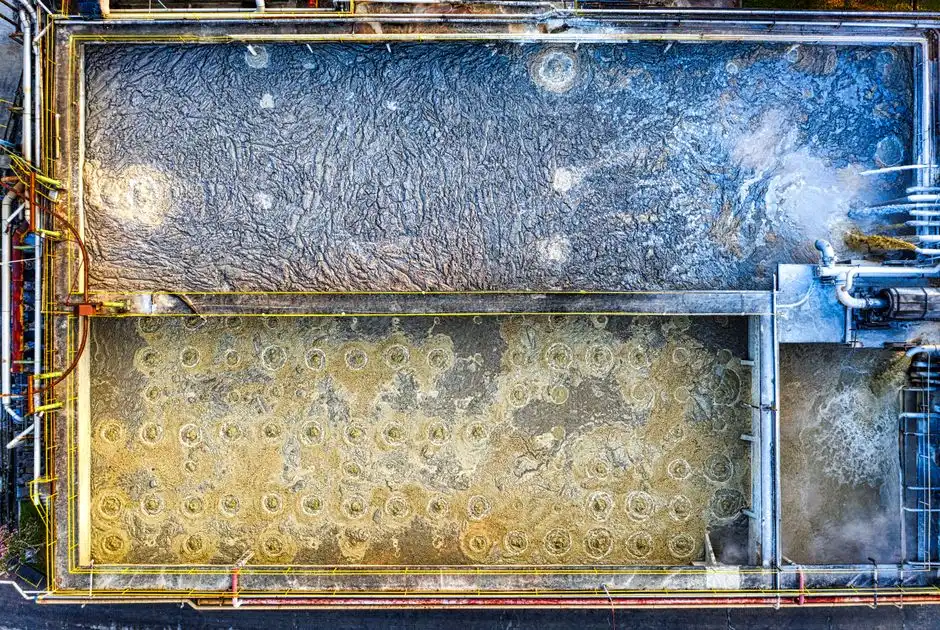
Size equalization and treatment around verified peak blowdown and sanitary flows, not average demand. Include temporary operating events such as emergency dumps, startup discharges, and chemical-control excursions. The sizing document should reconcile monthly and peak flows with storage time, treatment recovery, and the chosen discharge route.
The published reverse-osmosis water-purification equipment should be evaluated only after the required recovery and permeate quality are established. The available UF range is 2,000–40,000 L/h, while the dissolved-air flotation equipment is published over 4–300 m³/h. These are product-selection limits, not recommended capacities for the Izhevsk facility.
Require each bidder to document design flow, peak factor, recovery, operating redundancy, automatic controls, backwash or cleaning capacity, and treatment chemistry before quotation. The automatic chemical-dosing system must also be specified from the control strategy and chemical demand, not added as a generic accessory.
| Bid item | Minimum information required | Buyer check |
|---|---|---|
| Design basis | Verified peak and average sanitary and blowdown flows | No capacity based only on annual averages |
| Recovery and reuse | Guaranteed recovery, destination, and applicable water-quality limits | Mass balance closes within an agreed tolerance |
| Concentrate and residuals | Flow and composition; treatment and disposal route | Every output has an identified destination |
| Controls and redundancy | Automatic controls, duty/standby arrangement, remote monitoring, and response time | Failure modes and maintenance access are documented |
| Future expansion | Installed utilities, space, and connection provisions | Expansion is physically possible without relocating the plant |
Genesis Water Technologies gives 100–300 GPM as a market reference point for modular blowdown-treatment deployment. It is not an Izhevsk sizing recommendation. Ask bidders to state their own design flow and modularity basis.
Build future-proofing into the site plan. Reserve space, power, drainage, and controls for additional modules as server loads and heat density increase. Request a mass balance from each bidder covering makeup, evaporation, product water, blowdown, concentrate, sludge, and final discharge. Without that balance, freshwater-savings claims remain unauditable.
Verify Izhevsk requirements and procurement risks
Written confirmation from the local sewer operator or receiving authority is the first compliance gate. Obtain permitted flow, temperature, pH, conductivity, suspended solids, and any data-center-specific discharge conditions. Confirm available freshwater sources, tariffs, abstraction constraints, and whether reclaimed water has a defined connection or reuse standard.
Russian regulatory references must be checked by local environmental and design specialists. The supplied research does not contain a verified current Izhevsk discharge limit or sewer-acceptance condition, so this article does not infer one. A technology that meets a supplier’s stated permeate specification may still be unsuitable if the receiving route imposes different limits or restrictions.
In the tender, separate guaranteed parameters from assumptions. Require guarantees for recovery, permeate quality, chemical consumption, energy demand, cleaning frequency, availability, and response time. Define test methods, sampling points, operating conditions, correction curves, and remedies for failure.
Commissioning should use site water rather than only synthetic challenge water. Include repeated runs at expected flow and chemistry, verification of controls and alarms, chemical-handling checks, and operator training. Establish a baseline period before treatment so freshwater savings can be compared with post-commissioning performance.
Use explicit decision gates: baseline sampling; pilot work if chemistry varies materially; route approval; equipment selection; commissioning; and post-project performance review. The data-center wastewater treatment decision sequence provides a broader reference, but Izhevsk approvals and measurements remain the controlling inputs.
Frequently Asked Questions
What treatment does an Izhevsk data center need for cooling-tower blowdown?
Start with independent characterization of the blowdown, then apply pretreatment appropriate to suspended solids, colloids, floatables, and scaling constituents. Add targeted chemical control, followed by reuse or authorized discharge according to the confirmed route. Sanitary wastewater requires a separate treatment assessment because its biological load and reuse requirements differ from cooling blowdown.
Should an Izhevsk data center buy DAF, UF, or RO first?
Do not choose from a universal equipment category. DAF is a physical-separation option for suspended solids and floating material; UF provides fine solids, colloid, and bacterial barrier performance; RO removes dissolved salts and supports higher-quality reuse. The contaminant analysis, recovery target, concentrate route, and receiving-water limits determine the sequence.
How much should a modular cooling-blowdown treatment system cost?
No defensible site-specific price can be given without measured peak and average flow, complete water chemistry, recovery target, reuse destination, discharge route, concentration and residual-handling requirements, and automation scope. Request budgetary and firm quotations separately, with the same design basis, mass balance, guarantee schedule, installation boundaries, utility assumptions, and exclusions. Do not compare equipment prices without these inputs.
Can cooling-tower blowdown become cooling-tower makeup in Izhevsk?
It is technically possible when measured chemistry, recovery requirements, and scaling control support the application. It also requires a permitted concentrate destination and confirmation that the recycled water meets the cooling system’s makeup specification. IDE reports conventional BWRO at 75–80% recovery before scaling becomes unmanageable; its around 95% application result reflects a specific salt-management design and is not an Izhevsk guarantee.