What Chonburi Projects Need to Establish First
Domestic sewage treatment in Chonburi should be selected around the actual wastewater flow and load, available land, soil and groundwater conditions, discharge route and reuse objectives. Thailand-wide research found that tested on-site systems achieved only 43–59% BOD removal, with effluent BOD between 849 and 1,436 mg/L, while another study found low nitrogen and phosphorus removal in biological treatment systems. For decentralized sewage treatment in Chonburi, these findings favor a properly engineered biological process with clarification and disinfection, or an MBR system when compactness and fine solids separation are priorities. Final sizing must use Chonburi-specific flows, loads, soil, groundwater and applicable permit conditions.
Begin by defining the wastewater boundary. Separate domestic sewage from commercial laundry or kitchen drainage, industrial process water, stormwater and clean roof runoff. A hotel’s guest-room wastewater, a hospital’s clinical drainage and a factory’s process effluent must not be combined into one domestic design load unless each stream has been characterized and the treatment concept is technically capable of handling it.
The 2013 Water Environment Partnership in Asia household profile can be used only as preliminary screening evidence. It reports total wastewater generation of 150 L/capita/day: 45 L/capita/day from the kitchen, 20 from washing, 20 from the toilet and 65 from bathing. Its corresponding total household BOD loading is 115 g/capita/day, divided into 81 from the kitchen, 3 from washing, 14 from the toilet and 17 from bathing. Excluding kitchen drainage would therefore remove a substantial part of the preliminary organic load.
The supplied research does not contain Chonburi-specific flow, groundwater, soil, reuse or permit data. A project designer must obtain measured flows, current wastewater characteristics, groundwater levels, soil conditions and the applicable outlet criteria rather than treating national household figures as local design values. This site-definition sequence also applies to a comparison of domestic sewage treatment systems in Nakhon Ratchasima.
The US EPA identifies infiltration and inflow, wet-weather peak flow, blockages, equipment failure, broken pipes and vandalism as distinct sewer and treatment risks. For Chonburi, these are relevant design questions rather than assumed site conditions: establish stormwater entry, peak-flow exposure, access for recovery and the consequences of a treatment-unit outage.
Why Conventional On-Site Tanks Need Careful Evaluation
The 2013 Water Environment Partnership in Asia brief classifies Thailand’s domestic wastewater systems as centralized, cluster and on-site treatment, and notes that government policy has favored cluster systems because of lower construction cost and easier management. That policy context does not establish whether a septic-based system is appropriate for an individual Chonburi site.
Sampled performance makes site-specific assessment necessary. The brief reports BOD removal of 43–59% for one-cesspool, two-cesspool and commercial package septic systems. Average effluent BOD ranged from 849 to 1,436 mg/L. These values came from the cited Thai sampling study and must not be treated as Chonburi guarantees or as evidence that every commercial tank performs identically.
The same 2013 brief cites maximum permitted effluent BOD values of 20, 30, 40, 50 and 200 mg/L for building Types A, B, C, D and E, respectively. The applicable building classification and receiving route must be confirmed with the relevant Thai and local authorities. A sewer connection, surface-water discharge, land application or water reuse can impose different acceptance requirements.
| Evidence from the 2013 Thailand brief | Reported result | Implication for a Chonburi project |
|---|---|---|
| One-cesspool, two-cesspool and commercial package septic systems | BOD removal of 43–59% | Require site-specific performance evidence and confirm the outlet standard. |
| Average effluent from the sampled on-site systems | BOD of 849–1,436 mg/L | Do not assume that a conventional tank satisfies a reuse or sensitive-discharge objective. |
| Cited limits for building Types A, B, C, D and E | 20, 30, 40, 50 and 200 mg/L BOD | Confirm the building class and current applicable requirement. |
| Bangkok household survey on accumulated septage | 34% accumulated it for one year; 27% for one to five years | Base maintenance on tank condition and a signed schedule, not informal “full tank” responses. |
Soil and groundwater are decisive because the brief reports that open-bottomed cesspools can create groundwater-contamination risk in urban areas and that Bangkok’s low-permeability clay and high groundwater can impair soakage pits. Chonburi groundwater and soil conditions must therefore be established rather than inferred from a neighboring project.
The Bangkok survey illustrates a maintenance-planning issue, not Chonburi behavior: only 46% of respondents had requested desludging within one year, while the larger reported accumulation periods were common. A decentralized sewage treatment Chonburi proposal should name the operator, extraction method, transport route, treatment site, final-disposal responsibility and inspection frequency.
Compare Package A/O and MBR Treatment Routes
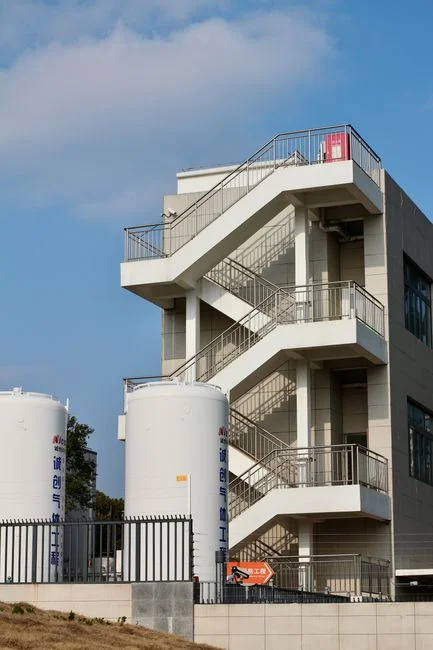
The principal package A/O and MBR comparison is the balance between integrated mechanical simplicity and membrane-specific solids separation and control.
The underground WSZ package sewage treatment plant combines anoxic/aerobic biological contact oxidation, sedimentation and disinfection in one below-grade package. The HydropureWater verified catalog states that it is fully automated, requires no operator, handles 1–80 m³/h and can also be trailer-mounted. Those are catalog attributes, not a Chonburi performance guarantee.
The MBR membrane bioreactor system uses activated-sludge biological treatment followed by submerged PVDF membrane filtration, with separate management requirements for separated solids and permeate. The verified catalog gives a treatment range of 10–2,000 m³/day, filtration below 1 μm and a footprint 60% smaller than conventional systems. The comparison remains meaningful only if the quoted capacity and footprint are tied to the project’s actual influent, duty cycle and site constraints.
| Decision parameter | Package A/O route | MBR route |
|---|---|---|
| Documented process | Anoxic/aerobic biological contact oxidation, sedimentation and disinfection | Activated sludge, submerged PVDF membrane separation, permeate and sludge management |
| Verified catalog capacity | 1–80 m³/h | 10–2,000 m³/day |
| Documented configuration | Underground package or trailer mounting; automated operation stated | Membrane-based separation; filtration below 1 μm stated |
| Principal technical attraction | Integrated treatment in a compact underground arrangement | Fine solids separation and a catalog-stated footprint 60% smaller than conventional systems |
| Items requiring supplier detail | Design influent, biological loading, clarification performance, disinfection, structural design, access and residuals handling | Design flux, cleaning method, membrane life, replacement pricing, controls, spare membranes and sludge handling |
Package A/O is generally the simpler integrated route for a suitable decentralized site, but “automated” does not remove the need for biological process control, inspection, cleaning, desludging or analytical monitoring. MBR offers fine solids separation and compact installation, while adding membrane cleaning, replacement and specialist-control requirements.
Nutrient objectives can change the shortlist. The 2017 Thailand study reported low nutrient-removal efficiency in both centralized and decentralized biological treatment plants and identified combined biological and chemical treatment as the better approach for nitrogen and phosphorus removal. Meeting BOD or suspended-solids targets alone may therefore be inadequate. No catalog capacity should be read as a guarantee of a particular Chonburi effluent value; request a guaranteed performance schedule linked to the agreed influent and receiving requirements.
Build a Chonburi-Specific Treatment and Sizing Plan
A defensible Chonburi design follows six linked steps, each with an identified input, output and responsible party.
- Characterize the wastewater. Obtain daily flow, peak factor, seasonal variation, BOD, COD, suspended solids, nitrogen, phosphorus, pH and temperature. Identify industrial contaminants and exclude stormwater from the sanitary flow.
- Check the physical site. Confirm footprint, maintenance access, burial depth, soil permeability, groundwater level, flood exposure, odor constraints, power supply and drainage route.
- Define the outlet. Select among sewer connection, permitted surface-water or land discharge, reuse, irrigation or land application. Obtain the relevant Chonburi authority’s written criteria.
- Size the process against hydraulic and pollutant loads. Compare measured peak hydraulic demand with documented capacity ranges, then verify that organic, solids and nutrient loads remain within the supplier’s stated design envelope.
- Plan residuals. Assign sludge or septage extraction, licensed transport, treatment, final disposal, odor control and maintenance access.
- Validate performance and handover. Require process calculations, P&IDs, guarantees, commissioning tests, monitoring, spare parts and operating support.
| Design step | Minimum supplier input | Buyer acceptance check |
|---|---|---|
| Wastewater characterization | Measured flow and wastewater analyses | Peak and average loads are separately calculated. |
| Site and groundwater | Survey, groundwater and flood information | Installation, access and containment assumptions are documented. |
| Outlet and reuse | Written acceptance criteria | Guaranteed effluent parameters match the actual route. |
| Process sizing | Calculations tied to the duty cycle | No unit is selected from nameplate flow alone. |
| Residuals and commissioning | Handling plan and test protocol | Responsibility, frequency and acceptance tests are assigned. |
Where current site data are unavailable, the 2013 Thailand household values of 150 L/capita/day and 115 g/capita/day BOD loading may be used only for preliminary screening. They do not establish peak demand, kitchen-drainage characteristics, industrial contributions or seasonal flow for a particular development.
Choose Equipment Through a Weighted Decision Framework
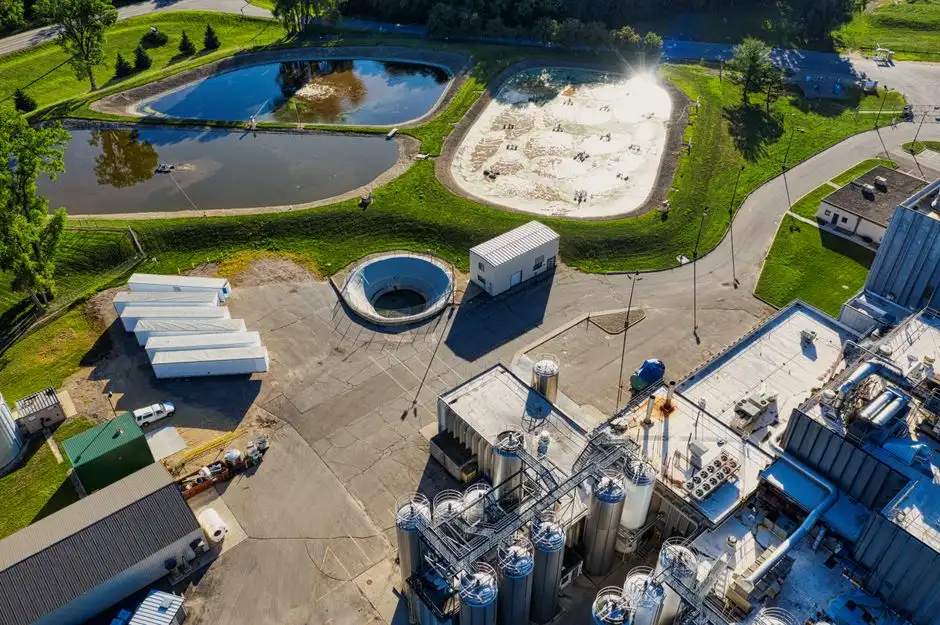
A defensible selection compares sewer connection, package A/O, MBR and conventional on-site treatment against the same project constraints rather than awarding points to a technology category.
The framework should cover sewer availability, land constraints, required effluent quality, reuse objectives, average and peak load, maintenance capability, odor sensitivity, expansion plans and total lifecycle responsibility. Hydraulic reliability must remain visible: the US EPA states that infiltration and inflow can cause sanitary sewer overflows and treatment-plant operational problems, while significant wet-weather flow increases can adversely affect treatment efficiency, reliability and control.
Automatic operation is a staffing attribute, not proof of low maintenance. Assign responsibility for biological process control, inspection, cleaning, sludge removal, membrane care and analytical monitoring. For MBR, request membrane flux, cleaning method, expected membrane life, replacement pricing and spare-part availability. For a WSZ package, request burial and structural design information, inlet and outlet details, access arrangements and confirmation of the installed flow range.
| Decision test | If the answer is yes | Action |
|---|---|---|
| Is a permitted sewer available? | Yes | Compare connection charges and operating obligations against on-site treatment, without assuming either route is cheaper. |
| Is land or odor treatment a binding constraint? | Yes | Assess a package A/O or MBR route and require site-specific installation and containment details. |
| Is reuse or nutrient control required? | Yes | Demand a defined treatment train, nutrient-removal design and relevant performance schedule. |
| Is there specialist maintenance capacity? | No | Reconsider membrane-intensive MBR or contract the required operating support. |
| Is future expansion expected? | Yes | Confirm installed reserve capacity and the space, power and control provisions for expansion. |
Require every supplier to use the same influent basis, peak-flow allowance, duty cycle, performance criteria, site constraints, civil-work boundary, residuals scope and warranty terms. Otherwise, quotations and footprint claims are not directly comparable. The WSZ package treatment details and MBR system details should therefore enter the comparison as technical submissions, not marketing selections.
Verify Performance, Operations and Environmental Risk
Acceptance should be tied to a written process basis, not a general statement that the equipment is automatic or compliant.
For the effluent treatment plant buyer’s guide for Pattaya, the same verification principle applies: the contract should define design flow, peak flow, wastewater characteristics, treatment objectives and the test method for demonstrating compliance.
Commissioning should cover startup, biological stabilization, solids separation, disinfection, controls, alarms, odor management and stable effluent performance. The monitoring plan should identify responsibility and frequency for flow, BOD, COD, suspended solids, nitrogen, phosphorus, pH and disinfection performance where relevant to the outlet. A one-time sample without a defined operating period is not a complete demonstration.
Residual management is part of environmental risk, not an afterthought. Record sludge quantity and characteristics, extraction frequency, transport and treatment arrangements, and the party responsible for final disposal. Where septage or sludge leaves the site, identify the authorized receiving facility and chain of records.
Do not import US NPDES limits into a Chonburi approval process. The US EPA municipal wastewater guidance is relevant here for hydraulic and reliability principles, but the project must identify the current Thai and local-government requirements that apply to its outlet and building classification. The 2017 Thailand nutrient-removal study is the relevant local warning: achieving BOD or solids targets alone may not resolve nitrogen and phosphorus risks.
Frequently Asked Questions
How much does domestic sewage treatment in Chonburi cost?
The supplied research contains no Chonburi equipment prices. A defensible quotation requires measured flow and loads, site and groundwater conditions, outlet and reuse criteria, civil works, power and controls, sludge handling, commissioning, maintenance scope and the commercial boundary. Ask each supplier for the same scope and separate the initial equipment price from installation, civil works, annual operation, extraction, monitoring and replacement costs.
How do I size a package A/O plant or an MBR system?
The verified WSZ range is 1–80 m³/h, while the verified MBR range is 10–2,000 m³/day. Those ranges do not justify choosing a unit from nameplate capacity alone. Obtain measured average and peak flows, wastewater loads, operating hours, future expansion and the required effluent guarantees; then require the supplier to show which duty point and loading basis supports the selection.
How should I select a sewage treatment supplier in Chonburi?
Request process calculations, P&IDs, performance guarantees, commissioning evidence, operating references, maintenance details, spare-parts availability and lifecycle responsibilities. For MBR, specifically request membrane flux, cleaning method, life and replacement pricing; for package A/O, request structural, burial and access information. Check that all submissions use the same influent, site and acceptance assumptions.
What compliance and environmental risks should be checked before installation?
Obtain written confirmation of the applicable Chonburi outlet requirements, building classification and permit conditions from the relevant authority. Distinguish Thailand-wide research from current local rules, and do not assume a sewer connection, surface-water discharge, land application or reuse route has the same requirements. Also document wet-weather peak flow, groundwater protection, odor, sludge transport and final disposal before accepting the design.