Determine Which Hazlehurst Sewer Limits Actually Apply
EPA’s pretreatment framework contains national general and specific prohibitions, but a petroleum plant’s controlling Hazlehurst-area requirements also depend on applicable categorical pretreatment standards, the industrial user permit issued by the receiving POTW, and site-specific POTW local limits. EPA identifies local limits as site-specific requirements that may be numeric or narrative, including best management practices, and places them at the industrial user’s end-of-pipe connection to the POTW collection system (EPA, Pretreatment Standards and Requirements—Local Limits).
Start by separating the compliance stack rather than treating one discharge limit as the entire requirement.
| Requirement layer | What it establishes | What the petroleum plant must obtain |
|---|---|---|
| Federal general prohibitions | No discharge may cause POTW pass through or interference. | Applicable regulatory text and confirmation that the discharge is covered by the national standards. |
| Federal specific prohibitions | National restrictions address fire or explosion hazards, corrosive discharges, obstructions, oxygen-demanding interference, heat, petroleum oil, toxic gases or vapors, and hauled waste. | Evidence that each prohibited condition is controlled before sewer discharge. |
| Categorical pretreatment standards | Pollutant discharge limits applicable to an industrial user within a designated category. | A documented applicability determination identifying the applicable category, pollutants, and limits. |
| Industrial user permit | The POTW’s enforceable control mechanism for the specific discharger and discharge point. | Current permit, monitoring requirements, approved control mechanisms, and discharge specifications. |
| POTW local limits | Site-specific limits protecting the particular POTW, sludge processes, and receiving waters. | Current pretreatment manual, local-limit tables, BMPs, and applicable narrative requirements. |
Ask the receiving POTW for the current pretreatment manual, industrial user permit, local-limit tables, monitoring requirements, approved control mechanisms, and discharge-point specifications. Do not transfer another petroleum facility’s requirements to a Hazlehurst-area site: EPA’s local-limits page expressly describes local limits as site-specific (EPA, Pretreatment Standards and Requirements—Local Limits). Numerical Hazlehurst-area acceptance values must come from that POTW, not from EPA guidance or a neighboring discharger’s permit.
EPA’s Local Limits Development Guidance says it is guidance, not a regulation, and does not substitute for Clean Water Act requirements or EPA regulations. For an indirect discharger, obligations are determined by the POTW industrial-user permit or equivalent control mechanism and applicable regulatory requirements; if guidance conflicts with a permit or regulation, the permit or regulation controls (EPA, Local Limits Development Guidance, 2021-06-25). This pretreatment compliance guide for industrial plants illustrates the same permit-led approach.
Characterize the Wastewater Before Designing the Treatment Train
A defensible treatment design begins with a source-resolved wastewater profile, because the permit controls which parameters must be controlled and the wastewater inventory determines whether those controls are technically appropriate. EPA’s MAHL framework starts by determining pollutants of concern, collecting and analyzing data, calculating maximum allowable headworks loadings for each pollutant, designating and implementing limits, and addressing collection-system concerns (EPA, Local Limits Development Guidance, 2021-06-25).
Develop a representative inventory that covers normal flow variability, oil and grease, suspended solids, pH, temperature, and any petroleum-derived pollutants named by the POTW. Include production, tank-cleaning, washdown, separator, and upset-event streams. Do not rely only on a diluted plant composite: source-specific sampling is needed to identify which stream drives the permit load and which treatment unit must control it.
| Design input | Characterization needed | Why it changes the decision |
|---|---|---|
| Flow and operating envelope | Normal, production, cleaning, washdown, separator, and upset-event flows. | Determines hydraulic treatment capacity and whether equalization or temporary storage is needed. |
| Oil, FOG, and solids | Source-specific oil and grease and suspended-solids data, including event concentrations. | Indicates whether separation, DAF, chemical conditioning, or solids dewatering is justified. |
| pH and temperature | Range, duration, and source of excursions. | Tests compliance with specific prohibitions and determines whether adjustment or cooling is required. |
| POTW-designated pollutants | Permit-listed parameters and analytical methods required by the POTW. | Prevents treatment from addressing pollutants the permit does not require while missing parameters it does. |
| Operational records | Production schedules, cleaning cycles, separator performance, bypass history, and material changes. | Establishes representative operating periods and identifies credible upsets. |
For local-limit development, EPA identifies data from industrial users as well as POTW influent, effluent, sludge, and collection-system locations (EPA, Local Limits Development Guidance, 2021-06-25). A petroleum plant should not wait for the POTW to characterize its discharge; it should supply credible source data and flag operational changes that could affect the treatment envelope.
Request the laboratory methods, sample points, monitoring frequency, and representative operating periods specified by the receiving POTW. The available EPA research does not provide Hazlehurst-area numerical acceptance values, so those inputs must come from the controlling industrial user permit and local limits.
Control Petroleum Oil, Grease, and Solids at the Right Point
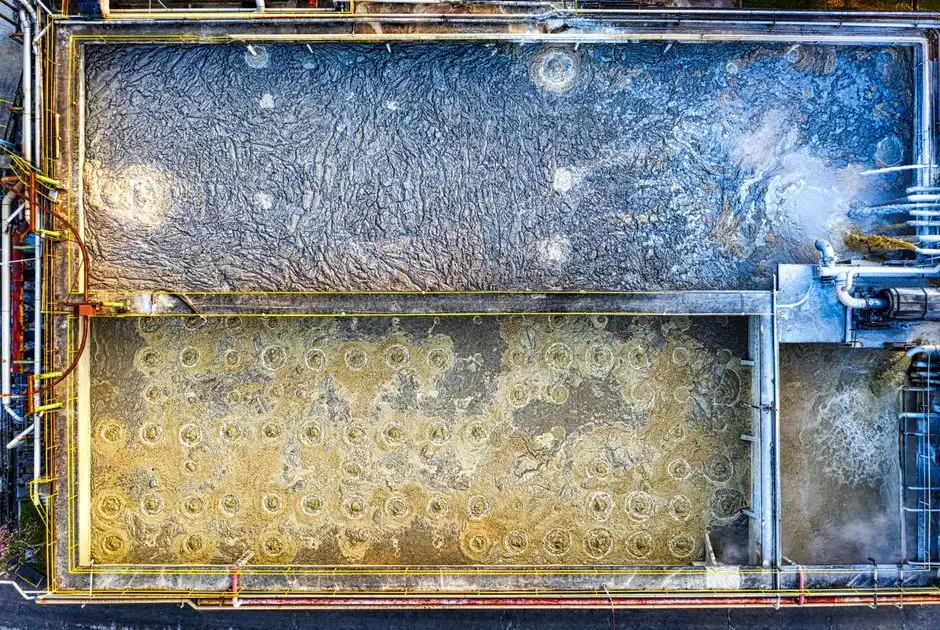
Source segregation and controlled collection should precede final treatment because diluted or mixed drainage can conceal high-concentration oil events and make downstream performance unpredictable. EPA’s specific prohibition applies to petroleum oil, nonbiodegradable cutting oil, and products of mineral-oil origin in amounts that cause interference or pass through (EPA, Pretreatment Standards and Requirements—General and Specific Prohibitions).
Use appropriate upstream separation for routine drainage, then route the resulting wastewater to treatment selected from the source profile. A DAF system for petroleum wastewater pretreatment is relevant when suspended oil, FOG, or colloidal material must be removed. HydropureWater reports DAF capacities from 4–300 m³/h across 13 standard models and identifies petrochemical applications among intended uses (HydropureWater product data, 2026). Those catalog figures establish available capacity ranges; they do not prove that a selected unit will meet the Hazlehurst permit.
| Process decision | Use when | Required design evidence |
|---|---|---|
| Source segregation and collection | Different plant areas produce materially different oil, solids, pH, or temperature conditions. | Source-level flow and contaminant records; identification of drain and bypass points. |
| DAF | Suspended oil, FOG, or colloidal material must be separated before sewer discharge. | Oil and grease, suspended-solids, flow variability, and required discharge criteria. |
| Chemical conditioning and dosing | Jar testing and operating experience show that chemical conditioning improves the selected separation process. | Identified chemical, dose range from testing, mixing requirements, control logic, and secondary containment requirements. |
| Solids dewatering | DAF sludge or oil-contaminated solids require separation before disposal or authorized sewer discharge. | Solids generation rate, recovered-oil characteristics, target moisture or solids condition, and disposal pathway. |
| Final discharge verification | Treatment is complete and the connection to the sewer is reached. | Representative end-of-pipe sampling and records tied to the industrial user permit. |
Automatic dosing should follow the process decision rather than precede it. A PLC-controlled chemical dosing system can automate injection of coagulants, flocculants, pH adjusters, or specialty chemicals (HydropureWater product data, 2026), but the chemical and operating range must be supported by jar testing and the selected wastewater profile.
Provide a downstream solids-management step when recovered DAF sludge or oil-contaminated solids need separation. The equipment decision must therefore cover the complete train: upstream segregation, oil and solids removal, chemical conditioning, sludge concentration, and end-of-pipe verification. Performance should be tied to the permit parameter being controlled, not merely to equipment throughput or clean-water performance.
Prevent pH, Heat, and Other Specific-Prohibition Failures
Oil removal alone does not establish pretreatment compliance: pH, heat, and the other specific prohibitions require independent engineering controls. EPA’s national prohibitions apply even when the POTW lacks an approved pretreatment program and when the nondomestic discharger has not received a permit or equivalent control mechanism (EPA, Pretreatment Standards and Requirements—General and Specific Prohibitions).
| Specific-prohibition category | National criterion | Engineering response |
|---|---|---|
| Fire or explosion hazard | Includes wastestreams with a closed-cup flashpoint below 140 °F (60 °C) using specified test methods. | Test the relevant stream, prevent discharge of excluded waste, and obtain POTW approval where applicable. |
| Corrosive structural damage | No discharge below pH 5.0 unless the works is specifically designed to accommodate it. | Identify acidic sources, adjust within the permitted envelope, and document the applicable limit. |
| Solid or viscous obstruction | Prohibited in amounts that obstruct flow and cause interference. | Apply solids pretreatment, inspect collection points, and control discharge concentrations. |
| Oxygen-demanding interference | Prohibited when the pollutant, flow rate, or concentration causes interference. | Characterize biodegradable organics and assess the required treatment step. |
| Heat interference | Temperature at the POTW treatment plant may not exceed 40 °C (104 °F) unless alternate limits are approved by the approval authority upon the POTW’s request. | Identify hot streams, assess cooling or segregation, and obtain any approved alternate limit. |
| Petroleum oil | Prohibited in amounts causing interference or pass through. | Provide source control and demonstrate petroleum-oil removal before discharge. |
| Toxic gases, vapors, or fumes | Prohibited when they may cause acute worker health and safety problems. | Control volatile sources and confirm worker-safety and sewer-entry risks. |
| Hauled waste | Prohibited except at discharge points designated by the POTW. | Confirm authorization and the designated point before accepting or hauling waste to the facility. |
These thresholds are national prohibition criteria, not substitutes for the Hazlehurst-area POTW’s industrial user permit or local limits. The flashpoint criterion and pH floor do not authorize a discharge: they identify conditions that trigger national prohibitions. Equipment selection and monitoring should address every parameter named in the permit, including any condition more restrictive than the national criteria.
Build a Sampling and Compliance-Verification System
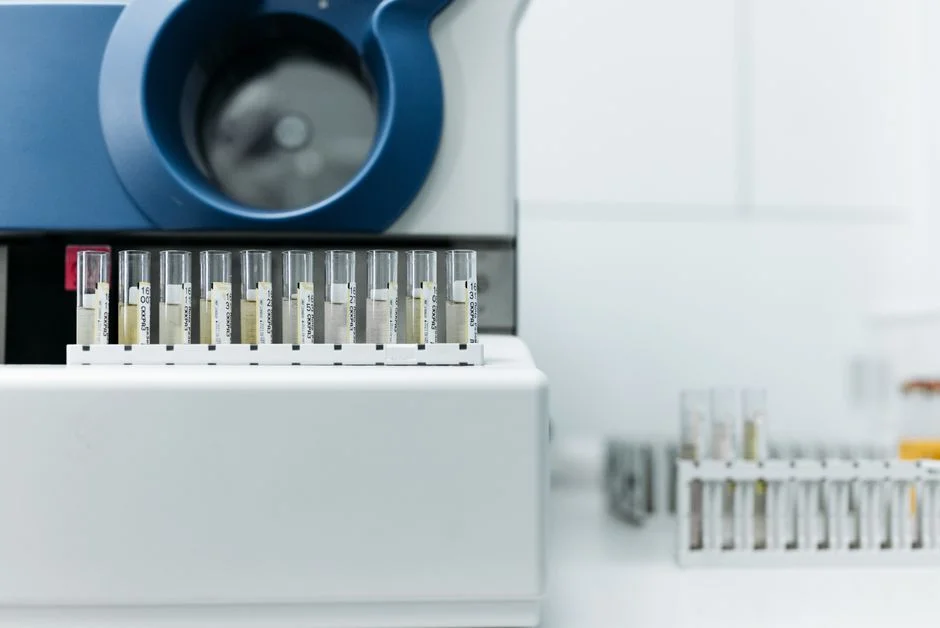
EPA places POTW local limits at the industrial user’s end-of-pipe discharge point, meaning the point of connection to the POTW collection system (EPA, Pretreatment Standards and Requirements—Local Limits). Sampling there tests what enters the sewer; an upstream sample cannot demonstrate end-of-pipe compliance.
Align the sampling point, frequency, parameters, analytical methods, flow measurement, monitoring records, and reporting with the industrial user permit or equivalent control mechanism. Establish representative normal-operation samples and separate investigation procedures for cleaning, upset, and high-concentration events. A diluted routine composite may hide a short-duration exceedance or an unrepresentative discharge source.
Track flow, oil and grease, suspended solids, pH, temperature, and every pollutant of concern designated by the POTW. Trends should connect discharge results to production, cleaning, separator, and upset events. Where process operation provides an early warning, such as an oil concentration or chemical-dose trend, use it to trigger sampling or load reduction rather than treating it as a substitute for compliance analysis.
Retain chain-of-custody records, laboratory reports, instrument calibration records, flow logs, chemical-use records, operating adjustments, and corrective actions. These records demonstrate that compliance was achieved under representative conditions; they also reveal whether a treatment unit was bypassed, overloaded, or operated outside its established envelope.
Use EPA’s review and detailed-re-evaluation process as a model for periodic reassessment. EPA’s local-limits guidance describes annual reviews and periodic reevaluations and identifies changes in POTW operations, collection-system conditions, industrial-user characteristics, and treatment capabilities as reasons to reconsider local limits (EPA, Local Limits Development Guidance, 2021-06-25). An industrial wastewater pretreatment limits guide provides a related review framework.
Choose a Pretreatment System Without Treating Compliance as a Product
A treatment train should be selected from the wastewater envelope, enforceable permit conditions, and required verification method—not from headline capacity or a supplier’s generic performance statement. EPA’s local-limits framework separates pollutant identification, data collection, loading calculations, limit implementation, and collection-system protection; equipment procurement should mirror those steps (EPA, Local Limits Development Guidance, 2021-06-25).
| Selection checkpoint | Question to resolve before purchase | Evidence to request |
|---|---|---|
| DAF applicability | Does the objective require removal of oil, FOG, suspended solids, or colloidal material? | Influent characterization, flow envelope, permit parameter mapping, and selected hydraulic and contaminant loading basis. |
| Chemical dosing | Does wastewater chemistry and jar testing justify a named chemical? | Chemical selection, test basis, dose controls, secondary containment, and operating labor requirements. |
| Solids handling | What happens to DAF sludge and oil-contaminated solids? | Solids balance, dewatering or collection method, disposal route, and compatibility with future waste requirements. |
| Alternative processes | Does biology offer value after screening for biodegradable organics, toxicity, and permit pollutants? | Wastewater characterization, treatment objectives, comparison with clarification and DAF, and residual-solids evaluation. |
| Compliance performance | How will each permit parameter be demonstrated? | Guarantee tied to a defined influent envelope and applicable discharge criteria, with test and sampling conditions stated. |
| Supplier support | Can the supplier support the system through commissioning and operation? | Controls, operator training, maintenance, consumables or media, spare parts, and future sludge-disposal compatibility. |
Shortlist DAF when the design objective includes oil, FOG, suspended solids, or colloidal-matter removal, but require the supplier to address chemical demand, sludge handling, controls, maintenance, and operating labor. Include chemical dosing only when the selected process and wastewater chemistry justify it. Compare modular DAF, conventional clarification, and biological treatment only after screening for biodegradable organics, toxicity, and the pollutants named in the permit.
Request a performance guarantee tied to a defined influent envelope and applicable discharge criteria, not an unqualified clean-water claim. Require each bidder to map every permit parameter to a treatment step and show how final compliance will be verified at end-of-pipe sampling. For broader vendor screening, an effluent treatment supplier comparison guide can support review of technical scope and lifecycle support; an activated-sludge comparison is relevant only if biological treatment survives the wastewater screen.
No researched quotation establishes a Hazlehurst-area treatment price or supplier lead time. Procurement should request a priced bill of quantities, installation scope, commissioning plan, consumables, maintenance support, and delivery schedule based on the approved influent envelope and permit criteria.
Frequently Asked Questions
Which authority supplies the controlling Hazlehurst-area sewer limits?
The receiving POTW supplies the controlling industrial user permit, local-limit tables, monitoring requirements, and approved control mechanisms for the specific discharge point. EPA’s national prohibitions still apply. Do not assume EPA guidance or a neighboring facility’s permit contains the numerical Hazlehurst-area requirements.
How should a plant size DAF before buying equipment?
Begin with source-specific flow and contaminant characterization, including normal, cleaning, washdown, and upset streams. Use that envelope to develop hydraulic and contaminant-loading bases, then require the chosen supplier to verify the selected DAF and any associated chemical-conditioning requirements against the applicable discharge criteria.
What should procurement compare when budgeting a pretreatment system?
Ask suppliers for a priced scope covering the selected treatment train, chemical dosing, controls, sludge handling or dewatering, installation, commissioning, operator training, maintenance, consumables, and end-of-pipe verification. No researched quotation establishes a defensible Hazlehurst-area price, so the buyer should request comparable offers based on the same influent envelope and permit duties.
Does meeting local limits prove that categorical pretreatment standards do not apply?
No. Local limits and categorical pretreatment standards are separate parts of the compliance stack. A discharge can meet every numeric local limit and still violate a categorical standard or a general or specific prohibition, so the plant needs a documented applicability determination and separate compliance evidence for each requirement.
Related Equipment
- DAF system for petroleum wastewater pretreatment — specifications, capacity range, and technical data