
What Pocatello Requires Before a Semiconductor Discharge
Semiconductor plants near Pocatello meet pretreatment limits by characterizing each wastewater stream, treating pollutants at the source, verifying compliance with representative samples, and obtaining written discharge approval before connecting to the sanitary sewer. Pocatello’s Industrial Pretreatment Program publishes local pretreatment limits, including pH from 6.0 to 10.0, nonpolar FOG at 100 mg/L, temperature at or below 65°C at sewer entry, and atmospheric hydrogen sulfide at 10 ppm at a designated monitoring manhole. Federally regulated discharges require a permit application 90 days before discharge. A practical treatment train separates equalization and chemical control from solids, oil, dissolved contaminants, and final filtration.
The City of Pocatello’s Industrial Pretreatment Program states that all businesses generating industrial wastewater should contact the program before discharging to the sewer. The program then determines the appropriate approval mechanism: a Waste Discharge Permit, Discharge Authorization, or Letter of Authorization. Its stated decision factors are discharge volume, the nature of the business, wastewater characteristics, and the potential risk to the treatment plant. Very low-volume or one-time discharges may receive verbal approval or a letter, but that should not be assumed for a semiconductor facility.
For federally regulated discharges, the City requires a permit application 90 days before discharge. The applicable approval route for a locally regulated discharge must be confirmed with Pocatello. A new fab, production expansion, new treatment unit, or materially changed waste stream should be reviewed as a potential change to the approved discharge conditions rather than handled as routine operational variation.
Pocatello maintains two standards and limitation sets: Local Pretreatment Limits and Federal Pretreatment Limits. The final obligation may include local limits, categorical requirements where applicable, and site-specific conditions in the issued authorization. The program’s 2026 semiconductor wastewater discharge standards provides useful technical context, but the City’s issued permit or authorization remains controlling.
There is no issuance or renewal fee for Waste Discharge Permits, Discharge Authorizations, or Letters of Authorization, according to Pocatello’s program. That does not make treatment cost disappear: the City assesses high-strength wastewater surcharges based on flow and pollutant loading.
Pocatello Limits and Prohibited Discharges to Design Against
Pocatello’s published local limits provide the screening basis for preliminary treatment design, while the plant’s discharge authorization and current City requirements establish the enforceable operating conditions. The screening table below organizes the numerical requirements that can drive process selection.
| Parameter | City-published requirement | Design and approval implication |
|---|---|---|
| pH | 6.0–10.0; no single sample or reading below 6.0. The upper limit may be exceeded only with written or verbal City authorization. | Provide equalization and controlled pH adjustment before solids-removal equipment. |
| Nonpolar FOG | 100 mg/L | Characterize the oil source. Obtain City approval before installing an oil/water separator for oily wastewater. |
| Temperature | Maximum 65°C (150°F) at sewer entry. Heat that raises treatment-plant temperature above 40°C (104°F) is prohibited. | Account for cooling demand and the sewer-entry temperature at worst-case discharge. |
| Atmospheric hydrogen sulfide | 10 ppm at a Pocatello-designated monitoring manhole; soluble sulfide limits may be established case by case. | Determine sulfide characteristics and the applicable monitoring basis before selecting chemical controls or final polishing. |
| Flammable or explosive substances | Prohibited unless the City determines that discharge approval will be granted based on material, degree of hazard, and amount present. | Resolve the hazard with the Industrial Pretreatment Program before discharge; do not rely on dilution. |
| Total metals | The City’s published metal limits apply to total metals, not only dissolved metals. | Use the analytical basis required by the authorization and evaluate solids-bearing fractions as well as dissolved fractions. |
The City’s surcharge parameters are TSS, BOD, FOG, Total Phosphorus, Total Kjeldahl Nitrogen, and flow. These parameters should remain separate from the permit-compliance table because a pollutant can affect treatment cost even when it is not the controlling compliance parameter. An industrial wastewater treatment cost and compliance review should therefore evaluate removal requirements and mass loading together.
Source control remains the first control. Cleaning chemicals, solvents, metals, grinding residues, and other process constituents should not be combined merely because they eventually reach the same sewer. The City also prohibits pure organic products and compounds that may create worker-safety or health hazards. Approval must be resolved before a noncompliant stream enters the collection system.
Characterize Semiconductor Wastewater by Source and Pollutant

Semiconductor wastewater cannot be treated responsibly as one uniform stream because process waste, cleaning waste, grinding residues, and photoresist-related waste carry different pollutant profiles and discharge behavior. Create separate sampling and treatment boundaries around each stream that can contain silicon fines, metals, cleaning chemicals, photoresist constituents, or other identified contaminants.
Before selecting equipment, obtain a process-by-process mass and flow inventory. The required characterization should cover flow variability, batch or continuous discharge behavior, total and dissolved solids, FOG character, metals, pH, temperature, sulfide characteristics, and chemical constituents. Determine whether the cleaned water can be reused internally, because reuse requirements can justify a tighter treatment objective than sewer-discharge compliance alone.
| Waste boundary | Data to establish | Compliance question |
|---|---|---|
| Silicon fines and grinding residues | Flow profile, TSS, particle-size distribution, metals where present, and batch-release behavior | Will solids separation receive a stable feed, and is the final filter duty defined by permit parameters? |
| Cleaning and process streams | pH, temperature, FOG, dissolved constituents, sulfide characteristics, and chemical compatibility | Which contaminants require chemical control, biological inhibition protection, or membrane removal? |
| Photoresist-related waste | Constituent identity, solids loading, COD/BOD if applicable, and chemical characterization | Can the stream be isolated and treated without impairing downstream equipment? |
| Combined discharge | Representative flow and pollutant loading under normal and worst-case production conditions | Can equalization prevent a high-concentration slug from overwhelming final controls? |
For metals, use total-metals analysis where applicable because Pocatello states that its published metal limits apply to total metals. For the complete characterization method, use the hybrid DAF-UF-RO treatment design for photoresist wastewater as a process-development reference, not as a substitute for plant-specific analysis.
Pocatello may require a representative wastewater sample to be analyzed and the results presented before discharge approval. Confirm the sampling point, sample type, analytical methods, and approved laboratory with the Industrial Pretreatment Program. Separate high-strength and high-flow streams where practical because the City’s surcharge calculation depends on wastewater volume and the amounts of TSS, BOD, FOG, Total Phosphorus, and/or Total Kjeldahl Nitrogen.
Build a Treatment Train That Addresses the Actual Limit
DAF, UF, RO, clarification, and sludge dewatering perform different compliance functions, so the treatment train should be assigned by contaminant and permit condition rather than by equipment name. Equalization and controlled chemical dosing establish flow, pH, and treatment stability; solids-removal equipment then addresses the physical contaminants; membranes or reuse systems address dissolved contaminants when the feed supports their use.
| Process function | Primary purpose | Evidence or design input required |
|---|---|---|
| Equalization and chemical control | Hold flow and pH within applicable conditions before downstream treatment | Peak and batch flows, pH range, chemical demand, and bypass controls |
| DAF | Separate suspended solids, oil and grease, and colloidal material | Actual feed characterization and performance at the plant’s flow and loading |
| UF | Remove solids and colloids before or within a broader treatment train | Feed chemistry, turbidity, flux behavior, and cleaning requirements |
| Industrial RO | Remove dissolved contaminants and support water reuse where appropriate | Membrane-feed quality, rejection targets, recovery, pretreatment, and concentrate disposition |
| Lamella clarification | Provide compact solids clarification and sludge recirculation | Settleable-solids loading, hydraulic capacity, and sludge-handling route |
| Plate-and-frame filter press | Dewater solids removed upstream | Sludge volume, solids consistency, polymer demand, and disposal route |
An industrial DAF system for suspended solids, FOG, and colloidal matter belongs where the characterized waste contains those fractions. A hollow-fiber ultrafiltration system belongs where solids and colloid removal are required before finer treatment or reuse.
Supplier performance data must remain in its proper scope. The catalog UF system accepts feed up to 300 ppm turbidity and includes automatic backwash and air scour; these describe that catalog system rather than a universal semiconductor wastewater limit. The catalog industrial RO system is offered for semiconductor applications and reports recovery rates up to 95%, but actual recovery depends on feed chemistry, membrane configuration, and operating conditions.
Likewise, a documented Oberlin Filter case reports solids reduced from more than 500 ppm to less than 1 ppm, clarity improved from more than 1,000 NTU to less than 1 NTU, and 99.99% suspended-solids removal. Those results describe that supplier application; they do not establish Pocatello compliance for a different feed or permit.
Require each bidder to map guaranteed process duty to the plant’s actual permit parameters. A single catalog result cannot prove pH, temperature, FOG, sulfide, or metals compliance. Solids removed by DAF, UF, or clarification also create a residual stream that must be dewatered and assigned a lawful destination; a filtration unit without a complete sludge plan is not a complete pretreatment system.
Prove Compliance with Sampling, Approval, and Monitoring
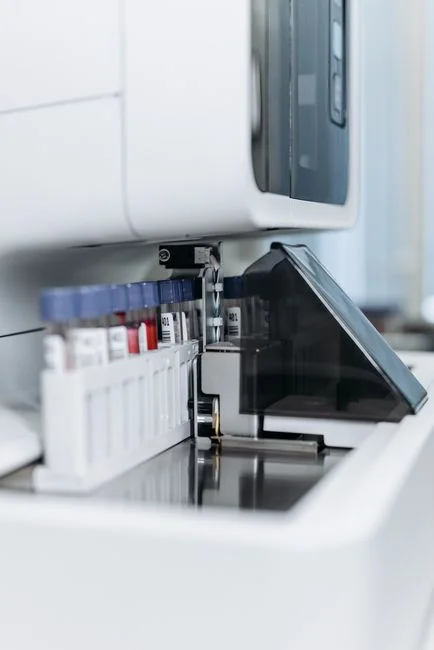
Pocatello’s compliance mechanism depends on a defensible sample from the discharge point, and the program may require representative analysis before discharge approval is issued. Establish the sampling point, sample type, analytical methods, monitoring frequency, and control mechanism with the Industrial Pretreatment Program before startup.
Prepare a permit-compliance test plan covering pH, TSS, FOG, temperature, metals, sulfide, and every additional pollutant identified in the discharge authorization. Apply the City-published local limits where they govern, while also accounting for categorical standards and site-specific conditions where applicable.
- Characterize each source stream and establish a combined discharge boundary.
- Develop the treatment train against identified pollutants and operating risks.
- Perform representative testing across normal, peak, batch, and startup conditions.
- Present the results to the Industrial Pretreatment Program when requested and obtain the required discharge approval.
- Connect the approved sampling point and monitoring plan to the City’s control mechanism before sewer discharge.
Do not demonstrate performance only with clean-water membrane data or one startup sample. For batch streams, document whether equalization has blended the relevant discharge event; for continuous streams, test across representative production conditions. The operating log should record flow, pollutant concentration, treatment-stage removals, chemical use, bypass prevention, sampling results, and corrective actions.
Treatment controls should be tied to action levels. A high pH reading, temperature excursion, sulfide alarm, or solids breakthrough should trigger an investigation, an approved response, and documentation of any discharge effect. The engineering guide to process control for chemical wastewater plants is useful for structuring that operating discipline, but it does not replace the City’s monitoring requirements.
The enforcement consequence is material. Pocatello states that businesses discharging prohibited or noncompliant wastewater may be fined up to $1,000 per day per violation, charged for increased monitoring, required to install upgraded equipment, and held responsible for damages.
Choose Equipment by Constraint Rather Than by Technology Name
Semiconductor treatment capacity should be sized around peak flow, average flow, batch releases, changing pollutant loading, available footprint, permitted treatment capacity, and planned production expansion. Average flow alone will not protect final control equipment from a concentrated slug or reveal whether the downstream sewer connection can accept the discharge.
Compare bids against a common technical basis. Require wastewater-characterization support, guaranteed performance at the actual feed conditions, City-submittable equipment information, controls integration, maintenance provisions, and a complete sludge-handling scope. Ask each bidder to identify which treatment step removes each regulated pollutant and which operating parameters create permit-compliance risk.
Evaluate lifecycle cost rather than purchase price alone. The comparison should include chemical consumption, sludge generation and handling, monitoring burden, maintenance, and Pocatello surcharges for flow, TSS, BOD, FOG, Total Phosphorus, and Total Kjeldahl Nitrogen. A semiconductor fab wastewater treatment guide for production expansion can support that engineering review, but no project price should be inferred without plant-specific inputs.
Frequently Asked Questions
Do semiconductor plants need a permit before discharging wastewater to Pocatello’s sewer?
Yes. Contact the Industrial Pretreatment Program before discharge and do not connect the wastewater until the required approval is issued. Pocatello identifies Waste Discharge Permits, Discharge Authorizations, and Letters of Authorization, with the route based on volume, business nature, wastewater characteristics, and treatment-plant risk. Federally regulated discharges require an application 90 days before discharge; locally regulated discharges require the City to determine the correct path.
Can DAF, UF, RO, and clarifiers be used interchangeably for semiconductor wastewater?
No. DAF separates suspended solids, oil and grease, and colloidal material; UF removes solids and colloids; RO addresses dissolved contaminants where feed quality supports it; and a clarifier handles settleable solids. The actual permit pollutants, waste characterization, treatment objectives, and reuse requirements determine which units are needed and where they belong in the train.
How should semiconductor wastewater treatment capacity be sized?
Size around peak and average flow, batch-release behavior, pollutant loading under changing production conditions, available footprint, and future expansion. Obtain representative wastewater data and identify the applicable sampling and analytical methods with Pocatello before final sizing. Selecting equipment from average flow alone can under-size equalization and expose downstream controls to high-concentration discharges.
What should a wastewater treatment supplier demonstrate before selection?
Require guaranteed performance at the actual wastewater conditions, identification of the treatment step responsible for each regulated pollutant, controls and monitoring integration, City-submittable documentation, and a defined sludge-handling scope. Supplier case studies and catalog data should be treated as application evidence, not proof that the proposed system will meet Pocatello’s issued authorization.
What inputs are needed to estimate the cost of meeting Pocatello pretreatment limits?
Request a project-specific estimate using flow, TSS, BOD, FOG, Total Phosphorus, Total Kjeldahl Nitrogen, equipment scope, chemical consumption, sludge handling, monitoring, and applicable City surcharges. Pocatello does not charge for issuance or renewal of its listed discharge approvals, but it does assess high-strength wastewater surcharges. No reliable project price can be given without those inputs.