Choose the Right Treatment Route for a Thai Site
Domestic sewage treatment in Thailand usually depends on whether a site can connect to public sewer infrastructure or needs a decentralized plant. Thailand uses centralized, cluster and on-site systems, but septic tanks alone may not provide adequate treatment: a policy brief reports BOD removal of 43–59% for common on-site systems and effluent BOD of 849–1,436 mg/L. For housing estates and other non-sewered developments, a packaged A/O plant is suitable where flow and land permit, while MBR is the stronger option where compactness and consistently low solids or nitrogen targets matter. Final sizing must use site flow, greywater and blackwater loads, effluent limits, sludge handling and current approvals from the Pollution Control Department and local authority.
The Water Environment Partnership in Asia’s policy brief, dated 1 March 2014, identifies three dominant domestic wastewater models in Thailand: centralized treatment, cluster treatment and on-site treatment. For a new site, the first decision is therefore not which package to buy. It is whether a public sewer connection is technically available, whether a cluster system can serve several properties, or whether the development needs its own treatment plant.
The policy brief’s household survey provides useful but historical context. It reports that 77% of 250 household interviewees selected sewerage connection, while 11% of 49 respondents selected an individual upgraded on-site treatment tank. These results indicate preferences under the survey conditions, not current project economics or an approval precedent. Present developers should request current connection charges, connection conditions and whole-life cost estimates from the responsible authority.
Treatment scope must include more than toilet discharge. The policy brief’s household reference data divides wastewater into kitchen, washing, toilet and bathing streams: kitchen wastewater contributes 81 g/cap/day of BOD, washing 3 g/cap/day, toilet 14 g/cap/day and bathing 17 g/cap/day. The kitchen stream therefore requires equalization, grease control and biological loading calculations; assuming that a package handles blackwater alone will understate both hydraulic and organic demand.
A site screening matrix should therefore compare connection availability, ownership, discharge route, available land, receiving-water sensitivity and operating responsibility before selecting equipment. The comparison of packaged A/O and MBR sewage plants provides a useful technology sequence, but the route decision must be resolved first.
Build a Thailand-Specific Design Basis
The Water Environment Partnership in Asia’s 1 March 2014 policy brief records a household wastewater reference of 150 L/cap/day and BOD loading of 115 g/cap/day, including 81 g/cap/day from kitchen wastewater; its source-specific data assigns 87.8% of household BOD loading to greywater, so greywater cannot be excluded from the sizing basis.
Start with project-specific inputs rather than multiplying an occupancy estimate by a generic per-capita rate. The designer needs connected population, design occupancy, daily and peak flow, kitchen and laundry contributions, toilet discharge, bathing discharge, seasonal occupancy, rainfall-derived inflow and infiltration, soil and groundwater conditions, available footprint, power reliability and the receiving-water route.
The policy brief provides a source-specific household reference: 150 L/cap/day total wastewater and 115 g/cap/day BOD loading. Kitchen wastewater contributes 81 g/cap/day, while washing, toilet and bathing contribute 3, 14 and 17 g/cap/day respectively. These figures help reveal the composition of domestic sewage, but they should not replace fixture calculations or sampling for a hotel, housing estate, hospital or mixed-use development.
The HydropureWater Thailand engineering guide gives a preliminary local framework of 150–180 L/cap/day, influent BOD of 200–250 mg/L and TSS of 200–250 mg/L. It also identifies a monsoon inflow/infiltration factor of 1.2–1.3 and a peak-flow factor of 1.5–2.0 for biological sizing. These are screening assumptions, not universal project values: the containerized MBR STP sizing methodology illustrates how the hydraulic basis must be reconciled with occupancy, sampling and site conditions.
| Design input | Evidence available | Procurement treatment |
|---|---|---|
| Household wastewater flow | 150 L/cap/day in the WEPA policy brief dated 1 March 2014 | Use as a source-specific reference; confirm through fixture, occupancy and sample data |
| Household BOD load | 115 g/cap/day, including 81 g/cap/day from kitchen wastewater | Include kitchen, washing, toilet and bathing streams in the organic balance |
| Preliminary Thai residential basis | 150–180 L/cap/day, BOD 200–250 mg/L and TSS 200–250 mg/L in the HydropureWater guide | Confirm against project sampling and occupancy |
| Wet-weather and peak flow | I/I factor 1.2–1.3 and peak-flow factor 1.5–2.0 in the HydropureWater guide | Check actual rainfall, sewer condition and collection layout |
| Effluent requirement | Housing Estate Effluent Standard B.E. 2539 (1996) identified for residential projects | Confirm the current applicable standard and receiving route with PCD and the local authority |
Keep hydraulic capacity, biological capacity and effluent compliance separate. Equalization and pretreatment may control shock loads and peak flow, while the biological reactor must sustain the agreed organic and nitrogen-removal duty. The design also needs a defined monitoring point, because compliance cannot be inferred solely from a correctly sized reactor.
Compare Packaged A/O and MBR Treatment
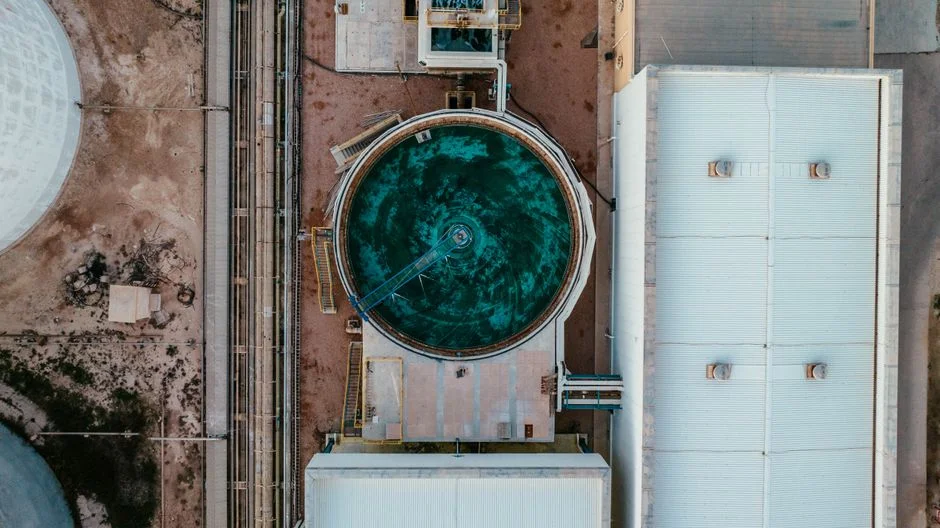
The WSZ below-grade anoxic/aerobic contact-oxidation package has a verified supplier capacity of 1–80 m³/h and includes sedimentation and disinfection; its fully automated configuration is described as requiring no operator, but that product statement does not remove the need for inspection, maintenance or responsible local oversight.
Packaged A/O and MBR systems should be compared against the same project inputs. The relevant distinctions are footprint, treatment consistency, nitrogen-removal scope, mechanical complexity, operator competence, sludge handling, redundancy, expansion and lifecycle cost. A supplier specification establishes what a product is designed to do; it does not establish compliance at the proposed site until the influent basis, guarantees and acceptance tests are accepted.
The underground packaged A/O sewage treatment plant combines anoxic/aerobic biological contact oxidation, sedimentation and disinfection in a below-grade package. The verified WSZ range is 1–80 m³/h. It can preserve surface space by allowing landscaping above the installation, making it relevant where available land is limited but not the controlling constraint.
The MBR membrane bioreactor wastewater system combines activated sludge with submerged PVDF membranes. Its verified supplier range is 10–2,000 m³/day, and the supplier reports filtration below 1 μm. A supplier also reports a 60% footprint reduction; this is a comparative product claim, not an independently verified Thailand performance guarantee.
| Decision variable | Packaged anoxic/aerobic system | MBR system |
|---|---|---|
| Verified capacity range | 1–80 m³/h | 10–2,000 m³/day |
| Process configuration | Anoxic/aerobic contact oxidation, sedimentation and disinfection | Activated sludge with submerged PVDF membranes |
| Land use | Below-grade installation can retain surface area for landscaping | Supplier reports 60% footprint reduction versus conventional activated sludge |
| Effluent consistency | Clarification and disinfection are included in the WSZ package | Supplier reports filtration below 1 μm |
| Operational burden | Simpler process train with aeration, clarification and disinfection components | Adds membrane operation, cleaning and replacement considerations |
| Selection logic | Consider where the simpler train and available land are adequate | Consider where land is constrained or the agreed design requires very low suspended solids and biological nitrification |
Choose MBR where the land constraint or agreed effluent objective justifies membrane-specific operation. Consider A/O where the simpler train fits the site, available land is adequate and the discharge route does not require the membrane-based solids separation. Neither option should be selected from footprint or capacity alone. The quotation should identify membrane or media guarantees, expected cleaning, spare parts, electrical demand and redundancy assumptions.
The supplied research provides no current Thailand-specific quotation or audited energy benchmark for either route. Therefore, compare proposals using identical average flow, peak flow, organic load, effluent values, power tariff, maintenance scope and analysis period. Otherwise, apparent capital savings may simply move cost into membrane replacement, sludge handling or specialist operations.
Design the Complete Treatment Train
The HydropureWater Thailand engineering guide lists preliminary residential influent references of BOD 200–250 mg/L, COD 400–500 mg/L, TSS 200–250 mg/L and NH3-N 20–40 mg/L; these are design-envelope references for engineering work, not guaranteed characteristics of the wastewater entering a specific site.
A complete treatment train is more than a biological reactor. The design sequence should be influent characterization, screening, flow equalization, biological treatment, solids separation, disinfection, effluent monitoring and sludge handling. Each step needs an owner, design duty, inspection access and performance criterion.
Screening protects the biological stage from solids, rag and fibrous material. A rotary mechanical bar screen should be considered where kitchen and laundry discharges can introduce fibrous material. Grease traps should be assessed for kitchen wastewater, while equalization should address variable flows, wet-weather dilution and operational shock loads. These measures should be verified against the actual wastewater rather than added automatically to every quotation.
Disinfection requirements depend on the permit and receiving-water route. Where residual disinfection is required, the verified chlorine dioxide generator range runs from 50 g/h for a compact manual unit to 20,000 g/h for a fully automated system. The chlorine dioxide generator range should be matched to the dose and contact-time calculation; the designer must also assess chemical handling, operator safety and effects on the receiving environment.
- Characterize the influent and establish the applicable discharge standard.
- Protect the plant with screening, grease control and equalization where required.
- Provide biological treatment sized for organic load, peak flow and required nitrogen removal.
- Separate solids and apply the required disinfection process.
- Define the sludge collection, dewatering, storage and disposal route.
- Install representative monitoring and define sampling and alarm responsibilities.
Sludge handling belongs in the initial scope. The verified plate-and-frame filter press specification ranges from 1 m² to 500 m² of filtration area for municipal and industrial sludge dewatering. A plate-and-frame sludge dewatering specification does not by itself establish the required filter area; the designer must calculate it from generated solids, feed characteristics and the selected operating cycle.
Navigate Thai Compliance and Procurement
The HydropureWater guide identifies the Enhancement and Conservation of National Environmental Quality Act B.E. 2535 (1992), administered by the Pollution Control Department, as the governing legal framework, and identifies the Housing Estate Effluent Standard B.E. 2539 (1996) as the operative standard for residential projects.
The broader compliance route identified in the guide may also involve the Buildings Effluent Standard B.E. 2537 (1994), Industrial Effluent Standard B.E. 2539, Surface Water Quality Standard B.E. 2537 (1994) and Groundwater Quality Standard B.E. 2543. Which instruments apply depends on the project type, discharge point, receiving environment and system scale. The designer and owner should not infer the permit route from a generic packaged-plant catalogue.
Before ordering, obtain written confirmation from the Pollution Control Department and the relevant local authority regarding the current applicable effluent standard, discharge route, ownership structure, permits and operating reporting requirements. The supplied sources contain older baselines and implementation references; those documents explain the framework but cannot replace a project-specific 2026 compliance review.
| Procurement stage | Supplier deliverable required | Buyer check |
|---|---|---|
| Design basis | Hydraulic and organic calculations covering average flow, peak flow, greywater, kitchen wastewater, I/I and septage | Inputs match the site survey, occupancy study, wastewater sampling and applicable standard |
| Technical proposal | Process flow, drawings, equipment list, electrical data, media or membrane guarantees and effluent values | Every guarantee states the duty condition and acceptance method |
| Factory and site testing | FAT and SAT protocols, instruments, test media and acceptance criteria | Witness points, deficiencies, retesting and handover are contractual |
| Operations and maintenance | Maintenance schedules, spare parts, training, monitoring plan and sludge route | Responsible operators and local service support are identified |
| Commercial close-out | Total lifecycle cost over an agreed period, with energy and sludge assumptions stated | All quotations use the same flow, load, power and disposal assumptions |
Require a signed process guarantee and evidence that the proposed capacity covers the agreed average and peak conditions. Ask each bidder to explain how its design handles kitchen wastewater, laundry, greywater, monsoon inflow and septage or sludge operations. The water treatment equipment supplier selection checklist is useful for evaluating service capability, but technical acceptance must be tied to project-specific drawings, tests and guarantees.
Frequently Asked Questions
Is a septic tank sufficient for domestic sewage treatment in Thailand?
Not by itself in every case. The WEPA policy brief dated 1 March 2014 reported BOD removal of 43–59% and average effluent BOD of 849–1,436 mg/L across three common on-site facility types surveyed. Whether a septic tank is acceptable depends on the applicable standard, soil, groundwater, receiving environment and the local authority’s approval route.
How should a buyer choose between packaged A/O and MBR?
Choose A/O when the simpler treatment train, available land and maintenance arrangements fit the project. Consider MBR when land is constrained or the agreed design requires very low suspended solids and biological nitrification. Compare both using the same effluent guarantee, peak-flow duty, sludge route, energy assumptions, maintenance scope and lifecycle-cost period.
What information does a supplier need to quote a domestic sewage treatment plant accurately?
Provide connected population, daily and peak flow, kitchen, laundry, toilet and bathing loads, monsoon conditions, soil and groundwater information, effluent standard, receiving point, land constraints, power availability, sludge disposal route and local approval requirements. Without these inputs, the quoted capacity is a generic selection rather than a defensible site design.
Which Thai approvals should be verified before procurement?
Ask the Pollution Control Department and relevant local authority to confirm the current permit, applicable effluent standard, discharge route, ownership structure and operating obligations for the specific project. The developer should also document which local permissions and utility interfaces apply before accepting delivery and installation dates.
How should supplier quotations be compared without overstating price?
No current Thailand-specific quotation is supplied in the research, so a valid price cannot be stated without a project brief. Request comparable quotations using the same hydraulic design basis, guaranteed effluent values, FAT and SAT requirements, maintenance scope, spares, energy assumptions, sludge-handling route and lifecycle-cost period.