

Start With the Caloocan Discharge Route
Domestic sewage treatment in Caloocan should begin by checking whether a permitted sewer connection with available capacity exists. If it does, obtain the sewer owner’s written pretreatment requirements; HydropureWater’s 2026 guide cites a typical sewer condition of BOD not exceeding 100 mg/L. If it does not, Section 13 of RA 9275 provides an on-site-treatment route. For a constrained residential site, a buried A/O package plant is a strong candidate; the WSZ series covers 1–80 m³/h. For denser sites or higher-grade reuse, MBR may be preferable, but capacity, measured loading, permits, installation, power, sludge handling and monitoring must be confirmed before selection.
The CAMANA Water Reclamation Facility is intended to serve the southern exclave of Caloocan, Malabon and Navotas within Maynilad’s west zone. Its planned capacity of 205 million liters per day does not establish that any particular property has a connection, available receiving capacity or permission to discharge into the network (Wikipedia, March 2021). A proposed equipment scope should therefore remain conditional until the sewer authority confirms the connection point and remaining capacity.
Ask the sewer authority to state the pretreatment condition in writing, including the required biochemical oxygen demand concentration, monitoring obligation, connection charges and responsibility for extension works. HydropureWater’s 2026 Philippine buyer’s guide describes municipal-sewer pretreatment as typically septic-tank effluent quality, with BOD not exceeding 100 mg/L, but its Philippine domestic sewage treatment buyer’s guide requires the sewer owner to confirm the exact acceptance condition.
Document the discharge destination, intended reuse, applicable permit and sewer status before comparing A/O, MBR or a septic tank with soil absorption. The Philippine packaged A/O and MBR comparison provides the process-selection framework, but it does not replace confirmation from the sewer authority.
| Project condition | Evidence required before equipment selection | Procurement consequence |
|---|---|---|
| Permitted sewer connection available | Connection point, remaining receiving capacity, written pretreatment condition, monitoring duty, charges and extension-work responsibility | Determine whether a package plant is required for pretreatment or can be omitted |
| No permitted sewer connection | Confirmation of on-site-treatment route and applicable DENR and Caloocan local government unit requirements | Develop an on-site process concept and permit scope |
| Surface-water discharge or reuse | Discharge destination, reuse specification, receiving-water assessment and applicable permit conditions | Select a treatment process against the confirmed effluent duty |
Build the Design Basis Before Choosing Equipment
The selected process must cover documented average flow, peak flow and measured organic loading rather than merely fall within a manufacturer’s capacity envelope. A defensible design basis also fixes the wastewater source, occupancy method, receiving route, site constraints and intended reuse before equipment is ordered.
Record the wastewater source, average and peak flow, occupancy basis, receiving water body, sewer availability, land area, soil condition, flood level, power reliability, intended reuse and projected growth. HydropureWater’s 2026 guide gives preliminary residential assumptions of 150–200 L per capita per day and a 1.5–2.5 hourly peaking factor. These are planning inputs, not substitutes for project occupancy data and wastewater testing.
For the supplied residential example, 200 houses multiplied by five persons per house and 180 L per capita per day equals 180,000 L per day, or 180 m³/day. Applying a 2.0 peaking factor gives 180 × 2.0 ÷ 24 = 15 m³/h. The result establishes a preliminary hydraulic basis; it does not establish the biological loading, final treatment stages or guaranteed effluent performance.
Request representative testing for BOD, COD, TSS, pH, oil and grease and fecal coliform where appropriate to the process and receiving route. Domestic-sewage assumptions alone do not establish the design load. The supplier should use confirmed flow and measured organic characteristics to demonstrate how biological treatment, clarification, membrane or filtration, and disinfection will perform at peak and average conditions.
Screen access, excavation conditions, utilities, flood exposure and future expansion before accepting a proposed arrangement. Where fibrous material could affect downstream equipment, include appropriate headworks and service access in the design. The rotary mechanical bar screen is one equipment option to consider, but its final selection must follow the characterized wastewater and complete headworks design.
| Design input | Information required | Why it affects procurement |
|---|---|---|
| Hydraulic demand | Occupancy basis, average flow and hourly peak | Sets the required treatment capacity and peak duty |
| Organic and solids load | Representative BOD, COD and TSS results | Determines biological and solids-removal capacity |
| Wastewater characteristics | pH, oil and grease, fecal coliform where relevant | Influences pretreatment, disinfection and effluent design |
| Site and utilities | Land, soil, flood level, access and power reliability | Determines constructability, resilience and operating exposure |
| Future duty | Projected occupancy growth and intended reuse | Prevents immediate or near-term capacity shortfall |
Match A/O and MBR to the Site Constraint
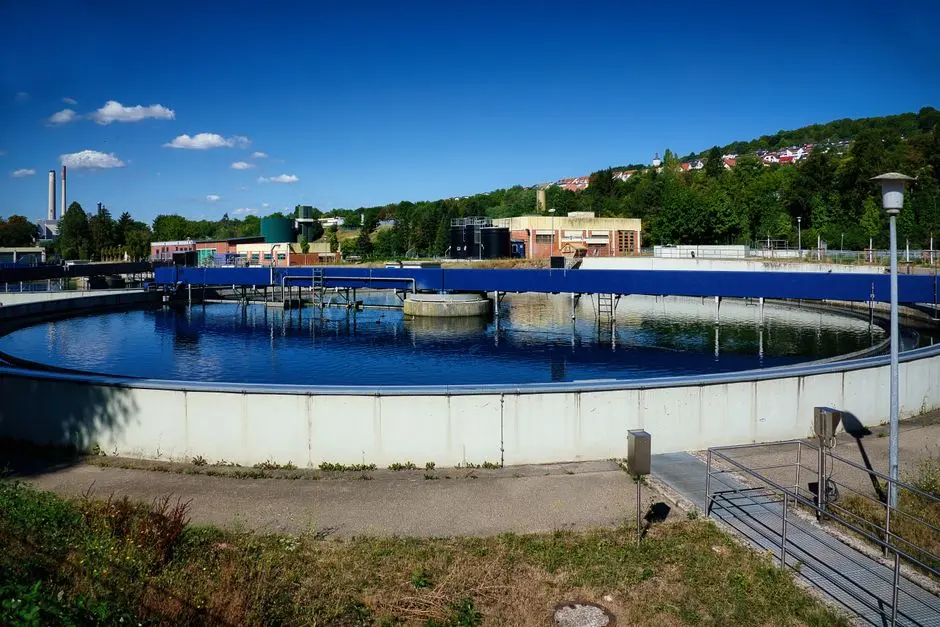
Buried A/O and MBR address different site and operating priorities, and the discharge duty must be confirmed before either is selected. HydropureWater’s verified catalog describes the WSZ series as an underground integrated system combining anoxic and aerobic biological contact oxidation, sedimentation and disinfection in one buried package, with listed capacity of 1–80 m³/h.
HydropureWater’s 2026 guide characterizes packaged A/O as a compact, buried option for subdivisions, mid-rise condominiums and resorts. It states greater than 85% BOD removal and effluent below 30 mg/L as supplier-guide claims, not unconditional project guarantees. The proposed duty and guarantee must therefore be tied to confirmed influent loading, peak flow and the applicable effluent requirement.
The buried A/O package sewage treatment plant is most appropriate where a package arrangement, installation below grade and manageable surface footprint are priorities. Its quoted process envelope does not remove the need to check hydraulic and organic loading, access for maintenance, structural requirements and the discharge route.
HydropureWater’s 2026 MBR catalog lists 10–2,000 m³/day, activated sludge combined with submerged PVDF membrane filtration, filtration below 1 μm and an approximately 60% smaller footprint than conventional systems. The MBR wastewater treatment system merits consideration where land is constrained, density is high or a higher-grade reuse objective justifies membrane operation, air scour and replacement planning.
HydropureWater states hydraulic retention-time ranges of 8–12 hours for A/O and 6–8 hours for MBR. These are design ranges in the 2026 guide, not universal defaults. Require quotations to reconcile average flow, hourly peak, organic load, retention time, duty cycle, treatment-stage redundancy and guaranteed effluent values. If the selected duty cannot be demonstrated at the documented peak and load, the capacity envelope is irrelevant.
| Selection factor | Packaged A/O | MBR | Procurement check |
|---|---|---|---|
| Catalog capacity | 1–80 m³/h | 10–2,000 m³/day | Confirm the selected duty covers verified average and peak conditions |
| Process architecture | Anoxic/aerobic contact oxidation, sedimentation and disinfection in a buried unit | Activated sludge with submerged PVDF membrane filtration | Match the process to the confirmed effluent benchmark |
| Stated retention-time range | 8–12 hours | 6–8 hours | Require the supplier to show the calculation against the design flow |
| Primary site advantage | Buried package with a manageable surface footprint | Approximately 60% smaller footprint than conventional systems, according to the 2026 catalog | Check land, access, flood level and construction conditions |
| Main operating attention | Aeration and biological-process control | Membrane operation, air scour and replacement planning | Price local support, consumables, spares and trained operators |
Confirm the Effluent and Permit Route
A sewer-pretreatment specification cannot be used automatically as the compliance standard for surface-water discharge or reuse. The receiving route determines the required effluent benchmark, and the applicable permit conditions must be established before final technology selection.
HydropureWater’s 2026 guide cites DAO 2016-08 general limits for surface-water discharge or reuse as BOD no more than 30 mg/L, COD no more than 100 mg/L, TSS no more than 30 mg/L, pH from 6.0 to 9.0, and oil and grease no more than 15 mg/L. These are source-qualified planning limits, not a substitute for the applicable Wastewater Discharge Permit, sector-specific rules, receiving-water assessment or reuse specification.
The same guide gives raw domestic influent BOD of 200–400 mg/L and conventional septic-tank effluent of 100–200 mg/L BOD. A septic tank used with soil absorption or as sewer pretreatment therefore does not, by itself, demonstrate compliance with the cited 30 mg/L general limit. Confirm the final duty in writing with the relevant authority and supplier.
HydropureWater’s 2026 guide identifies the Environmental Compliance Certificate and Wastewater Discharge Permit as the principal DENR instruments, with local government unit requirements also applying. Confirm the project-specific permit path with DENR’s Environmental Management Bureau and the Caloocan local government unit; a product-compliance statement is not a permit. The supplier comparison and installed-cost checklist is useful for checking that permitting deliverables and monitoring responsibilities are not left undefined.
The monitoring scope described by HydropureWater’s 2026 guide includes monthly testing by a DENR-accredited laboratory for BOD, COD, TSS, pH, oil and grease and fecal coliform. Results are compiled into the Discharge Monitoring Report and filed with the regional Environmental Management Bureau office. Obtain written confirmation of sampling locations, laboratory accreditation, submission responsibility and corrective-action requirements before ordering.
| Discharge route | Planning condition cited by HydropureWater’s 2026 guide | Documents to confirm |
|---|---|---|
| Centralized sewer | Typically septic-tank effluent quality, BOD not exceeding 100 mg/L | Written acceptance condition, receiving capacity, monitoring duty, charges and infrastructure responsibility |
| Surface-water discharge or reuse | BOD ≤30 mg/L, COD ≤100 mg/L, TSS ≤30 mg/L, pH 6.0–9.0 and oil and grease ≤15 mg/L | Wastewater Discharge Permit, ECC path, receiving-water assessment, reuse specification and sampling plan |
| Conventional septic tank | Suitable only with soil absorption or as sewer pretreatment under the cited conditions | Soil assessment and written sewer acceptance, or a separate treatment proposal for direct discharge or reuse |
Compare Installed Cost and Operating Exposure
HydropureWater’s 2026 unit-capital planning benchmarks are ₱45,000–₱80,000 per m³/day for packaged A/O and ₱90,000–₱120,000 per m³/day for MBR. They exclude land, power upgrades and permitting, so they are not installed project prices and should not be used as quotations.
For the supplied 180 m³/day example, HydropureWater’s 2026 planning ranges are ₱9 million–₱16 million for A/O and ₱18 million–₱24 million for MBR, before land and connection works. These figures provide planning-class allowances only. A comparable quotation must separate the equipment package, civil works, installation, commissioning, electrical supply, sludge handling, permits, training, spares and maintenance.
HydropureWater estimates electricity consumption at 0.8–1.5 kWh/m³ for A/O and 1.8–2.5 kWh/m³ for MBR. Its sludge-hauling allowance is 2–5% of capital expenditure annually. It also estimates ₱50,000–₱200,000 for the Environmental Compliance Certificate and permitting, depending on the local government unit and project class. Use these figures to identify budget lines to test, not to replace site-specific pricing.
Price sludge dewatering separately where included, along with its associated power, labor, consumables and haul-off arrangement. Also identify the disinfection duty, chemical demand, membrane replacement or aerator servicing, and electrical backup. A packaged-equipment price alone does not establish the cost of a compliant and operable installation.
The 2026 technology, compliance and cost guide for domestic sewage treatment provides an additional framework for comparing scopes, but only quotations tied to the same 180 m³/day design basis, duty and permit route are directly comparable.
| Cost or operating item | HydropureWater 2026 planning assumption | Scope caveat |
|---|---|---|
| Packaged A/O capital | ₱45,000–₱80,000 per m³/day | Excludes land, power upgrades and permitting |
| MBR capital | ₱90,000–₱120,000 per m³/day | Excludes land, power upgrades and permitting |
| A/O at 180 m³/day | ₱9 million–₱16 million | Planning-class figure before land and connection works |
| MBR at 180 m³/day | ₱18 million–₱24 million | Planning-class figure before land and connection works |
| A/O electricity | 0.8–1.5 kWh/m³ | Supplier estimate, not a guaranteed site consumption |
| MBR electricity | 1.8–2.5 kWh/m³ | Supplier estimate, not a guaranteed site consumption |
| Annual sludge hauling | 2–5% of capital expenditure | HydropureWater planning estimate |
| ECC and permitting | ₱50,000–₱200,000 | Depends on local government unit and project class |
Plan Operations, Flood Resilience and Maintenance
Reliability must be designed into operations, sludge handling, access and power supply rather than added after the process is selected. HydropureWater’s 2026 guidance states that plants above 100 m³/day may use on-site plate-and-frame sludge dewatering to reduce sludge volume by 75–85% before haul-off, subject to final process design. The plate-and-frame filter press should therefore be evaluated as part of the complete sludge-handling route, not as an optional accessory.
HydropureWater’s 2026 guide states that plants above 190 m³/day require at least one DENR-accredited operator per shift under the DAO 2003-30 series. Confirm the current staffing and certification requirement with the authorities because this project-level planning statement should not be treated as the final compliance determination.
For flood-exposed sites, HydropureWater’s planning requirements place the tank top at or above the 100-year flood elevation, specify IP68 submersible or dry-pit pumps, and call for standby power of 24 hours or more in typhoon-prone coastal zones. Check these conditions against current site studies, electrical design and applicable regulations before including them in the specification.
Maintain an operating logbook covering influent flow, equipment runtime, power consumption, sludge yield and chemical dosing. Signed and dated entries support quarterly inspection readiness. The permit scope should also identify sampling locations, laboratory accreditation, Discharge Monitoring Report submission, record retention and responses to non-compliant results.
Ask suppliers for comparable Philippine references, the membrane-replacement methodology for MBR, the aerator-servicing method for A/O, spare-parts availability, local technical support and an operator-training plan. Resilience equipment and automatic controls can support reliable operation, but they do not replace process control, monitoring or permit compliance.
Use a Decision Checklist Before Ordering Equipment
Equipment selection should follow a fixed procurement sequence: route, load, site, compliance and then commercial offer. Beginning with a product price or broad capacity range risks purchasing a system that cannot connect, receive the required load or satisfy the intended discharge duty.
- Verify the permitted connection, remaining receiving capacity, connection point, written pretreatment condition and responsibility for connection costs and extension works.
- Confirm average and peak flow, occupancy basis, and representative BOD, COD, TSS, pH, oil and grease and fecal coliform results where relevant.
- Verify land, soil, flood level, power, access and future expansion, then eliminate technologies that cannot be constructed and operated reliably.
- Identify the discharge destination, reuse objective, Environmental Compliance Certificate, Wastewater Discharge Permit and Caloocan local government unit review requirements.
- Require each written quotation to state design flow, peaking basis, duty cycle, process description, influent basis, guaranteed effluent values, retention-time assumptions and treatment-stage redundancy.
Use the Philippine domestic sewage treatment buyer’s guide to check the broader buyer sequence, then require the selected supplier to confirm that wastewater characterization, final sizing and permit compliance remain subject to site-specific design, current authority requirements and the formal proposal.
| Stage | Decision gate | Required written outcome |
|---|---|---|
| Route | Is permitted sewer service available? | Sewer-authority confirmation or approved on-site concept |
| Load | What are the verified hydraulic and organic loads? | Occupancy basis, test results, average flow and peak flow |
| Site | Can the system be constructed, accessed and operated? | Land, soil, flood, power and access assessment |
| Compliance | What effluent and monitoring duty applies? | Permit path, effluent specification and monitoring plan |
| Commercial | Do all quotations cover the same scope? | Itemized quotation, guarantees, exclusions and lifecycle obligations |
Frequently Asked Questions
How is the 180 m³/day sewage treatment example calculated, and why is 15 m³/h only a preliminary peak?
The example uses 200 houses × five persons × 180 L per capita per day, producing 180,000 L/day or 180 m³/day. Applying a 2.0 peaking factor gives 180 × 2.0 ÷ 24 = 15 m³/h. HydropureWater’s 2026 guide presents these as preliminary planning inputs; measured occupancy, wastewater characteristics and organic loading must still be confirmed before equipment is selected.
Should a Caloocan project choose packaged A/O or MBR?
Choose A/O when a buried package arrangement, manageable surface footprint and the cited process envelope fit the verified duty. Consider MBR when land is tight, development density is high or a higher-grade reuse objective justifies membrane operation and replacement planning. In either case, the applicable effluent requirement and written quotation must demonstrate performance at the confirmed average and peak conditions.
What is excluded from the ₱45,000–₱80,000 per m³/day A/O and ₱90,000–₱120,000 per m³/day MBR benchmarks?
HydropureWater’s 2026 unit-capital planning benchmarks exclude land, power upgrades and permitting. The corresponding 180 m³/day planning ranges also exclude land and connection works. Request itemized quotations for equipment, civil works, installation, commissioning, electrical supply, sludge handling, permits, training, spares and maintenance rather than treating a packaged-equipment price as the installed cost.
Which permit and laboratory checks should be completed before ordering equipment?
Confirm the project-specific Environmental Compliance Certificate and Wastewater Discharge Permit path with DENR-EMB and the Caloocan local government unit, and obtain the sewer owner’s written pretreatment acceptance where a connection is proposed. HydropureWater’s 2026 guide describes monthly testing by a DENR-accredited laboratory for BOD, COD, TSS, pH, oil and grease and fecal coliform, with results included in the Discharge Monitoring Report filed with the regional EMB office.