
Start with the factory's wastewater, not the equipment name
A Montevideo factory usually needs a DAF system when its wastewater contains floating oil, FOG, suspended solids, colloids or other material that flotation can separate before biological treatment. It needs a broader industrial effluent treatment plant when the wastewater also requires pH correction, flocculation, biological treatment and final polishing. Many factories use both: physical separation and DAF protect downstream biological reactors, while the ETP completes the treatment train. DAF alone is not the default answer; the correct choice depends on representative wastewater testing, average and peak flow, discharge or reuse objectives, and applicable Uruguayan permit conditions.
Begin by classifying every wastewater source, including free oil, FOG, suspended solids, colloids, pH, dissolved organics and toxicity. Record where the water will go: direct discharge, a sewer connection or internal reuse. That destination determines the required outlet quality and the responsible authority or sewer operator whose conditions apply in Uruguay.
Do not rely on one clean-water or startup sample. Take representative samples across production conditions, including batch discharges and cleaning cycles, because intermittent loads may control the hydraulic design more than the daily average. The 2026 industrial DAF selection framework is useful for structuring that decision after the factory profile is established.
DAF should not be used as a substitute for biological or tertiary treatment simply because it removes suspended material. A supplier is applying for factory wastewater treatment Uruguay without understanding the stream if it selects equipment before collecting representative data and defining the receiving requirement.
Choose DAF, an industrial ETP, or a combined treatment train
DAF is appropriate when the principal objective is to separate suspended solids, FOG, oil and grease, or colloidal material that can be floated and skimmed. An industrial ETP is appropriate when the required treatment train includes physical and chemical pretreatment, aerobic or anaerobic biological treatment, and tertiary cleaning. A combined ETP–DAF arrangement is appropriate when emulsions or fine solids could reach a biological reactor and must be removed first.
The refinery example in the Quora treatment explanation uses DAF as a protective barrier before biological polishing: emulsified oil entering biological reactors can interfere with oxygen transfer and damage the microbial population. That process role is relevant, but it does not establish the equipment selection for a Montevideo factory without local wastewater testing and project-specific targets.
Do not select a stand-alone DAF when dissolved biodegradable contaminants require biological treatment. Do not select a broad biological ETP without adequate upstream oil, grease and solids control where those pollutants could interfere with the biological stage.
| Wastewater evidence | Primary objective | Preliminary configuration | Information still required |
|---|---|---|---|
| Free or emulsified oil, FOG, floatable solids and colloids | Remove floatable contaminants and protect downstream equipment | DAF, with coagulation or flocculation where required | Oil, FOG and solids analysis; emulsion condition; chemical demand; sludge route |
| Dissolved biodegradable organics with broader treatment requirements | Achieve the required effluent quality | Complete industrial ETP | Biological load, toxicity, process selection, outlet standard and receiving requirements |
| Oil, FOG and fine solids upstream of biological treatment | Protect biological treatment while meeting the final objective | DAF followed by biological and, where needed, tertiary treatment | Peak loads, biological influent limits, hydraulic profile and final-water destination |
| Stable physical contaminants without a dissolved-organic treatment requirement | Meet a defined physical-separation objective | Stand-alone DAF only if the confirmed outlet duty supports it | Representative results, batch discharge data and a legally applicable treatment objective |
Use this matrix as a decision record, not as a substitute for a design. A preliminary industrial dissolved air flotation system can be evaluated only after the treatment objective and wastewater assumptions are stated.
Understand what the DAF system actually removes
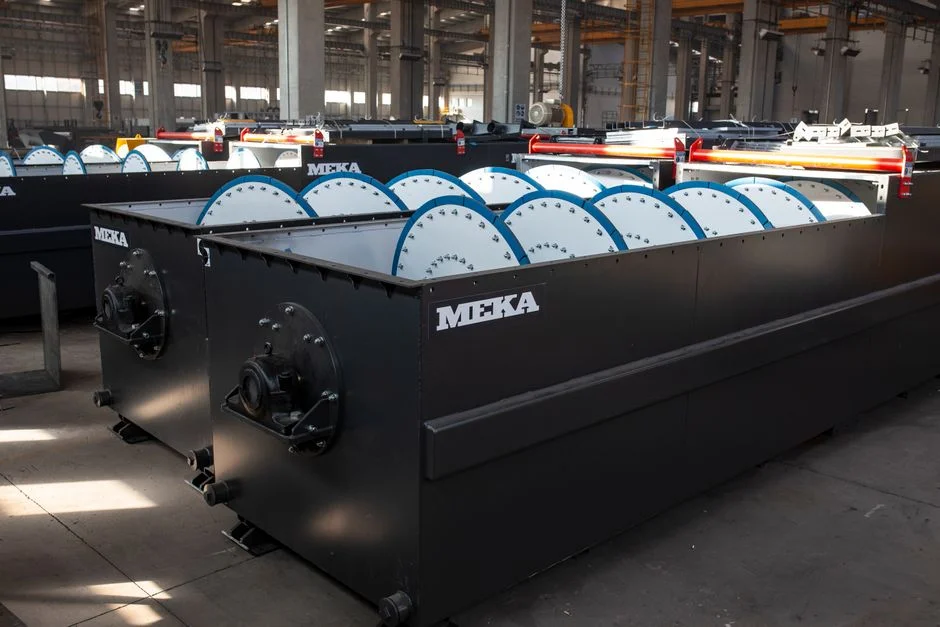
DAF separates floatable material by attaching small air bubbles to particles and oil droplets, increasing their rise rate so they can be skimmed from the surface. This mechanism makes DAF relevant to oil and grease removal, FOG interception and solids clarification, but it does not by itself establish that dissolved contaminants are removed.
According to the Quora treatment explanation, a portion of clarified effluent is pressurized and saturated with air before returning to the flotation tank. On entry at normal atmospheric pressure, dissolved air exits solution and forms micro-bubbles described as 10–100 microns in diameter. Those bubbles attach to suspended particles and tiny oil droplets, causing them to rise rapidly; a mechanical skimmer removes the accumulated froth, while clarified water leaves beneath an overflow weir.
The same source describes chemical coagulants as a way to destabilize emulsions before flotation. This is a process role, not proof that chemicals are required at the Montevideo site. The decision depends on the oil condition, solids characteristics and required outlet objective.
For repeatable chemical addition, evaluate a PLC-controlled chemical dosing skid as part of the treatment package. The scope should identify the chemicals, preparation method, control basis, storage requirements and operator interface.
Removed solids and separated oil or FOG need a defined handling route. During equipment selection, ask how froth and sludge leave the flotation unit, where they go, and whether the proposed route is compatible with the factory's waste classifications and receiving requirements.
Size the system from measured wastewater and hydraulic data
Industrial wastewater sizing requires measured contaminant loading and a complete hydraulic profile, not nominal factory flow alone. The sizing basis should connect representative wastewater results, peak discharge conditions, treatment objective and selected equipment to a defensible duty calculation.
Request representative analysis covering suspended solids, oil and grease, FOG, pH, temperature, conductivity where relevant, dissolved organics and industry-specific contaminants. Document average flow, peak flow, minimum flow, batch discharge volume and operating duration. A short, high-volume cleaning discharge may control equalization and treatment capacity even when the daily average is lower.
For DAF procurement, compare the required hydraulic duty with the published range of 4–300 m³/h across 13 standard models in the supplied HydropureWater product information. That is a catalog range, not proof that any model fits the factory: final sizing must use the site flow profile, wastewater characteristics, recycle ratio, hydraulic loading and chemical demand.
| Sizing input | Evidence required from the factory | Use in equipment selection |
|---|---|---|
| Wastewater characterization | Representative laboratory results across normal production, cleaning and batch conditions | Select DAF, biological treatment and polishing steps; establish chemical demand |
| Hydraulic profile | Average, peak and minimum flow; batch volume; discharge duration | Determine equalization, treatment capacity and pumping requirements |
| Treatment objective | Required outlet characteristics and final destination | Define the treatment train and performance basis |
| Physical and biological load | Solids, oil, grease, FOG, dissolved organics and toxicity information | Assess flotation duty, pretreatment needs and biological suitability |
| Site constraints | Available footprint, utilities, access, installation interface and waste-handling route | Confirm skid arrangement, civil works and operating requirements |
| Commercial scope | Equipment, controls, dosing, sludge removal, utilities, installation and service | Make quotations comparable and identify exclusions |
Evaluate the complete scope: equalization, pretreatment, chemical dosing, sludge or FOG removal, controls, utilities, installation and ongoing operation. Do not infer recycle ratio, hydraulic loading or chemical consumption from the catalog capacity alone. The 2026 industrial DAF selection framework provides a structured starting point for those supplier questions.
Match treatment levels to the factory's final water destination
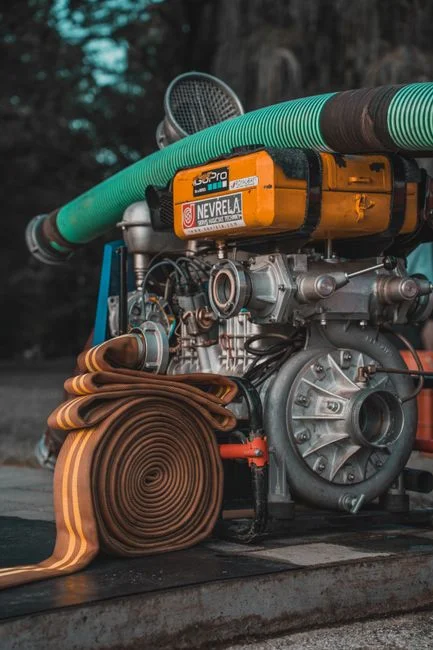
The required treatment level follows the final water destination and the contaminant profile; it is not set by the generic label “ETP.” The Quora treatment explanation identifies three functional levels, but each must be adapted to the factory's wastewater and receiving requirements.
Primary treatment uses physical and chemical methods, including removal of settleable material, pH control and flocculation. This stage may also cover equalization, free-oil capture and preparation for downstream treatment. Where an FOG interceptor or oil-recovery system is included, its relationship to DAF must be defined so the same contaminant is not counted twice without an engineering rationale.
Secondary treatment may use aerobic or anaerobic biological processes to remove dissolved biodegradable organic material. A biological stage does not remove every industrial contaminant. The treatment explanation notes that aromatic solvents can be difficult to remove biologically and that inadequate pretreatment can transfer pollutants to air; therefore, specific industrial contaminants require their own process assessment.
Tertiary treatment provides final cleaning before release and can include disinfection. The cited source specifically identifies chlorine and alum as examples used for remaining inorganic compounds and microorganisms, but these are treatment examples rather than a prescribed recipe for a Montevideo factory.
For reuse, final polishing may need to extend beyond the minimum required for environmental discharge. Define whether the water enters cooling, washing, process equipment or another application, because each use sets a different acceptance basis. If discharge or sewering is intended, obtain the applicable Uruguayan authority or sewer-operator requirements before comparing equipment. For the physical-separation component, compare DAF and sedimentation for factory wastewater within the confirmed treatment objective.
Evaluate suppliers using an engineering and commercial checklist
A defensible supplier comparison requires the same wastewater brief, treatment objective and scope template for every bidder. Model selection without a stated duty basis is not an engineering comparison.
| Supplier deliverable | What the buyer should require | Commercial issue exposed |
|---|---|---|
| Proposed process and boundaries | Treatment steps, wastewater assumptions, outlet objective and included equipment | Shows whether quotations cover equivalent scopes |
| Sizing calculation and equipment schedule | Duty basis, design flow, contaminant basis, recycle and chemical-demand calculations | Prevents model recommendations based only on average flow |
| Technical compliance | Materials of construction, controls, automation, skid integration and utilities | Identifies site-specific additions and exclusions |
| Implementation | Installation requirements, commissioning tests and local service support | Clarifies delivery, civil-work and commissioning responsibilities |
| Operating commitments | Chemical consumption, sludge or waste handling, operator tasks and maintenance access | Connects purchase price to lifecycle operating requirements |
| Regulatory and application basis | Assumed permit or sewer interface, relevant references and project-specific assumptions | Separates verified local knowledge from generic experience |
Require each supplier to identify chemical consumption, waste or sludge handling, operator tasks and maintenance access before price comparison. Clarify whether civil works, utilities, permits, local contractors and freight are included. Verified local regulatory knowledge and relevant application references should support selection, but they cannot replace site-specific wastewater testing.
For a broader procurement framework, use the supplier-checklist structure in the DAF supplier evaluation guide, then ask the bidder to adapt it to the Montevideo site and applicable receiving requirements.
Build the next-step wastewater treatment brief
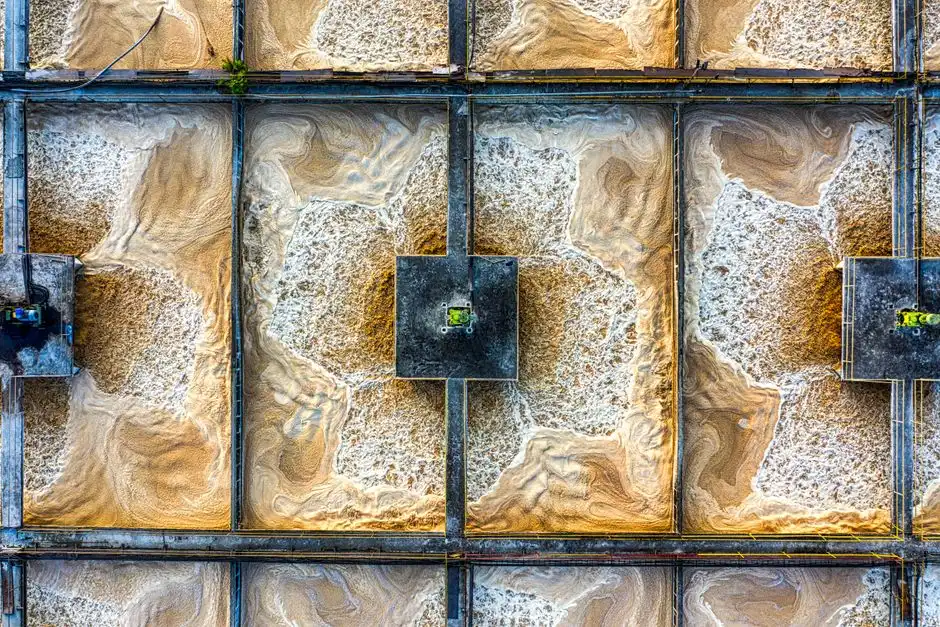
The next engineering step is a common wastewater and treatment brief issued to both DAF and ETP suppliers. It should turn factory operating knowledge into a design basis that bidders can price and engineers can compare.
- Document all stream sources, contaminants, pH, flow profile, batch discharges and the final water destination.
- Attach representative laboratory results and list missing parameters explicitly; do not allow unresolved data to become silent supplier assumptions.
- State the treatment objective, available footprint, utilities and installation constraints.
- Require each bidder to propose a treatment train, sizing basis, equipment schedule, scope boundary and commercial schedule.
- Ask the selected designer to state permit or sewer-interface assumptions, commissioning acceptance criteria and operating responsibilities.
This brief should request comparable quotations rather than asking for a price from model names alone. It also creates a clear technical record of why DAF, an ETP or a combined train was selected.
After the factory profile is known, use the 2026 industrial DAF selection framework for equipment comparisons. For a worked sizing approach, the step-by-step industrial DAF sizing guide shows how wastewater-specific information should be assembled; its source stream is not a substitute for Montevideo factory data.
Frequently Asked Questions
How much should a factory budget for an industrial ETP or DAF system in Montevideo?
The supplied research contains no defensible Uruguay price range, so a reliable budget cannot be stated from equipment capacity alone. Request a quote using the wastewater analysis, average and peak flow, batch-discharge profile, treatment objective, civil-work scope, utilities, waste handling, installation and local delivery requirements. Compare those quotations on the same scope.
Should a Montevideo factory choose a DAF system or install a complete ETP?
Choose a complete ETP when the treatment objective requires physical, biological and tertiary stages. Use DAF as the upstream or internal unit where oil, FOG, solids or colloids must be separated, particularly where they could interfere with downstream biological treatment. Confirm that choice with representative wastewater results and the final outlet requirement.
What data does a DAF supplier need before sizing equipment?
Request representative analysis, average and peak flow, minimum flow, batch volume and duration, pH, oil and grease or FOG, suspended solids, dissolved organics and relevant industry-specific contaminants. Also provide the treatment objective, utilities, available footprint, installation constraints and waste-handling route.
Can a factory copy a DAF design from a refinery or another country?
No. A refinery installation may demonstrate a useful process role, but its wastewater characteristics, treatment targets, equipment sizing and regulatory interface must be verified for the Montevideo site. The DAF and API separator cost comparison can structure the commercial questions, but the final selection must use local project data and applicable Uruguayan requirements.
Related Equipment
- industrial dissolved air flotation system — specifications, capacity range, and technical data